



Blogs

Are THC Gummies Legal? A 2026 State-by-State Guide
Yes, THC gummies are legal to buy in most of the United States right…
Learn more
You must be 21+ to enter this site
 FREE SHIPPING $89+
 FREE GIFT ON $120+
 100% FEDERALLY LEGAL
 LAB TESTED FOR PURITY
FREE SHIPPING $89+
FREE GIFT ON $120+
100% FEDERALLY LEGAL
LAB TESTED FOR PURITY
FREE SHIPPING $89+
FREE GIFT ON $120+
100% FEDERALLY LEGAL
LAB TESTED FOR PURITY
FREE SHIPPING $89+
FREE GIFT ON $120+
100% FEDERALLY LEGAL
LAB TESTED FOR PURITY
FREE SHIPPING $89+
FREE GIFT ON $120+
100% FEDERALLY LEGAL
LAB TESTED FOR PURITY
FREE SHIPPING $89+
FREE GIFT ON $120+
100% FEDERALLY LEGAL
LAB TESTED FOR PURITY
FREE SHIPPING $89+
FREE GIFT ON $120+
100% FEDERALLY LEGAL
LAB TESTED FOR PURITY
FREE SHIPPING $89+
FREE GIFT ON $120+
100% FEDERALLY LEGAL
LAB TESTED FOR PURITY
LAB TESTED FOR PURITY
FREE SHIPPING $89+
FREE GIFT ON $120+
100% FEDERALLY LEGAL
LAB TESTED FOR PURITY
FREE SHIPPING $89+
FREE GIFT ON $120+
100% FEDERALLY LEGAL
LAB TESTED FOR PURITY
FREE SHIPPING $89+
FREE GIFT ON $120+
100% FEDERALLY LEGAL
LAB TESTED FOR PURITY
FREE SHIPPING $89+
FREE GIFT ON $120+
100% FEDERALLY LEGAL
LAB TESTED FOR PURITY
FREE SHIPPING $89+
FREE GIFT ON $120+
100% FEDERALLY LEGAL
LAB TESTED FOR PURITY
FREE SHIPPING $89+
FREE GIFT ON $120+
100% FEDERALLY LEGAL
LAB TESTED FOR PURITY
FREE SHIPPING $89+
FREE GIFT ON $120+
100% FEDERALLY LEGAL
LAB TESTED FOR PURITY

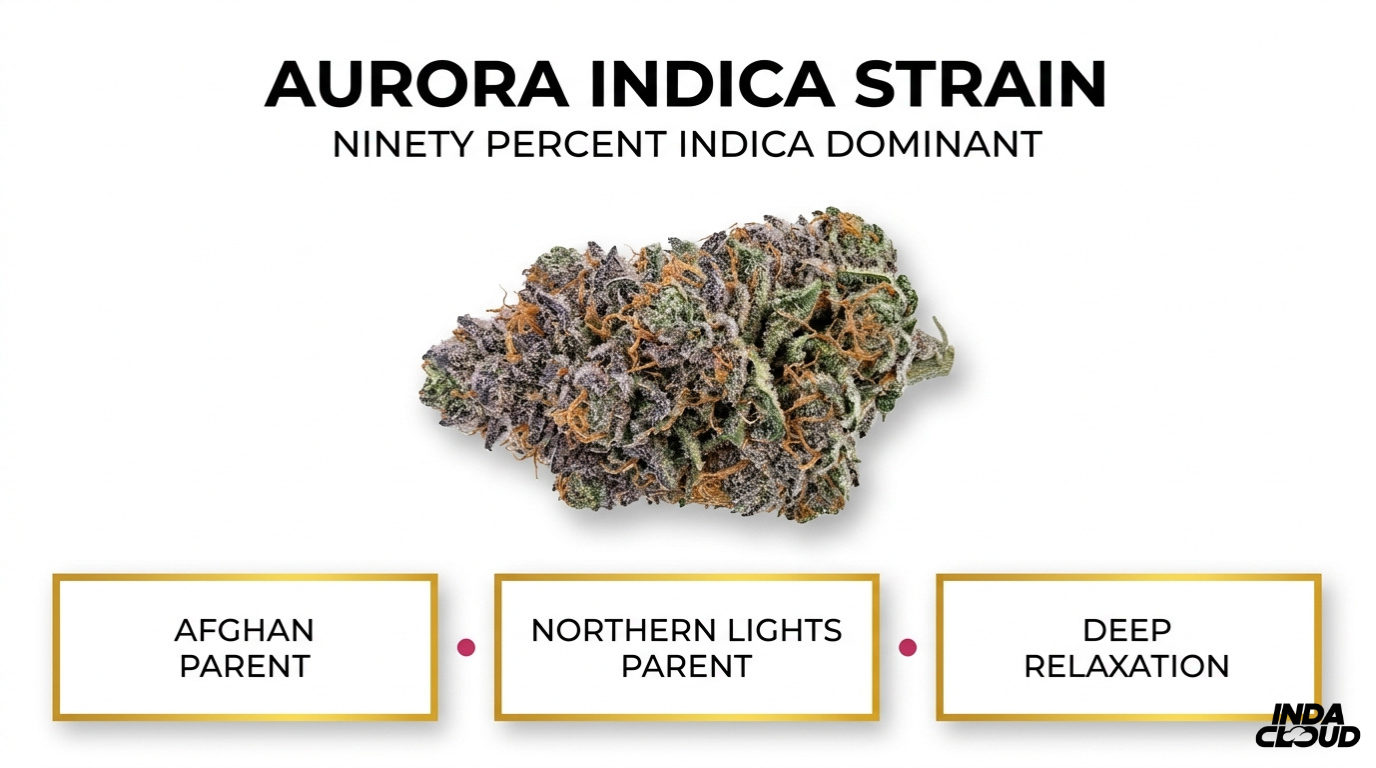
Aurora Indica is a 90% indica dominant hybrid created by crossing Afghan and Northern Lights, two of the most influential resin-heavy cultivars in cannabis history. Bred by Nirvana Seeds in the 1990s, this compact, high-potency strain has earned a lasting reputation for deep physical relaxation and sedating cerebral calm.
This guide covers Aurora Indica’s genetic lineage and sensory profile, its cannabinoid content and full-spectrum effects, medical applications and side effects, comparisons to similar indica strains, and cultivation requirements for home growers.
Aurora Indica inherits a double-reinforced Afghan gene pool from both parent strains, producing dense, bulky buds coated in crystal resin with colors ranging from forest green to deep purple. Its terpene profile, led by myrcene and beta-caryophyllene, delivers layered earthy, peppery, and floral flavors.
THC levels range from 12% to 24% depending on phenotype and growing conditions, while CBD stays minimal at 0.1% to 1%. This cannabinoid ratio drives heavy full-body effects that build gradually; Aurora Indica is a creeper strain, so its sedation intensifies well beyond the initial onset.
Users commonly turn to this strain for insomnia, chronic pain, stress, anxiety, and appetite loss. THC promotes adenosine release for sleep support and ghrelin production for hunger signaling, though overconsumption can elevate anxiety rather than relieve it.
When compared to Northern Lights, Afghan Kush, and Granddaddy Purple, Aurora Indica offers a balanced middle ground: slightly less sedating than its relatives yet deeply relaxing. Its compact 30 to 40 inch growth habit and 7 to 9 week flowering time also make it one of the more practical indica varieties for indoor growers using sea of green setups.
The genetic origins of Aurora Indica trace back to two legendary landrace-derived strains from Central Asia. The following sections cover its parent strains, the breeder behind the cross, and why this cultivar qualifies as a near-pure indica.
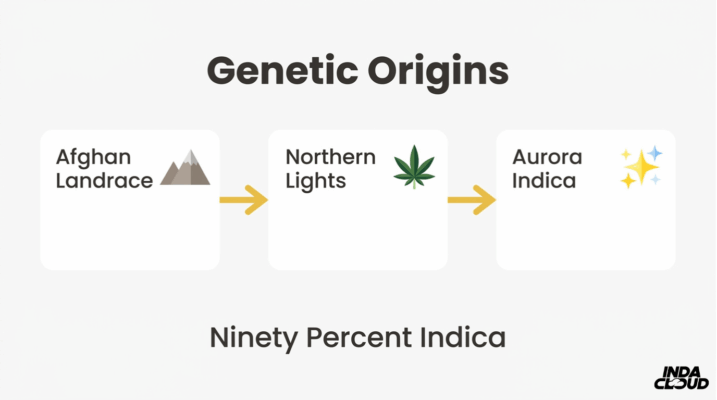
The parent strains crossed to create Aurora Indica are Afghan and Northern Lights. Afghan, also known as Afghani, is a pure indica landrace originating from the Hindu Kush mountain region, prized for its heavy resin production and deeply sedating body effects. Northern Lights is an indica-dominant strain built on Afghani IBL genetics, widely regarded as one of the most influential cultivars in modern cannabis breeding. By combining these two resin-heavy, indica-dominant parents, the resulting F1 hybrid inherited a concentrated indica gene pool. Few modern strains carry such a direct, double-reinforced Afghan lineage, which is precisely what gives Aurora Indica its reputation for potency and physical relaxation.
Nirvana Seeds bred Aurora Indica and released it in the 1990s. Based in the Netherlands, Nirvana Seeds developed this cultivar as an F1 hybrid of Afghan and Northern Lights, according to the breeder’s own product documentation. The cross was designed to stabilize the best indica traits from both parents into a single, consistent seed line. Releasing during a period when Dutch seed banks were pushing landrace genetics into accessible hybrid formats, Nirvana positioned Aurora Indica as a compact, high-resin option for both hobbyist and commercial growers. That 1990s origin makes this strain one of the more established indica hybrids still in active circulation today.
Aurora Indica qualifies as a near-pure indica strain because it carries a 90% indica and 10% sativa genetic ratio, as reported by Leafly. Both parent lines, Afghan and Northern Lights, contribute overwhelmingly indica genetics, leaving only a trace sativa influence. This composition manifests in several observable traits:
That minimal sativa percentage may contribute subtle cerebral awareness, but it does not meaningfully shift the strain’s physical character. For anyone seeking a textbook indica experience rooted in verified Afghan lineage, Aurora Indica delivers one of the most genetically concentrated options available.
With its parentage and indica dominance established, the strain’s physical appearance, aroma, and flavor further reflect these deep Afghan roots.
Aurora Indica delivers a distinctive sensory experience across its appearance, aroma, and flavor. The sections below cover its bud structure, terpene-driven scent, and taste profile.
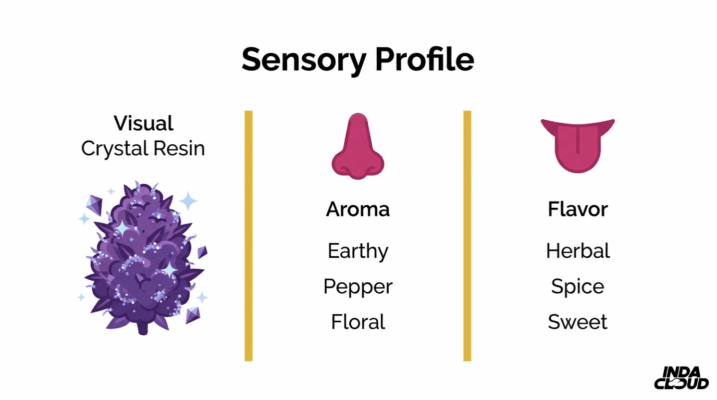
The visual characteristics of Aurora Indica buds are defined by dense, bulky structures coated in a thick layer of crystal resin. According to Leafly, Aurora Indica plants produce these heavily frosted nugs, signaling high trichome concentration across the bud surface. The overall shape tends toward compact, rounded colas typical of heavy indica genetics. Coloring ranges from deep forest green to rich purple hues; in colder climates, the plants turn purple and produce dark purple buds. Fiery orange pistils weave throughout the dense flower, creating sharp contrast against the frosty trichome blanket. For anyone evaluating bag appeal, this strain’s resin-heavy, jewel-toned appearance is hard to miss.
The terpenes that define Aurora Indica’s aroma profile are myrcene, beta-caryophyllene, alpha/beta-pinene, and variable linalool. According to a JointCommerce strain guide, total terpene content in well-grown, carefully cured Aurora Indica flower often falls in the 1 to 3% range by weight. Myrcene contributes herbaceous, earthy notes that anchor the scent. Beta-caryophyllene layers in peppery, woody facets. Pinene adds a subtle forest-like sharpness, while linalool, when present, introduces a floral-sweet top note that softens the overall profile. The result is a complex, earthy aroma with spicy undertones that deepens as the buds are broken apart.
The flavors you can expect when smoking Aurora Indica mirror its terpene profile closely. On the inhale, earthy and herbal notes from myrcene dominate, grounding the smoke with a rich, almost musky flavor. Mid-palate, beta-caryophyllene introduces a distinct peppery spice that adds warmth without harshness. The exhale tends to finish with subtle sweetness and floral undertones courtesy of linalool, when that terpene is expressed in the phenotype. Pine accents from alpha and beta-pinene occasionally surface, lending a crisp, resinous edge. Overall, Aurora Indica’s flavor is smooth and layered rather than one-dimensional, making it a satisfying smoke for anyone who appreciates complex indica taste profiles.
With its sensory identity established, understanding Aurora Indica’s cannabinoid levels reveals what powers its effects.
The THC and CBD levels in Aurora Indica vary by phenotype and growing conditions, but THC generally falls between 12% and 24% while CBD remains minimal. Here is how these cannabinoid levels break down across reported sources.
According to Leafwell, Aurora Indica has a low to moderate THC level ranging from 12% to 20%, while Nirvana Seeds reports that optimized grows can achieve THC levels of 18% to 24%. Leafly lists the THC level at 16%, with CBG at 1%. This wide range reflects differences in cultivation technique, curing methods, and individual phenotype expression.
CBD levels in Aurora Indica are typically low, around 0.1% to 1%. This minimal CBD content means the strain leans heavily on THC for its primary effects, with little cannabidiol to moderate the experience. For users seeking a more balanced THC-to-CBD ratio, Aurora Indica is not the ideal choice; its cannabinoid profile is built for potency-driven relaxation rather than CBD-focused wellness.
Understanding these cannabinoid ranges matters when selecting the right product and dose, especially since Aurora Indica’s effects can intensify well beyond the initial onset.
Aurora Indica produces heavy full-body relaxation paired with a sedating cerebral calm. The subsections below cover its physical effects, mental impact, and typical duration.
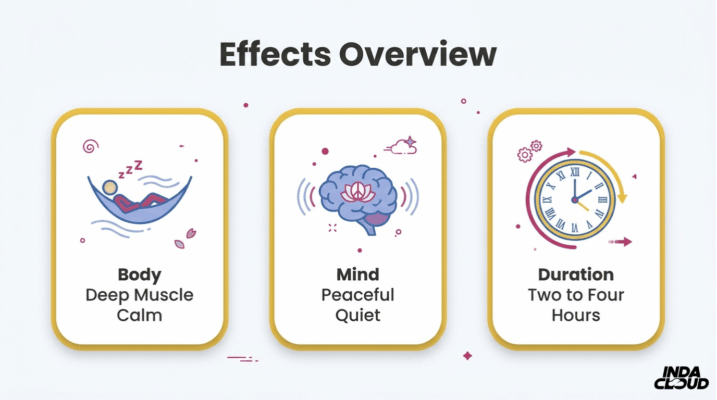
Aurora Indica affects the body by delivering deep, full-spectrum physical relaxation. According to Leafly, this strain induces heavy full-body effects that settle into the muscles and limbs, often leaving users couch-locked. The sensation typically begins as a warm heaviness in the extremities before spreading throughout the entire body.
Because Aurora Indica is a 90% indica dominant hybrid, its physical effects lean strongly toward sedation rather than stimulation. Users commonly report:
For anyone seeking evening relief or wind-down support, this physical profile makes Aurora Indica one of the more reliable choices among heavy indicas.
Aurora Indica affects the mind by producing a sedating cerebral calm that quiets racing thoughts without causing confusion. The mental experience is gentle rather than intense, which suits users who want to decompress without feeling overwhelmed.
Notably, Aurora Indica is a “creeper strain.” According to Leafwell, its effects may not feel strong initially but build gradually over time, so a low starting dose is advisable. Once the cerebral effects fully arrive, most users describe a peaceful, hazy contentment. Stress and mental chatter tend to fade as the indica genetics take hold.
This slow onset can catch inexperienced users off guard. Starting small and waiting at least 20 to 30 minutes before increasing consumption helps avoid overconsumption.
The effects of Aurora Indica typically last two to four hours when smoked or vaped, though individual factors can extend or shorten that window. Variables such as tolerance, consumption method, and dosage all influence duration.
Because this strain’s creeper onset delays the peak by 15 to 30 minutes, the total experience from first inhalation to full fade can stretch longer than faster-hitting strains. Edible forms containing Aurora Indica genetics may produce effects lasting six hours or more due to slower metabolization.
The residual drowsiness and body heaviness often linger after the primary high subsides, which is worth planning around if you have responsibilities ahead. Understanding this timeline helps set expectations before exploring Aurora Indica’s reported medical applications.
Aurora Indica offers a distinct experience depending on tolerance level. Beginners should approach this strain cautiously, while experienced users can lean into its heavy indica effects more confidently.
Aurora Indica is a “creeper strain,” meaning its effects may not feel strong initially but build over time. According to Leafwell, this delayed onset suggests a low starting dose for newcomers. With THC levels ranging from 12% to 20%, potency varies by phenotype, so even seasoned users should gauge each batch. Beginners risk overconsumption if they redose too early, which can trigger reported adverse effects such as paranoia, dizziness, and dry mouth.
For experienced indica users, Aurora Indica’s heavy full-body sedation and cerebral calm deliver exactly what a 90% indica dominant hybrid promises. Higher-tolerance consumers can settle into its relaxing effects without being caught off guard by the gradual onset. Beginners benefit most from starting with a single small dose and waiting at least 30 minutes before considering more. This patience-first approach is especially important given that too much THC can elevate anxiety rather than relieve it. Understanding your tolerance transforms Aurora Indica from potentially overwhelming into a deeply relaxing experience.
The common medical uses of Aurora Indica include relief from insomnia, chronic pain, stress, anxiety, and appetite loss. Each condition benefits from this strain’s heavy indica profile in specific ways.

Yes, Aurora Indica can help with insomnia and sleep issues. THC stimulates the release of adenosine, a sleep neurotransmitter that promotes drowsiness and helps users fall asleep faster. According to research published by the National Library of Medicine, acute THC administration decreases REM sleep and increases slow wave sleep, the deepest and most restorative sleep stage. A clinical trial also found that smoked cannabis improved subjective sleep quality in patients with neuropathic pain. One important consideration often overlooked: cannabis withdrawal can trigger sleep disturbances and vivid dreams persisting up to 6 to 7 weeks in heavy users. For this reason, consistent, moderate use tends to produce better long-term sleep outcomes than sporadic heavy sessions.
Aurora Indica relieves chronic pain through its combination of THC, CBD, and the terpene beta-caryophyllene, all of which possess analgesic and anti-inflammatory properties. According to a study published by the National Library of Medicine, inhaled cannabis containing 6% THC and 11% CBD relieved pain in 67.2% of patients and eliminated pain completely in 34.5% within two hours. For anyone dealing with persistent discomfort, this strain’s heavy body effects make it one of the more practical indica options for evening pain management.
Aurora Indica is effective for stress and anxiety because cannabis contains many anxiolytic compounds that reduce the production of the stress hormone cortisol. The strain’s sedating cerebral calm, driven by its indica-dominant genetics, quiets racing thoughts while relaxing tense muscles. Moderate dosing is essential here; smaller amounts tend to ease anxiety, while overconsumption can have the opposite effect. For most users seeking stress relief, starting low and increasing gradually yields the most consistent results.
Yes, Aurora Indica can help with appetite loss. THC stimulates the production of ghrelin, the hunger hormone responsible for signaling the brain to eat. According to Leafwell, Aurora Indica has been known to alleviate loss of appetite, insomnia, anxiety, pain, and symptoms associated with chronic fatigue syndrome. This broad therapeutic profile makes Aurora Indica a versatile choice for patients managing multiple overlapping conditions at once.
Beyond appetite stimulation, understanding side effects helps set realistic expectations before use.
The potential side effects of Aurora Indica include dry mouth, dry eyes, thirst, dizziness, and paranoia. Most reactions are mild and dose-dependent, but understanding THC sensitivity and starting low helps minimize discomfort.
According to Leafwell, reported adverse effects of Aurora Indica include thirst, dry eyes, paranoia, dizziness, and dry mouth. These are common across many indica-dominant strains and typically intensify at higher doses. Because Aurora Indica is a creeper strain whose effects build gradually, overconsumption is a real risk for users who dose again too quickly.
Too much THC can also elevate anxiety rather than relieve it, which is particularly counterproductive for those using this strain specifically for stress management. A smaller dosage is often needed to stay within the therapeutic window. Additionally, a University of Pennsylvania study found that participants who began using marijuana before age 15 doubled their risk of developing a sleeping disorder as an adult, a consideration worth noting given Aurora Indica’s popularity as a sleep aid.
For most users, the key to avoiding side effects is simple: start with a low dose, wait at least 30 minutes before consuming more, and stay hydrated throughout the session. With proper dosing, Aurora Indica’s side effect profile remains manageable compared to higher-THC strains.
Aurora Indica compares favorably to other indica strains, sharing deep relaxation effects with its parent genetics while differing in sedation intensity and pain relief. The following comparisons cover Northern Lights, Afghan Kush, and Granddaddy Purple.
Aurora Indica compares to Northern Lights as a direct descendant; it is an F1 hybrid of Afghan and Northern Lights. Both strains deliver 100% relaxed effects, making them nearly interchangeable for evening wind-down sessions. The key difference lies in sedation: according to Compare The Strain, Northern Lights produces 68% sleepy effects compared to Aurora Indica’s 65%. That small gap means Northern Lights may push users toward sleep slightly faster. Aurora Indica, with its marginally lighter sedation, can feel more versatile for those who want relaxation without immediately drifting off. For anyone already familiar with Northern Lights, Aurora Indica offers a very similar profile with a touch more functional calm.
Aurora Indica compares to Afghan Kush with near-identical relaxation and stress relief but notable differences in pain management. Both strains produce 100% relaxed effects and 100% stress relief. According to Compare The Strain, Afghan Kush delivers 83% pain relief compared to Aurora Indica’s 75%. This makes Afghan Kush the stronger option for users prioritizing physical discomfort. Aurora Indica, however, inherits Afghan genetics alongside Northern Lights influence, which adds a slightly more balanced cerebral component. For pure body-focused relief, Afghan Kush holds the edge; for a blend of mental calm and physical relaxation, Aurora Indica is the more well-rounded choice.
Aurora Indica compares to Granddaddy Purple with matched relaxation but significant differences in potency and sedation. Both strains show 100% relaxed effects. However, Granddaddy Purple carries a THC level of 20–27%, considerably higher than Aurora Indica’s typical range. Granddaddy Purple also produces 77% sleepy effects versus Aurora Indica’s 65%, according to Compare The Strain. That combination of higher THC and stronger sedation makes Granddaddy Purple better suited for experienced users seeking heavy nighttime relief. Aurora Indica, with its gentler potency and lighter sleepiness, remains the more approachable option for those easing into deep indica effects.
With these strain differences in mind, choosing the right indica product starts with understanding your desired experience.
The best conditions for growing Aurora Indica include warm daytime temperatures, controlled humidity, and compact indoor setups. The sections below cover indoor versus outdoor growing, flowering time, and expected yields.

Aurora Indica grows better indoors, where its compact size and forgiving nature are best utilized. According to JointCommerce, Aurora Indica is unusually forgiving and compact, ideal for small tents and cabinet grows. Plants reach only 30 to 40 inches tall, making them perfectly suited for the sea of green (SOG) method.
Key indoor growing conditions include:
Outdoor cultivation also works well. In colder climates, plants turn purple and produce dark purple buds, adding visual appeal to the harvest.
The flowering time for Aurora Indica typically ranges from 7 to 9 weeks indoors. According to JointCommerce, many phenotypes finish around week 8 under standard 12/12 lighting. Some sources note a slightly wider window of 9 to 11 weeks depending on the specific phenotype and environmental conditions, so monitoring trichome development remains essential for timing the harvest correctly. This relatively short bloom period makes Aurora Indica one of the faster-finishing indica varieties available, which is particularly valuable for growers running multiple cycles per year.
The yields from Aurora Indica plants are generous for such a compact strain. According to MedicalSeeds.cz, indoor yields can reach 550 g/m² (1.8 oz per square foot) in a SOG setup, while outdoor plants can produce 650 grams (22 oz) per plant without training.
Several factors influence final output:
For a strain that stays under 40 inches, these numbers represent exceptional productivity per square foot. With Inda Cloud offering a range of lab-tested indica products, exploring this strain’s profile can help guide your next purchase.
You can find lab-tested indica products online by shopping with retailers that publish third-party lab reports and ship hemp-derived products legally under the 2018 Farm Bill. The sections below cover Inda Cloud’s delivery options and a final recap of Aurora Indica’s profile.
Yes, Inda Cloud offers hemp-derived indica options for delivery across the continental United States. All Inda Cloud products contain less than 0.3% Delta-9 THC, making them 100% federally legal under the 2018 Farm Bill, which removed hemp from the Controlled Substances Act. The product lineup includes indica flower, pre-rolls, vapes, and edibles, each backed by comprehensive third-party lab testing.
Inda Cloud ships orders within 48 hours in nondescript packaging, with free shipping on orders over $89. Every batch comes with accessible lab reports verifying cannabinoid potency and purity. For anyone interested in indica-dominant experiences like those associated with Aurora Indica, Inda Cloud provides a convenient, transparent alternative to traditional dispensaries.
The key takeaways about Aurora Indica’s effects and origins center on its pure indica heritage and deeply sedating profile. Nirvana Seeds bred this 90% indica hybrid by crossing Afghan and Northern Lights, producing a compact plant with dense, resin-coated buds.
Aurora Indica delivers heavy full-body relaxation paired with sedating cerebral calm. Its terpene profile, led by myrcene and beta-caryophyllene, reinforces those calming, anti-inflammatory qualities. THC levels range from 12% to 24% depending on the phenotype, while CBD remains low. Users commonly turn to this strain for insomnia, chronic pain, stress, and appetite loss.
As a creeper strain, Aurora Indica rewards patience and a low starting dose. For those seeking lab-tested, hemp-derived indica products that capture similar relaxation benefits, Inda Cloud delivers directly to your door.
Yes, THC gummies are legal to buy in most of the United States right…
Learn more

Raw, unheated THCA clears your system in roughly 24 to 48 hours. Once you…
Learn more

Yes, edibles show up on drug tests. Standard panels detect THC edibles exactly the…
Learn more

Green Wednesday is the Wednesday before Thanksgiving, the cannabis industry’s second-biggest shopping day of…
Learn more
