


THCA

How Long Does THCA Stay in Your System?
Raw, unheated THCA clears your system in roughly 24 to 48 hours. Once you…
Learn more
You must be 21+ to enter this site
 FREE SHIPPING $89+
 FREE GIFT ON $120+
 100% FEDERALLY LEGAL
 LAB TESTED FOR PURITY
FREE SHIPPING $89+
FREE GIFT ON $120+
100% FEDERALLY LEGAL
LAB TESTED FOR PURITY
FREE SHIPPING $89+
FREE GIFT ON $120+
100% FEDERALLY LEGAL
LAB TESTED FOR PURITY
FREE SHIPPING $89+
FREE GIFT ON $120+
100% FEDERALLY LEGAL
LAB TESTED FOR PURITY
FREE SHIPPING $89+
FREE GIFT ON $120+
100% FEDERALLY LEGAL
LAB TESTED FOR PURITY
FREE SHIPPING $89+
FREE GIFT ON $120+
100% FEDERALLY LEGAL
LAB TESTED FOR PURITY
FREE SHIPPING $89+
FREE GIFT ON $120+
100% FEDERALLY LEGAL
LAB TESTED FOR PURITY
FREE SHIPPING $89+
FREE GIFT ON $120+
100% FEDERALLY LEGAL
LAB TESTED FOR PURITY
LAB TESTED FOR PURITY
FREE SHIPPING $89+
FREE GIFT ON $120+
100% FEDERALLY LEGAL
LAB TESTED FOR PURITY
FREE SHIPPING $89+
FREE GIFT ON $120+
100% FEDERALLY LEGAL
LAB TESTED FOR PURITY
FREE SHIPPING $89+
FREE GIFT ON $120+
100% FEDERALLY LEGAL
LAB TESTED FOR PURITY
FREE SHIPPING $89+
FREE GIFT ON $120+
100% FEDERALLY LEGAL
LAB TESTED FOR PURITY
FREE SHIPPING $89+
FREE GIFT ON $120+
100% FEDERALLY LEGAL
LAB TESTED FOR PURITY
FREE SHIPPING $89+
FREE GIFT ON $120+
100% FEDERALLY LEGAL
LAB TESTED FOR PURITY
FREE SHIPPING $89+
FREE GIFT ON $120+
100% FEDERALLY LEGAL
LAB TESTED FOR PURITY

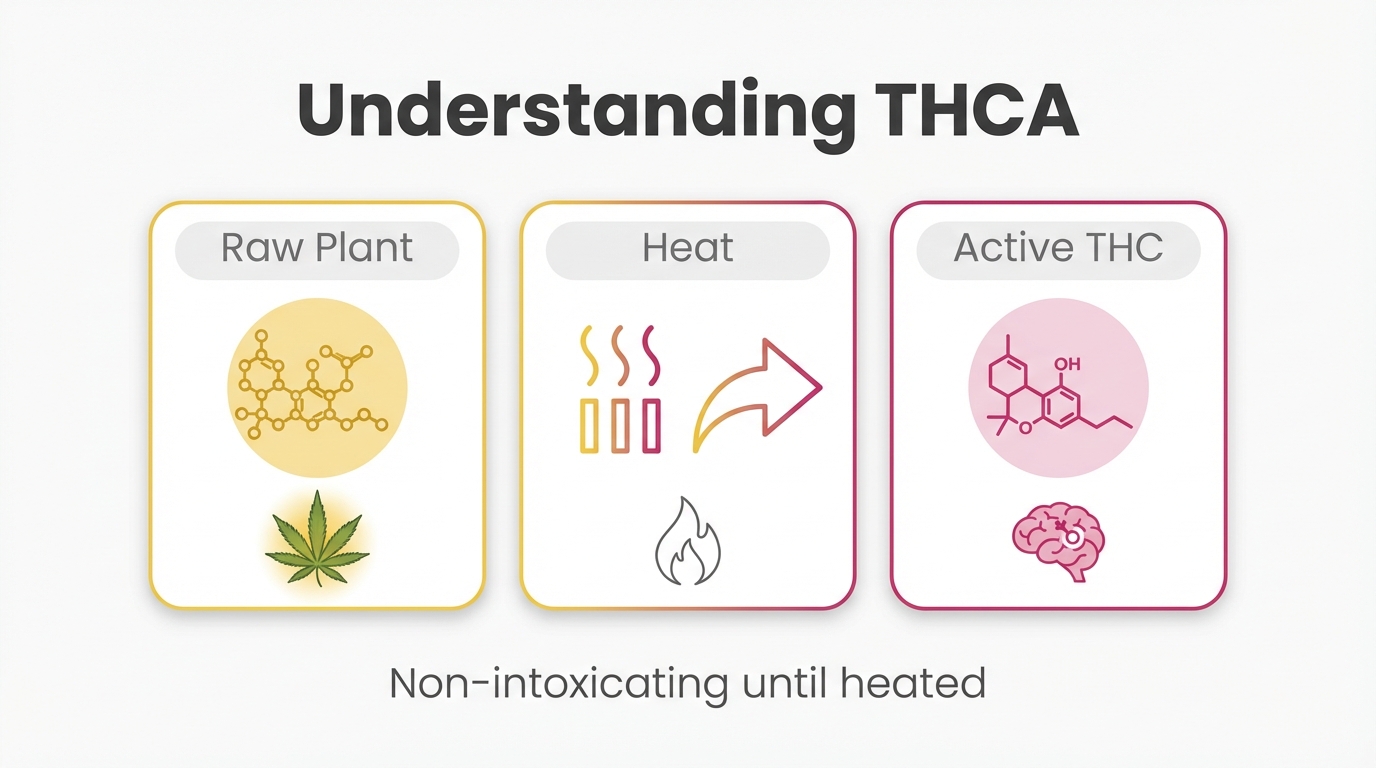
THCA (tetrahydrocannabinolic acid) is a non-intoxicating cannabinoid found naturally in raw cannabis and hemp plants. It serves as the chemical precursor to delta-9 THC, converting into the psychoactive compound only when heat is applied through a process called decarboxylation.
This guide covers the science behind THCA and how it differs from THC, what “THCA infused” means across product types, therapeutic benefits supported by preclinical research, the effects of raw versus heated consumption, available product formats, and legal and quality considerations for buyers in the United States.
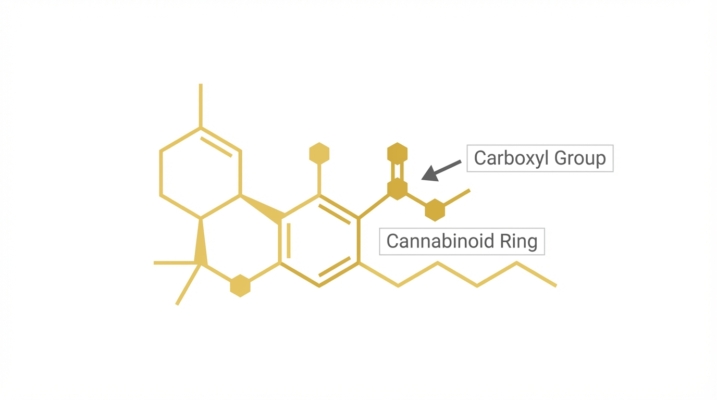
THCA is defined by the molecular formula C₂₂H₃₀O₄ and carries an extra carboxyl group that prevents it from binding CB1 receptors, which is why it produces no high in its raw state. Once that carboxyl group is removed by heat, the molecule becomes active delta-9 THC.
“THCA infused” describes products enhanced with concentrated THCA beyond natural levels. In flower, this involves coating hemp buds with THCA isolate or diamonds. In edibles, manufacturers blend raw extract at low temperatures to preserve the acid form. Whether the product causes intoxication depends entirely on whether heat is applied during consumption.
Preclinical research has identified anti-inflammatory, neuroprotective, and antiemetic properties in THCA. Laboratory findings show it suppresses COX-1, COX-2, and TNF-α inflammatory markers, while separate studies highlight potent neuroprotective activity relevant to conditions like Huntington’s disease.
Product options range from raw flower and pre-rolls to vapes, edibles, and crystalline concentrates; each delivers different onset times and bioavailability profiles. IndaCloud offers lab-tested options across all these product categories, with third-party Certificates of Analysis available for every batch to verify potency and purity. Federal legality under the 2018 Farm Bill hinges on delta-9 THC content below 0.3%, though state-level regulations vary. Verifying third-party lab testing, reading Certificates of Analysis, and confirming U.S.-grown hemp sourcing remain the most reliable ways to ensure product quality and compliance.
THCA is a naturally occurring cannabinoid acid found in raw cannabis and hemp plants. It serves as the chemical precursor to delta-9 THC. The sections below cover its molecular structure, the decarboxylation process, and the key differences between THCA and THC.
The chemical structure of THCA is defined by the molecular formula C₂₂H₃₀O₄ and a molecular weight of 358.5 g/mol, according to the National Center for Biotechnology Information. Its IUPAC name is (6aR,10aR)-1-hydroxy-6,6,9-trimethyl-3-pentyl-6a,7,8,10a-tetrahydro-6H-benzo[c]chromene-2-carboxylic acid. What distinguishes THCA from THC at the molecular level is a carboxyl group (COOH) attached to the cannabinoid ring system. This additional carboxylic acid group prevents THCA from binding efficiently to CB1 receptors in the brain, which is why raw THCA does not produce psychoactive effects. When that carboxyl group is removed through heat, the molecule becomes delta-9 THC.
THCA converts to THC through decarboxylation, a heat-driven chemical reaction that removes the carboxyl group from the THCA molecule, releasing carbon dioxide and yielding active delta-9 THC. This process occurs when cannabis is smoked, vaped, or baked into edibles. Even prolonged exposure to sunlight or room-temperature storage can trigger slow, partial conversion over time.
This transformation carries significant legal implications. Under the 2018 Farm Bill, hemp-derived products containing less than 0.3% delta-9 THC are federally legal, yet the legislation does not explicitly address THCA, as reported by Recovered.org. Because THCA readily converts to THC when heated, some states regulate it differently, creating varying legal interpretations across the country.
The difference between THCA and delta-9 THC centers on molecular structure, psychoactivity, and how each compound interacts with the body’s endocannabinoid system. Key distinctions include:
For consumers exploring THCA products, this distinction matters most at the point of consumption: raw THCA stays non-intoxicating, while any form of heating initiates the conversion to psychoactive THC. Understanding this relationship helps inform both product selection and dosing expectations.
THCA infused refers to a product that has been enhanced with concentrated tetrahydrocannabinolic acid beyond its natural levels. The infusion process, psychoactive potential, and product type vary significantly depending on the format.
THCA is infused into hemp flower by coating or saturating compliant hemp buds with concentrated THCA extract. Producers typically spray or dust the flower with THCA isolate, diamonds, or distillate, raising the total THCA content well above what the plant produces naturally. Some methods also involve dipping buds in liquid concentrate and then rolling them in crystalline THCA powder for maximum potency. According to a 2026 industry report covered by Yahoo Finance, growing consumer interest in THCA flower has driven demand for strain-specific products and transparent lab testing. This trend reflects a market that increasingly values knowing exactly how infused flower is produced and verified.
THCA is infused into edibles and concentrates by blending raw, unheated THCA extract directly into the product formulation. For edibles, manufacturers mix THCA isolate or crystalline into ingredients at low temperatures to prevent decarboxylation, preserving the acid form. Concentrates like diamonds and live resin naturally retain high THCA levels through cold extraction processes that avoid heat exposure. The critical distinction is temperature control; any heat applied during production converts THCA into psychoactive THC. Products labeled “THCA infused” in the edible category are specifically designed to deliver the cannabinoid in its raw, non-intoxicating state.
THCA infused does not automatically mean the product will get you high. THCA in its raw form is non-intoxicating because it cannot efficiently bind to CB1 receptors in the brain. However, the method of consumption determines whether intoxication occurs. Smoking, vaping, or cooking THCA flower applies heat, triggering decarboxylation that converts THCA into delta-9 THC. Once converted, the resulting THC produces psychoactive effects. Raw consumption of THCA edibles or tinctures, by contrast, typically does not cause a high. For most consumers, the deciding factor is simple: if you heat it, expect psychoactive effects; if you consume it raw, expect non-intoxicating benefits.
With a clear understanding of what THCA infused means, exploring its specific benefits reveals why this cannabinoid has gained such attention.
The benefits of THCA span anti-inflammatory support, nausea relief, neuroprotection, and pain management. Below, each benefit is explored with the research behind it.
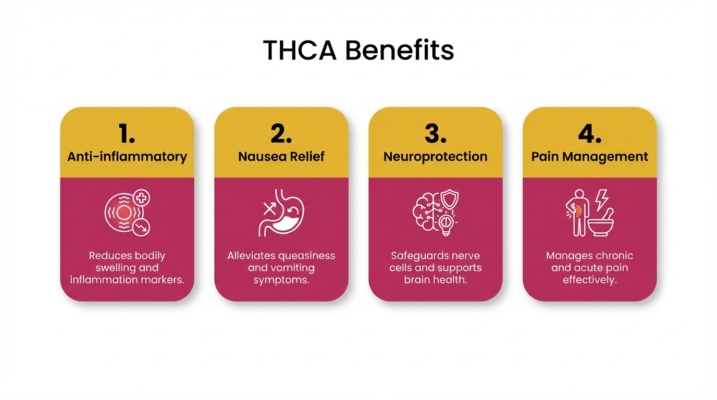
THCA supports anti-inflammatory responses by suppressing key enzymes and signaling molecules that drive inflammation. Early laboratory studies found that THCA reduced levels of COX-1 and COX-2 inflammatory enzymes, along with cytokines like interleukin-2 and interleukin-8. THCA also inhibited TNF-α, a major inflammatory messenger linked to conditions such as rheumatoid arthritis, in a dose-dependent manner, according to research published by DNA Genetics. Because this cannabinoid works through multiple inflammatory pathways simultaneously, it represents one of the more promising raw cannabis compounds for those exploring natural approaches to managing chronic inflammation.
THCA can help with nausea and appetite regulation based on preliminary preclinical findings. Researchers have observed that acidic cannabinoids, including THCA, interact with serotonin receptors involved in nausea signaling. While much of the robust clinical data centers on THC’s well-documented antiemetic effects, THCA’s ability to suppress pro-inflammatory compounds like COX-2 and interleukin-8 may also play a supporting role in gut comfort. For individuals who want potential relief without psychoactive effects, consuming raw or unheated THCA products offers a practical option worth discussing with a healthcare provider.
THCA offers neuroprotective properties supported by preclinical evidence. According to a study published in PubMed, Δ9-THCA shows potent neuroprotective activity worth considering for the treatment of Huntington’s disease and possibly other neurodegenerative and neuroinflammatory diseases. This protective mechanism appears to involve PPARγ receptor activation, which helps regulate inflammation within the central nervous system. For anyone exploring cannabinoid-based wellness, THCA’s neuroprotective profile makes it a compound that deserves closer attention as research continues to evolve.
THCA might contribute to pain management through its combined anti-inflammatory and neuromodulatory activity. By reducing inflammatory enzymes like COX-1 and COX-2, THCA addresses one of the underlying biological drivers of pain sensation. Its interaction with PPARγ and CB1 receptor pathways, observed in preclinical arthritis models, further suggests relevance for inflammatory pain conditions. Although large-scale human clinical trials remain limited, the existing preclinical evidence positions THCA as a cannabinoid with meaningful potential for individuals seeking non-intoxicating alternatives within a broader pain management strategy.
With these therapeutic properties in mind, understanding how THCA behaves when consumed raw provides additional context.
The effects of THCA when consumed raw are non-intoxicating, since the cannabinoid retains its acidic form and does not produce a high. Raw consumption preserves THCA’s natural properties, which include anti-inflammatory, neuroprotective, and appetite-supporting potential. Without heat, THCA never converts to delta-9 THC, so the body processes it differently than smoked or vaped cannabis.
Raw THCA consumption typically involves methods that avoid decarboxylation:
Because THCA does not bind strongly to CB1 receptors in its raw form, users experience functional benefits without cognitive impairment. According to Primary Jane, the delivery method significantly impacts absorption: oral edibles have a bioavailability of 6%–20%, while sublingual drops reach 20%–50%. This means raw consumers may need higher amounts to achieve noticeable effects compared to heated methods.
For those interested in wellness-oriented cannabinoid use, raw THCA represents a practical option. The compound’s anti-inflammatory activity and neuroprotective potential remain available without psychoactive side effects, making it especially appealing for daytime use or for individuals who want to avoid intoxication entirely. Understanding how heating changes these effects reveals why consumption method matters so much.
The effects of THCA when heated or smoked are psychoactive, because heat triggers decarboxylation and converts THCA into delta-9 THC. This conversion is what produces the euphoric, intoxicating experience commonly associated with cannabis use.
When THCA flower or a THCA concentrate is exposed to flame, vaporizer heat, or oven temperatures, the carboxyl group detaches from the THCA molecule. The resulting compound, delta-9 THC, binds directly to CB1 receptors in the brain and central nervous system. This binding activates the endocannabinoid system and produces effects that range from relaxation and mood elevation to altered sensory perception and increased appetite.
The intensity of these effects depends on several factors:
According to Primary Jane, vaping THCA products yields a bioavailability of 30% to 70%, meaning the body absorbs a substantial portion of the converted THC through inhalation. Oral consumption after heating, by contrast, delivers only 6% to 20% bioavailability due to first-pass liver metabolism.
For anyone accustomed to raw THCA products, this distinction matters. A product labeled “THCA infused” will behave very differently once heat is applied; the non-intoxicating cannabinoid becomes fully psychoactive THC. Starting with a low dose and choosing a delivery method that matches your experience level helps manage the intensity of these effects. Understanding decarboxylation is essential before selecting any THCA product type.
The different types of THCA products include flower, pre-rolls, vapes, edibles, and concentrates. Each format offers a distinct consumption method, onset time, and bioavailability profile.
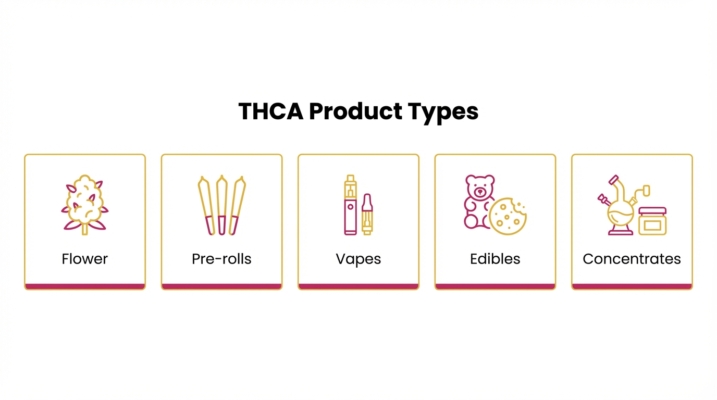
THCA flower is raw, cured cannabis bud that contains high levels of tetrahydrocannabinolic acid in its natural, non-decarboxylated state. When stored properly, the cannabinoid remains acidic and non-intoxicating. Smoking or vaporizing the flower applies heat, converting THCA into delta-9 THC and producing psychoactive effects. Consumers often select THCA flower by strain type, choosing indica, sativa, or hybrid varieties based on desired outcomes. Strain-specific products with transparent lab testing have driven growing consumer interest, according to a 2026 industry report highlighted by Yahoo Finance. Shoppers looking to stock up can explore bulk THCA hemp flower options that deliver the same strain-specific quality at a larger scale. For those who prefer convenience over grinding and packing, pre-rolls offer a ready-made alternative.
THCA pre-rolls are pre-ground, pre-rolled joints filled with THCA-rich hemp flower. They eliminate preparation steps, making them ideal for on-the-go use. Each pre-roll delivers the same cannabinoid profile as loose flower since the starting material is identical. Once lit, heat triggers decarboxylation, converting THCA to THC during inhalation. Pre-rolls are typically available in strain-specific options, allowing users to choose effects that match their preferences. Quality varies between brands, so verifying third-party lab results on the specific batch ensures accurate potency and purity.
IndaCloud provides comprehensive third-party lab testing for all pre-rolls, with batch-specific COAs accessible through their website to help customers verify exactly what they’re consuming.
THCA vapes are cartridges or disposable pens containing concentrated THCA extract that converts to THC upon heating. The cannabis vaporizer market was valued at an estimated $6.6 billion in 2024 and is expected to grow significantly by 2035, according to The Cannabis Industry. Vaping delivers cannabinoids with notably high bioavailability, ranging from 30% to 70%, which means faster onset and more efficient absorption compared to oral methods. Because the extract is concentrated, vapes typically produce stronger effects per puff than flower. Precise temperature control in quality vape hardware helps preserve terpene profiles while ensuring thorough decarboxylation.
THCA edibles are food products infused with tetrahydrocannabinolic acid, available as gummies, baked goods, and other ingestible formats. When consumed without prior decarboxylation, these edibles deliver THCA in its raw, non-intoxicating form. However, some edibles are formulated so that cooking or digestion partially converts THCA to THC. Oral bioavailability for cannabinoids ranges from 6% to 20%, resulting in slower onset but longer-lasting effects compared to inhalation methods. This lower absorption rate means precise dosing matters; starting with a small serving and waiting at least 60 to 90 minutes before increasing helps avoid overconsumption.
THCA concentrates and diamonds are highly purified extracts containing crystalline tetrahydrocannabinolic acid at potencies often exceeding 90%. THCA hemp diamonds are crystalline structures that form during extraction, while broader concentrate categories include live resin, badder, and sauce. These products are typically consumed through dabbing, which applies intense heat to convert THCA into THC almost instantaneously. Because of their extreme potency, concentrates are best suited for experienced consumers with established tolerance levels. Pairing diamonds with terpene-rich sauce can enhance the entourage effect, delivering a fuller spectrum of flavor and cannabinoid interaction.
With a clear understanding of available product types, knowing how to verify quality and legality becomes the next essential step.
THCA occupies a gray area in federal law. Its legality depends on how regulations classify hemp-derived cannabinoids and how individual states interpret those rules. The sections below cover the Farm Bill’s role and drug testing implications.
The 2018 Farm Bill affects THCA legality by legalizing hemp-derived products that contain less than 0.3% delta-9 THC on a dry weight basis. However, the legislation does not explicitly address THCA, which converts into THC through decarboxylation when heated. According to Recovered.org, this ambiguity allows some states to regulate THCA differently, leading to varying legal interpretations across the country.
Because federal law measures only delta-9 THC concentration, raw THCA flower can test below the 0.3% threshold while containing high levels of THCA. Some states have closed this gap by adopting “total THC” testing, which accounts for the potential conversion. Consumers should always verify their state’s specific regulations before purchasing any THCA product.
IndaCloud ships 100% federally legal hemp-derived products containing less than 0.3% delta-9 THC to customers across the continental United States, though buyers remain responsible for confirming compliance with their local state laws.
THCA can show up on a drug test once it converts to THC in the body. Standard urine drug screens detect THC-COOH, the primary metabolite produced after THC is processed by the liver. Since smoking, vaping, or cooking THCA triggers decarboxylation, consuming heated THCA products generates the same metabolite that a conventional cannabis test identifies.
Even raw THCA consumption carries some risk, because small amounts of conversion can occur during digestion or storage. For anyone subject to workplace or legal drug screening, this distinction matters significantly. The safest assumption is that regular use of any THCA product, whether heated or raw, may produce a positive result.
Understanding legal status and testing risks helps you evaluate THCA products with greater confidence before making a purchase.
You choose a high-quality THCA product by verifying third-party lab testing, reading the certificate of analysis, and confirming U.S.-grown hemp sourcing. These three factors separate reliable products from inconsistent ones.
Third-party lab testing matters for THCA because it provides independent verification of a product’s cannabinoid content, purity, and safety. Unlike in-house testing, an accredited outside laboratory has no financial incentive to alter results.
A 2026 industry report highlighted growing consumer interest in THCA flower, with a particular focus on strain-specific products and transparent lab testing, according to Yahoo Finance. This trend reflects a market where buyers increasingly demand proof before purchasing.
Third-party testing screens for:
Products sold without independent lab results should be avoided entirely, regardless of price or branding claims.
You should look for several key data points on a THCA certificate of analysis (COA) to confirm product quality. A legitimate COA is issued by an ISO-accredited laboratory and tied to a specific product batch.
Essential elements to verify include:
If any of these elements are missing, or if the COA cannot be matched to the specific product batch, that is a significant red flag. Trustworthy brands make COAs easy to find on their websites.
Sourcing from U.S.-grown hemp affects quality by ensuring the plant material meets federal agricultural standards and regulatory oversight. Hemp cultivated in the United States falls under the 2018 Farm Bill framework, which requires compliance with state hemp programs, licensed cultivation, and delta-9 THC limits below 0.3%.
Domestically grown hemp benefits from:
Imported hemp, by contrast, often lacks equivalent regulatory oversight, making potency and purity harder to verify. For consumers prioritizing consistency and safety, U.S.-sourced hemp remains the most reliable foundation for any THCA product.
With quality indicators established, knowing where to find verified THCA products simplifies the buying process.
You can find lab-tested THCA products online by shopping with brands that publish third-party Certificates of Analysis and source U.S.-grown hemp. The sections below cover Inda Cloud’s product lineup and the key takeaways from this guide.
Yes, IndaCloud offers THCa flower, vapes, and edibles through its online store at indacloud.co. Every product undergoes comprehensive third-party lab testing to verify potency, purity, and compliance with federal hemp regulations. IndaCloud ships directly to consumers across the continental United States, with orders processed within 48 hours.
Browse the full range of lab-tested THCA products available across all categories, including:
Backed by over 250,000 verified customers and a team of 35 cannabis experts, Inda Cloud prioritizes transparent lab reports and nondescript packaging for a discreet, quality-assured experience.
The key takeaways about THCA benefits, effects, and what THCA infused means center on three core points. First, THCA is a non-intoxicating cannabinoid with a molecular formula of C22H30O4 and a molecular weight of 358.5 g/mol, as documented by the National Center for Biotechnology Information. It only produces psychoactive effects after decarboxylation converts it to THC.
Second, early research points to anti-inflammatory and neuroprotective potential, making THCA a cannabinoid worth watching for wellness applications. Third, “THCA infused” means a product has been enriched with concentrated THCA, preserving its raw acidic form until heat is applied. Choosing lab-tested products from transparent retailers remains the most reliable way to ensure safety and accurate potency.
Raw, unheated THCA clears your system in roughly 24 to 48 hours. Once you…
Learn more
THCP binds cannabinoid receptors roughly 33 times harder than THC in lab testing. THCA,…
Learn more
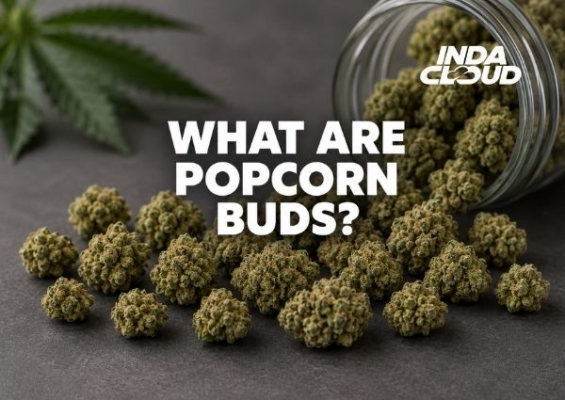
Popcorn buds are small, whole flower pulled out of a harvest and sorted by…
Learn more
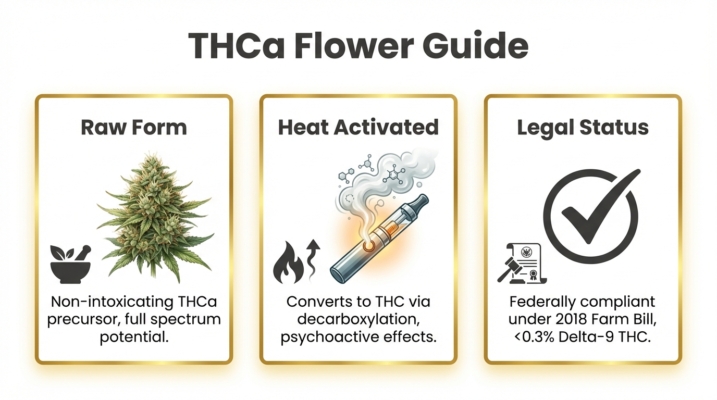
THCA flower keeps best in an airtight glass jar held at 58 to 62%…
Learn more
