


Blogs

Sativa vs Indica vs Hybrid Carts: How to Choose
Sativa, indica, and hybrid tell you what effect a vape cart is marketed toward.…
Learn more
You must be 21+ to enter this site
 FREE SHIPPING $89+
 FREE GIFT ON $120+
 100% FEDERALLY LEGAL
 LAB TESTED FOR PURITY
FREE SHIPPING $89+
FREE GIFT ON $120+
100% FEDERALLY LEGAL
LAB TESTED FOR PURITY
FREE SHIPPING $89+
FREE GIFT ON $120+
100% FEDERALLY LEGAL
LAB TESTED FOR PURITY
FREE SHIPPING $89+
FREE GIFT ON $120+
100% FEDERALLY LEGAL
LAB TESTED FOR PURITY
FREE SHIPPING $89+
FREE GIFT ON $120+
100% FEDERALLY LEGAL
LAB TESTED FOR PURITY
FREE SHIPPING $89+
FREE GIFT ON $120+
100% FEDERALLY LEGAL
LAB TESTED FOR PURITY
FREE SHIPPING $89+
FREE GIFT ON $120+
100% FEDERALLY LEGAL
LAB TESTED FOR PURITY
FREE SHIPPING $89+
FREE GIFT ON $120+
100% FEDERALLY LEGAL
LAB TESTED FOR PURITY
LAB TESTED FOR PURITY
FREE SHIPPING $89+
FREE GIFT ON $120+
100% FEDERALLY LEGAL
LAB TESTED FOR PURITY
FREE SHIPPING $89+
FREE GIFT ON $120+
100% FEDERALLY LEGAL
LAB TESTED FOR PURITY
FREE SHIPPING $89+
FREE GIFT ON $120+
100% FEDERALLY LEGAL
LAB TESTED FOR PURITY
FREE SHIPPING $89+
FREE GIFT ON $120+
100% FEDERALLY LEGAL
LAB TESTED FOR PURITY
FREE SHIPPING $89+
FREE GIFT ON $120+
100% FEDERALLY LEGAL
LAB TESTED FOR PURITY
FREE SHIPPING $89+
FREE GIFT ON $120+
100% FEDERALLY LEGAL
LAB TESTED FOR PURITY
FREE SHIPPING $89+
FREE GIFT ON $120+
100% FEDERALLY LEGAL
LAB TESTED FOR PURITY

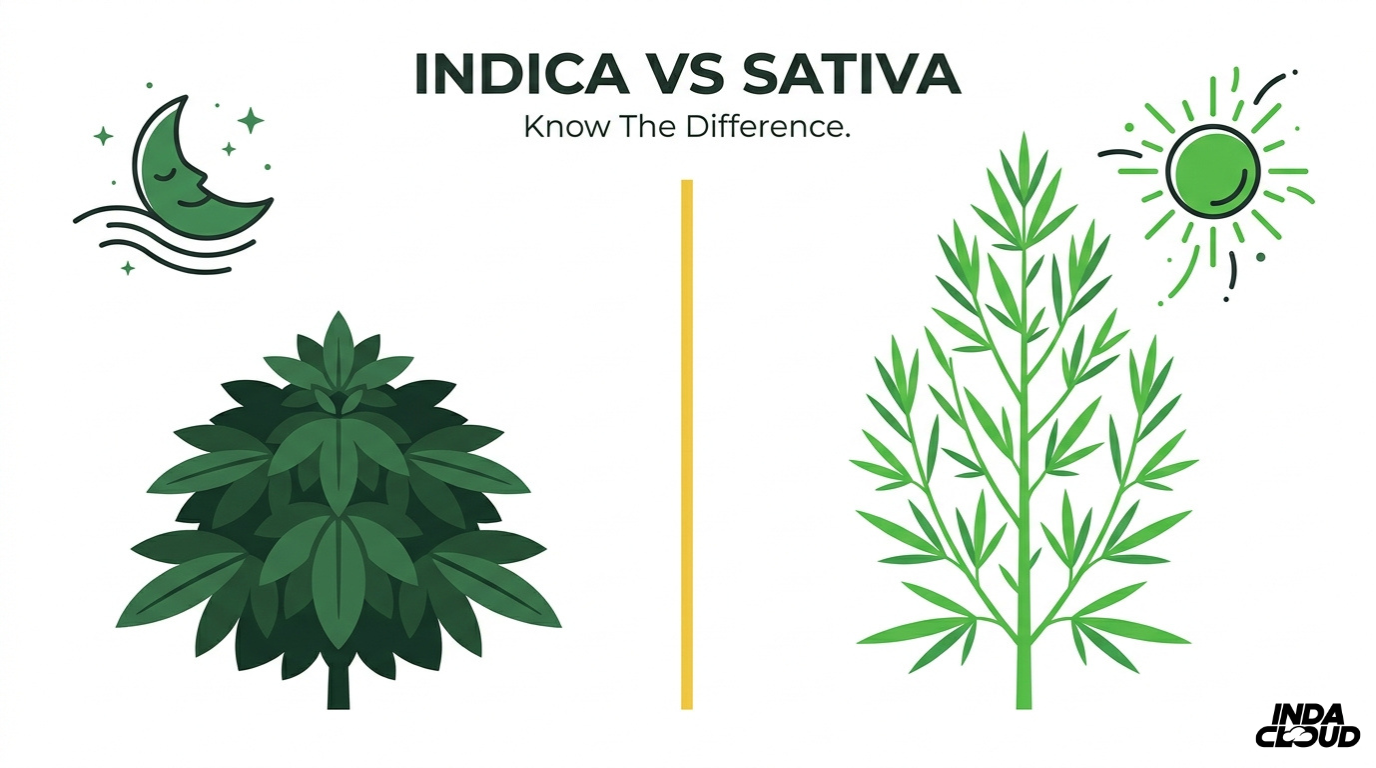
Indica and sativa are the two primary classifications of the Cannabis plant, distinguished by physical structure, reported effects, and chemical composition. Though these labels have guided consumers for decades, modern science reveals that the real story lies in cannabinoids and terpenes rather than plant shape alone.
This guide covers botanical origins and plant morphology, effects across body and mind, cannabinoid and terpene chemistry, the scientific validity of traditional classifications, and practical selection for specific needs.
Indica strains trace back to Lamarck’s 1785 classification of a wild species growing in India, producing short, bushy plants with broad leaves adapted to harsh mountain climates. Sativa varieties, first described by Linnaeus in 1753, grow tall and narrow with longer flowering periods suited to equatorial regions. These structural differences influence everything from leaf shape to bud density and harvest timing.
The effects associated with each type follow distinct patterns. Indica leans toward deep physical relaxation, muscle relief, and sleep support, while sativa promotes cerebral stimulation, creativity, and sustained energy. Each type also responds differently when applied to pain management and anxiety, with individual chemistry playing a significant role in outcomes.
Terpene and cannabinoid profiles offer a more reliable predictor of effects than strain labels. Myrcene-rich strains tend toward sedation; limonene and pinene-dominant profiles skew uplifting. Researchers increasingly advocate for chemotype-based classification over the traditional indica/sativa framework, though the familiar categories still serve as useful starting points.
For those exploring hemp-derived options, effect-based product selection bridges the gap between outdated labels and actual outcomes, helping match specific goals like relaxation or focus to the right cannabinoid and terpene profile.
An indica cannabis strain is a classification of the Cannabis plant historically associated with short, bushy growth and physically relaxing effects. Jean-Baptiste Lamarck first proposed Cannabis indica in 1785 as a wild species growing in India and neighboring countries, distinguishing it from the Western-cultivated Cannabis sativa that Linnaeus had described in 1753, according to a review published in the National Library of Medicine. Plants belonging to the genus Cannabis are likely indigenous to the Asiatic continent, where they preferably grew in wet places and near water bodies. This geographic origin contributed to indica’s compact structure, broad leaves, and dense flower clusters, traits that developed as adaptations to harsher mountain climates. Today, the term “indica” is widely used by consumers and brands to signal products geared toward relaxation, calm, and physical comfort, though modern science increasingly emphasizes chemical profiles over plant morphology when predicting effects.
A sativa cannabis strain is a classification of the Cannabis sativa plant historically associated with tall growth, narrow leaves, and uplifting mental effects. According to the American Herbal Pharmacopoeia, C. sativa L. was historically bred to be tall and is used mainly for fiber and seed. Linnaeus first described Cannabis sativa in Species Plantarum in 1753, establishing it as the original taxonomic classification for hemp cultivated across the Western Continent. Plants belonging to the genus Cannabis are probably indigenous to the Asiatic Continent, where they preferably grew in wet places and near water bodies. Today, the term “sativa” is widely used by consumers and brands to describe strains that produce alert, energized, and motivated feelings, though modern science increasingly emphasizes that a plant’s chemical profile matters more than its physical classification.
Indica and sativa differ in physical appearance across plant height, leaf shape, and growth habit. These visual distinctions trace back centuries to early botanical classifications, though modern science questions their reliability as predictors of chemical content.
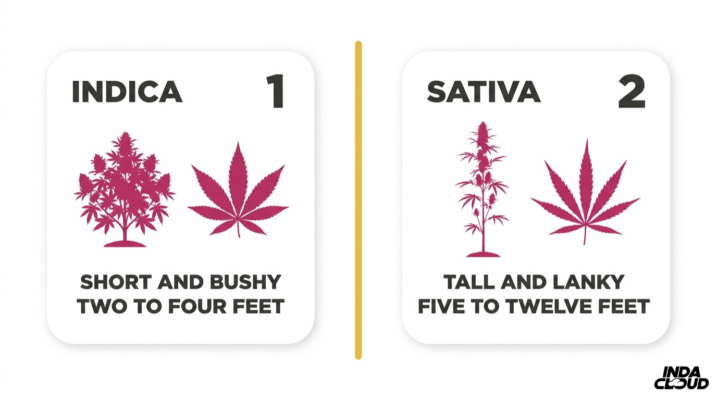
Indica plant structure is short, dense, and bush-like, typically reaching 2 to 4 feet tall with thick stems and tightly clustered branches. Sativa plant structure is tall and lanky, often stretching 5 to 12 feet with long internodal spacing and an open canopy.
This structural distinction has roots in 18th-century taxonomy. Linnaeus described a single species, Cannabis sativa, in Species Plantarum (1753), while Lamarck proposed Cannabis indica in 1785 as a separate wild species growing in India. These geographic origins shaped each plant’s form; indica varieties adapted to harsh mountain climates by staying compact, whereas sativa varieties thrived in equatorial regions where vertical growth captured more light.
Still, visual traits alone have limits. Dr. Ethan Russo noted that “one cannot in any way currently guess the biochemical content of a given Cannabis plant based on its height, branching, or leaf morphology,” a reminder that structure does not reliably predict effects.
Indica and sativa leaves look different primarily in finger width and overall shape. Indica leaves are broad, with short, wide fingers that appear dark green and overlap slightly. Sativa leaves are narrow, with long, thin fingers that spread apart and display a lighter green color.
A mature cannabis leaf typically develops 5 to 7 fingers, though some plants produce up to 13 fingers per leaf. Indica varieties tend toward fewer, wider fingers, while sativa varieties often develop more numerous, slender fingers. This distinction, while visually striking, reflects adaptation to different climates rather than cannabinoid content. Broader leaves maximize light absorption in shorter growing seasons, and narrower leaves allow better airflow in humid tropical environments.
Growth patterns differ between indica and sativa in flowering time, stretch behavior, and overall yield structure. Key differences include:
For growers working indoors, these differences directly influence space planning and harvest scheduling. Understanding how each type fills a canopy helps set realistic expectations for both timeline and output.
The different effects of indica vs sativa span body relaxation, mental stimulation, sleep support, energy levels, pain relief, and anxiety management. The following subsections break down each effect category.
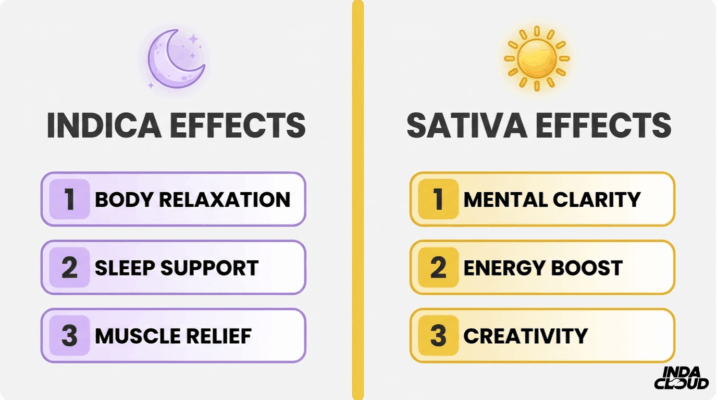
Indica affects your body by producing deep physical relaxation that targets muscles and tension. Users commonly report a heavy, sedating sensation often called “body high,” which can ease muscle tightness and promote stillness. This full-body calming effect makes indica strains a popular evening choice for those looking to physically unwind after a long day. The relaxation tends to settle into the limbs, reducing restlessness and encouraging a slower pace. For anyone seeking physical relief without mental stimulation, indica’s body-focused profile is often the preferred starting point.
Sativa affects your mind by promoting cerebral stimulation, heightened creativity, and a sense of mental clarity. Users frequently describe an uplifting “head high” that sharpens focus and sparks motivation. This makes sativa strains well suited for daytime activities like brainstorming, socializing, or creative projects. Rather than slowing thought processes, sativa tends to accelerate them, often producing feelings of euphoria and engagement. Those who want to stay mentally active while enjoying cannabis typically gravitate toward sativa-dominant options.
Indica and sativa differ for sleep primarily in their sedation profiles. Indica strains promote drowsiness and deep relaxation, making them a common choice for nighttime use. Sativa strains, by contrast, tend to increase alertness and mental activity, which can interfere with falling asleep. According to a 2021 study published in the Journal of Cannabis Research, participants were more likely to perceive feeling “sleepy/tired” or “relaxed” after using indica and “alert,” “energized,” and “motivated” after using sativa. For sleep support, indica’s calming properties consistently outperform sativa’s stimulating tendencies.
Indica and sativa differ for energy and focus in opposite directions. Sativa strains boost energy and sharpen concentration, making them suitable for productive daytime use. Indica strains, however, tend to reduce energy and slow cognitive pace, often leading to a sedentary state. Key distinctions include:
For anyone needing to stay sharp and motivated, sativa is generally the stronger choice.
Indica and sativa differ for pain relief in the type of discomfort they address most effectively. Indica strains target physical pain through deep body relaxation, making them well suited for muscle soreness, tension, and chronic aches. Sativa strains may help with pain that has a strong psychological component, such as discomfort worsened by stress or low mood. The heavy sedation of indica can dull pain perception more directly, while sativa’s mood-elevating properties offer an indirect form of relief. Most users managing significant physical pain tend to favor indica-dominant options for their pronounced body effects.
Indica and sativa differ for anxiety based on the nature of a person’s symptoms. Indica strains reduce anxiety through physical relaxation and sedation, which can quiet racing thoughts tied to bodily tension. Sativa strains, while uplifting for some, may intensify anxiety in sensitive individuals due to their cerebral stimulation. Key considerations include:
Individual response varies significantly, so starting with a low dose of either type is the safest approach when managing anxiety.
The cannabinoid and terpene profiles that distinguish indica from sativa involve differences in THC-to-CBD ratios and dominant terpene compositions. These chemical markers shape each strain’s effects more than plant morphology alone.
THC and CBD ratios differ in indica vs sativa primarily by tendency rather than by fixed rule. Traditional indica strains often carry moderate THC levels paired with slightly higher CBD content, contributing to their reputation for physical relaxation. Sativa strains, by contrast, tend toward higher THC concentrations with minimal CBD, which aligns with their association with cerebral stimulation and alertness.
These ratios are generalizations, not guarantees. Modern breeding has blurred historical patterns considerably. A strain labeled “indica” at a dispensary may contain a THC-to-CBD ratio nearly identical to one labeled “sativa.” Chemotype testing remains the only reliable way to confirm a specific product’s cannabinoid balance. For anyone prioritizing precise ratios, requesting a certificate of analysis is far more useful than relying on indica or sativa labels alone.
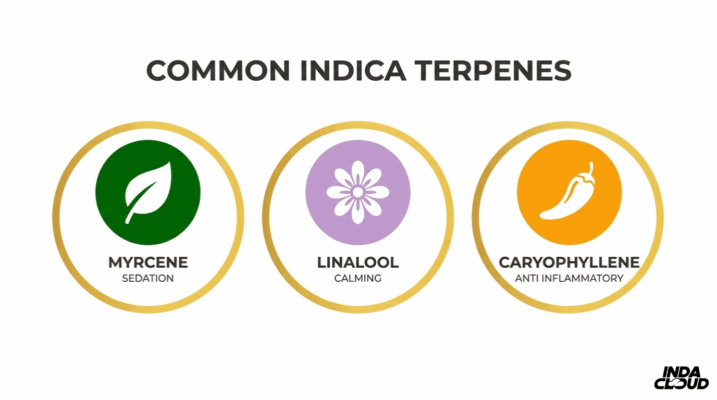
The terpenes most common in indica strains include myrcene, linalool, and beta-caryophyllene. Myrcene is the dominant terpene in many indica-leaning cultivars, producing earthy, musky aromas often associated with sedation and deep physical relaxation. Linalool, also found in lavender, contributes floral notes and calming properties.
Beta-caryophyllene adds a spicy, peppery character to indica profiles. According to a study published in the National Library of Medicine, β-caryophyllene is the only terpene known to interact with the body’s endocannabinoid system by selectively binding to the CB2 receptor. This unique binding activity may contribute to the anti-inflammatory qualities many users associate with indica-dominant strains. Together, these terpenes create the heavy, soothing sensory experience that typifies classic indica cultivars.
The terpenes most common in sativa strains are limonene, pinene, and terpinolene. Limonene produces bright citrus aromas and is linked to mood elevation and stress reduction. Alpha-pinene, recognizable by its sharp pine scent, supports alertness and may improve airflow during inhalation. Terpinolene rounds out many sativa profiles with complex herbal, floral, and slightly fruity notes.
These uplifting terpenes contrast sharply with the heavier myrcene-dominant profiles found in indica cultivars. Their combined presence helps explain why sativa strains are frequently chosen for daytime use, creative activities, and social settings. Still, individual batches vary significantly; checking lab-tested terpene breakdowns provides a much clearer picture than strain classification alone.
Understanding these terpene distinctions makes it easier to select strains based on desired effects rather than outdated labels.
Hybrid strains are cannabis varieties created by crossbreeding indica and sativa parent plants to combine traits from both lineages. Breeders select specific parent strains to target desired characteristics, such as a sativa’s uplifting mental effects paired with an indica’s physical relaxation. Most cannabis available today is technically a hybrid, since decades of crossbreeding have blended genetic lines extensively.
Hybrids are typically classified as indica-dominant, sativa-dominant, or balanced, depending on which parent’s traits are more pronounced. An indica-dominant hybrid tends to lean toward body relaxation with mild cerebral stimulation, while a sativa-dominant hybrid often emphasizes energy and focus with lighter physical effects. Balanced hybrids aim for an even split between the two.
For practical purposes, the hybrid category acknowledges that pure indica and pure sativa varieties are increasingly rare. Terpene and cannabinoid profiles, rather than lineage labels alone, ultimately shape each hybrid’s effects. This is worth keeping in mind when evaluating whether modern strain classification holds up under scientific scrutiny.
Modern science does not fully support the indica vs sativa classification as it is commonly used today. While the terms remain useful for describing general plant morphology, researchers increasingly argue that they fail to predict a strain’s chemical profile or its effects on the user.
The traditional two-species framework dates back centuries. Linnaeus described Cannabis sativa in 1753, and Lamarck proposed Cannabis indica as a separate species in 1785. For generations, this botanical distinction served as the foundation for categorizing cannabis. However, decades of crossbreeding have blurred whatever clear genetic lines once existed between the two groups.
Perhaps the most cited critique comes from neurologist and cannabis researcher Dr. Ethan Russo, who stated: “The sativa/indica distinction as commonly applied in the lay literature is total nonsense and an exercise in futility. One cannot in any way currently guess the biochemical content of a given Cannabis plant based on its height, branching, or leaf morphology.” This perspective, published in a 2016 interview in Cannabis and Cannabinoid Research, reflects a growing consensus among scientists that physical appearance alone tells consumers very little about what a product will actually do.
What modern research supports instead is a chemotype-based classification system. Rather than sorting plants by their shape or geographic origin, this approach categorizes cannabis by its measurable chemical composition, including cannabinoid ratios and terpene concentrations. A strain’s unique blend of compounds like THC, CBD, myrcene, and beta-caryophyllene determines its effects far more reliably than whether someone labels it “indica” or “sativa.”
That said, dismissing the labels entirely may be premature for everyday consumers. The indica and sativa framework, while scientifically imprecise, still provides a practical shorthand that helps people navigate an overwhelming market. The most informed approach combines these familiar categories with attention to lab-tested cannabinoid and terpene data. Understanding how to choose between indica and sativa based on your personal needs makes this knowledge actionable.
You should choose between indica and sativa by matching each strain type’s reported effects to your specific goal. The following subsections cover relaxation, social and creative use, and daytime wellness.
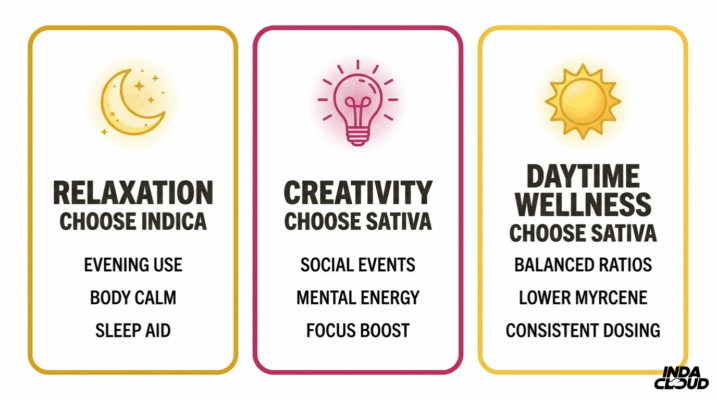
You should choose an indica-dominant strain for relaxation and winding down. A 2021 study published in the National Library of Medicine found that participants were more likely to perceive feeling “sleepy/tired” or “relaxed” after using indica. Strains rich in myrcene above 0.5% tend to amplify this sedating quality, often described as a “couch lock” sensation.
For an evening routine, look for products that emphasize body-calming effects:
If unwinding after a long day is the priority, indica consistently delivers the calming profile most users seek.
You should choose a sativa-dominant strain for socializing and creativity. Sativa strains are associated with feelings of alertness, energy, and motivation, making them well suited for gatherings, conversations, and creative projects. Terpene profiles featuring limonene and pinene often complement this uplifting character, contributing a brighter, more cerebral experience.
Practical considerations include:
For most social settings, starting with a modest dose allows you to gauge the energizing effects before committing further.
You should choose a sativa or sativa-leaning hybrid for daytime wellness. These strains support alertness and focus without the heavy sedation that could interfere with daily responsibilities. Because terpene and cannabinoid profiles vary between products, checking lab results matters more than relying on the label alone.
Key factors for daytime use include:
Choosing by desired effect rather than strain name alone leads to more predictable daytime results, especially as modern research shifts toward chemotype-based selection.
You can explore indica and sativa with hemp-derived products by choosing federally legal options labeled by strain type or desired effect. The sections below cover IndaCloud’s effect-based product selection and key takeaways about indica vs sativa differences.
Yes, IndaCloud’s effect-based product selection can help you find the right strain type by organizing hemp-derived products around desired outcomes rather than botanical labels alone. IndaCloud categorizes its flower, pre-rolls, vapes, and edibles by effects such as relaxation, energy, focus, and sleep, making it straightforward to match a product to a specific need.
This approach aligns well with how cannabinoid science actually works. Because terpene and cannabinoid profiles determine effects more reliably than indica or sativa labels, shopping by desired outcome is often the most practical strategy. IndaCloud offers indica, sativa, and hybrid options across its THCa flower and pre-roll lines, while its edibles and vapes are organized by potency and effect. All products contain less than 0.3% Delta-9 THC, keeping them 100% federally legal.
For anyone still learning the differences between strain types, effect-based browsing removes the guesswork and puts the focus where it matters most: on how the product actually makes you feel.
The key takeaways about indica vs sativa differences center on physical structure, perceived effects, and the growing role of chemical profiles. Indica strains are typically shorter with broad leaves and are associated with relaxation, while sativa strains grow taller with narrow leaves and are linked to energy and focus. However, modern research suggests terpene and cannabinoid content predicts effects more accurately than strain classification alone.
When shopping for hemp-derived products, these practical points matter most:
According to Brightfield Group, hemp-derived THC sales rose from $200 million in 2020 to $3.5 billion in 2024, with forecasts projecting $4.4 billion by 2025. This rapid growth reflects expanding consumer access made possible after the 2018 Farm Bill legalized hemp-derived CBD across all 50 states. Understanding indica and sativa differences gives you a stronger foundation for navigating this expanding market with confidence.
Sativa, indica, and hybrid tell you what effect a vape cart is marketed toward.…
Learn more

When exploring the world of cannabis, understanding the differences between Hybrid and Indica strains…
Learn more
