



Delta 8

Delta 8 vs Delta 9: Complete Comparison
Let’s dive into the worlds of delta 8 and delta 9 THC. Delta 9…
Learn more
You must be 21+ to enter this site
 FREE SHIPPING $89+
 FREE GIFT ON $120+
 100% FEDERALLY LEGAL
 LAB TESTED FOR PURITY
FREE SHIPPING $89+
FREE GIFT ON $120+
100% FEDERALLY LEGAL
LAB TESTED FOR PURITY
FREE SHIPPING $89+
FREE GIFT ON $120+
100% FEDERALLY LEGAL
LAB TESTED FOR PURITY
FREE SHIPPING $89+
FREE GIFT ON $120+
100% FEDERALLY LEGAL
LAB TESTED FOR PURITY
FREE SHIPPING $89+
FREE GIFT ON $120+
100% FEDERALLY LEGAL
LAB TESTED FOR PURITY
FREE SHIPPING $89+
FREE GIFT ON $120+
100% FEDERALLY LEGAL
LAB TESTED FOR PURITY
FREE SHIPPING $89+
FREE GIFT ON $120+
100% FEDERALLY LEGAL
LAB TESTED FOR PURITY
FREE SHIPPING $89+
FREE GIFT ON $120+
100% FEDERALLY LEGAL
LAB TESTED FOR PURITY
LAB TESTED FOR PURITY
FREE SHIPPING $89+
FREE GIFT ON $120+
100% FEDERALLY LEGAL
LAB TESTED FOR PURITY
FREE SHIPPING $89+
FREE GIFT ON $120+
100% FEDERALLY LEGAL
LAB TESTED FOR PURITY
FREE SHIPPING $89+
FREE GIFT ON $120+
100% FEDERALLY LEGAL
LAB TESTED FOR PURITY
FREE SHIPPING $89+
FREE GIFT ON $120+
100% FEDERALLY LEGAL
LAB TESTED FOR PURITY
FREE SHIPPING $89+
FREE GIFT ON $120+
100% FEDERALLY LEGAL
LAB TESTED FOR PURITY
FREE SHIPPING $89+
FREE GIFT ON $120+
100% FEDERALLY LEGAL
LAB TESTED FOR PURITY
FREE SHIPPING $89+
FREE GIFT ON $120+
100% FEDERALLY LEGAL
LAB TESTED FOR PURITY

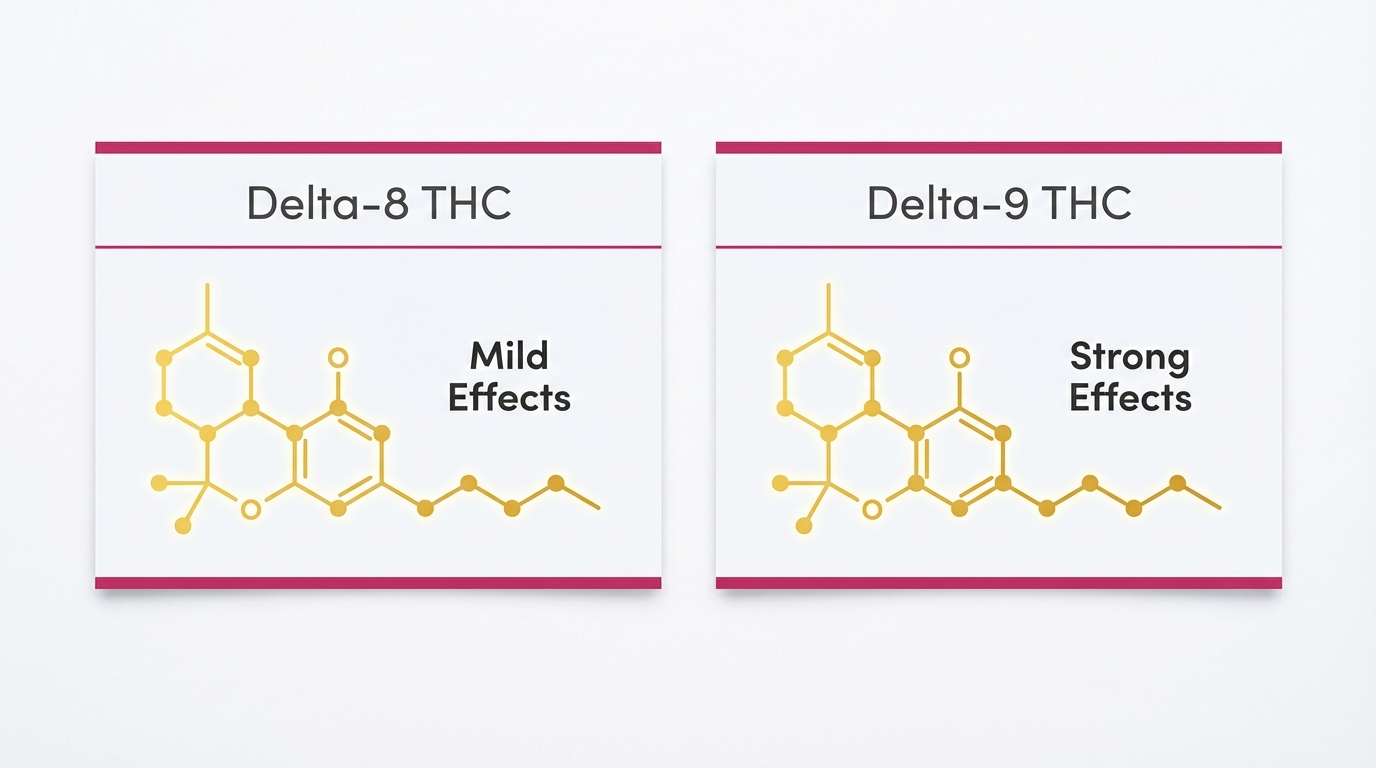
Delta-8 THC is a naturally occurring cannabinoid found in cannabis plants that produces milder psychoactive effects than delta-9 THC due to its lower binding affinity for CB1 receptors. This guide covers how delta-8 works in the body, its reported benefits and side effects, the risks of unregulated products, legal status and safe usage practices, and how it compares to other cannabinoids.
Delta-8 THC interacts with the endocannabinoid system as a partial CB1 receptor agonist, producing roughly two-thirds the psychoactive potency of delta-9 THC. This weaker receptor binding is what gives delta-8 its characteristically gentle, functional experience.
Reported benefits include relaxation, nausea reduction, appetite stimulation, pain relief, and sleep support. In user surveys, 71% of delta-8 consumers reported significant relaxation, while 74% did not experience anxiety and 83% did not experience paranoia.
Side effects range from dry mouth and drowsiness to increased heart rate and short-term memory impairment, particularly at higher doses. Unregulated products introduce additional dangers; some contain contaminants like heavy metals, residual solvents, and pesticides that independent lab testing has found far exceeding labeled levels.
Delta-8 THC occupies a complex legal position. The 2018 Farm Bill effectively legalized hemp-derived delta-8 at the federal level, yet multiple states have banned or restricted its sale. It also triggers positive results on standard drug tests, since screening panels cannot distinguish delta-8 metabolites from delta-9.
Safe use starts with low doses, verified third-party lab results, and awareness of who should avoid delta-8 entirely, including pregnant individuals, minors, and anyone on interacting prescription medications. Understanding these factors helps consumers make informed choices backed by actual product transparency.
Delta-8 THC is a naturally occurring cannabinoid found in cannabis plants. The sections below cover how it differs from delta-9 THC, how it is derived from hemp, and whether it occurs naturally in the plant.
Delta-8 THC is different from delta-9 THC primarily in molecular structure and psychoactive potency. Delta-8 THC is an isomer of delta-9 THC, with the distinguishing feature being the position of a double bond in the carbon ring: on the eighth carbon in delta-8 and the ninth carbon in delta-9.
This structural difference matters pharmacologically. Because of its altered structure, delta-8 THC has a lower affinity for the CB1 receptor and therefore produces a lower psychotropic potency than delta-9 THC. According to a study published in the Journal of Cannabis Research, researchers concluded that delta-8 THC was approximately two-thirds as potent as delta-9 THC while remaining qualitatively similar in experiential effects. Most consumers describe the delta-8 experience as noticeably milder, often characterized by an “indica-like” high with sedative properties. For anyone seeking gentle psychoactive effects without the intensity of traditional THC, this distinction makes delta-8 a compelling option.
Delta-8 THC is derived from hemp through a chemical conversion process, most commonly by synthesizing it from cannabidiol (CBD) extracted from hemp plants. Because delta-8 occurs naturally in cannabis at very low concentrations, direct extraction is impractical for commercial production. Instead, manufacturers use acid-catalyzed isomerization to convert CBD into delta-8 THC.
This conversion process fueled rapid market growth. According to Cannabis Business Times, the U.S. market for delta-8 THC and other hemp-derived cannabinoids grew 1,283% in three years, expanding from $200.5 million in 2020 to $2.8 billion in 2023. That explosive growth underscores why product quality and sourcing transparency matter so much in this still-maturing market.
Yes, delta-8 THC is a naturally occurring cannabinoid present in cannabis plants. It functions as a partial agonist of the cannabinoid CB1 receptor and has cannabimimetic activity in both animals and humans. However, the plant produces it in only trace amounts, which is why nearly all commercial delta-8 products rely on synthesis from CBD or delta-9 THC rather than direct plant extraction. According to the American Association for Clinical Chemistry, cannabinoid immunoassays yielded positive results for all samples with delta-8 concentrations of 30 ng/mL and higher, confirming the compound’s biological detectability despite its low natural abundance.
Understanding what delta-8 THC is sets the stage for exploring how it interacts with the body’s endocannabinoid system.
Delta-8 THC works in the body by interacting with the endocannabinoid system, binding to cannabinoid receptors that regulate mood, pain, and appetite. The sections below explain the endocannabinoid system’s role and which specific receptors delta-8 THC targets.
The endocannabinoid system plays a central role with delta-8 THC by serving as the biological network through which this cannabinoid produces its effects. This system contains receptors, endogenous cannabinoids, and enzymes that regulate functions such as pain perception, mood, appetite, and nausea response.
When delta-8 THC enters the body, it mimics natural endocannabinoids and activates this system. According to the National Cancer Institute, delta-8-tetrahydrocannabinol is an analogue of THC with potential antiemetic, anxiolytic, appetite-stimulating, analgesic, and neuroprotective activities. These properties reflect direct engagement with endocannabinoid pathways rather than indirect metabolic effects.
Product purity matters here because contaminated delta-8 THC can disrupt this interaction unpredictably. Understanding the endocannabinoid system helps clarify why delta-8 produces specific, receptor-driven responses.
Delta-8 THC binds to CB1 and CB2 cannabinoid receptors, with CB1 receptors in the brain being the primary target responsible for psychoactive effects. However, this binding is weaker compared to its more potent relative.
According to the University of South Carolina, delta-8 THC binds to CB1 receptors less strongly than delta-9 THC, which is what makes it less psychoactive. This reduced receptor affinity produces a milder, more functional experience that many users prefer for daytime use. For anyone exploring cannabinoid options, this receptor distinction is one of the most important factors in understanding why delta-8 feels different from traditional THC.
With this foundation of how delta-8 THC interacts with your body, the next step is understanding the specific benefits it may offer.
The benefits of delta-8 THC include relaxation, stress reduction, nausea relief, appetite stimulation, pain management, sleep support, and a milder psychoactive experience compared to delta-9 THC.
Delta-8 THC helps with relaxation and stress by binding to CB1 receptors in the endocannabinoid system, producing calming effects without the intensity often associated with delta-9 THC. According to a survey published in the Journal of Cannabis Research, 71% of delta-8 THC users reported experiencing a great deal of relaxation, while 74% did not experience anxiety and 83% did not experience paranoia.
This combination of pronounced relaxation with minimal anxiety makes delta-8 THC particularly appealing for people who find traditional THC products overwhelming. For anyone seeking a calmer, more controlled wind-down, delta-8 represents one of the most practical cannabinoid options available today.
Yes, delta-8 THC can help reduce nausea. The National Cancer Institute classifies delta-8-tetrahydrocannabinol as a cannabinoid with potential antiemetic activity, meaning it may help suppress nausea and vomiting. This property has drawn particular interest in supportive care settings, where managing nausea is a persistent challenge.
Delta-8 THC’s antiemetic potential, combined with its milder psychoactive profile, positions it as a noteworthy option for those who need nausea relief without the stronger cognitive effects of delta-9 THC.
Yes, delta-8 THC stimulates appetite. Its interaction with CB1 receptors in the brain triggers hunger signaling pathways, a mechanism shared with delta-9 THC but typically accompanied by less intense psychoactive effects. Users frequently report increased appetite as one of delta-8’s most noticeable benefits.
For individuals struggling with reduced appetite due to medical treatments or other conditions, this appetite-boosting property can be genuinely meaningful. The milder experience makes it easier to eat comfortably without feeling overly impaired.
Yes, delta-8 THC can provide pain and inflammation relief. As reported by WebMD, users say delta-8 can ease pain, calm nausea, boost appetite, support mental health, and prevent vomiting during cancer treatments. Delta-8 THC’s analgesic properties stem from its partial agonism of CB1 receptors, which modulate pain perception throughout the nervous system.
While more clinical research is needed, the consistency of user-reported pain relief suggests delta-8 THC holds real promise as a gentler alternative to both delta-9 THC and certain conventional pain management approaches.
Yes, delta-8 THC supports better sleep for many users. Its relaxation-promoting and mildly sedative properties can help ease the transition into restful sleep, especially for those whose sleep is disrupted by stress or discomfort. Many consumers describe delta-8’s effects as “indica-like,” characterized by physical calm and mental quieting that naturally encourages drowsiness.
Because delta-8 produces less cognitive stimulation than delta-9 THC, it is less likely to trigger the racing thoughts that sometimes interfere with falling asleep. This makes it a practical choice for people who want cannabinoid-assisted sleep without intense psychoactivity.
Delta-8 THC offers a milder psychoactive experience because it binds to CB1 receptors with lower affinity than delta-9 THC. As noted by Greenpost, delta-8 provides mild effects, delta-9 offers stronger psychoactivity, and HHC provides balanced experiences with improved stability.
This reduced potency means users can enjoy subtle euphoria and relaxation while maintaining clearer focus and functional awareness. For those new to cannabinoids or sensitive to stronger THC products, delta-8’s gentler profile is often the deciding factor.
Understanding these benefits helps set realistic expectations for how delta-8 THC affects the body, which makes recognizing its potential side effects equally important.
The side effects of delta-8 THC include dry mouth, dry eyes, drowsiness, increased heart rate, anxiety at high doses, short-term memory impairment, and dizziness. Below, each common side effect is explained individually.
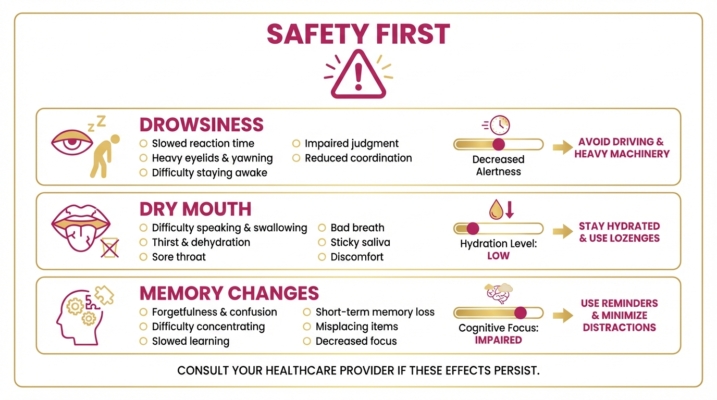
Yes, delta-8 THC causes dry mouth and dry eyes. Because delta-8 is a partial agonist of CB1 receptors, it affects glands that regulate saliva and tear production. Cannabinoid receptor activation reduces secretion from these glands, leading to the cottonmouth sensation and eye dryness familiar to most cannabis users. Staying hydrated and using eye drops can minimize both effects. For most people, these are the mildest and most manageable side effects of delta-8 THC consumption.
Yes, delta-8 THC can cause drowsiness or fatigue, particularly at moderate to high doses. Many consumers describe delta-8 as producing an “indica-like” sedative quality, which makes tiredness a common response. This effect intensifies when delta-8 is consumed in edible form, since slower absorption extends the duration of sedation. Anyone experiencing drowsiness should avoid operating heavy machinery or making important decisions until the effects fully subside.
Yes, delta-8 THC increases heart rate in some users. CB1 receptor activation in the cardiovascular system can temporarily elevate heart rate, a response shared with delta-9 THC. Individuals with preexisting cardiac conditions should exercise particular caution. According to the Journal of Medical Toxicology, the rate of delta-8 THC exposures per 100,000 U.S. population increased by 79.2% from 0.53 in 2021 to 0.95 in 2022, highlighting the growing importance of understanding its cardiovascular effects.
Yes, delta-8 THC can cause anxiety at high doses. While most users report reduced anxiety at lower amounts, overconsumption shifts the experience toward nervousness and unease. This dose-dependent response is consistent across cannabinoids that activate CB1 receptors. Starting with a low dose and increasing gradually remains the most reliable strategy for avoiding anxiety. In my experience, the users who encounter anxiety from delta-8 have almost always taken too much, too fast.
Yes, delta-8 THC impairs short-term memory. CB1 receptor activation in the hippocampus, the brain region responsible for memory formation, disrupts the encoding of new information. Difficulty concentrating and an altered sense of time often accompany this memory impairment. These cognitive effects are temporary and resolve as delta-8 clears the system, though they can be disorienting for first-time users who are unprepared.
Yes, delta-8 THC can cause dizziness or lightheadedness. Changes in blood pressure and heart rate triggered by cannabinoid receptor activity contribute to this sensation, especially when standing up quickly. Dehydration and an empty stomach can worsen the effect. Sitting or lying down until the feeling passes is the simplest remedy. Because these side effects are generally mild and dose-dependent, choosing well-tested products becomes essential for a predictable experience.
The risks of using delta-8 THC include exposure to unregulated products, potential contaminants, tolerance buildup, and dependency. According to the American Journal of Preventive Medicine, 12.4% of US young adults reported using delta-8-THC in the past 12 months, making these risks increasingly relevant.
Yes, unregulated delta-8 THC products are dangerous. Without consistent manufacturing oversight, these products pose serious health risks to consumers of all ages. According to the U.S. Food and Drug Administration, national poison control centers received 2,362 exposure cases involving delta-8 THC products between January 2021 and February 2022. Of those cases:
The high rate of pediatric exposures is particularly alarming. Products sold without proper age-gating, child-resistant packaging, or clear labeling contribute directly to accidental ingestion. For any consumer, purchasing from brands that prioritize third-party testing and transparent labeling is not optional; it is essential.
The contaminants that can appear in low-quality delta-8 THC include heavy metals, pesticides, residual solvents, and mold. Because most delta-8 THC is synthesized from CBD through a chemical conversion process, some manufacturers use unsafe household chemicals during production. The final product may retain harmful by-products from these reactions.
A 2022 study published in Molecules found that ten tested delta-8 THC products contained several impurities in concentrations far beyond what their certificates of analysis declared. This gap between labeled and actual purity underscores why independent lab verification matters more than packaging claims alone.
Yes, you can build a tolerance to delta-8 THC with repeated use. Like other cannabinoids that act on CB1 receptors, regular consumption reduces receptor sensitivity over time. A 2023 study published in Drug and Alcohol Dependence confirmed that repeated administration of delta-8 THC produced tolerance and cross-tolerance to other cannabinoid agonists, consistent with downregulated CB1 receptor function.
In practical terms, this means the same dose produces weaker effects after sustained use. Periodic breaks, sometimes called tolerance breaks, can help restore receptor sensitivity and maintain the desired experience at lower doses.
Yes, there is a risk of dependency with regular delta-8 THC use. Because delta-8 THC activates CB1 receptors similarly to delta-9 THC, prolonged exposure can lead to physical dependence. Research published in Drug and Alcohol Dependence demonstrated behavioral signs of physical dependence following precipitated withdrawal from delta-8 THC in preclinical models. The same study concluded that delta-8 THC produces qualitatively similar effects to delta-9 THC, including risk of drug dependence and abuse liability.
This does not mean every user will develop dependency, but the risk increases with higher doses and more frequent use. Mindful consumption and awareness of personal patterns remain the best safeguards against problematic use.
Understanding these risks helps inform smarter product choices and safer consumption habits.
Delta-8 THC is legal at the federal level under the 2018 Farm Bill, but individual state laws vary widely. The sections below cover the Farm Bill’s language and which states have moved to ban or restrict delta-8 sales.
The 2018 Farm Bill, formally known as the Agriculture Improvement Act, legalized hemp and hemp-derived products containing less than 0.3% delta-9-THC. This language effectively, and perhaps unintentionally, legalized delta-8-THC at the federal level. Because the bill set its threshold around delta-9 concentration specifically, hemp-derived delta-8 products entered the market with no direct federal oversight.
According to a review published in the Journal of Cannabis Research, the 2018 Farm Bill legalized the sale of hemp-derived delta-8-THC products with no regulatory framework in place, and its popularity grew dramatically in late 2020. That rapid growth caught the attention of cannabis consumers, processors, and regulators alike. For anyone purchasing delta-8, understanding that federal legality does not guarantee state-level legality remains essential.
At least 14 U.S. states have blocked the sale of delta-8-THC, primarily due to insufficient research into the compound’s psychoactive effects, according to the Journal of Cannabis Research. State-level restrictions range from outright bans to regulatory frameworks that limit how delta-8 products are manufactured, labeled, or sold.
The data supports the impact of these bans. A study published in the Journal of Medical Toxicology found that the mean rate of delta-8-THC exposures in states where it was unregulated was 1.36 per 100,000 population, compared with just 0.17 per 100,000 in states where it was banned (P < 0.0001). Because regulations shift frequently, consumers should verify their own state’s current laws before purchasing any delta-8 product.
With the legal landscape constantly evolving, understanding how to use delta-8 safely becomes equally important.
You use delta-8 THC safely by starting with a low dosage, waiting for full effects before taking more, avoiding driving while impaired, and never combining it with alcohol or certain medications.
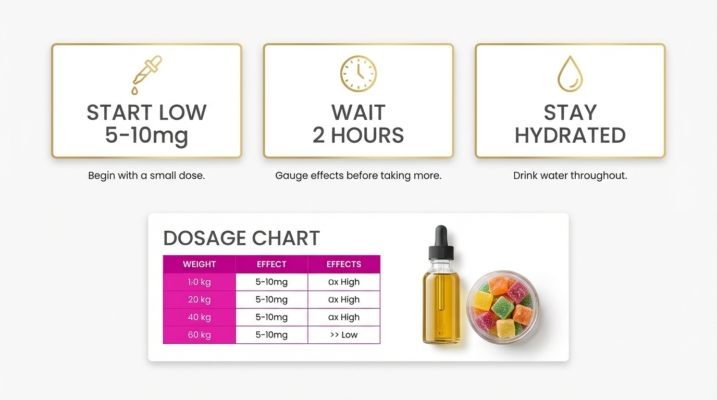
The right delta-8 THC dosage for beginners is typically 5 to 10 milligrams. Because delta-8 is roughly two-thirds as potent as delta-9 THC, a small starting dose allows new users to gauge individual sensitivity without overwhelming effects. Edibles and tinctures offer the easiest way to measure precise milligram amounts. Those with no prior cannabis experience should consider beginning at the lower end of this range, since body weight, metabolism, and personal tolerance all influence how strongly a dose is felt.
Starting low and going slow with delta-8 THC is important because onset times vary significantly by product type. Vapes and flower can produce effects within minutes, while edibles may take 60 to 90 minutes to reach full intensity. Consuming more before the initial dose fully activates is one of the most common mistakes new users make, often leading to uncomfortable side effects like drowsiness, anxiety, or dizziness. Waiting at least two hours after an edible before considering an additional dose gives the body enough time to process the cannabinoid completely.
Yes, you should avoid driving after taking delta-8 THC. Delta-8 produces psychoactive effects that can impair reaction time, coordination, and judgment. According to Recovered, delta-8 THC is usually detectable for 12 to 48 hours after use in blood tests, with heavy use potentially extending that window. Even if subjective effects feel mild, cognitive and motor impairment may still be present. Operating a vehicle under the influence of any THC compound also carries legal consequences in most states, regardless of the product’s federal legality.
No, you should not mix delta-8 THC with alcohol or medications without consulting a healthcare provider first. Alcohol amplifies THC’s sedative and impairing effects, increasing the risk of extreme drowsiness, nausea, and poor judgment. Delta-8 may also interact with medications metabolized by the liver’s cytochrome P450 enzyme system, including blood thinners, sedatives, and certain antidepressants. These interactions can alter how quickly drugs are processed, potentially raising them to unsafe levels in the bloodstream. Anyone taking prescription medications should speak with a doctor before using delta-8 THC products.
With safe usage habits established, choosing a high-quality product is the next critical step.
You choose safe and high-quality delta-8 THC products by verifying third-party lab results, reading certificates of analysis carefully, and confirming the hemp source. The sections below cover lab testing, COA interpretation, and why U.S.-grown hemp matters.
Third-party lab tests are important for delta-8 THC because they provide independent verification that a product is free from harmful contaminants. According to the FDA, some manufacturers may use unsafe household chemicals during the chemical synthesis process, and the final delta-8 THC product may contain potentially harmful by-products as a result. Independent laboratories screen for residual solvents, heavy metals, pesticides, and mold, none of which would be caught without outside testing. Since delta-8 THC products have not been evaluated or approved by the FDA for safe use, third-party testing remains the most reliable safeguard consumers have before purchasing.
Brands that prioritize transparency, such as those offering complete certificates of analysis and U.S.-sourced hemp, provide consumers with the verification needed to make informed purchasing decisions in this unregulated market.
You should look for cannabinoid potency, contaminant screening results, and batch-specific identification on a delta-8 THC certificate of analysis. A credible COA lists the exact cannabinoid profile, confirms delta-9 THC content falls below 0.3%, and reports results for pesticides, heavy metals, residual solvents, and microbial contaminants. A study published in Molecules found that ten tested delta-8 THC products contained several impurities in concentrations far beyond what was declared on their certificates of analysis. Always confirm the COA matches the product’s batch number and was issued by an accredited, independent lab rather than the manufacturer itself.
Sourcing from U.S.-grown hemp matters because domestic cultivation operates under stricter agricultural oversight than many international sources. Hemp grown in the United States must comply with USDA guidelines and state agricultural programs that regulate pesticide use, soil quality, and THC content at harvest. These standards reduce the likelihood of contamination before the extraction process even begins. Imported hemp, by contrast, may lack equivalent testing requirements, increasing the risk of heavy metals or chemical residues carrying through into finished delta-8 THC products. For consumers prioritizing product safety, U.S.-sourced hemp offers a more traceable and accountable supply chain.
Some established brands have built their reputations specifically on U.S.-grown hemp sourcing combined with rigorous third-party testing, creating a quality standard that helps consumers navigate an otherwise inconsistent marketplace.
With product quality verified, understanding who should avoid delta-8 THC adds another layer of informed decision-making.
Certain groups should avoid delta-8 THC due to heightened health risks. These include pregnant or breastfeeding individuals, minors, and people taking prescription medications.
Delta-8 THC is not considered safe during pregnancy or breastfeeding. THC crosses the placental barrier and can transfer through breast milk, posing potential risks to fetal and infant development. According to GoodRx, delta-8 THC products have not undergone rigorous safety evaluations, which makes their use especially concerning for vulnerable populations. No cannabinoid product, including delta-8, has been approved by the FDA for use during pregnancy or lactation. Anyone who is pregnant, planning to become pregnant, or nursing should consult a healthcare provider before using any THC product.
No, minors should not use delta-8 THC. Adolescent brains are still developing, and exposure to psychoactive cannabinoids can interfere with cognitive development, memory formation, and emotional regulation. The FDA reported that 41% of the 2,362 delta-8 THC exposure cases logged by poison control centers between January 2021 and February 2022 involved pediatric patients under 18 years of age. Delta-8 THC products are intended exclusively for adults aged 21 and over. Parents and caregivers should store all cannabinoid products securely out of children’s reach.
Yes, delta-8 THC can interact with prescription medications. Because delta-8 THC is metabolized by cytochrome P450 liver enzymes, it may alter how the body processes other drugs that rely on the same enzymatic pathways. Medications such as blood thinners, sedatives, and anti-seizure drugs carry particular interaction risks. These interactions could amplify side effects or reduce a medication’s effectiveness. Anyone taking prescription medications should discuss delta-8 THC use with their physician before combining it with their current regimen.
Understanding who should avoid delta-8 THC helps clarify another common concern: drug testing.
Delta-8 THC will likely show up on a drug test. Standard screening methods detect THC metabolites without distinguishing between delta-8 and delta-9 THC, meaning any recent use can trigger a positive result.
The body metabolizes delta-8 THC into compounds nearly identical to those produced by delta-9 THC. According to a 2022 report from the American Association for Clinical Chemistry, cannabinoid immunoassays yielded positive results for all samples with delta-8 concentrations of 30 ng/mL and higher. This confirms that existing workplace and clinical drug panels are fully capable of flagging delta-8 use.
Detection windows vary by test type:
For anyone facing an upcoming drug screening, the safest approach is to stop all delta-8 THC consumption well in advance. Even occasional use carries real risk of a positive result, and no reliable method exists to accelerate metabolite clearance.
Understanding how drug tests interact with delta-8 helps clarify how this cannabinoid compares to others.
Delta-8 THC compares to other cannabinoids through key differences in psychoactivity, receptor binding, and legal classification. The following sections break down how delta-8 THC differs from CBD, delta-10 THC, and HHC.
Delta-8 THC differs from CBD primarily in psychoactivity and receptor interaction. Delta-8 THC is a partial agonist of the CB1 receptor, producing mild euphoria and relaxation. CBD, by contrast, is non-intoxicating and does not directly activate CB1 receptors in the same way. While both cannabinoids are hemp-derived, delta-8 delivers noticeable psychoactive effects that CBD does not.
CBD is often chosen for daily wellness routines where cognitive clarity is essential. Delta-8 appeals to consumers seeking a gentle high without the intensity of delta-9 THC. For anyone prioritizing zero psychoactivity, CBD remains the clear choice.
Delta-8 THC compares to delta-10 THC in potency, effect profile, and consumer preference. Both are minor cannabinoids typically synthesized from CBD, yet they produce distinct experiences. Delta-8 is widely described as calming and sedative, while delta-10 leans toward energizing, uplifting effects.
Delta-8 also has a stronger research foundation. In 1995, researchers administered delta-8 THC to eight pediatric cancer patients before chemotherapy sessions, and over eight months none of these patients vomited following treatment, according to the Journal of Cannabis Research. Delta-10 lacks comparable clinical data. For consumers wanting relaxation over stimulation, delta-8 is generally the stronger candidate.
Delta-8 THC compares to HHC in stability, potency, and availability. HHC (hexahydrocannabinol) is a hydrogenated cannabinoid with improved chemical stability and a slightly stronger psychoactive profile than delta-8. Delta-8 provides mild effects, while HHC provides balanced experiences with improved shelf stability.
Both compounds occupy a legal gray area under the 2018 Farm Bill, though HHC faces even less regulatory clarity. Delta-8 has a larger consumer base and more published safety data, making it easier to find lab-tested products. For those new to alternative cannabinoids, delta-8 offers a more predictable starting point with broader product availability.
With these cannabinoid distinctions clear, choosing the right product depends on sourcing and quality standards.
You can find lab-tested delta-8 THC products you can trust from brands that prioritize third-party testing, U.S.-grown hemp sourcing, and full transparency. Reputable brands offer complete lineups of verified delta-8 products backed by rigorous quality standards and third-party testing.
Reputable brands that prioritize safety offer delta-8 THC edibles, vapes, and flower backed by comprehensive third-party lab testing and sourced from U.S.-grown hemp. Quality products contain less than 0.3% delta-9 THC, ensuring full federal compliance under the 2018 Farm Bill.
When evaluating delta-8 brands, look for diverse product categories such as edibles (gummies, baked goods), vapes (cartridges and disposable pens in strain-specific options), and flower or pre-rolls in Indica, Sativa, and Hybrid varieties.
Established brands in the legal hemp-derived cannabinoid space often demonstrate their credibility through verified customer bases, expert teams overseeing quality control, and consistent third-party testing protocols. For anyone prioritizing product safety, that kind of track record matters more than marketing claims alone.
The key takeaways about delta-8 THC benefits, risks, and safety center on informed, cautious use of verified products.
Choosing a transparent, lab-tested brand with verified quality standards is the most practical step consumers can take to minimize risk while exploring delta-8 THC’s potential benefits.
Let’s dive into the worlds of delta 8 and delta 9 THC. Delta 9…
Learn more

A THC drink is easier to misjudge than a gummy. It goes down like…
Learn more
Microdosing edibles means taking the smallest amount of THC that gives you a subtle,…
Learn more
You took the gummy, waited a while, and now you want to know how…
Learn more
