


Blogs

Are THC Gummies Legal? A 2026 State-by-State Guide
Yes, THC gummies are legal to buy in most of the United States right…
Learn more
You must be 21+ to enter this site
 FREE SHIPPING $89+
 FREE GIFT ON $120+
 100% FEDERALLY LEGAL
 LAB TESTED FOR PURITY
FREE SHIPPING $89+
FREE GIFT ON $120+
100% FEDERALLY LEGAL
LAB TESTED FOR PURITY
FREE SHIPPING $89+
FREE GIFT ON $120+
100% FEDERALLY LEGAL
LAB TESTED FOR PURITY
FREE SHIPPING $89+
FREE GIFT ON $120+
100% FEDERALLY LEGAL
LAB TESTED FOR PURITY
FREE SHIPPING $89+
FREE GIFT ON $120+
100% FEDERALLY LEGAL
LAB TESTED FOR PURITY
FREE SHIPPING $89+
FREE GIFT ON $120+
100% FEDERALLY LEGAL
LAB TESTED FOR PURITY
FREE SHIPPING $89+
FREE GIFT ON $120+
100% FEDERALLY LEGAL
LAB TESTED FOR PURITY
FREE SHIPPING $89+
FREE GIFT ON $120+
100% FEDERALLY LEGAL
LAB TESTED FOR PURITY
LAB TESTED FOR PURITY
FREE SHIPPING $89+
FREE GIFT ON $120+
100% FEDERALLY LEGAL
LAB TESTED FOR PURITY
FREE SHIPPING $89+
FREE GIFT ON $120+
100% FEDERALLY LEGAL
LAB TESTED FOR PURITY
FREE SHIPPING $89+
FREE GIFT ON $120+
100% FEDERALLY LEGAL
LAB TESTED FOR PURITY
FREE SHIPPING $89+
FREE GIFT ON $120+
100% FEDERALLY LEGAL
LAB TESTED FOR PURITY
FREE SHIPPING $89+
FREE GIFT ON $120+
100% FEDERALLY LEGAL
LAB TESTED FOR PURITY
FREE SHIPPING $89+
FREE GIFT ON $120+
100% FEDERALLY LEGAL
LAB TESTED FOR PURITY
FREE SHIPPING $89+
FREE GIFT ON $120+
100% FEDERALLY LEGAL
LAB TESTED FOR PURITY

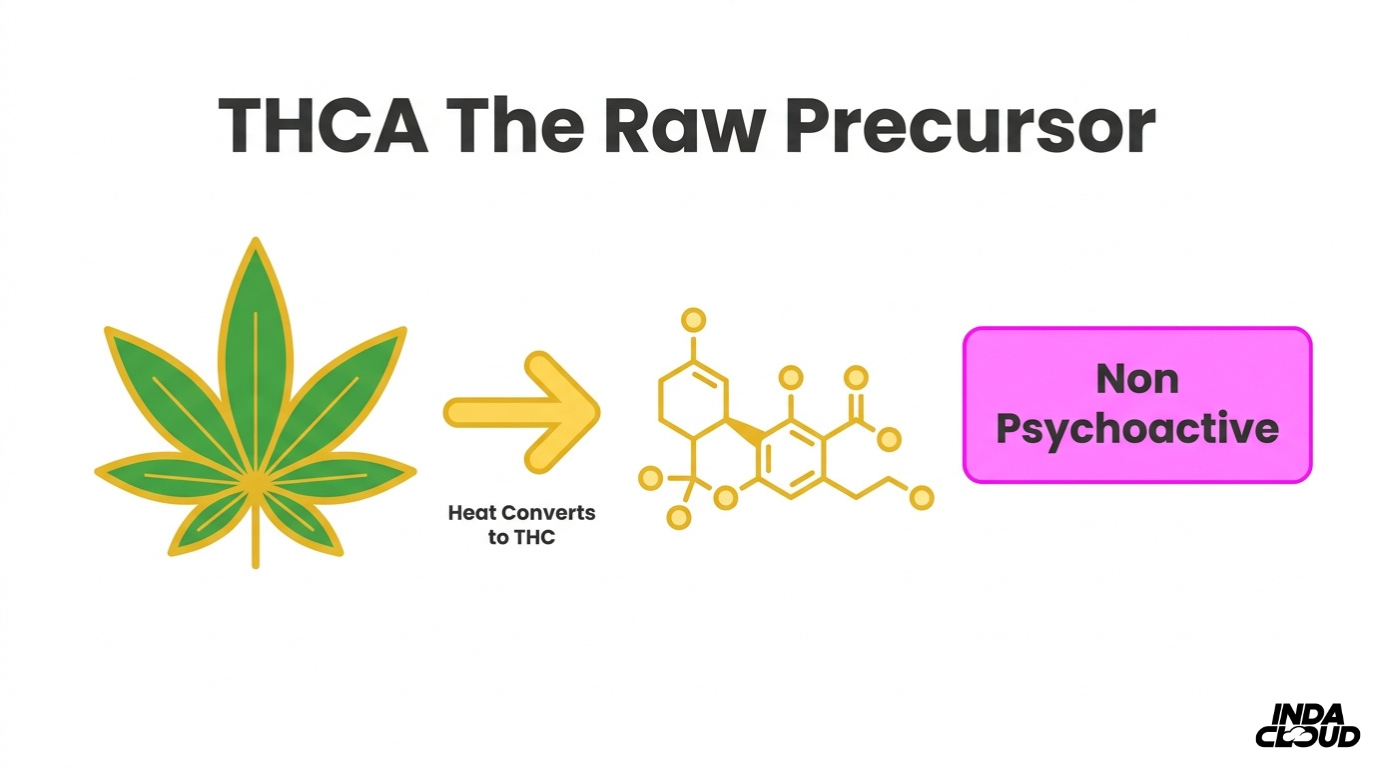
THCA (tetrahydrocannabinolic acid) is the naturally occurring, non-psychoactive precursor to THC found in raw cannabis and hemp plants. It converts into psychoactive THC only when exposed to heat through a process called decarboxylation.
This guide covers the science behind THCA’s molecular structure and conversion process, its emerging therapeutic benefits, how people consume it across different product formats, the legal landscape reshaping its availability, and how to verify product quality before buying.
THCA’s chemical structure features a carboxyl group that prevents it from binding effectively to CB1 receptors, which is why raw THCA produces no high. Temperature-dependent decarboxylation kinetics determine how quickly that carboxyl group detaches; storage conditions, smoking, and vaping each trigger conversion at different rates, making consumption method the single biggest factor in whether THCA remains non-intoxicating.
Preclinical research points to anti-inflammatory activity through COX-2 inhibition, neuroprotective effects on dopaminergic neurons in Parkinson’s disease models, and antiemetic potential through serotonin receptor pathways. These findings remain early-stage, with no confirmed human clinical trials to date.
Product formats in 2026 range from raw juices and unheated tinctures (which preserve THCA) to flower, pre-rolls, vapes, edibles, and crystalline concentrates (which convert it to THC upon use). Bioavailability varies significantly by method, from 6% orally to 35% through inhalation.
The 2026 Farm Bill amendments now count THCA toward total THC limits, closing the previous loophole. Several states have independently banned THCA sales, and new federal potency caps take effect in November 2026. Standard drug screenings also detect THCA use by identifying THC-COOH metabolites.
Third-party lab testing, batch-matched certificates of analysis, and verified cannabinoid profiles remain the most reliable tools for confirming product safety and legal compliance.
THCA is tetrahydrocannabinolic acid, the naturally occurring precursor to THC found in raw cannabis and hemp plants. The sections below cover its chemical structure, the decarboxylation process that converts it into THC, and how it compares to both Delta 9 and Delta 8 THC.
The chemical structure of THCA is defined by a carboxyl group (COOH) attached to the same terpenophenolic backbone shared by other cannabinoids. This extra carboxyl group is what distinguishes THCA from its neutral counterpart, THC, and prevents it from fitting into cannabinoid receptors in the same way. According to research published by the International Union of Crystallography, the hydrogen bonding observed in crystalline THCA-A is a critical determinant of its chemical stability and structural relationship to other cannabinoids. Because of this molecular configuration, THCA remains non-intoxicating in its raw acidic form. The carboxyl group must be removed through heat or prolonged aging before the compound can produce psychoactive effects.
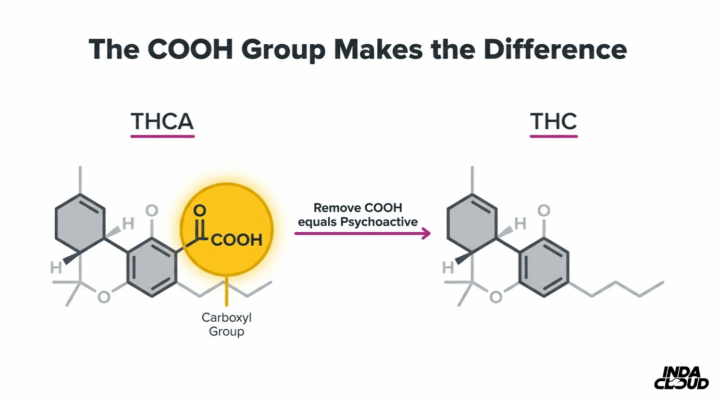
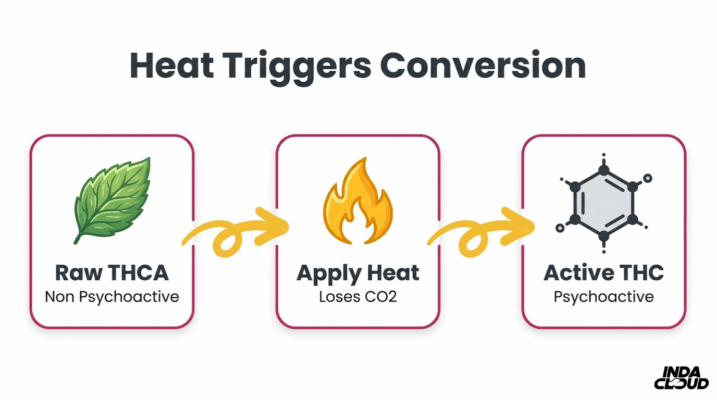
THCA converts into THC through decarboxylation, a chemical reaction that removes the carboxyl group when heat, light, or time is applied. THCA-A has a molecular formula of C22H30O4 and a molar mass of 358.47 g/mol; once it loses CO2, the resulting molecule is Delta 9 THC. According to research in the Cannabis and Cannabinoid Research Journal, decarboxylation kinetics are temperature-dependent: THCA-A drops to 80% of initial levels after 25 months at room temperature, while 94.7% remains stable when stored at 4°C. This is why proper storage matters so much for anyone purchasing raw THCA products. Smoking, vaping, or baking with THCA triggers rapid decarboxylation, converting the compound into active THC almost instantly.
The difference between THCA and Delta 9 THC centers on psychoactivity, molecular structure, and how the body processes each compound. THCA retains a carboxyl group that prevents it from binding efficiently to CB1 receptors in the brain, so it produces no intoxicating effects in its raw form. Delta 9 THC lacks that carboxyl group and activates CB1 receptors directly, producing the characteristic “high.” Bioavailability also differs significantly. The bioavailability of THCA from raw hemp consumption is estimated between 6% and 20% due to digestive breakdown and first-pass liver metabolism, according to technical data reviewed by Primary Jane. For consumers choosing between raw and heated products, understanding this distinction is essential for predicting effects.
The difference between THCA and Delta 8 THC involves both their chemical classification and their psychoactive profiles. THCA is an acidic precursor cannabinoid found naturally in raw cannabis, while Delta 8 THC is a neutral, mildly psychoactive isomer of Delta 9 THC. Key distinctions include:
For anyone exploring cannabinoid options, recognizing that THCA is a raw precursor while Delta 8 is a synthesized active compound helps clarify which products align with specific wellness or recreational goals. With these foundational differences established, the next section explores the specific benefits THCA may offer.
The known benefits of THCA span anti-inflammatory support, nausea relief, neuroprotection, pain management, and anti-proliferative activity. Each benefit reflects preclinical research on this non-psychoactive cannabinoid acid.
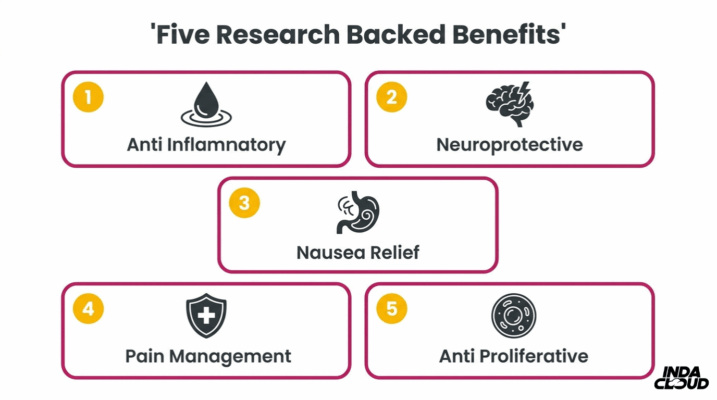
THCA supports anti-inflammatory responses through COX-2 inhibition and 5-HT1A receptor modulation pathways. According to a study published in Springer’s Medical Cannabis and Cannabinoids, preclinical research confirms that THCA possesses anti-inflammatory properties mediated through these dual mechanisms. COX-2 is an enzyme closely linked to inflammation and pain signaling, while 5-HT1A receptors play a role in modulating immune and inflammatory cascades. By acting on both targets simultaneously, THCA may offer a broader anti-inflammatory profile than compounds that address only one pathway. For anyone exploring natural options for inflammation, this dual-action mechanism makes THCA a cannabinoid worth watching as research advances.
Yes, THCA can help with nausea and appetite regulation, though it works through different receptor pathways than THC. According to research published by the National Center for Biotechnology Information, THC shows 62-fold greater affinity at hCB1 and 125-fold greater affinity at hCB2 compared to THCA-A. This significantly lower binding affinity means THCA likely influences nausea and appetite through alternative mechanisms, such as serotonin receptor interaction, rather than direct cannabinoid receptor activation. That distinction matters because it allows THCA to offer antiemetic potential without producing the psychoactive effects associated with THC. Consumers should also note that standard drug screenings detect THC-COOH metabolites, with detection windows varying by consumption method and frequency.
The potential neuroprotective properties of THCA include the ability to protect dopaminergic neurons from degeneration. A study published in the British Journal of Pharmacology found that Δ9-THCA at concentrations of 0.01 to 10 μM produced a significant positive effect on dopaminergic cell count, reaching 123% compared to control, in Parkinson’s disease models. Dopaminergic cell loss is the hallmark of Parkinson’s progression, so any compound that preserves these neurons holds real therapeutic promise. Beyond Parkinson’s, broader cannabinoid research suggests THCA may help mitigate neuroinflammation relevant to other neurodegenerative conditions. This is one of the most compelling areas of THCA research, and continued clinical investigation could reshape how we approach neurodegeneration.
THCA might contribute to pain management by modulating inflammatory pathways that amplify pain signaling. Its demonstrated COX-2 inhibitory activity targets the same enzyme pathway that conventional NSAIDs address, suggesting a similar analgesic mechanism without identical side-effect profiles. Because THCA does not produce intoxication in its raw acidic form, it offers potential for daytime pain relief without cognitive impairment. Early anecdotal reports from consumers using raw cannabis juicing and THCA tinctures describe reduced discomfort, though controlled human trials remain limited. For those seeking non-psychoactive cannabinoid options for pain, THCA represents one of the more promising candidates currently under investigation.
Yes, THCA can offer anti-proliferative effects based on preliminary preclinical evidence. Early research indicates that THCA may inhibit the growth of certain abnormal cell lines, a property shared by several other cannabinoid acids found in raw cannabis. These anti-proliferative actions are thought to involve pathways related to cell cycle regulation and programmed cell death. While this area of cannabinoid science remains in its earliest stages, the initial signals are encouraging enough to warrant further investigation. It is important to note that no clinical trials in humans have confirmed these effects, so anti-proliferative claims should be understood as emerging science rather than established medical guidance.
With THCA’s therapeutic potential mapped, understanding how people actually consume it clarifies which benefits apply to each method.
People use THCA in 2026 through raw consumption, inhalation, edibles, tinctures, and concentrated extracts. Each method affects whether THCA remains in its acidic form or converts into psychoactive THC.
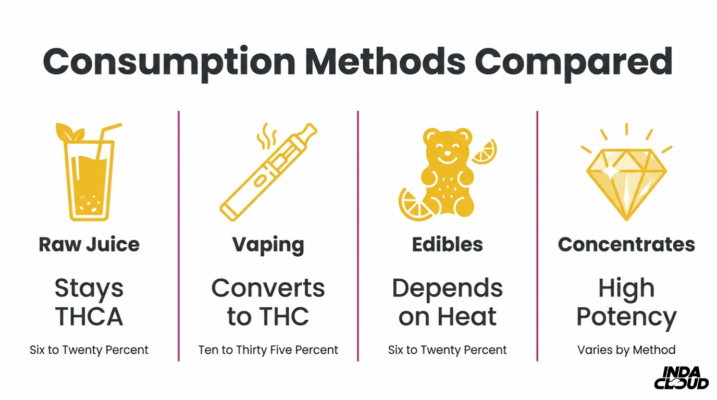
Raw THCA is consumed without activating THC by ingesting unheated cannabis plant material, which preserves the acidic cannabinoid in its natural state. Common raw consumption methods include:
Because no heat is applied, decarboxylation does not occur, and the THCA molecule retains its carboxyl group. According to Primary Jane, the bioavailability of THCA from raw hemp consumption is estimated between 6% and 20% due to the digestive process and first-pass liver metabolism. This relatively low absorption rate means raw consumers often use larger servings to achieve their desired effect.
THCA flower is used for smoking or vaping by applying heat, which triggers decarboxylation and converts THCA into THC during inhalation. This makes THCA flower functionally psychoactive once lit or vaporized, despite containing primarily THCA in its unheated form.
Smoking involves combustion through joints, pipes, or bongs, while vaporizing heats flower at lower temperatures to release cannabinoids without full combustion. According to a study published by the National Institutes of Health, inhaled THC (the decarboxylated product of THCA) has a bioavailability range of 10% to 35%. Vaporization at controlled temperatures can preserve more terpenes and reduce harsh byproducts compared to combustion, making it a preferred choice for many users.
THCA edibles and tinctures are used by delivering cannabinoids through oral or sublingual routes, each offering distinct absorption characteristics. Edibles infused with raw, unheated THCA preserve the acidic compound through the digestive tract, while baked or cooked edibles convert THCA into THC during preparation.
Sublingual tinctures offer a middle ground. Placed under the tongue, these formulations bypass much of the digestive system. A study published in The Permanente Journal found that sublingual cannabinoid delivery provides a slightly higher relative bioavailability, estimated at 13%, compared to traditional oral forms. For consumers who want THCA specifically, choosing products labeled as “raw” or “unheated” is essential, since any heat during manufacturing will initiate conversion.
THCA concentrates and extracts are used by consuming highly purified forms of tetrahydrocannabinolic acid, including diamonds, isolates, live rosin, and crystalline powders. These products contain THCA concentrations far exceeding those found in raw flower.
Key consumption methods include:
The method chosen determines the outcome entirely. Heat-based methods produce psychoactive effects through THC conversion, while cold applications preserve THCA in its non-intoxicating form. For consumers prioritizing precision and potency, concentrates offer the most control over dosing and consumption experience.
Understanding how each method affects THCA conversion helps consumers choose products that match their goals, whether wellness-focused or recreational.
THCA does not get you high in its raw, unheated form. This cannabinoid acid lacks the molecular shape needed to activate the brain’s cannabinoid receptors effectively. However, the answer changes completely once heat enters the picture, because decarboxylation converts THCA into THC, the compound responsible for cannabis intoxication.
In its natural state, THCA carries an extra carboxyl group that prevents it from fitting into CB1 receptors in the brain. According to a study published by the National Center for Biotechnology Information, THC displays 62-fold greater binding affinity at human CB1 receptors and 125-fold greater affinity at CB2 receptors compared to THCA-A. This dramatic difference in receptor interaction is why raw cannabis flower, fresh juice, or unheated tinctures containing THCA produce no intoxicating effects.
The critical distinction lies in how the product is consumed:
So while THCA itself is non-intoxicating, any product labeled as “THCA” that involves heat during use will produce psychoactive effects identical to traditional THC. This is arguably the most misunderstood aspect of THCA products on the market today. Many consumers purchase high-THCA flower specifically because they know smoking it delivers a full THC experience, while the product technically remains compliant with hemp regulations in its pre-heated state.
Understanding this conversion is essential before choosing any THCA product, and the variety of available formats reflects these different consumption methods.
The different types of THCA products include flower, pre-rolls, vapes, edibles, and diamonds or concentrates. Each format offers a distinct consumption method, onset time, and experience level.
THCA flower is raw, cured cannabis hemp bud that contains high concentrations of tetrahydrocannabinolic acid in its natural, non-decarboxylated state. When kept unheated, the flower retains its acidic cannabinoid profile. Smoking or vaping the flower applies heat, converting THCA into THC and producing psychoactive effects. Flower is available in indica, sativa, and hybrid strains, letting users choose based on desired outcomes. According to the NIH, inhaled THC has a bioavailability range of 10% to 35%, making flower one of the more efficient delivery methods. For those who prefer a ready-to-use option, pre-rolls offer the same experience without the preparation.
THCA pre-rolls are pre-ground, ready-to-smoke joints filled with THCA-rich hemp flower. They eliminate the need for a grinder, rolling papers, or any preparation. Each pre-roll delivers the same strain-specific effects as loose flower once lit, since combustion triggers decarboxylation on contact. Pre-rolls suit social settings and on-the-go use particularly well. Quality varies significantly between brands, so verified lab testing for potency and purity remains essential. Choosing pre-rolls from a transparent retailer helps ensure consistent cannabinoid content from one joint to the next.
THCA vapes are cartridges or disposable pens containing concentrated THCA oil that converts to THC upon heating. Vaporization occurs at lower temperatures than combustion, which can preserve more terpenes and reduce harshness on the throat. Onset is rapid, typically within minutes, making vapes a preferred choice for users who want fast-acting effects with precise dose control. Strain-specific options allow consumers to target particular experiences, from relaxation to energy. Because concentrated oils amplify potency, new users should start with small draws and wait before taking additional puffs.
THCA edibles are food and beverage products infused with tetrahydrocannabinolic acid. In their raw, unheated form, THCA edibles deliver the cannabinoid without psychoactive effects. However, baked or cooked edibles undergo decarboxylation during preparation, converting THCA into THC. Oral bioavailability is lower than inhalation; estimates place it between 6% and 20% due to first-pass liver metabolism. Onset takes 30 to 90 minutes, but effects tend to last longer than inhaled methods. Gummies, baked goods, and infused beverages are among the most common formats available in this category.
THCA diamonds and concentrates are highly purified crystalline or semi-solid extracts that contain some of the highest THCA potency available. Diamonds form through a slow crystallization process that isolates nearly pure THCA, often exceeding 95% cannabinoid content. Other concentrate forms include live resin, budder, and sauce, each varying in texture and terpene retention. These products are typically consumed through dabbing, which involves flash-vaporizing a small amount on a heated surface. Because potency is substantially higher than flower or edibles, concentrates are best suited for experienced users who understand proper dosing. With product types established, understanding THCA legality helps ensure compliant purchasing.
THCA legality in the United States in 2026 depends on evolving federal definitions and individual state laws. Key factors include the 2018 Farm Bill’s original framework, recent amendments closing the THCA loophole, and state-level restrictions.
The 2018 Farm Bill defines THCA legality by classifying hemp as cannabis containing no more than 0.3% delta-9 THC on a dry-weight basis. Because the original language measured only delta-9 THC, not total THC, THCA-rich hemp flower technically qualified as legal hemp, even though THCA converts to THC when heated.
That gap has now narrowed. According to Cannabis Business Times, the 2026 Farm Bill amendments redefine hemp by restricting total THC, inclusive of THCA, to 0.3% or below on a dry-weight basis, effectively closing the “THCA loophole.” For consumers, this means products that were previously sold as compliant hemp may no longer qualify under updated federal standards.
THCA becomes functionally illegal once it converts to THC if the resulting delta-9 THC concentration exceeds 0.3% on a dry-weight basis. Decarboxylation, triggered by heat from smoking, vaping, or cooking, transforms the non-intoxicating THCA molecule into psychoactive THC.
Under the updated total-THC testing framework, regulators now account for this conversion potential before a product reaches the consumer. A hemp product with high THCA content may test below delta-9 limits in its raw state yet produce THC levels well above the legal threshold once heated. This is precisely why the 2026 amendments incorporate THCA into total THC calculations, shifting enforcement from post-consumption outcomes to pre-sale product composition.
The states that have restricted or banned THCA sales include several that enacted specific statutes targeting hemp-derived cannabinoids. As of March 2026, Alaska, Arkansas, Idaho, Kansas, Louisiana, Mississippi, and North Carolina have implemented laws that ban or effectively prohibit THCA products.
These restrictions vary in scope:
Consumers should verify their state’s current statutes before purchasing, since enforcement and legislative updates occur frequently.
The states that still allow THCA under hemp laws are those that have not enacted additional restrictions beyond the original 2018 Farm Bill framework. Many states continue to permit hemp-derived THCA products as long as the delta-9 THC content remains at or below 0.3% on a dry-weight basis.
However, this landscape is shifting rapidly. States without explicit THCA bans may still be operating under outdated testing standards that do not yet reflect the 2026 federal amendments requiring total-THC measurement. Buyers in these states should confirm whether their local regulations have adopted total-THC testing or still rely on delta-9-only analysis, as this distinction determines whether high-THCA products remain compliant.
Proposed federal regulations affect THCA in 2026 by imposing strict potency caps on finished hemp products. New federal legislation effective November 12, 2026, establishes a limit of 0.4 milligrams of total THC (including THCA) per container for final hemp-derived products, according to DLA Piper’s legal analysis.
This per-container cap represents a dramatic tightening compared to the percentage-based dry-weight standard. For practical purposes, most current THCA flower, concentrates, and edibles would exceed this threshold by a wide margin. The regulation signals a clear federal intent to separate low-potency wellness products from intoxicating cannabinoid goods, fundamentally reshaping what can be legally sold as hemp. With the U.S. legal cannabis market projected to reach $46 billion by 2026, these rules will redirect significant consumer demand toward state-licensed cannabis channels.
THCA will likely show up on a drug test. Standard screenings do not distinguish between THCA and THC because the body metabolizes both into the same detectable compound. Understanding how this works, what triggers a positive result, and the current testing landscape helps THCA consumers make informed decisions.
THCA itself is non-psychoactive in its raw form, but the human body converts it into THC metabolites during digestion or after heat exposure. Standard drug screenings detect THCA use by identifying THC-COOH metabolites, with detection windows varying based on consumption method and frequency of use, according to a review by Vayu CBD. This means smoking THCA flower, eating THCA edibles, or even consuming raw THCA in large quantities can all produce the same metabolite that triggers a positive result.
Detection windows depend on several factors:
The frequency and method of THCA consumption directly influence how long metabolites remain detectable. Someone who smokes THCA flower daily will retain metabolites far longer than an occasional user of raw THCA tinctures.
For anyone subject to workplace screening, this distinction matters. In 2026, approximately 4 to 5 percent of employees in the United States tested positive for drugs in workplace screenings, with increasing legal challenges regarding hemp-derived metabolites. As THCA products remain widely available under hemp laws, more consumers face unexpected positive results despite using federally legal products.
From a practical standpoint, no reliable method exists to guarantee a negative test while actively using THCA. Abstinence remains the only certain way to clear metabolites before a scheduled screening. Anyone with an upcoming drug test should treat THCA products the same as THC products when assessing personal risk.
With drug testing considerations in mind, choosing quality THCA products becomes equally important.
You should choose quality THCA products by verifying third-party lab testing, reading the certificate of analysis, and evaluating potency and purity claims. The following subsections cover each step.
Third-party lab testing matters for THCA because it provides an independent verification of a product’s cannabinoid content, contaminant levels, and legal compliance. Unlike in-house testing, independent laboratories have no financial incentive to misrepresent results, which makes their findings more reliable for consumers.
The USDA strongly encourages ISO 17025 accreditation for hemp testing laboratories, according to its lab testing guidelines, although this accreditation is not currently mandatory for all domestic hemp production labs. That distinction matters: brands that voluntarily use ISO 17025-accredited labs demonstrate a higher commitment to accuracy. When a company skips independent testing entirely, there is no objective way to confirm whether the product matches its label claims or meets federal THC thresholds.
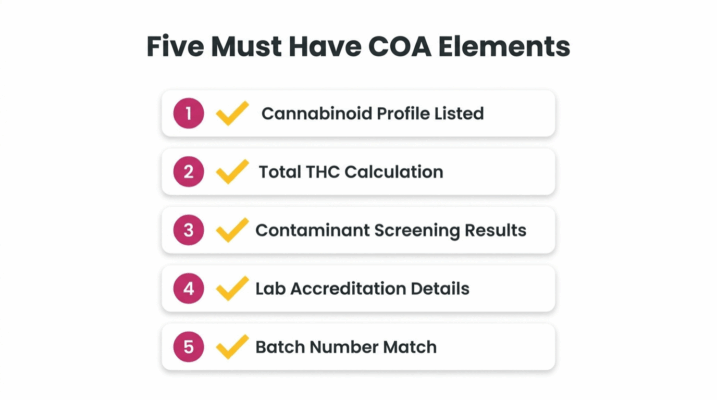
You should look for several key data points on a THCA certificate of analysis (COA):
A COA missing any of these elements should raise concern. Always cross-reference the batch number on the product label with the one printed on the report itself.
You evaluate THCA potency and purity by comparing the COA’s cannabinoid percentages against the product’s marketed claims and checking for contaminant-free results. A high THCA percentage on the lab report should closely match the potency listed on the packaging; significant discrepancies suggest poor quality control.
Purity evaluation goes beyond cannabinoid content. Clean products will show “not detected” or values well below action limits for pesticides, heavy metals like lead and arsenic, and residual solvents. For consumers who plan to smoke or vape THCA flower, this step is especially critical because inhalation bypasses the body’s digestive filtration.
Prioritizing brands that publish current, batch-matched COAs makes selecting safe THCA products far more straightforward.
You can get lab-tested THCA products delivered by ordering from reputable online hemp retailers that provide third-party certificates of analysis. Below, learn how IndaCloud serves this need and review the key takeaways from this guide.
Yes, IndaCloud’s hemp-derived THCA products can meet your needs if you are looking for lab-tested, federally legal options with convenient home delivery. IndaCloud ships directly to consumers across the continental United States, offering a diverse lineup that includes THCA flower, pre-rolls, vapes, edibles, and concentrates. Every product undergoes comprehensive third-party testing for potency and purity, with certificates of analysis available for review before purchase.
The hemp-derived cannabinoid space has experienced remarkable growth. According to Brightfield Group consumer insights, the market for hemp-derived THC products grew from $200 million in 2020 to $3.5 billion in 2024, with projections reaching $4.4 billion by 2029. IndaCloud backs its offerings with a team of over 35 cannabis experts, free shipping on qualifying orders, and discreet packaging processed within 48 hours. For consumers who prioritize verified quality alongside convenience, this combination of transparency and accessibility makes a meaningful difference.
The key takeaways about THCA benefits, uses, and legality in 2026 center on three areas: emerging therapeutic potential, evolving consumption methods, and a rapidly shifting regulatory landscape.
Staying informed as regulations evolve will help you make confident purchasing decisions throughout 2026 and beyond.
Yes, THC gummies are legal to buy in most of the United States right…
Learn more
Raw, unheated THCA clears your system in roughly 24 to 48 hours. Once you…
Learn more
Yes, edibles show up on drug tests. Standard panels detect THC edibles exactly the…
Learn more
THCP binds cannabinoid receptors roughly 33 times harder than THC in lab testing. THCA,…
Learn more
