


THCA

How Long Does THCA Stay in Your System?
Raw, unheated THCA clears your system in roughly 24 to 48 hours. Once you…
Learn more
You must be 21+ to enter this site
 FREE SHIPPING $89+
 FREE GIFT ON $120+
 100% FEDERALLY LEGAL
 LAB TESTED FOR PURITY
FREE SHIPPING $89+
FREE GIFT ON $120+
100% FEDERALLY LEGAL
LAB TESTED FOR PURITY
FREE SHIPPING $89+
FREE GIFT ON $120+
100% FEDERALLY LEGAL
LAB TESTED FOR PURITY
FREE SHIPPING $89+
FREE GIFT ON $120+
100% FEDERALLY LEGAL
LAB TESTED FOR PURITY
FREE SHIPPING $89+
FREE GIFT ON $120+
100% FEDERALLY LEGAL
LAB TESTED FOR PURITY
FREE SHIPPING $89+
FREE GIFT ON $120+
100% FEDERALLY LEGAL
LAB TESTED FOR PURITY
FREE SHIPPING $89+
FREE GIFT ON $120+
100% FEDERALLY LEGAL
LAB TESTED FOR PURITY
FREE SHIPPING $89+
FREE GIFT ON $120+
100% FEDERALLY LEGAL
LAB TESTED FOR PURITY
LAB TESTED FOR PURITY
FREE SHIPPING $89+
FREE GIFT ON $120+
100% FEDERALLY LEGAL
LAB TESTED FOR PURITY
FREE SHIPPING $89+
FREE GIFT ON $120+
100% FEDERALLY LEGAL
LAB TESTED FOR PURITY
FREE SHIPPING $89+
FREE GIFT ON $120+
100% FEDERALLY LEGAL
LAB TESTED FOR PURITY
FREE SHIPPING $89+
FREE GIFT ON $120+
100% FEDERALLY LEGAL
LAB TESTED FOR PURITY
FREE SHIPPING $89+
FREE GIFT ON $120+
100% FEDERALLY LEGAL
LAB TESTED FOR PURITY
FREE SHIPPING $89+
FREE GIFT ON $120+
100% FEDERALLY LEGAL
LAB TESTED FOR PURITY
FREE SHIPPING $89+
FREE GIFT ON $120+
100% FEDERALLY LEGAL
LAB TESTED FOR PURITY

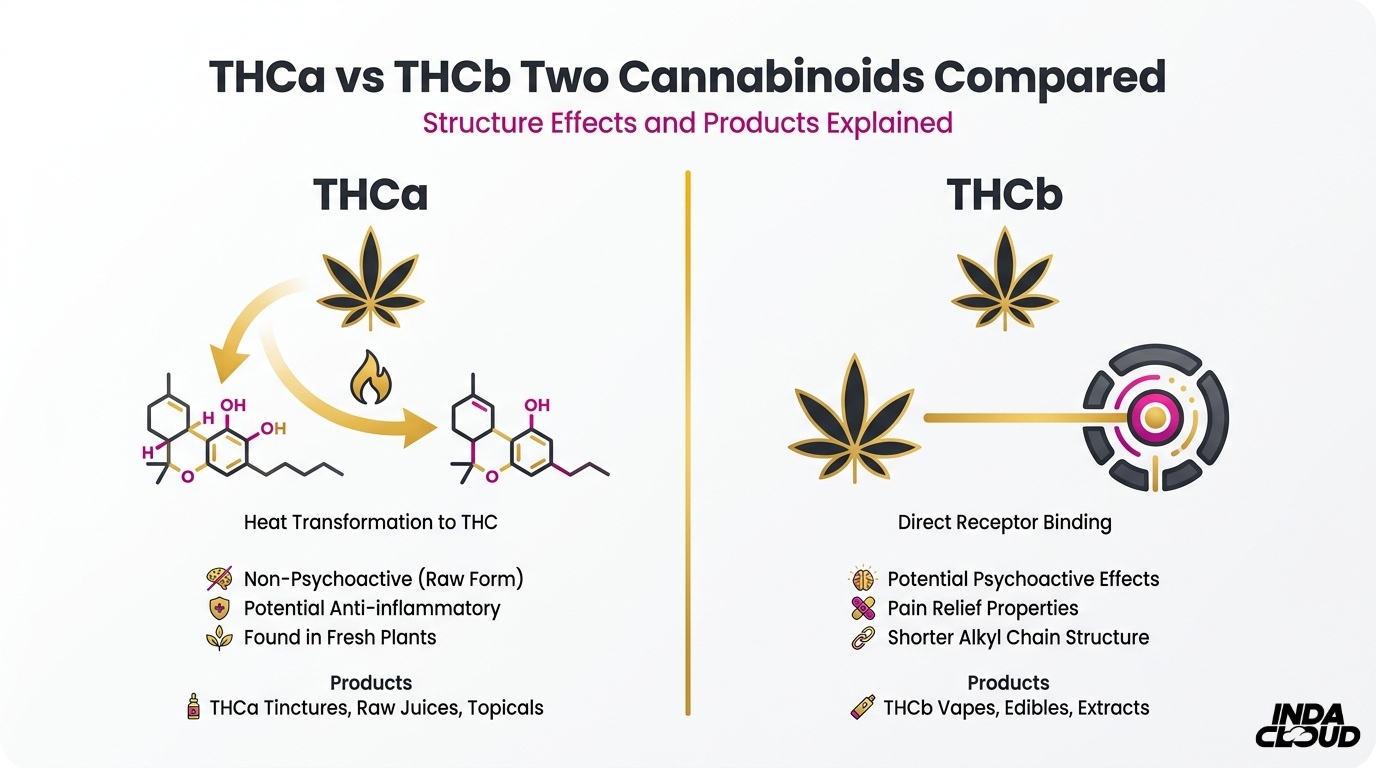
THCa is a non-psychoactive acidic cannabinoid abundant in raw cannabis that converts to intoxicating THC through heat, while THCb is a rare minor cannabinoid with a shorter side chain and stronger receptor binding that produces effects without conversion.
This guide covers their molecular structures and conversion processes, how their effects and psychoactive profiles compare, receptor binding strength and potency differences, product availability and legal status, and practical guidance for choosing between them.
THCa carries a carboxylic acid group and a five-carbon pentyl side chain with the molecular formula C₂₂H₃₀O₄. This acid group blocks CB1 receptor binding, keeping THCa non-intoxicating until decarboxylation removes it at temperatures between 220°F and 250°F. Raw cannabis flower commonly contains 20% to 30% THCa, making it one of the most plentiful cannabinoids in the plant.
THCb features a four-carbon butyl side chain and the molecular formula C₂₂H₃₀O₂, with no carboxylic acid group requiring removal. First isolated by Italian researchers in 2019, THCb accounts for less than 1% of total cannabinoids in raw cannabis yet binds CB1 receptors with roughly three-fold higher affinity than conventional THC.
Raw THCa supports anti-inflammatory, neuroprotective, and anti-nausea pathways without cognitive impairment, while heated THCa delivers the familiar THC experience. THCb leans toward pronounced physical relaxation and potential analgesic effects through its potent receptor engagement.
THCa flower and pre-rolls dominate the hemp market under the 2018 Farm Bill’s 0.3% Delta-9 THC threshold, while THCb products remain limited to blended vapes and edibles. State-level regulations continue evolving for both cannabinoids, making third-party lab testing and transparent sourcing essential for safe purchasing.
THCa is a naturally occurring acidic cannabinoid found in raw cannabis that serves as the precursor to THC. Its chemical structure, conversion process, and natural abundance are explored below.
The chemical structure of THCa is defined by the molecular formula C22H30O4 and the IUPAC name (6aR,10aR)-1-hydroxy-6,6,9-trimethyl-3-pentyl-6a,7,8,10a-tetrahydro-6H-benzo[c]chromene-2-carboxylic acid. What distinguishes THCa from THC is a carboxylic acid group (-COOH) attached to the molecule, which prevents it from binding effectively to CB1 receptors. According to PubChem at the National Center for Biotechnology Information, this carboxyl group is the key structural feature that keeps THCa non-intoxicating in its raw form. THCA synthase biosynthesizes THCa from cannabigerolic acid (CBGA), and the compound accumulates in glandular trichomes where it can represent up to 90% of total THC content in the living plant. Understanding this acid-form structure is essential when comparing THCa to newer cannabinoids like THCb.
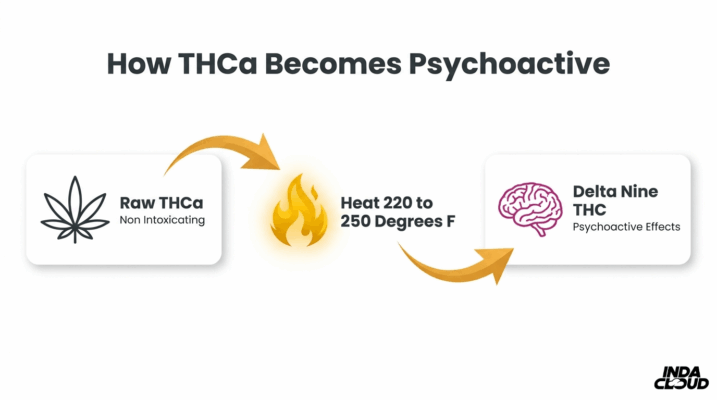
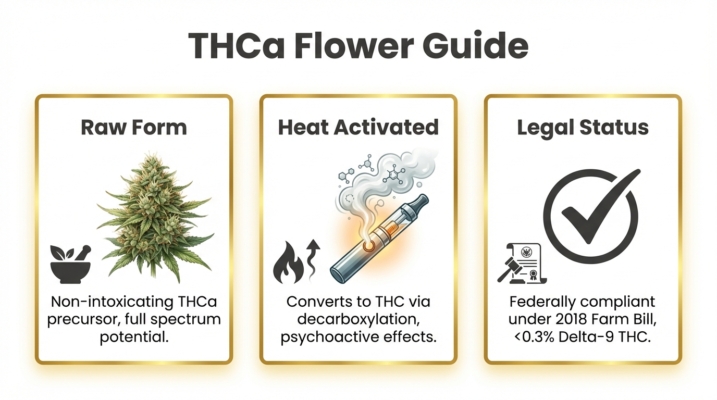
THCa converts into THC through decarboxylation, a heat-driven chemical reaction that removes the carboxylic acid group as carbon dioxide. This process typically occurs at temperatures between 220°F and 250°F (104°C to 121°C) over 30 to 60 minutes, according to Beachview Treatment. Once the acidic moiety is removed, the resulting THC molecule fits into CB1 receptors in the brain, producing psychoactive effects. Smoking, vaping, or baking cannabis all trigger this conversion. Without decarboxylation, THCa remains non-intoxicating, which is why raw cannabis flower does not produce a high when consumed without heat.
Natural sources that contain high levels of THCa include raw, unheated cannabis flower, particularly cultivars bred for potency. A high THCa percentage in cannabis flower typically falls between 20% and 30%, with test results above 25% indicating elite cultivars, according to Botany Farms. Consumer interest has increasingly shifted toward strain-specific products that preserve the plant’s natural trichome and terpene content. Fresh-frozen cannabis and live resin extracts also retain elevated THCa levels because they bypass the heat exposure that triggers decarboxylation. For those comparing cannabinoid options, THCa’s widespread availability in flower stands in sharp contrast to rarer compounds like THCb.
With THCa’s structure and sources established, understanding THCb reveals how a small molecular change creates a very different cannabinoid.
THCb is a minor cannabinoid distinguished by its four-carbon butyl side chain and notable binding affinity for CB1 and CB2 receptors. The sections below cover its chemical structure, receptor interactions, and discovery.
The chemical structure of THCb features a butyl (four-carbon) side chain attached to the classic cannabinoid scaffold, with the molecular formula C₂₂H₃₀O₂. This shorter side chain sets THCb apart from THC, which carries a five-carbon pentyl chain. According to a 2019 study published in the Journal of Natural Products by Linciano et al., Δ9-Tetrahydrocannabutol (Δ9-THCB) was isolated from a medicinal Cannabis sativa variety and characterized by this distinct butyl configuration.
The single-carbon difference may seem minor, yet side-chain length directly influences how cannabinoids interact with biological targets. For consumers exploring options beyond conventional THC, this structural variation is what gives THCb its unique pharmacological profile.
THCb interacts with cannabinoid receptors by binding to both the human CB1 and CB2 receptors with measurable affinity. A 2019 study published in Scientific Reports by Citti et al. found that Δ9-THCB showed an affinity for the human CB1 receptor with a Ki value of 15 nM and for the CB2 receptor with a Ki value of 51 nM. This strong CB1 binding suggests THCb can produce psychoactive effects, while its CB2 activity may influence immune and inflammatory pathways.
Despite this receptor affinity, THCb remains a minor cannabinoid, accounting for less than 1% of total cannabinoids in raw cannabis plant material. Its scarcity in nature means most THCb products rely on targeted extraction or conversion processes to achieve usable concentrations.
THCb was discovered in 2019 by a team of Italian researchers who identified and isolated it from a medicinal Cannabis sativa variety. The team, led by Linciano and colleagues, published their findings in the Journal of Natural Products after using advanced analytical techniques including liquid chromatography and mass spectrometry to separate THCb from the plant’s complex cannabinoid profile.
Before this identification, cannabinoids with butyl side chains had gone undetected due to their extremely low concentrations. The discovery opened a new chapter in cannabinoid science, prompting researchers to investigate whether other rare, short-chain cannabinoids might offer distinct therapeutic or psychoactive properties worth exploring further.
With its unique structure and receptor activity now established, the next question becomes how THCb compares to THCa in chemical composition.
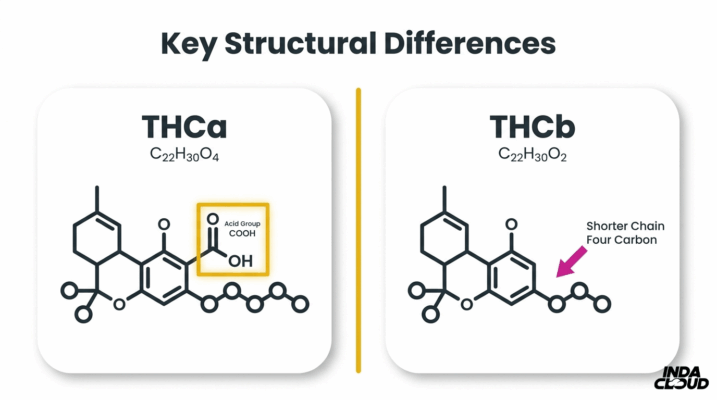
THCa and THCb differ in chemical composition primarily through their molecular formulas, side chain lengths, and functional groups. THCa carries a carboxylic acid group and a five-carbon (pentyl) side chain, while THCb features a shorter four-carbon (butyl) side chain and lacks the acidic moiety. These structural differences shape how each cannabinoid interacts with the body.
THCa has the molecular formula C₂₂H₃₀O₄, which includes the carboxyl group (COOH) responsible for its classification as an acidic cannabinoid. According to PubChem at the National Center for Biotechnology Information, the IUPAC name for THCa-A is (6aR,10aR)-1-hydroxy-6,6,9-trimethyl-3-pentyl-6a,7,8,10a-tetrahydro-6H-benzo[c]chromene-2-carboxylic acid. That carboxyl group prevents THCa from fitting into CB1 receptors, which is why raw THCa does not produce intoxicating effects on its own.
THCb, by contrast, has the molecular formula C₂₂H₃₀O₂. The most notable structural distinction is its butyl (four-carbon) alkyl side chain, one carbon shorter than THCa’s pentyl chain. Despite this seemingly minor difference, side chain length significantly influences how cannabinoids bind to endocannabinoid receptors. THCb also lacks the carboxylic acid group found in THCa, meaning it does not require decarboxylation to interact with CB1 and CB2 receptors.
The key compositional differences between THCa and THCb include:
For anyone evaluating cannabinoid products, these compositional distinctions matter because they directly determine each compound’s receptor activity, bioavailability, and required method of consumption. Understanding how effects differ between these two cannabinoids builds on this structural foundation.
The effects of THCa and THCb differ based on their chemical states and receptor interactions. THCa produces non-intoxicating effects in its raw form but converts to psychoactive THC through heat. THCb interacts directly with cannabinoid receptors at notable potency.
THCa produces non-intoxicating effects before decarboxylation. In its raw acidic form, THCa does not bind effectively to CB1 receptors, so it cannot produce a high. Instead, preclinical research points to several therapeutic properties. According to Beachview Treatment, decarboxylation must occur at 220°F to 250°F over 30 to 60 minutes to remove the carboxyl group and activate psychoactive potential. Until that conversion happens, THCa remains functionally non-psychoactive.
Consumers who juice raw cannabis or use unheated tinctures access THCa without intoxication. This makes raw THCa particularly appealing for those seeking wellness support during daily activities where cognitive clarity matters.
THCa produces the full psychoactive effects of Delta-9 THC after decarboxylation. Once heat removes the carboxyl group, the resulting THC molecule binds to CB1 receptors in the brain and central nervous system. This binding triggers effects such as:
The intensity depends on the original THCa concentration in the flower. Strains containing 20% to 30% THCa convert into equally potent THC, delivering experiences comparable to traditional cannabis. Smoking, vaping, or baking all trigger this conversion, making the consumption method the deciding factor between non-intoxicating and psychoactive outcomes.
THCb produces psychoactive and potentially analgesic effects on the body through strong cannabinoid receptor engagement. Because THCb carries a four-carbon butyl side chain instead of THC’s five-carbon pentyl chain, its receptor interaction profile is distinct. A 2019 study published in Scientific Reports by Citti et al. found that THCb binds to the human CB1 receptor with a Ki value of 15 nM, compared to 41 nM for Delta-9 THC, indicating roughly three-fold higher affinity.
Users report deep relaxation and pain relief, though formal clinical trials remain limited. This stronger binding affinity suggests THCb may produce more pronounced effects at lower doses, making it one of the most intriguing minor cannabinoids for both researchers and consumers.
With their distinct effect profiles now clear, understanding whether each cannabinoid produces intoxication helps guide product selection.
THCa does not get you high in its raw form, while THCb can produce psychoactive effects through direct CB1 receptor interaction. The distinction comes down to receptor binding and molecular activation.
In its natural acidic state, THCa cannot bind effectively to CB1 receptors in the brain. This means consuming raw cannabis flower, juices, or unheated tinctures containing THCa produces no intoxicating effect. Only after decarboxylation, when heat converts THCa into Delta-9 THC, does the molecule become psychoactive. So whether THCa gets you high depends entirely on how you consume it.
THCb operates differently. According to a 2024 analysis in the Journal of Cannabis Research, Δ9-THCB demonstrated a three-fold higher affinity for the human CB1 receptor (Ki = 15 nM) compared to Δ9-THC (Ki = 41 nM). This stronger binding suggests THCb may produce noticeable psychoactive effects without requiring any chemical conversion. Even in small quantities, that elevated receptor affinity could translate to a more pronounced experience.
For consumers weighing these two cannabinoids, the practical takeaway is straightforward. THCa offers flexibility: kept raw, it remains non-intoxicating and wellness-oriented, but once heated, it delivers the familiar THC high. THCb, though far less abundant in cannabis, appears to interact with the endocannabinoid system more aggressively at the receptor level. Understanding how each cannabinoid affects CB1 binding helps clarify which products align with your wellness goals or desired experience.
The potential wellness benefits of THCa vs THCb reflect their distinct mechanisms. THCa targets inflammatory pathways without producing a high, while THCb’s strong receptor binding may support pain relief and relaxation.
THCa supports anti-inflammatory responses by inhibiting key enzymes involved in the body’s inflammatory cascade, particularly cyclooxygenase-2 (COX-2). Because THCa does not convert to psychoactive THC when consumed raw, it offers a non-intoxicating route to these benefits.
According to a review published in PMC on acidic cannabinoids, preclinical studies suggest that THCa possesses anti-inflammatory, anticonvulsant, neuroprotective, anti-nausea, and anti-cancer properties. These findings position THCa as one of the more versatile raw cannabinoids for everyday wellness routines. For those prioritizing functional support without cognitive impairment, THCa’s preclinical profile is particularly compelling.
THCb influences pain and relaxation through its potent affinity for CB1 and CB2 cannabinoid receptors, which regulate pain signaling and stress responses throughout the endocannabinoid system. Its butyl side chain enables strong receptor engagement, and early observations suggest pronounced analgesic and calming effects compared to more common cannabinoids.
Users exploring THCb often report deep physical relaxation and relief from tension, though formal clinical trials remain limited. Given its receptor binding strength, even small amounts may produce noticeable effects, making careful dosing essential for newcomers.
With wellness profiles now outlined, potency and binding affinity further distinguish these two cannabinoids.
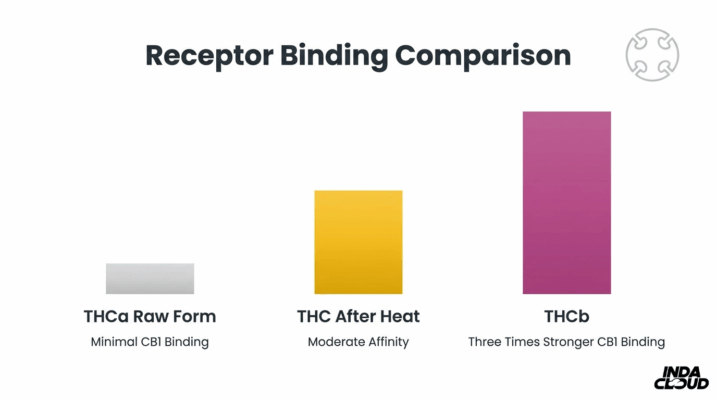
THCa and THCb differ in potency and binding affinity primarily through their interaction with CB1 and CB2 cannabinoid receptors. THCa in its raw acidic form shows minimal receptor binding, while THCb demonstrates notably strong affinity for both receptor types. The contrast becomes especially clear when comparing receptor binding data.
THCa lacks significant CB1 receptor affinity in its unheated state because its carboxylic acid group prevents it from fitting into the receptor’s binding pocket. Only after decarboxylation, when THCa converts to THC, does meaningful CB1 activation occur. This makes raw THCa functionally non-intoxicating, despite its abundance in cannabis flower.
THCb, by contrast, binds potently to cannabinoid receptors without requiring any chemical conversion. According to a 2019 study published in Scientific Reports (Citti et al.), Δ9-THCB demonstrated a CB1 receptor Ki value of 15 nM and a CB2 receptor Ki value of 51 nM. For context, Δ9-THC has a CB1 Ki of approximately 41 nM, meaning THCb shows roughly three-fold stronger CB1 affinity than conventional THC.
Key binding affinity comparisons:
A lower Ki value indicates tighter receptor binding, so THCb’s 15 nM figure reflects considerably stronger CB1 engagement than even decarboxylated THC achieves. This stronger affinity suggests THCb could produce more pronounced psychoactive effects at lower concentrations, though human clinical trials remain limited. For anyone comparing these two cannabinoids, the practical takeaway is straightforward: THCa requires heat to become active, while THCb arrives potent by nature. Understanding these receptor dynamics helps when choosing between cannabinoid product types.
THCa and THCb are available in distinct product forms shaped by each cannabinoid’s natural abundance and market maturity. THCa dominates flower and concentrate categories, while THCb appears primarily in blended formulations.
The most common THCa products are flower, pre-rolls, concentrates, and diamonds. THCa flower leads the category because the cannabinoid occurs naturally at high concentrations in raw cannabis. According to Ideal Plus, THCa flower market share in the US grew from less than 2% of cannabinoid product sales in 2020 to approximately 15% by 2025. Other widely available forms include:
This range of formats reflects strong consumer demand for products that preserve THCa in its non-decarboxylated state.
The most common THCb products are vape cartridges, disposable pens, and cannabinoid-blend edibles. Because THCb occurs at trace levels in raw cannabis, manufacturers typically isolate or synthesize it for inclusion in multi-cannabinoid formulations rather than single-ingredient products. Common THCb product forms include:
Standalone THCb flower does not exist commercially due to the cannabinoid’s scarcity in plant material. For consumers exploring both cannabinoids, lab-tested options from trusted retailers help ensure accurate potency and purity.
THCa legality differs from THCb legality primarily because of how federal hemp law addresses Delta-9 THC content. The following subsections explain what the 2018 Farm Bill means for each cannabinoid.
The 2018 Farm Bill means THCa legality hinges on the Delta-9 THC concentration in the source plant. Under this legislation, hemp is federally defined as Cannabis sativa L. containing no more than 0.3% Delta-9 THC on a dry weight basis, which has created a legal pathway for THCa products that meet this threshold. Because THCa itself is not Delta-9 THC, raw hemp flower rich in THCa can qualify as legal hemp, provided it stays within the 0.3% limit. However, state-level regulations vary significantly; some states have moved to restrict THCa products by accounting for total potential THC after decarboxylation. Consumers should always verify their state’s specific cannabinoid laws before purchasing.
The 2018 Farm Bill means THCb legality occupies a gray area in federal regulation. The bill specifically references Delta-9 THC concentration, not THCb, so hemp-derived THCb products containing under 0.3% Delta-9 THC are not explicitly prohibited at the federal level. Still, this silence creates uncertainty rather than clear authorization. Because THCb was only identified in 2019 and remains a trace-level compound, regulators have not addressed it with the same specificity as more prevalent cannabinoids. For consumers navigating this evolving landscape, prioritizing products with third-party lab testing and transparent certificates of analysis remains the most practical safeguard. With legal frameworks still developing, understanding product sourcing helps inform smarter purchasing decisions.
You should choose between THCa and THCb products based on your desired effects, tolerance level, and wellness goals. The factors that matter most include potency preferences, product legality, and whether you seek relaxation or everyday support.
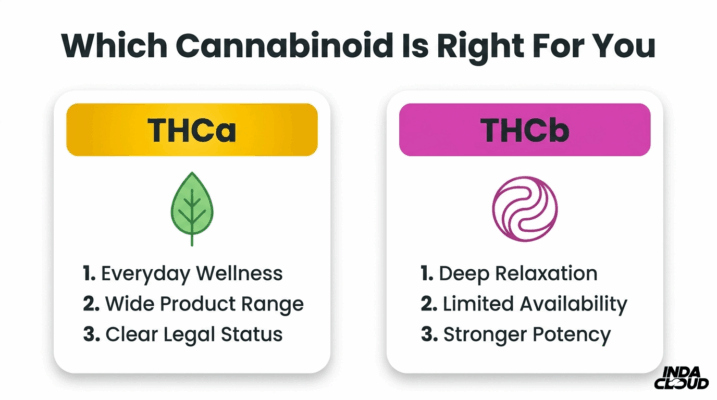
The factors that matter when selecting a cannabinoid include potency, intended use, legal status, and product availability. THCa is widely accessible in flower, pre-rolls, and edibles, while THCb remains a rare minor cannabinoid found in less than 1% of raw cannabis material. Consider these key selection criteria:
For most consumers, starting with THCa offers a more predictable, well-documented experience before exploring newer cannabinoids like THCb.
THCa is generally better for everyday wellness, while THCb may suit those seeking deeper relaxation. In its raw form, THCa provides non-psychoactive support; preclinical research published in a 2024 update on acidic cannabinoids suggests THCa possesses anti-inflammatory, neuroprotective, and anti-nausea properties. This profile makes raw THCa practical for daily routines without cognitive impairment.
THCb, given its strong CB1 receptor affinity, leans toward pronounced physical relaxation and potential analgesic effects. However, limited clinical data means individual responses vary significantly. Those prioritizing functional daytime use typically gravitate toward THCa products, while consumers comfortable with stronger psychoactive experiences may prefer THCb for evening wind-down sessions.
Knowing the distinction between non-intoxicating wellness support and potent relaxation helps narrow down which products align with your lifestyle.
You can find lab-tested THCa and THCb products online by purchasing from retailers that provide third-party certificates of analysis and use hemp-derived, federally compliant cannabinoids. Below, learn how Inda Cloud meets these standards and review the key differences between THCa and THCb.
Yes, Inda Cloud offers hemp-derived cannabinoid products through its direct-to-consumer online store at indacloud.co. Inda Cloud specializes in federally legal, lab-tested THC products, including THCa flower, pre-rolls, edibles, and vapes. Every product undergoes comprehensive third-party testing to verify potency and purity, with detailed lab reports available to consumers.
Inda Cloud carries THCa flower in Indica, Sativa, and Hybrid strains, all containing less than 0.3% Delta-9 THC on a dry weight basis. Orders ship free on purchases over $89, with nondescript packaging and dispatch within 48 hours. Backed by over 250,000 verified customers and a team of 35+ cannabis experts, Inda Cloud provides a transparent, quality-focused source for exploring both THCa and emerging cannabinoids like THCb.
The key takeaways about THCa vs THCb center on their structural differences, psychoactive profiles, and availability. THCa is a non-psychoactive precursor found abundantly in raw cannabis that converts to THC through heat, while THCb is a rare minor cannabinoid with a shorter butyl side chain and notably stronger receptor binding affinity.
Core distinctions to remember:
Choosing between them depends on your goals: THCa suits those seeking raw-form wellness support or a familiar THC experience after heating, while THCb appeals to users curious about potent, lesser-known cannabinoids. Prioritizing lab-tested products from transparent retailers ensures safety regardless of which cannabinoid you select.
Raw, unheated THCA clears your system in roughly 24 to 48 hours. Once you…
Learn more
THCP binds cannabinoid receptors roughly 33 times harder than THC in lab testing. THCA,…
Learn more
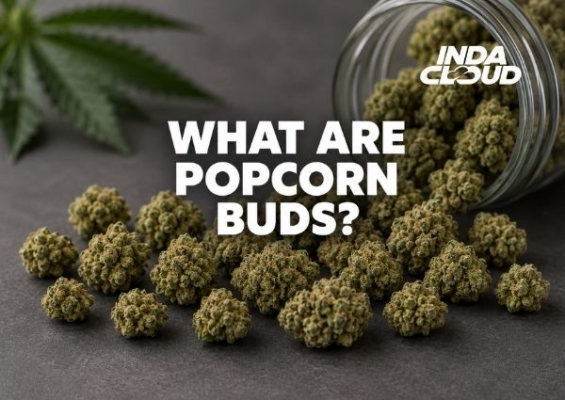
Popcorn buds are small, whole flower pulled out of a harvest and sorted by…
Learn more
THCA flower keeps best in an airtight glass jar held at 58 to 62%…
Learn more
