FREE SHIPPING $89+
 FREE GIFTS ALL ORDERS $120+
 100% FEDERALLY LEGAL
  LAB TESTED FOR PURITY


The art of joint smoke is the deliberate control of every variable, from grind consistency and paper selection to lighting technique and inhalation, that determines the quality of your session.
This guide covers preparation fundamentals, rolling and lighting mechanics, inhalation and troubleshooting methods, flower quality and storage science, and advanced techniques including premium pre-rolls.
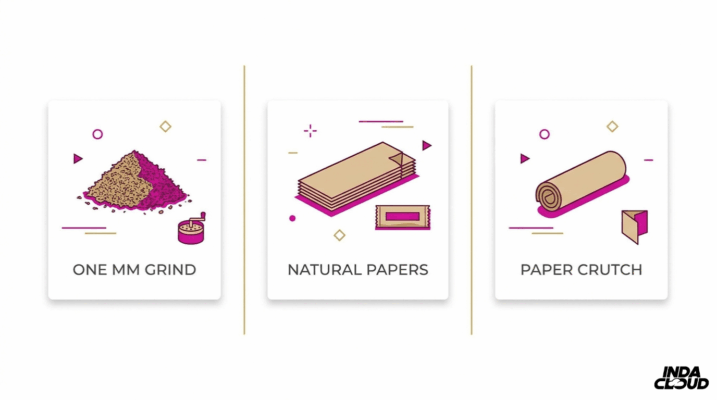
Preparation starts with achieving a uniform 1 mm grind for optimal cannabinoid release, choosing unbleached rolling papers to minimize chemical exposure, and building a paper crutch that maintains open airflow without filtering out active compounds.
Rolling a joint that smokes perfectly requires even flower distribution, a smooth tuck-and-seal technique, and proper tip packing where gradual taper supports consistent burn progression from the first draw to the last.
Lighting and inhalation work together to shape each hit. Toasting the tip evenly while rotating the joint prevents canoeing, and a controlled mouth-to-lung draw at moderate depth maximizes cannabinoid absorption without throat irritation.
Flower quality and storage directly influence burn consistency, flavor, and potency. Maintaining 55–65% relative humidity preserves terpene content that degrades rapidly under poor conditions, while matching cannabinoid potency to personal tolerance keeps sessions enjoyable.
Group etiquette, proper joint storage, and advanced methods like cone rolling, inside-out rolls, and concentrate infusions push the experience further. For those who want expert-level consistency without hand-rolling, IndaCloud’s lab-tested hemp-derived pre-rolls apply these principles at the production level.
What Do You Need to Know Before Smoking a Joint?
Before smoking a joint, you need to understand three preparation fundamentals: grind consistency, rolling paper material, and filter construction. Each factor directly shapes airflow, flavor, and burn quality.
What Is the Ideal Grind Consistency for Joint Smoking?
The ideal grind consistency for joint smoking is a medium-fine grind with a particle size around 1 mm. According to a study published in Cannabis Science and Technology, a 1 mm particle size released the largest quantity of THC compared to larger sizes when packed in a joint.
Grinding too fine creates a dense pack that restricts airflow and causes harsh draws. Grinding too coarse leaves air pockets that produce uneven burning. A quality herb grinder with multiple chambers helps achieve that consistent medium texture. For most smokers, two to three twists in a standard grinder deliver the right balance between surface area exposure and airflow.
How Does Rolling Paper Material Affect Your Smoke?
Rolling paper material affects your smoke by influencing burn rate, flavor purity, and chemical exposure. Common materials include rice, hemp, wood pulp, and unbleached cellulose, each with distinct combustion characteristics.
- Rice papers burn slowly and produce minimal ash, offering a clean taste.
- Hemp papers provide moderate burn speed with natural flavor compatibility.
- Wood pulp papers ignite easily but burn faster and can mask terpene profiles.
- Unbleached or uncolored options reduce chemical exposure during combustion.
A 2024 study in ACS Omega found that some commercially available rolling papers with Cu-based pigments might result in copper exposures 4.5 to 11 times maximum pharmaceutical exposure limits. Choosing natural, uncolored papers is one of the simplest ways to reduce unnecessary inhalation risks. Inside-out rolling, which burns off excess paper, can further minimize paper consumption for a cleaner flavor profile.
What Role Does the Filter or Crutch Play in a Joint?
The filter, or crutch, plays a structural and functional role in a joint by preventing herb from entering the mouth, maintaining the joint’s cylindrical shape, and regulating airflow. Most hand-rolled joints use a paper crutch folded into an accordion or “W” shape at the mouthpiece end.
Paper crutches allow relatively open airflow, which supports fuller draws. Cigarette-style cotton filters, by contrast, restrict airflow and create a tighter drag that can reduce the amount of smoke inhaled per puff, according to HempElf. That tighter restriction may also filter out some cannabinoids, which is why most experienced smokers prefer a simple paper crutch over cotton alternatives.
A well-constructed crutch also keeps the mouthpiece from collapsing as moisture accumulates during a session. With preparation fundamentals covered, the next step is learning how to roll a joint that burns evenly.
How Do You Roll a Joint That Smokes Perfectly?
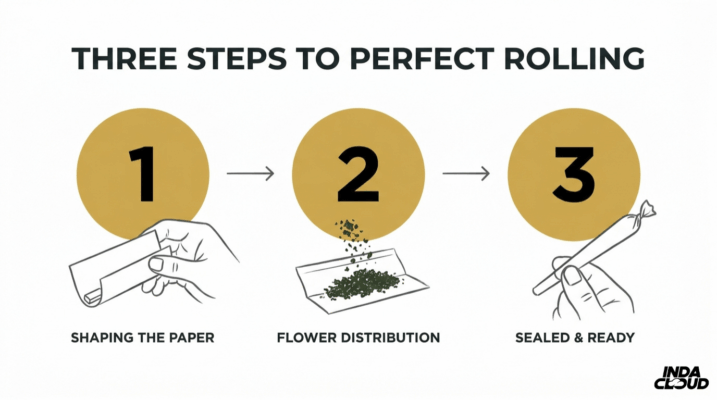
You roll a joint that smokes perfectly by mastering three stages: shaping the paper with even flower distribution, tucking and sealing without tearing, and packing the tip for a consistent burn.
How Do You Shape the Paper and Distribute the Flower?
You shape the paper and distribute the flower by holding the rolling paper with the adhesive strip facing you along the top edge, then spreading ground cannabis evenly along the crease. Place slightly less flower near the filter end and a bit more toward the opposite side if rolling a cone shape. Use your fingertips to gently press the material into a uniform line, removing any stems or clumps that could create air pockets. Even distribution prevents hot spots and ensures each draw pulls smoke through a consistent density of flower from start to finish.
How Do You Tuck and Seal the Joint Without Tearing?
You tuck and seal the joint without tearing by rolling the flower back and forth between your thumbs and forefingers until it forms a compact cylinder. Once shaped, tuck the unglued edge of the paper snugly around the cannabis, starting from the filter side and working outward. This anchor point gives the rest of the paper a guide to wrap tightly. Lick the adhesive strip lightly, then press it down with steady, even pressure. Rushing this step or using too much moisture weakens the paper. A smooth, crease-free seal is essential for preventing air leaks that cause uneven burns.
How Do You Pack and Twist the Tip for an Even Burn?
You pack and twist the tip for an even burn by using a pen, chopstick, or similar tool to gently tamp the flower down from the open end. Avoid packing too tightly, which restricts airflow and makes drawing difficult. According to Futurola, the degree of taper in a cone directly affects airflow and burn progression, where a gradual taper supports an even burn compared to cylindrical shapes. After packing, pinch the excess paper at the tip and twist it into a tight point. This twisted end acts as a wick when you light it, promoting uniform ignition across the entire surface.
With a well-packed joint in hand, the next step is learning how to light it properly.
How Do You Properly Light a Joint for the Best Hit?
You properly light a joint for the best hit by toasting the tip with a gentle flame before drawing. The subsections below cover toasting technique, rotation during lighting, and common mistakes that cause uneven burns.
How Should You Toast the Tip Before Your First Draw?
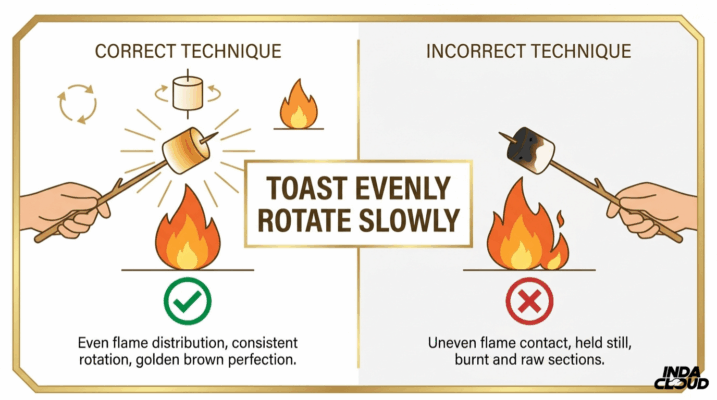
You should toast the tip by holding the flame just below the end of the joint and letting radiant heat ignite the flower before inhaling. According to Smoke Cones, the best way to light a joint is to toast the tip evenly before taking slow, gentle draws while rotating the joint in the flame to ensure even ignition patterns.
Hold the joint at a slight angle and let the outermost layer of flower catch first. Once a small cherry forms uniformly across the tip, take your first soft puff. Rushing this step with hard pulls draws the flame unevenly into the cone, setting the stage for a lopsided burn from the very first hit.
Why Should You Rotate the Joint While Lighting It?
You should rotate the joint while lighting it because consistent rotation exposes every side of the tip to equal heat. Without rotation, one edge catches flame while the opposite side remains unlit, creating an asymmetrical cherry that worsens with each subsequent puff.
A slow, steady spin between your thumb and index finger during the first few seconds of contact with the flame distributes heat around the entire circumference. This produces a ring of evenly glowing embers rather than a single hot spot. For most smokers, a quarter-turn every second or two is enough to establish that balanced cherry before transitioning into normal draws.
What Mistakes Cause Uneven Lighting or Canoeing?
The mistakes that cause uneven lighting or canoeing include drawing too hard on the first puff, holding the flame at one fixed point, and smoking a joint with inconsistent moisture levels. According to Custom Cones USA, uneven moisture content within a pre-roll is the common denominator that causes canoeing, as materials with different moisture levels burn at different rates.
Other frequent errors that contribute to canoeing:
- Lighting the joint in wind without shielding the flame, which directs heat to one side.
- Packing the flower too loosely on one edge and too tightly on another, creating airflow imbalances.
- Using a torch lighter held too close, which scorches the paper faster than the flower can ignite.
Addressing these factors before and during the light ensures the cherry tracks evenly down the joint, preserving flavor and minimizing waste. With lighting technique dialed in, the next step is mastering how you inhale.
What Inhalation Technique Gives You the Smoothest Hit?
The smoothest hit comes from controlling how deeply you inhale, how long you hold smoke, and whether you use a mouth draw or direct lung hit. Each variable affects comfort, flavor, and cannabinoid absorption.
How Deep Should You Inhale Joint Smoke Into Your Lungs?
You should inhale joint smoke into your lungs with a moderate, comfortable depth rather than forcing the deepest breath possible. A slow, steady draw that fills about two-thirds of your lung capacity delivers cannabinoids efficiently without triggering harsh coughing fits. After pulling smoke into your mouth, follow with a small sip of fresh air to carry it deeper into the airways. According to Vanderbilt University Medical Center, bioavailability after cannabis inhalation ranges from 10–35%, with variability attributed to the number, duration, and interval of puffs as well as breath-hold time. Shallow sips waste flower, but aggressive gulps irritate bronchial tissue unnecessarily. A controlled, medium-depth inhale strikes the best balance between absorption and comfort.
How Long Should You Hold the Smoke Before Exhaling?
You should hold the smoke before exhaling for approximately two to three seconds. Most cannabinoid absorption occurs almost instantly upon contact with lung tissue, so extended breath holds of ten or more seconds offer diminishing returns while increasing tar exposure. A brief pause gives THC and other compounds enough time to transfer across the alveolar membrane without subjecting your airways to prolonged irritation. Exhaling smoothly and steadily, rather than in a forceful burst, also reduces coughing. For those prioritizing a smoother session, this short hold paired with a relaxed exhale consistently delivers better results than the old myth of holding smoke as long as possible.
When Should You Take a Mouth Draw Versus a Direct Lung Hit?
You should take a mouth draw when you want cooler, more flavorful smoke and a direct lung hit when you prioritize intensity. A mouth draw, also called mouth-to-lung, involves pulling smoke into the oral cavity first, then inhaling into the lungs with a second breath. This two-step approach cools the smoke slightly and lets you taste terpene profiles more clearly. A direct lung hit bypasses the mouth hold entirely, drawing smoke straight into the lungs in one continuous inhale for stronger effects per puff. Beginners generally find the mouth draw gentler and easier to control. Experienced smokers often alternate between both techniques depending on the session’s pace.
With inhalation dialed in, knowing how to troubleshoot common problems keeps every session smooth.
How Do You Prevent Common Joint Smoking Problems?
You prevent common joint smoking problems by addressing canoeing, running, extinguishing, and harshness before they ruin your session. The following subsections cover fixes for each issue.
How Do You Fix a Joint That Starts Canoeing Mid-Smoke?
You fix a joint that starts canoeing mid-smoke by targeting the faster-burning side directly. Lick your fingertip and dab saliva along the edge that is burning too quickly; the moisture slows combustion on that side and lets the slower side catch up. If the canoe is severe, hold a lighter briefly to the unburned portion to even the cherry. According to Custom Cones USA, uneven moisture content within a pre-roll is the common denominator that causes canoeing, as materials with different moisture levels burn at different rates. Preventing it starts during preparation: grind flower to a uniform consistency and pack it evenly throughout the joint.
What Causes a Joint to Run and How Do You Stop It?
A joint runs when one side burns faster than the other, typically due to uneven packing, inconsistent grind, or wind exposure. Running differs from canoeing in severity; a run creates a thin trail of fast-burning paper that wastes flower.
To stop a running joint:
- Rotate the joint so the running side faces upward, letting gravity slow the burn.
- Apply a small amount of saliva directly ahead of the run to create a moisture barrier.
- Relight the lagging side gently with a hemp wick or lighter held at a distance.
Packing flower firmly and evenly during the roll is the most reliable way to prevent runs from starting. Shielding the joint from wind during your session also helps maintain a consistent burn line.
Why Does a Joint Go Out and How Do You Relight It Properly?
A joint goes out because airflow through the flower decreases, usually from overly tight packing, excess moisture, or long pauses between draws. Loosely rolled joints can also extinguish if the cherry loses contact with surrounding material.
To relight properly, gently ash any charred material from the tip first. Then hold the flame just below the end while rotating the joint slowly, allowing the cherry to re-establish evenly. Avoid holding the flame directly against the paper, which can cause a fresh canoe. Taking a few short, gentle puffs while lighting helps draw heat inward without scorching. For group sessions, consistent puff intervals keep the cherry active and reduce the need to relight altogether.
How Do You Avoid Harsh Hits That Irritate Your Throat?
You avoid harsh hits that irritate your throat by controlling draw speed, flower moisture, and paper choice. Drawing too hard overheats the cherry, producing hotter, more irritating smoke. Slow, measured puffs keep combustion temperatures lower and deliver smoother hits.
Other factors that reduce harshness include:
- Using thin, unbleached rolling papers, which add less combustion byproduct to each draw.
- Ensuring flower is stored at proper humidity before rolling; overly dry cannabis burns hot and produces acrid smoke.
- Including a well-constructed crutch or filter tip, which cools smoke slightly before it reaches your mouth.
Pairing proper technique with quality materials makes the difference between a comfortable session and a coughing fit. With these troubleshooting strategies covered, flower quality itself plays the next major role in your experience.
How Does Flower Quality Affect Your Joint Smoking Experience?
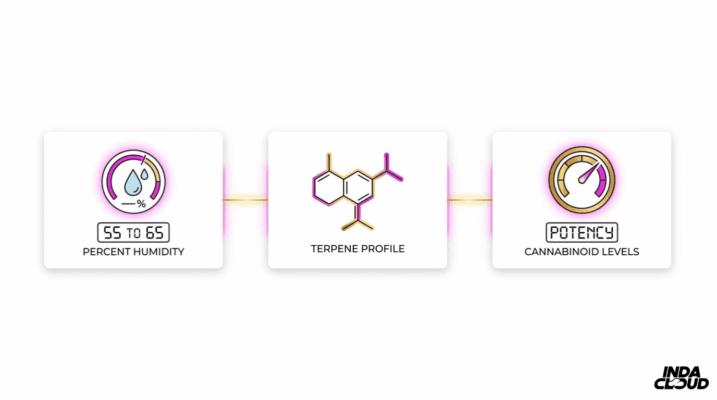
Flower quality affects your joint smoking experience by determining burn consistency, flavor intensity, and cannabinoid delivery. Moisture content, terpene profile, and cannabinoid potency each play distinct roles.
How Does Moisture Content Change the Way a Joint Burns?
Moisture content changes the way a joint burns by creating uneven combustion rates throughout the flower. When sections of a joint contain different moisture levels, drier areas ignite faster while wetter areas lag behind, leading to canoeing and wasted material. For properly cured cannabis, ASTM International established an optimal storage humidity range of 55–65% relative humidity. Flowers stored within this range maintain structural integrity, burn evenly, and produce smooth, consistent draws. Overly dry flower crumbles during grinding and combusts too quickly, producing harsh smoke. Overly wet flowers resist ignition and require constant relighting. Checking the moisture balance before rolling is one of the simplest ways to improve every session.
Why Does Terpene Profile Matter for Flavor and Smoothness?
Terpene profile matters for flavor and smoothness because terpenes are the aromatic compounds responsible for each strain’s distinct taste, aroma, and throat feel. Myrcene contributes earthy, musky notes with a relaxing quality, while limonene delivers bright citrus flavor and a lighter exhale. Pinene adds a crisp, piney sharpness that many smokers find refreshing. Beyond flavor, terpenes influence perceived smoothness; strains rich in linalool tend to produce a gentler throat sensation compared to terpinolene-dominant varieties. Proper storage preserves these volatile compounds. Degraded terpenes result in flat, hay-like flavor regardless of how well a joint is rolled. Selecting a flower with a robust, intact terpene profile elevates the entire smoking experience from ordinary to memorable.
How Do Cannabinoid Potency Levels Influence Your Session?
Cannabinoid potency levels influence your session by determining the intensity, onset speed, and duration of effects. Higher THC concentrations produce stronger psychoactive effects per puff, meaning fewer draws are needed to reach the desired state. A study published in Cannabis Science and Technology found that a 1 mm particle size released the largest quantity of THC compared to larger sizes, demonstrating that grind consistency and flower preparation directly impact how much cannabinoid your body actually receives. CBD-rich flower, by contrast, moderates psychoactive intensity and may promote a calmer, more balanced experience. For most smokers, matching potency to personal tolerance prevents overconsumption and keeps each session enjoyable rather than overwhelming.
Understanding these flower variables helps you select and prepare cannabis that complements your rolling and lighting technique.
What Are the Best Tips for Smoking a Joint in a Group?
The best tips for smoking a joint in a group focus on keeping the joint lit and following consistent rotation etiquette. These practices ensure an even, enjoyable session for everyone in the circle.
How Do You Keep the Joint Burning Between Passes?
You keep the joint burning between passes by minimizing idle time and taking deliberate puffs before handing it off. A joint that sits too long without airflow loses its cherry and requires relighting, which wastes flower and disrupts the session.
To maintain a steady burn:
- Take one or two gentle puffs right before passing to keep the ember active.
- Avoid setting the joint down on surfaces where it can cool rapidly.
- Hold the joint upright between hits so heat rises naturally through the remaining flower.
- Ash lightly before passing to prevent a buildup that smothers the cherry.
Smaller group circles with fewer people between puffs also reduce the chance of the joint going out entirely. For larger groups, rolling a slightly thicker joint helps sustain combustion through longer rotation gaps.
What Is Proper Joint Rotation Etiquette in a Circle?
Proper joint rotation etiquette in a circle follows the “puff puff pass” custom. According to Cannabis Now, this rotation ensures everyone in a group gets an equal share of the cannabis while preventing the joint from burning out or becoming overly saturated with saliva.
Key etiquette rules include:
- Pass in one consistent direction, typically to the left, throughout the entire session.
- Limit yourself to two puffs per turn before passing.
- Avoid holding the joint while talking or telling a story.
- Wipe the mouthpiece discreetly if needed before handing it to the next person.
- The person who rolled or supplied the joint traditionally takes the first hit.
Consistent rotation keeps the session fair and the joint in motion. For social smokers looking for convenient, ready-to-share options, pre-rolls offer a hassle-free way to start any group circle.
How Should You Store Joints to Preserve Freshness and Burn?
You should store joints in airtight containers kept at stable humidity levels to preserve freshness and burn quality. Proper storage protects cannabinoid potency, terpene content, and moisture balance.
Key storage practices include:
- Use airtight glass containers. Mason jars or UV-resistant glass tubes prevent oxygen exposure and slow degradation.
- Maintain 55–65% relative humidity. ASTM International established this range as optimal for cured cannabis storage; humidity packs help hold it steady.
- Avoid heat and direct light. Both accelerate terpene evaporation and cannabinoid breakdown.
- Store joints upright when possible. This prevents resin from pooling unevenly, which causes erratic burns.
Terpene loss happens faster than most people expect. According to a 2021 study published in the Journal of Cannabis Research, cannabis samples stored without proper humidity control lost between 9.41% and 51.6% of their total terpene content after just four weeks. That loss directly diminishes flavor, aroma, and smoothness during your session.
Plastic bags and sandwich containers may seem convenient, but they generate static, strip trichomes, and trap inconsistent moisture. For anyone serious about preserving burn quality, glass with controlled humidity is worth the small investment. With freshness maintained, advanced techniques can push your smoking experience even further.
What Advanced Techniques Can Elevate Your Joint Smoke?
Advanced techniques that can elevate your joint smoke include rolling cones, mastering the inside-out roll, and infusing joints with concentrates. Each method targets a specific improvement in airflow, flavor, or potency.
How Do You Roll a Cone for Improved Airflow and Aesthetics?
You roll a cone by shaping rolling paper into a gradually widening taper from the filter tip to the open end, then packing flower incrementally from the base upward. The cone shape is more than cosmetic. According to Futurola’s analysis of cone shape versus burn rate, the degree of taper in a cone directly affects airflow and burn progression, where a gradual taper supports an even burn compared to cylindrical shapes.
To achieve a consistent cone:
- Start with a tight wrap around the crutch to anchor the narrow end.
- Fan the paper outward at roughly a 15-degree angle before tucking.
- Pack flower in small increments, tamping lightly after each addition.
- Twist the tip gently to seal without compressing the top layer.
Rushing the pack is the most common mistake; loosely filled cones burn unevenly and are prone to canoeing. A well-packed cone remains one of the most reliable shapes for group sessions.
What Is the Inside-Out Roll and When Should You Use It?
The inside-out roll, also called a “backflip” roll, is a technique where you position the rolling paper with the adhesive strip facing outward and downward, roll normally, then burn off the single excess flap of paper. According to Marijuana Packaging, this method reduces the total amount of paper consumed and can result in a cleaner flavor profile.
Use the inside-out roll when flavor preservation matters most, particularly with terpene-rich flower where excess paper taste would compete with the strain’s natural profile. It does require confident tucking skills, so it is best suited to experienced rollers who have already mastered standard technique.
How Do You Add Concentrates to a Joint for Extra Potency?
You add concentrates to a joint by layering or applying concentrated cannabis extracts, such as wax, shatter, or live resin, either inside the joint along the flower line or around the exterior of the rolled paper. Interior application distributes heat more evenly, while exterior “twaxing” creates a slower, more intense burn.
Key methods for infusing a joint include:
- Spreading a thin line of wax along the center of the flower before rolling.
- Wrapping a thin rope of shatter spirally around the outside of a finished joint.
- Dipping the tip in heated distillate, then rolling it in kief for added potency.
Infused pre-rolls represent the fastest-growing segment of the pre-roll market, reflecting strong consumer demand for higher-potency options. For those who prefer a ready-made experience, Inda Cloud offers hemp-derived pre-rolls that deliver consistent quality without the hands-on preparation.
How Can Premium Pre-Rolls Enhance Your Joint Smoking Ritual?
Premium pre-rolls enhance your joint smoking ritual by eliminating preparation variables and delivering a consistent, expertly crafted experience. The sections below cover IndaCloud’s quality assurance and the key takeaways from mastering joint smoke.
Can IndaCloud Hemp-Derived Pre-Rolls Deliver a Quality Smoke?
Yes, IndaCloud hemp-derived pre-rolls can deliver a quality smoke. IndaCloud THCA King Size Pre-Rolls are tested by third-party DEA certified labs to ensure they meet federal legal standards for hemp-derived products. This rigorous testing verifies cannabinoid potency, purity, and compliance with the federal 0.3% Delta-9 THC threshold.
Each pre-roll uses premium hemp flower ground to an optimal consistency, packed with a gradual taper that promotes even airflow and a smooth burn. Because the grind, paper selection, and packing density are controlled during production, common issues like canoeing and harsh hits are minimized before you even light up. For anyone who values consistency without the effort of hand-rolling, a lab-tested pre-roll from IndaCloud is one of the most reliable ways to enjoy the full art of joint smoking.

What Are the Key Takeaways About Mastering Joint Smoke?
The key takeaways about mastering joint smoke center on controlling every variable from grind to exhale:
- Grind consistency matters. A uniform, medium grind promotes even airflow and complete cannabinoid delivery.
- Paper choice affects health and flavor. Thinner, unbleached papers reduce chemical exposure and let terpene profiles shine.
- Proper lighting prevents problems. Toasting the tip evenly while rotating the joint establishes a uniform cherry that resists canoeing.
- Inhalation technique controls the experience. Gentle mouth draws followed by a moderate lung inhale maximize bioavailability without throat irritation.
- Storage preserves quality. Maintaining proper humidity protects terpene content and burn consistency over time.
Mastering these fundamentals transforms joint smoking from a casual act into a deliberate ritual. IndaCloud pre-rolls apply many of these principles at the production level, giving you a refined starting point every session.