



Blogs

How Long Do THC Edibles Last? Onset, Peak & Comedown Timeline
You took the gummy, waited a while, and now you want to know how…
Learn more
You must be 21+ to enter this site
 FREE SHIPPING $89+
 FREE GIFT ON $120+
 100% FEDERALLY LEGAL
 LAB TESTED FOR PURITY
FREE SHIPPING $89+
FREE GIFT ON $120+
100% FEDERALLY LEGAL
LAB TESTED FOR PURITY
FREE SHIPPING $89+
FREE GIFT ON $120+
100% FEDERALLY LEGAL
LAB TESTED FOR PURITY
FREE SHIPPING $89+
FREE GIFT ON $120+
100% FEDERALLY LEGAL
LAB TESTED FOR PURITY
FREE SHIPPING $89+
FREE GIFT ON $120+
100% FEDERALLY LEGAL
LAB TESTED FOR PURITY
FREE SHIPPING $89+
FREE GIFT ON $120+
100% FEDERALLY LEGAL
LAB TESTED FOR PURITY
FREE SHIPPING $89+
FREE GIFT ON $120+
100% FEDERALLY LEGAL
LAB TESTED FOR PURITY
FREE SHIPPING $89+
FREE GIFT ON $120+
100% FEDERALLY LEGAL
LAB TESTED FOR PURITY
LAB TESTED FOR PURITY
FREE SHIPPING $89+
FREE GIFT ON $120+
100% FEDERALLY LEGAL
LAB TESTED FOR PURITY
FREE SHIPPING $89+
FREE GIFT ON $120+
100% FEDERALLY LEGAL
LAB TESTED FOR PURITY
FREE SHIPPING $89+
FREE GIFT ON $120+
100% FEDERALLY LEGAL
LAB TESTED FOR PURITY
FREE SHIPPING $89+
FREE GIFT ON $120+
100% FEDERALLY LEGAL
LAB TESTED FOR PURITY
FREE SHIPPING $89+
FREE GIFT ON $120+
100% FEDERALLY LEGAL
LAB TESTED FOR PURITY
FREE SHIPPING $89+
FREE GIFT ON $120+
100% FEDERALLY LEGAL
LAB TESTED FOR PURITY
FREE SHIPPING $89+
FREE GIFT ON $120+
100% FEDERALLY LEGAL
LAB TESTED FOR PURITY

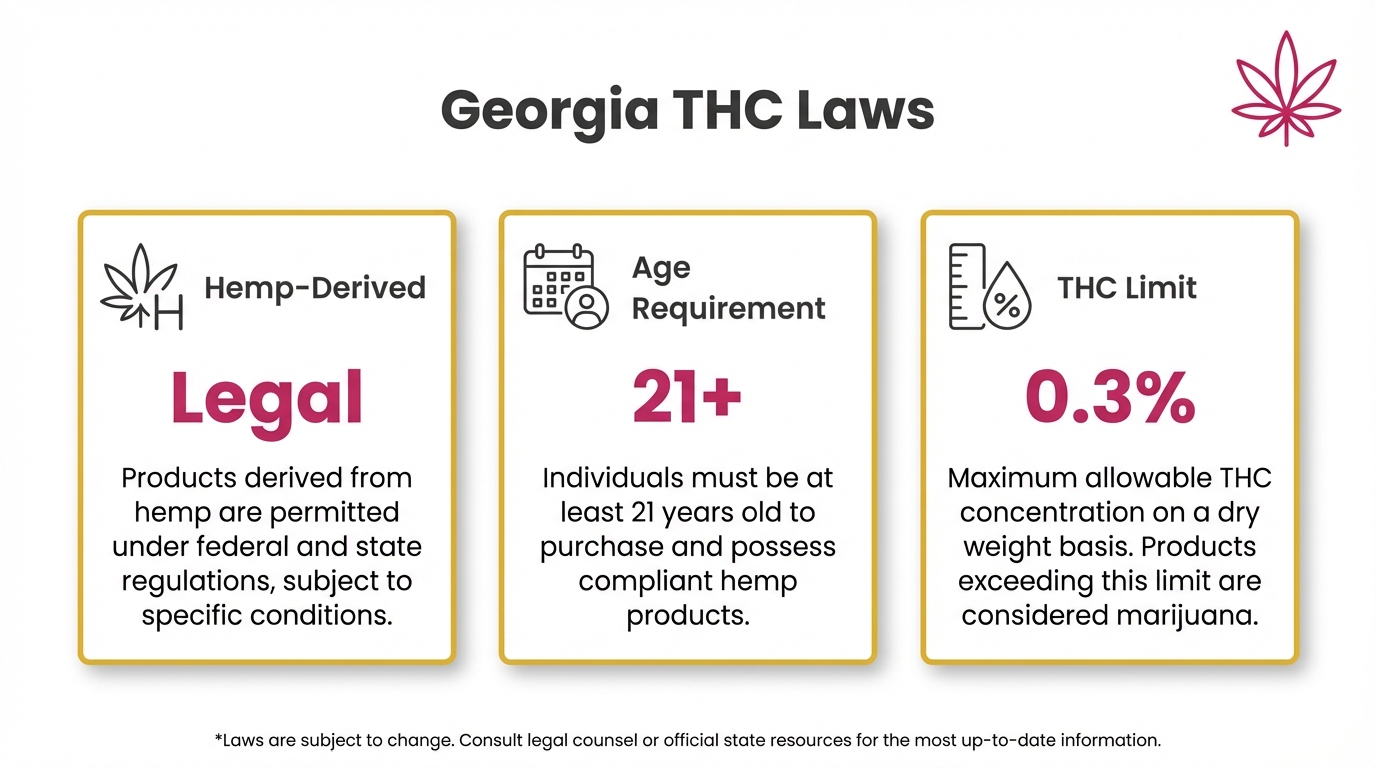
Hemp-derived THC gummies and edibles are legal in Georgia when they contain no more than 0.3% delta-9 THC by dry weight and comply with the Georgia Hemp Farming Act’s testing, labeling, and age requirements.
This guide covers Georgia’s hemp law framework, which cannabinoid types qualify as legal, purchasing and shipping options, compliance verification standards, and upcoming regulatory changes that could reshape the market.
Georgia’s Hemp Farming Act defines legal hemp broadly to include all derivatives, extracts, and isomers of Cannabis sativa L. below the 0.3% delta-9 THC threshold. The 2018 Farm Bill provides the federal foundation, though Georgia layers its own rules on top, including a strict 21-and-older age requirement and per-serving THC caps.
Delta-8, delta-9, delta-10, THCa, and HHC edibles all qualify as legal when hemp-derived and compliant. The Georgia Court of Appeals confirmed that THC isomers found in hemp products fall outside Schedule I classification. Marijuana-derived edibles, however, remain illegal and carry penalties up to ten years of imprisonment.
Consumers can purchase compliant THC gummies both in Georgia retail stores and from online retailers that ship under federal interstate commerce protections. Carriers require adult signature verification, and buyers must confirm lab results, serving limits of 10 milligrams per serving and 40 milligrams per package, and proper labeling before ordering.
IndaCloud simplifies this verification process by providing detailed Certificates of Analysis for all products directly on their website, along with clear labeling that displays THC content per serving and per package, ensuring Georgia customers can easily confirm compliance before ordering.
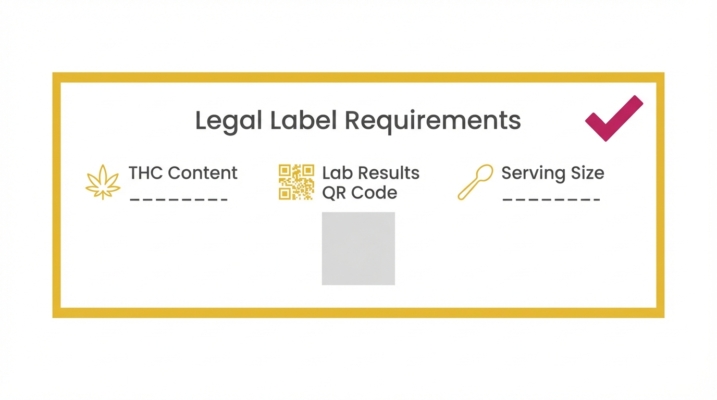
Every legal product needs a full panel Certificate of Analysis from an ISO-accredited independent lab, clear labeling of THC content in milligrams, and a QR code linking to test results. These markers separate compliant products from risky ones.
Proposed legislation, including SB33 and new budget provisions that could cap THC at just 0.4 milligrams per container, may dramatically tighten Georgia’s rules in the near future. Purchasing from brands like IndaCloud that actively track regulatory shifts and publish current lab results is the most reliable way to stay compliant.
Georgia law permits hemp-derived THC products that meet specific concentration limits established by both state and federal statute. The following subsections cover the Georgia Hemp Farming Act’s definitions, the enforced THC threshold, and how the 2018 Farm Bill applies within the state.
Georgia’s Hemp Farming Act defines legal hemp as the Cannabis sativa L. plant, including all seeds, derivatives, extracts, isomers, acids, salts, and salts of isomers, with a total delta-9-THC concentration that does not exceed the legal limit. According to the Georgia Department of Agriculture, a “consumable hemp product” means any hemp product intended to be ingested, absorbed, or inhaled by humans or animals. This definition is significant because it encompasses THC gummies, tinctures, beverages, and other edible formats sold throughout the state.
The Act also establishes that purchasers must be at least 21 years old. Products require lab testing, proper labeling, and compliance with concentration caps before commercial sale. For consumers shopping for hemp-derived THC edibles, understanding this statutory framework is essential; if a product fits within these definitions, it carries legal protection under Georgia law.
The THC concentration limit Georgia enforces is a total delta-9-THC concentration of 0.3% or less on a dry weight basis, whichever is the lesser value when compared to the federal threshold set forth in 7 U.S.C. Section 1639o. According to the Georgia Department of Agriculture, this “legal limit” applies to both raw hemp material and finished consumable products.
Any product exceeding this threshold falls outside the legal definition of hemp and is classified as marijuana under Georgia law. This 0.3% ceiling is the single most important compliance benchmark for manufacturers and consumers alike. For THC gummies specifically, the concentration is calculated across the total product weight, which is why properly formulated hemp edibles can contain noticeable amounts of delta-9-THC while remaining fully legal.
The 2018 Farm Bill applies in Georgia by providing the federal legal foundation that Georgia’s Hemp Farming Act builds upon. The Farm Bill legalized hemp nationally, defining it as Cannabis sativa L. with no more than 0.3% delta-9-THC, and it permits interstate transportation and shipment of compliant hemp products across the United States.
Georgia adopted this federal framework and layered state-specific requirements on top, including age restrictions, labeling mandates, and testing protocols. However, the federal definition remains contested. Georgia Attorney General Chris Carr joined a bipartisan coalition of 39 attorneys general urging Congress to clarify the Farm Bill’s hemp definition, arguing that bad actors exploit the provision to manufacture synthetic THC products more potent than marijuana. This tension between federal permissiveness and state enforcement concerns shapes the evolving regulatory landscape Georgia consumers must navigate heading into 2026.
The types of THC edibles legal in Georgia include delta-8, hemp-derived delta-9, delta-10, THCa, and HHC edibles, provided they meet the state’s hemp compliance requirements. Each cannabinoid type carries distinct legal considerations.
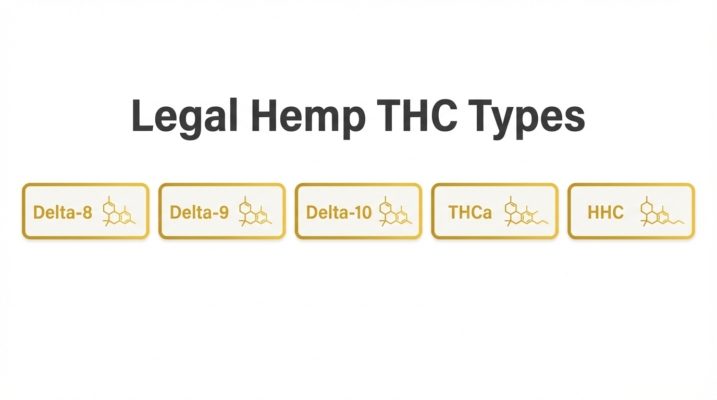
Delta-8 THC edibles are legal in Georgia when derived from hemp containing less than 0.3% delta-9 THC. The Georgia Court of Appeals ruled that edible products containing delta-8 THC with less than 0.3% delta-9 THC are not controlled substances, since Schedule I expressly excludes tetrahydrocannabinol found in hemp or hemp products. Despite this legal status, delta-8 remains a semi-synthetic cannabinoid that faces growing regulatory scrutiny at both state and federal levels. Buyers should confirm that any delta-8 gummy or edible includes a full panel certificate of analysis verifying hemp-derived origin and compliant THC levels.
Delta-9 THC edibles from hemp are legal in Georgia as long as the product contains no more than 0.3% delta-9 THC by dry weight. According to the Georgia Department of Agriculture, delta-9 THC concentration is established by identifying the total percentage weight, on a dry weight basis, of delta-9 THC from a sample that has undergone decarboxylation so all delta-9 THCA converts to delta-9 THC. This testing method means manufacturers must carefully formulate products to remain compliant after decarboxylation. For consumers, hemp-derived delta-9 edibles offer the same psychoactive compound found in marijuana, just in legally limited concentrations per serving.
Delta-10 THC edibles are legal in Georgia under the same hemp-derived framework that applies to delta-8. Because delta-10 THC is a derivative of the cannabis plant distinguished only by the location of a carbon-carbon double bond, it falls within the statutory exclusion for THC found in hemp products. Products must still contain less than 0.3% delta-9 THC to qualify. Delta-10 typically produces milder, more energizing effects compared to delta-8 or delta-9, making it a popular choice for daytime use. Third-party lab verification remains essential to confirm both cannabinoid content and legal compliance.
THCa edibles are legal in Georgia when the finished product meets the 0.3% delta-9 THC threshold. THCa is the acidic precursor to delta-9 THC and is non-psychoactive in its raw form. However, heat converts THCa into active delta-9 THC through decarboxylation. Georgia’s testing protocols account for this conversion, so any edible containing THCa must demonstrate compliant delta-9 levels after decarboxylation. This distinction makes THCa edibles one of the more nuanced product categories, since a product high in THCa could technically exceed the legal limit once heated or metabolized.
HHC edibles are legal in Georgia provided they derive from hemp and contain less than 0.3% delta-9 THC. Hexahydrocannabinol is a hydrogenated form of THC with psychoactive properties, though it does not appear on Georgia’s controlled substances schedule when found in compliant hemp products. HHC’s market presence remains smaller compared to delta-8 or delta-9 options. Because HHC is produced through chemical hydrogenation, product quality varies significantly between manufacturers. Choosing edibles backed by accredited third-party lab testing is the most reliable way to ensure both legal compliance and product safety.
With these cannabinoid options clarified, understanding which THC edibles remain illegal helps complete the picture.
THC edibles derived from marijuana remain illegal in Georgia. The sections below explain why marijuana-sourced products fall outside legal protections and what happens when any edible crosses the 0.3% delta-9 THC threshold.
Marijuana-derived edibles are illegal in Georgia because marijuana is classified as a Schedule I controlled substance under state law. Georgia’s legal framework only protects THC found in hemp or hemp products, meaning the plant source determines legality. Any edible manufactured from Cannabis sativa L. plants exceeding 0.3% delta-9 THC on a dry weight basis qualifies as marijuana, not hemp.
According to Georgia statute OCGA § 16-13-30, any person who possesses, manufactures, or distributes marijuana is guilty of a felony, punishable by imprisonment for not less than one year nor more than ten years. Even possession of less than one ounce is a misdemeanor carrying up to 12 months in jail or a $1,000 fine.
The distinction is straightforward: identical gummies can be legal or illegal based entirely on their source plant’s THC concentration at harvest.
An edible that exceeds the 0.3% THC limit is no longer classified as a hemp product under Georgia or federal law. It becomes a marijuana product, subject to the same criminal penalties that apply to any controlled substance.
Georgia determines delta-9 THC concentration on a dry weight basis, calculated as either the total percentage weight after decarboxylation or the sum of delta-9 THCA multiplied by 0.877 plus delta-9 THC. Even a slight miscalculation during manufacturing can push a product over the legal threshold.
Consequences for possessing non-compliant edibles include:
This is why verifying a product’s certificate of analysis before purchase matters more than trusting label claims alone. Understanding Georgia’s possession limits adds another layer of protection for consumers.
Georgia’s possession limits for THC edibles depend on whether the product is hemp-derived or marijuana-derived. Hemp-derived consumable products must not exceed 10 milligrams of THC per serving and 40 milligrams per package, according to the Georgia Hemp Farming Act. Buyers must be 21 or older; purchasing or possessing consumable hemp products under that age is illegal, as confirmed by the Georgia Governor’s Office in a 2024 press release announcing the Act’s effective date.
Marijuana-derived edibles fall under an entirely different framework. Under OCGA § 16-13-2(b), possession of less than one ounce of cannabis is a misdemeanor punishable by up to 12 months in jail or a $1,000 fine. Possession above one ounce can result in felony charges carrying one to ten years of imprisonment. These penalties apply regardless of whether the marijuana is in flower or edible form.
For anyone buying legal hemp THC gummies, the per-serving and per-package milligram caps are the numbers that matter most. Staying within those limits, verified through a product’s certificate of analysis, is the simplest way to remain compliant with Georgia law.
Yes, you can buy THC gummies online and ship them to Georgia, provided the products are hemp-derived and comply with both federal and state law. Federal shipping regulations and Georgia-specific verification steps determine whether an order arrives legally.
Federal shipping laws allow hemp edibles to be shipped to Georgia when the products contain less than 0.3% delta-9 THC on a dry weight basis. The 2018 Farm Bill legalized interstate transportation of compliant hemp products, creating the federal framework that online retailers rely on.
Carrier-specific policies add requirements beyond the federal baseline. According to UPS shipping guidelines, UPS accepts hemp derivatives for transportation only as permitted by all applicable federal, state, and local laws, and all U.S. shipments containing hemp or hemp derivatives must use UPS Adult Signature Required service.
This three-layer compliance check (federal, state, and carrier) is what separates a legitimate shipment from a risky one. Not every state treats hemp edibles the same way; Florida, for example, allows THC edibles only for registered medical patients. Georgia’s framework is more permissive for hemp-derived products, but the product must still meet the state’s serving size limits and labeling standards upon arrival.
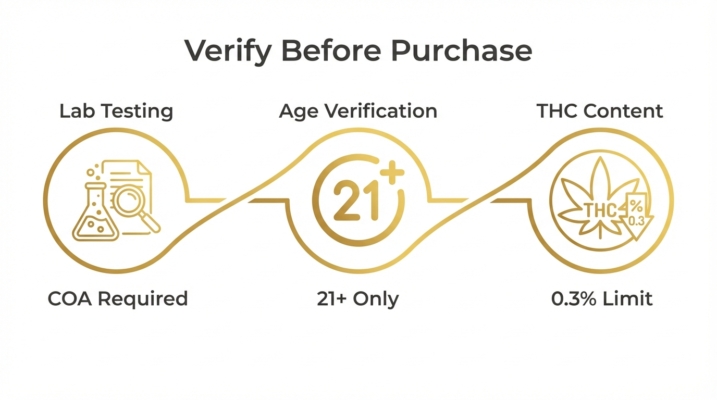
You should verify several key factors before ordering THC gummies online for delivery to Georgia:
Skipping any of these checks increases the risk of receiving a product that does not meet Georgia’s legal requirements. Understanding what makes a THC edible legally compliant helps you evaluate any retailer’s credibility before placing an order.
You can buy legal THC edibles in Georgia through licensed retail stores and compliant online retailers. Both channels require products to meet state hemp law standards.
Yes, you can buy THC gummies in Georgia retail stores that carry compliant hemp-derived products. Smoke shops, CBD specialty stores, and select wellness retailers across the state stock edibles meeting the 0.3% delta-9 THC threshold. Before purchasing in-store, verify these essentials:
Not every retail location maintains the same quality standards, so checking lab results before buying protects you from non-compliant products.
Yes, you can buy THC edibles from online retailers in Georgia, provided the products comply with the 2018 Farm Bill and Georgia’s Hemp Farming Act. According to LGC Standards, the 2018 Farm Bill allows interstate transportation and shipment of hemp products across the United States, making online purchasing a federally supported option.
Online shopping offers broader selection, transparent lab reports, and direct price comparison. When choosing an online retailer, confirm the brand publishes third-party certificates of analysis, ships with adult signature verification, and clearly labels THC content per serving. For example, IndaCloud provides free shipping on orders over $89 to Georgia addresses and ensures all shipments arrive in nondescript packaging with required adult signature verification, combining convenience with the compliance documentation Georgia law requires. Reputable online sellers typically provide more detailed compliance documentation than brick-and-mortar stores, making it easier to verify legality before your order arrives.
With purchasing options clarified, meeting Georgia’s age requirement is the next step to a legal transaction.
Yes, you need to be at least 21 years old to buy THC edibles in Georgia. According to the Georgia Governor’s Office, it is illegal to purchase or possess consumable hemp products if you are under the age of 21. This age requirement applies to all consumable hemp products, including gummies, beverages, tinctures, and other THC-infused edibles sold within the state.
The 21-and-older rule mirrors alcohol purchase restrictions and reflects Georgia’s approach to regulating intoxicating hemp products. Retailers, whether operating in physical storefronts or online, must verify buyer age before completing any sale. For online orders, carriers like UPS require Adult Signature service for all hemp derivative shipments within the United States, adding a second layer of age verification at delivery.
Attempting to purchase consumable hemp products while underage violates the Georgia Hemp Farming Act. Understanding Georgia’s labeling and compliance requirements helps buyers confirm that products meet all legal standards.
You can tell if a THC edible is legally compliant by checking three things: third-party lab certification, hemp-derived sourcing, and labeled THC content below 0.3% by dry weight.
Yes, the product should have a third-party lab certificate, specifically a Full Panel Certificate of Analysis (COA). According to the Georgia Department of Agriculture, a Full Panel COA is a report produced by a laboratory unaffiliated with the processor or manufacturer, accredited pursuant to International Organization for Standardization standards for competence, impartiality, and consistent laboratory operation, attesting to the composition of a product.
A COA confirms cannabinoid potency, contaminant screening, and legal THC levels. Products sold without an accessible COA should raise immediate concern, since Georgia labeling rules require either full COA results or a scannable QR code on the package. Always verify the lab is ISO-accredited and independent before trusting the results.
Yes, the THC source matters. THC derived from hemp is federally legal; THC derived from marijuana is not. Hemp-sourced THC must originate from Cannabis sativa L. containing no more than 0.3% delta-9-THC.
One critical detail often overlooked is THCA conversion. According to USDA Agricultural Marketing Service guidelines, hemp testing must consider the potential conversion of THCA into THC, and the test result must report total available THC derived from the sum of THC and THCA content. This means a product could appear compliant before decarboxylation yet exceed the legal threshold once THCA converts to active THC. Verifying the source plant and reviewing the COA for total THC calculations is essential.
Yes, the label should show THC content below 0.3% by dry weight to confirm legal compliance. The Georgia Department of Agriculture specifies that total delta-9-THC concentration shall be determined and reported on a dry weight basis, calculated as either the total percentage weight of delta-9-THC after decarboxylation or the sum of delta-9-THCA multiplied by 0.877 plus delta-9-THC.
That 0.877 conversion factor accounts for the molecular weight difference when THCA becomes THC. For consumers, the practical takeaway is straightforward: look for “dry weight basis” language on the label and confirm the total THC figure stays at or below 0.3%. Knowing how to read Georgia’s labeling standards helps consumers distinguish compliant products from those that may pose legal risk.
Georgia has proposed significant new THC edible regulations for 2026, including legislative bills and budget provisions that could dramatically reshape the market. The key proposals involve tightening THC concentration limits and revising product definitions.
Georgia SB33 proposes to amend Chapter 23 of Title 2 of the Official Code of Georgia Annotated, the “Georgia Hemp Farming Act,” to provide new limits on the total THC concentration of consumable hemp products, revise provisions concerning the certificate of analysis, and update definitions. According to TrackBill’s Georgia legislative tracking database, SB33 specifically targets how consumable hemp products are tested and classified.
Separately, new budget provisions could impose even stricter limits. Under these measures, hemp products would only be allowed to contain 0.4 milligrams of THC per container, a threshold so low it would effectively eliminate most THC edibles currently sold in Georgia. This represents a dramatic reduction from the existing framework of 10 milligrams per serving and 40 milligrams per package.
Georgia’s labeling regulations, established through the Georgia Secretary of State’s Rules and Regulations, already require consumable hemp products to meet strict standards before commercial sale or distribution. These existing rules serve as the regulatory foundation that any new legislation would build upon or replace.
For consumers navigating this shifting landscape, staying informed matters more than ever. Current products meeting today’s legal standards may not comply with tomorrow’s requirements, making it essential to purchase from retailers who actively track regulatory changes and adjust their offerings accordingly.
Georgia’s THC edible laws differ from neighboring states in age requirements, product regulations, and access models. The key differences involve Florida, Alabama, Tennessee, and South Carolina.
Georgia’s laws differ from Florida’s in one fundamental way: access model. Georgia permits any adult 21 and older to purchase hemp-derived THC edibles from retail stores or online. Florida restricts THC edibles to registered medical patients only. According to Dr. Green Relief, Florida allows THC edibles only for registered medical patients, and legal purchase and possession is tied to the Medical Marijuana Use Registry. This means Georgia residents enjoy broader recreational access to hemp-derived products, while Floridians must obtain a medical card and purchase through licensed dispensaries. For consumers traveling between states, this distinction matters significantly.
Georgia’s laws differ from Alabama’s primarily in regulatory structure, though both states share similar baseline rules. According to The Marijuana Herald, Alabama allows certain hemp-derived THC products under tight rules, with consumable hemp items limited to adults 21 and older, lab-tested and properly labeled, and generally capped at 10 milligrams of THC per serving and 40 milligrams per package. Georgia enforces comparable serving and package limits alongside its own labeling and testing requirements under the Georgia Hemp Farming Act. In practice, both states occupy similar regulatory ground, making the consumer experience largely parallel for compliant hemp-derived edibles.
Georgia’s laws differ from Tennessee’s in regulatory specificity and enforcement. Tennessee permits hemp-derived THC products under the federal 0.3% delta-9 THC threshold but has imposed fewer state-level packaging and labeling mandates compared to Georgia’s detailed requirements. Georgia requires full panel certificates of analysis, QR codes on labels, and THC content expressed in milligrams per serving. Tennessee’s lighter regulatory framework means consumers there encounter less standardized product quality. Georgia’s more prescriptive approach offers stronger consumer protections, which makes verifying product compliance easier for buyers in the state.
Georgia’s laws differ from South Carolina’s by a wide margin in consumer protection. According to The State, South Carolina does not have any regulations for intoxicating hemp products, with no quality control or testing requirements and no packaging or labeling standards. Georgia, by contrast, mandates third-party lab testing, detailed labeling, age verification at 21, and serving size limits. South Carolina’s complete lack of oversight makes it one of the least regulated markets in the Southeast. For consumers who prioritize product safety, Georgia’s framework provides far greater assurance of what they are actually consuming. Understanding these regional differences helps Georgia residents evaluate products purchased across state lines.
Georgia residents should look for lab-tested hemp THC gummies that meet state-mandated serving limits, carry proper labeling, and come from compliant retailers. The following sections cover shipping from Inda Cloud and key legal takeaways.
Yes, IndaCloud can ship lab-tested hemp THC gummies to Georgia. All IndaCloud products contain less than 0.3% delta-9 THC, are third-party lab tested, and ship directly to customers aged 21 and older across the continental United States.
Georgia’s compliance framework sets clear boundaries for any hemp gummy sold in the state. According to The Marijuana Herald’s 2025 state-by-state analysis, consumable hemp products in Georgia must be sold only to adults 21 and older, be lab-tested and properly labeled, and generally cannot exceed 10 milligrams of THC per serving and 40 milligrams per package. IndaCloud meets each of these requirements before shipping.
When ordering, Georgia buyers should verify these compliance markers:
For Georgia residents who prioritize transparency and convenience, IndaCloud offers a straightforward path to legally compliant hemp THC gummies delivered to their door.
The key takeaways about THC edible legality in Georgia center on source, concentration, testing, and age. Hemp-derived THC edibles are legal when they stay within the state’s defined limits; marijuana-derived edibles remain illegal regardless of form.
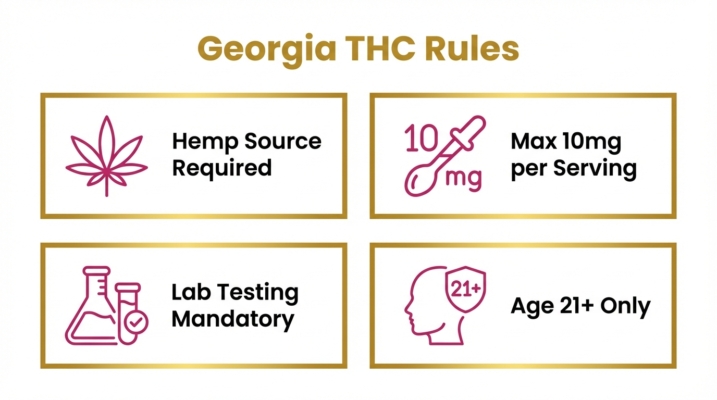
Georgia residents should remember these essentials:
Choosing a brand like IndaCloud, which publishes lab results, labels THC content in milligrams, and enforces age verification, simplifies compliance for Georgia buyers navigating this evolving legal landscape.
You took the gummy, waited a while, and now you want to know how…
Learn more
Iowa’s THC rules confuse many buyers. Retail shops openly sell hemp-derived gummies, but the…
Learn more
THC gummies have gained massive popularity across the U.S., especially as seller’s market products,…
Learn more
If you’re a fan of THC gummies or are just curious about the legal…
Learn more
