



Blogs

Are Hemp-Derived Delta-9 Drinks Legal in My State?
Hemp-derived delta-9 drinks are federally legal, but whether they’re legal where you live depends…
Learn more
You must be 21+ to enter this site
 FREE SHIPPING $89+
 FREE GIFT ON $120+
 100% FEDERALLY LEGAL
 LAB TESTED FOR PURITY
FREE SHIPPING $89+
FREE GIFT ON $120+
100% FEDERALLY LEGAL
LAB TESTED FOR PURITY
FREE SHIPPING $89+
FREE GIFT ON $120+
100% FEDERALLY LEGAL
LAB TESTED FOR PURITY
FREE SHIPPING $89+
FREE GIFT ON $120+
100% FEDERALLY LEGAL
LAB TESTED FOR PURITY
FREE SHIPPING $89+
FREE GIFT ON $120+
100% FEDERALLY LEGAL
LAB TESTED FOR PURITY
FREE SHIPPING $89+
FREE GIFT ON $120+
100% FEDERALLY LEGAL
LAB TESTED FOR PURITY
FREE SHIPPING $89+
FREE GIFT ON $120+
100% FEDERALLY LEGAL
LAB TESTED FOR PURITY
FREE SHIPPING $89+
FREE GIFT ON $120+
100% FEDERALLY LEGAL
LAB TESTED FOR PURITY
LAB TESTED FOR PURITY
FREE SHIPPING $89+
FREE GIFT ON $120+
100% FEDERALLY LEGAL
LAB TESTED FOR PURITY
FREE SHIPPING $89+
FREE GIFT ON $120+
100% FEDERALLY LEGAL
LAB TESTED FOR PURITY
FREE SHIPPING $89+
FREE GIFT ON $120+
100% FEDERALLY LEGAL
LAB TESTED FOR PURITY
FREE SHIPPING $89+
FREE GIFT ON $120+
100% FEDERALLY LEGAL
LAB TESTED FOR PURITY
FREE SHIPPING $89+
FREE GIFT ON $120+
100% FEDERALLY LEGAL
LAB TESTED FOR PURITY
FREE SHIPPING $89+
FREE GIFT ON $120+
100% FEDERALLY LEGAL
LAB TESTED FOR PURITY
FREE SHIPPING $89+
FREE GIFT ON $120+
100% FEDERALLY LEGAL
LAB TESTED FOR PURITY

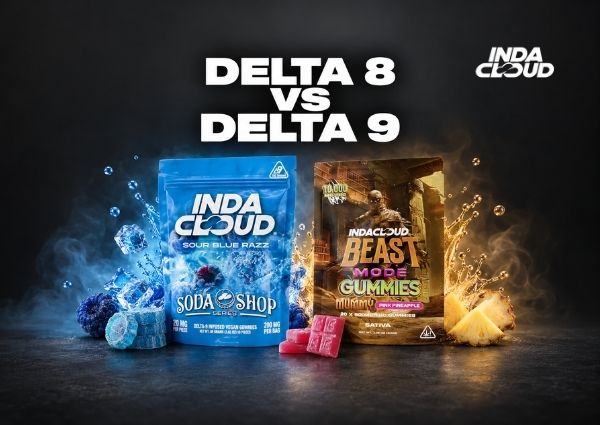
Let’s dive into the worlds of delta 8 and delta 9 THC. Delta 9 is the naturally abundant cannabinoid that made cannabis famous, and it hits harder. Delta 8 is a milder isomer, usually made by converting hemp-derived CBD, with a reputation for a smoother, more body-focused high.
That’s the short answer. The longer answer covers how each one is made, how the effects compare milligram for milligram, where each stands legally, and which one fits your tolerance and your state.
If you’re comparing delta 8 gummies against delta 9 gummies and reading two labels side by side, this guide is built for exactly that decision.
Delta 8 and delta 9 are two forms of tetrahydrocannabinol, the psychoactive compound in cannabis. When people say “THC,” they historically mean delta 9. It’s the most abundant intoxicating cannabinoid in the cannabis plant, one of more than 100 cannabinoids the plant produces.
Delta 8 THC occurs naturally too, but only in trace amounts. Cannabis sativa produces so little of it that commercial delta 8 is made by converting hemp-derived CBD instead of extracting it directly.
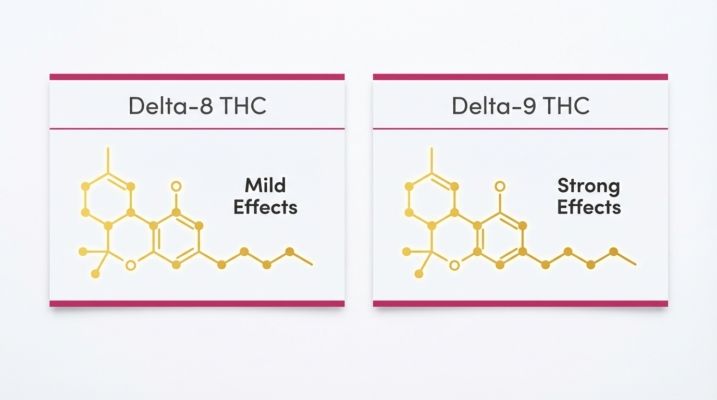
Chemically, the two are isomers: same chemical formula, different arrangement of atoms. The single distinction is the position of a double bond on the carbon chain. Delta 8 carries it on the eighth carbon, delta 9 on the ninth.
The most common misconception is that delta 8 is somehow closer to CBD than to THC. It isn’t. Both compounds are psychoactive, both get you high, and both interact with the same receptors. For the raw acidic precursor that sits upstream of both, see our guide to what THCa is and why it matters.
Delta 9 is extracted directly from the plant. In hemp products, it’s present naturally at or below the 0.3% dry-weight threshold, not synthesized. Delta 8 takes a different route: manufacturers convert hemp-derived CBD into delta 8 through an acid-catalyzed process called isomerization, because natural concentrations are too low to extract at scale.
That sourcing difference has practical consequences. The FDA has stated that concentrated delta 8 is typically manufactured from hemp-derived CBD and has warned that the conversion process can leave potentially harmful byproducts behind. Residual reagents and byproduct isomers are exactly what third-party lab testing exists to catch.
This is where a certificate of analysis comes in. A COA is the lab report for a specific product batch, and a complete one covers cannabinoid potency, residual solvents, heavy metals, and pesticides. Reading one takes about a minute: match the batch number to your product, confirm the potency matches the label, and check that contaminant panels show a pass.
We publish batch COAs for everything we sell, and that’s the standard to hold any product page to, ours or anyone else’s. A delta 8 product without a public COA is asking you to take the conversion chemistry on faith.
Hemp-derived delta 9 and cannabis-derived delta 9 are the same molecule, but the plant it comes from determines whether a product can legally ship to your door. More on that in the legality section.
Delta 9 is stronger. It binds the CB1 receptor in the endocannabinoid system with greater affinity than delta 8 does, and a 2022 review in the British Journal of Pharmacology found roughly a six-to-one difference in mean binding affinity across human-receptor studies. That weaker CB1 binding explains much of delta 8’s reduced potency, though the review notes other mechanisms may contribute.
In practice, delta 8 is commonly estimated at roughly 50 to 75% as psychoactive as delta 9, a figure from the CDC’s health advisory on delta 8 (HAN 00451).
The two highs also feel different in character. Delta 9 brings more intense euphoria, heightened sensory perception, altered time perception, and more pronounced cognitive effects. At higher doses that can tip into the classic strong head high, couch-lock territory, and the munchies.
Delta 8 users typically describe a mellower, more body-weighted experience that stays less cognitively busy. The “clear-headed” reputation is widely reported and consistent with weaker CB1 binding, but it’s user-reported rather than clinically established. Treat it as a common experience, not a guarantee.
Potency is a dose relationship, not a ranking. A 50mg delta 8 gummy and a 15mg delta 9 gummy can land in similar territory. The cannabinoid tells you the character of the high; the milligrams tell you the intensity.
Onset depends far more on format than on which cannabinoid you chose. Inhaled products like vapes and flower hit within minutes. Edibles pass through digestion first, and Health Canada’s consumer guidance puts edible onset at 30 minutes to 2 hours, with full effects taking up to 4 hours to develop.
THC beverages often land faster than gummies because liquid absorbs more quickly than a chewed solid.
Duration follows the same logic. Edibles last longer than inhaled products regardless of cannabinoid, often six hours or more with a gradual tail-off. The duration gap between delta 8 and delta 9 is smaller than the gap between formats, which corrects a common assumption. If you want a shorter, more controllable session, pick your format first and your cannabinoid second.
Both cannabinoids share the same core side-effect profile: dry mouth, red eyes, elevated heart rate, drowsiness, dizziness, and appetite changes. Slowed reaction time and impaired coordination come with both, which is why neither belongs anywhere near driving.
Where they diverge is at the uncomfortable end. Reports of anxiety, paranoia, and disorientation cluster more around higher-dose delta 9 sessions. Delta 8’s milder receptor activity appears to make those experiences less common, though dose matters more than cannabinoid: enough delta 8 can absolutely produce an anxious, too-high experience.
Tolerance builds to both compounds, and cross-tolerance exists between them because they act on the same CB1 receptor. Regular delta 9 users usually find delta 8 underwhelming at standard doses, and regular delta 8 users will have a head start on delta 9 tolerance.
Milder does not mean safer. Mildness is about potency. Safety is about sourcing, synthesis quality, and testing, which is why the COA conversation above matters more for delta 8 than for almost any other product category.
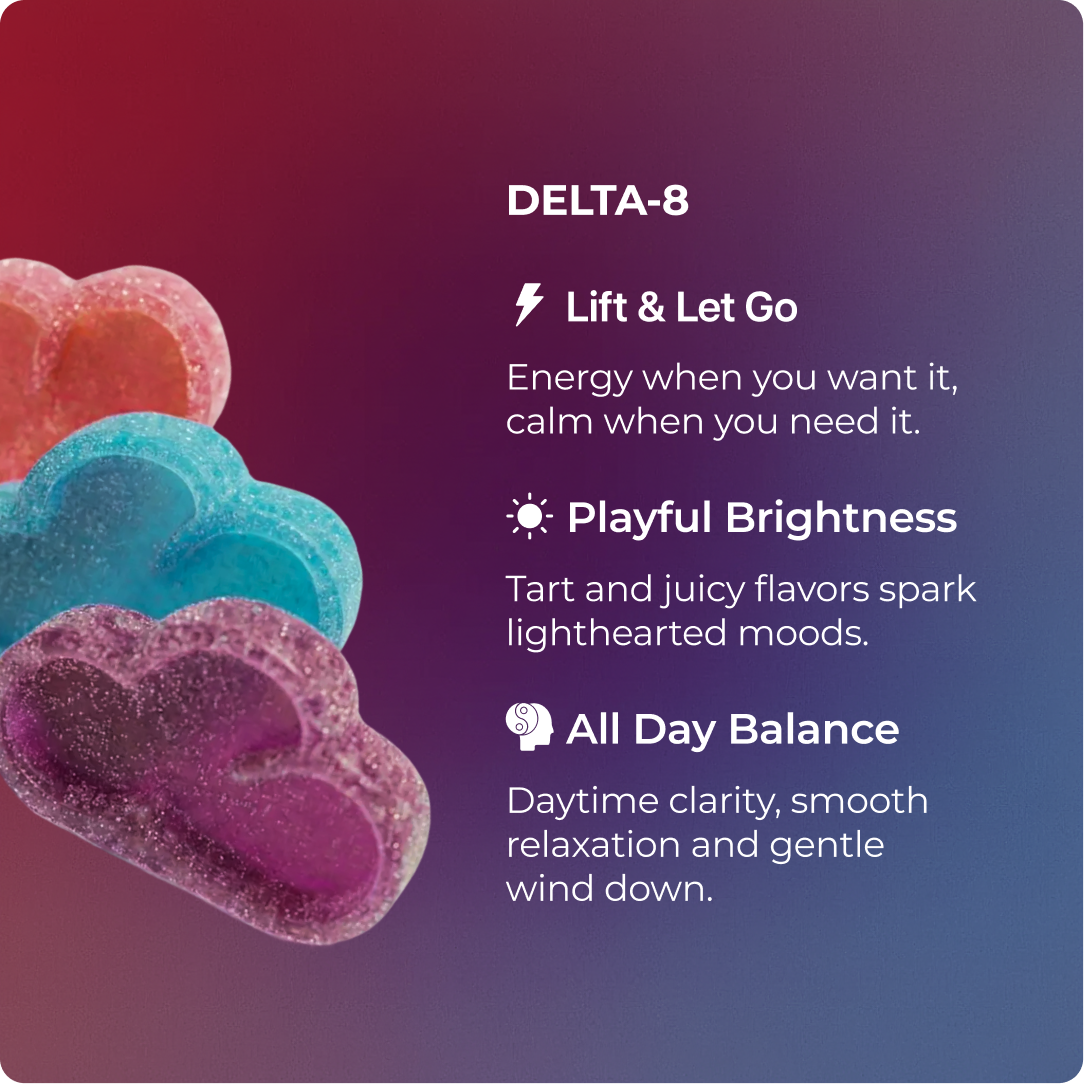
Delta 8 servings are formulated higher because the compound is weaker per milligram. A moderate delta 9 gummy serving typically sits in the 5 to 15mg range, while delta 8 gummies commonly run 25 to 50mg per piece to deliver a comparable experience. Our Delta 8 50-count gummy jar works out to 50mg per vegan gummy, which is a standard delta 8 serving and would be a heavy delta 9 dose.
That’s why milligram-for-milligram label comparison misleads shoppers. A 50mg delta 8 gummy next to a 10mg delta 9 gummy looks five times stronger on paper. In experienced terms, they’re closer than the numbers suggest.
For a new user, the single most useful rule: start low and go slow. Take the smallest serving available, then wait the full onset window before taking more. For anything edible, that means waiting at least two hours before redosing. The most common bad edible experience comes from doubling up at the 45-minute mark because “nothing’s happening.”
Keep high-potency products in child-resistant packaging and stored away from anyone who shouldn’t find them. THC gummies look like candy because they are candy, minus the part that matters.
Federally, hemp-derived versions of both can be legal. The 2018 Farm Bill legalized hemp and its derivatives as long as the product contains no more than 0.3% delta 9 THC by dry weight. Because that threshold is calculated against the product’s total weight, a heavier format like a gummy or a beverage can carry a meaningfully psychoactive delta 9 dose and still qualify. Concentrates can’t, which is why compliant delta 9 lives mostly in edibles and drinks.
Delta 8 occupies a grayer position. It’s derived from legal hemp, but the conversion process has prompted several states to regulate it separately. State restrictions fall into three buckets: outright bans, age-and-testing regulation, and states that fold delta 8 into their adult-use cannabis programs. More than 20 states now ban or restrict it, so verify your state’s current law before ordering.
One federal change is coming. H.R. 5371, signed on November 12, 2025, tightens the federal hemp definition effective November 12, 2026: it moves to a total THC standard and caps finished products at 0.4mg total THC per container. Industry groups are pushing amendments and legal challenges, so the rules described here reflect current law. Check the latest before you order.
Delta 9 has a split status. Hemp-derived delta 9 products under the 0.3% threshold ship broadly, and our delta 9 collection falls in that category. Cannabis-derived delta 9 remains a Schedule I substance federally and is dispensary-only in states that have legalized it.
Two constraints apply everywhere: all THC products are 21+, and shipping restrictions are real. We don’t ship to Alaska, Hawaii, or Washington state, or to states where delta 8 is illegal. For state-level detail we’ve already covered, see our guides on whether hemp-derived delta 9 drinks are legal in your state and flying with delta 8.
Yes. Standard immunoassay drug panels detect THC metabolites and cannot distinguish delta 8 from delta 9, so both can trigger a positive result.
The reason is chemistry. Your body metabolizes both compounds into THC-COOH, the carboxy metabolite that urine screens actually look for. Because the screen targets the metabolite family rather than the parent compound, the isomer difference is invisible to it. Only confirmatory lab testing, such as the liquid chromatography tandem mass spectrometry (LC-MS/MS) methods documented by Mayo Clinic Laboratories, can separately identify delta 8 and delta 9 metabolites.
So the widespread claim that delta 8 is “test-safe” is wrong. If you’re subject to drug testing, delta 8 carries the same risk as delta 9.
How long you’ll test positive depends on frequency of use, dose, body composition, metabolism, and the test type, whether urine, blood, saliva, or hair. For the detailed detection timeline, see our full guide on how long delta 8 stays in your system.
Delta 10 is another isomer converted from hemp CBD, typically described as lighter and more energetic than delta 8. Users often reach for it as a daytime option, though the research base is even thinner than delta 8’s.
THCa is the non-psychoactive acidic precursor to delta 9. Heat converts it to delta 9 through decarboxylation, which is why THCa flower behaves like conventional flower the moment you smoke or vape it. Our THCa explainer covers the conversion in full.
HHC is a hydrogenated cannabinoid, generally positioned between delta 8 and delta 9 in reported strength. For the full family tree of these compounds, our guide to the types of THC sorts each one out.
Match the cannabinoid to your tolerance, your goal, and your constraints.
By experience level: first-time and low-tolerance users are better served by delta 8 or a low-dose delta 9 product, since both allow a gentle entry point. Experienced users who want the familiar full intensity of cannabis will usually be happier with delta 9.
By desired outcome: functional daytime use leans delta 8, since the milder profile stays out of the way. Evening wind-down works with either at the right dose. Social settings favor lower doses and faster formats. Delta 9 is the more common pick when intensity is the point.
By constraint: state legality and shipping access may make the decision for you, since delta 8 is restricted in more states. Drug-test exposure rules out both. Budget favors delta 8, which typically costs less per milligram.

Format matters as much as cannabinoid. Gummies give you predictable per-piece dosing, and something like our grape dispensary grade delta 9 gummies makes the math simple at 20mg per piece. Delta 8 carts offer fast onset and puff-by-puff control. Beverages suit social pacing.
| Factors | Delta 8 | Delta 9 |
| Chemical structure | Double bond on 8th carbon | Double bond on 9th carbon |
| Natural abundance | Trace amounts | Abundant in cannabis |
| How it’s produced | Converted from hemp CBD | Extracted from the plant |
| Relative potency | Roughly 50 to 75% as psychoactive as delta 9 | Baseline THC strength |
| Effect character | Milder, body-focused, mellow | Intense euphoria, strong head high |
| Common side effects | Dry mouth, red eyes, drowsiness | Same, plus more anxiety/paranoia reports at high doses |
| Onset and duration | Format-dependent: minutes inhaled, 30 min to 2 hr edibles | Same format-dependent windows |
| Federal status | Legal gray area under the Farm Bill | Hemp-derived legal under 0.3%; cannabis-derived Schedule I |
| State variability | Banned or restricted in 20+ states | Hemp-derived ships broadly; state laws vary |
| Drug test result | Positive | Positive |
| Typical serving | 25 to 50mg | 5 to 15mg |
| Common formats | Gummies, carts, edibles | Gummies, edibles, sodas, flower |
Delta 9 is stronger, with delta 8 estimated at roughly 50 to 75% of its psychoactive strength. That said, a high-milligram delta 8 serving can outpunch a low-milligram delta 9 serving, so read the label, not just the cannabinoid name.
No. Hemp-derived delta 9 under the 0.3% dry-weight threshold ships to more states than delta 8 does, because more than 20 states have banned or restricted delta 8 specifically. Always check your state’s current law before ordering either.
You can, and blended products exist, but the effects stack because both act on the same CB1 receptor. Cross-tolerance also means regular use of one raises your tolerance to the other. If you combine them, count total milligrams across both and dose accordingly.
Delta 8, or a low-dose delta 9 gummy in the 5 to 10mg range. Delta 8’s milder profile leaves more room for error. Whichever you pick, start with one low serving and wait two hours before even thinking about more.
Total THC accounts for THCa that converts to delta 9 when heated, calculated with a conversion factor. It gives a truer picture of an inhalable product’s potency than the delta 9 number alone, since raw flower carries most of its THC as THCa.
The delta 8 vs delta 9 decision comes down to three questions. How much intensity do you want, what does your state allow, and does anyone test you for THC? Delta 9 delivers the full classic experience, delta 8 offers a gentler version of the same thing, and a drug test can’t tell them apart.
Whichever direction you land, buy from somewhere that shows you the lab work. Every product in our delta 9 gummies and delta 8 gummies collections carries a batch COA, per-piece milligram labeling, and the 0.3% compliance that lets it ship to your door. Start low, wait two hours, and let the label do the deciding.
Hemp-derived delta-9 drinks are federally legal, but whether they’re legal where you live depends…
Learn more
Delta-8 THC is a naturally occurring cannabinoid found in cannabis plants that produces milder…
Learn more
Delta-8 THC wax is a concentrated cannabis extract containing high levels of delta-8-tetrahydrocannabinol in…
Learn more
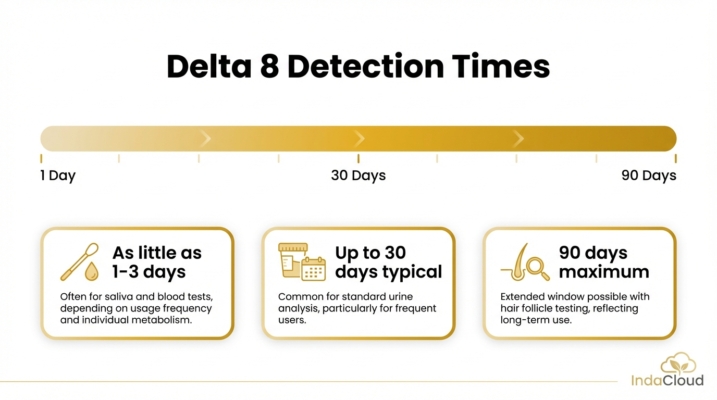
Delta-8 THC is a hemp-derived cannabinoid that stays in your system for as little…
Learn more
