



THCA

How Long Does THCA Stay in Your System?
Raw, unheated THCA clears your system in roughly 24 to 48 hours. Once you…
Learn more
You must be 21+ to enter this site
 FREE SHIPPING $89+
 FREE GIFT ON $120+
 100% FEDERALLY LEGAL
 LAB TESTED FOR PURITY
FREE SHIPPING $89+
FREE GIFT ON $120+
100% FEDERALLY LEGAL
LAB TESTED FOR PURITY
FREE SHIPPING $89+
FREE GIFT ON $120+
100% FEDERALLY LEGAL
LAB TESTED FOR PURITY
FREE SHIPPING $89+
FREE GIFT ON $120+
100% FEDERALLY LEGAL
LAB TESTED FOR PURITY
FREE SHIPPING $89+
FREE GIFT ON $120+
100% FEDERALLY LEGAL
LAB TESTED FOR PURITY
FREE SHIPPING $89+
FREE GIFT ON $120+
100% FEDERALLY LEGAL
LAB TESTED FOR PURITY
FREE SHIPPING $89+
FREE GIFT ON $120+
100% FEDERALLY LEGAL
LAB TESTED FOR PURITY
FREE SHIPPING $89+
FREE GIFT ON $120+
100% FEDERALLY LEGAL
LAB TESTED FOR PURITY
LAB TESTED FOR PURITY
FREE SHIPPING $89+
FREE GIFT ON $120+
100% FEDERALLY LEGAL
LAB TESTED FOR PURITY
FREE SHIPPING $89+
FREE GIFT ON $120+
100% FEDERALLY LEGAL
LAB TESTED FOR PURITY
FREE SHIPPING $89+
FREE GIFT ON $120+
100% FEDERALLY LEGAL
LAB TESTED FOR PURITY
FREE SHIPPING $89+
FREE GIFT ON $120+
100% FEDERALLY LEGAL
LAB TESTED FOR PURITY
FREE SHIPPING $89+
FREE GIFT ON $120+
100% FEDERALLY LEGAL
LAB TESTED FOR PURITY
FREE SHIPPING $89+
FREE GIFT ON $120+
100% FEDERALLY LEGAL
LAB TESTED FOR PURITY
FREE SHIPPING $89+
FREE GIFT ON $120+
100% FEDERALLY LEGAL
LAB TESTED FOR PURITY


The potential of THCA in alleviating pain has sparked interest within the medical community. Research suggests that THC A may possess analgesic properties and could offer a natural alternative for individuals seeking relief from various types of pain.
So, does THCa help with pain? To answer this, it’s important to examine how THCa may support pain relief by contributing to overall health and wellness.
THCA, short for tetrahydrocannabinolic acid, is a cannabinoid compound that has shown promise in alleviating pain and inflammation, particularly in cases of chronic pain. Research suggests that THCA interacts with the endocannabinoid system in the human body, affecting the perception of pain in the brain.
When exploring the potential benefits of THCA for pain relief, it is essential to consider its therapeutic effects, especially in the context of injury or disease where inflammation plays a crucial role. THCA’s interaction with cannabinoid receptor 1 has also shown neuroprotective properties in experimental settings.
THCA’s neuroprotective qualities make it a promising avenue for conditions involving neurological damage, offering hope to patients with conditions like multiple sclerosis or Alzheimer’s disease. Its anti-inflammatory properties can also benefit individuals suffering from chronic inflammation due to conditions such as arthritis or autoimmune disorders.
THCA can be found in various forms, and the metabolism of THCA in these different forms can vary, affecting its efficacy and potential risks when used:
THCA consumption methods for pain relief vary, offering individuals flexibility in choosing the most suitable approach. Common methods include:
Establishing a recommended dosage of THCA for pain relief can vary depending on individual factors such as tolerance, metabolism, and the severity of pain.
Here are some general dosage recommendations:
THCA, when used for pain management, can lead to adverse reactions like:
These side effects may vary in intensity from person to person, so it is important to monitor any changes and consult a healthcare provider if necessary.
Additionally, THCA can interact with certain medications, affecting their effectiveness or increasing the risk of negative reactions. The liver plays a pivotal role in metabolizing THCA, which could potentially lead to liver complications if not carefully monitored.
The immune system may also be influenced by THCA, possibly altering its response to infections or illnesses.
In terms of THCA and its effects on drug metabolism enzymes, one must consider the intricate processes that take place within the body.
For instance, THCA may inhibit certain enzymes responsible for metabolizing medications, potentially altering their effectiveness or increasing the risk of side effects.
This interference with drug metabolism pathways can have a significant impact on how opioids are processed in the body, leading to unforeseen interactions.
The legal status of tetrahydrocannabinolic acid varies depending on jurisdiction and the form in which it is found.
In its raw, unprocessed form as part of the cannabis plant, THCA is typically considered legal in regions where cannabis cultivation is permitted for industrial or research purposes. However, the legality of THCA can become ambiguous when it is isolated or concentrated into products with higher potency levels.
Regulations surrounding THCA are often subject to local laws and regulations governing cannabis and its derivatives. It’s crucial for individuals to research and understand the specific legal framework regarding THCA in their respective areas to ensure compliance with relevant legislation.
Obtaining THCA for pain relief can be accomplished through various means, each offering different levels of accessibility and convenience. Here are some options:
Medical THCA usage is typically recommended by healthcare professionals for managing various conditions such as chronic pain, inflammation, or nausea. Patients who opt for medical THCA are often seeking relief from specific symptoms and require tailored dosages for effective treatment.
In contrast, recreational THCA use is more about personal enjoyment and relaxation, with consumers having the freedom to choose products based on their desired potency, flavor profiles, and overall experience. Quality assurance is vital in both sectors to ensure consistency, potency levels, and purity of products.
Compliance with quality standards, such as Good Manufacturing Practices (GMP) and third-party testing, is crucial for product safety and patient satisfaction. Managing risks associated with impurities or inaccurate labeling requires strict adherence to these regulations to protect consumer health and promote trust in the industry.
Using THCA for pain relief carries potential risks, and individuals should be aware of these before incorporating it into their treatment regimen. Some risks include:
Assessing the effectiveness of other pain medications compared to THCA involves considerations of opioids, placebo responses, and results from clinical trials.
In terms of opioids, they are commonly prescribed for pain relief but carry the risk of addiction and tolerance development. On the other hand, the placebo effect, where a patient perceives improvement without active medication, highlights the importance of psychological factors in pain management.
Clinical trials play a pivotal role in providing scientific evidence regarding the efficacy and safety of different pain medications, informing healthcare professionals and patients alike in making treatment choices.
Related Post:
While more research is needed, some patients have reported finding relief from chronic pain by using THCA as a natural alternative to pharmaceutical painkillers.
Does THCA transform into THC when smoked?
Yes. Smoking provides sufficient heat to convert a significant portion of THCA in a product into regular THC.
THCA shows promise in providing pain relief, particularly for individuals experiencing chronic pain. Its interaction with the endocannabinoid system and anti-inflammatory properties make it a potential natural alternative for managing various types of pain.
THCA can be consumed in different forms such as extracts, oils, tinctures, capsules, topicals, and edibles, offering flexibility in dosage and administration. However, it’s essential to consult with a healthcare professional before using THCA for pain relief, considering individual factors such as tolerance, metabolism, and potential interactions with medications.
Additionally, users should be aware of potential side effects and legal considerations associated with THCA use. Further research is needed to fully understand the efficacy and safety of THCA compared to other pain medications.
Raw, unheated THCA clears your system in roughly 24 to 48 hours. Once you…
Learn more
THCP binds cannabinoid receptors roughly 33 times harder than THC in lab testing. THCA,…
Learn more

Popcorn buds are small, whole flower pulled out of a harvest and sorted by…
Learn more
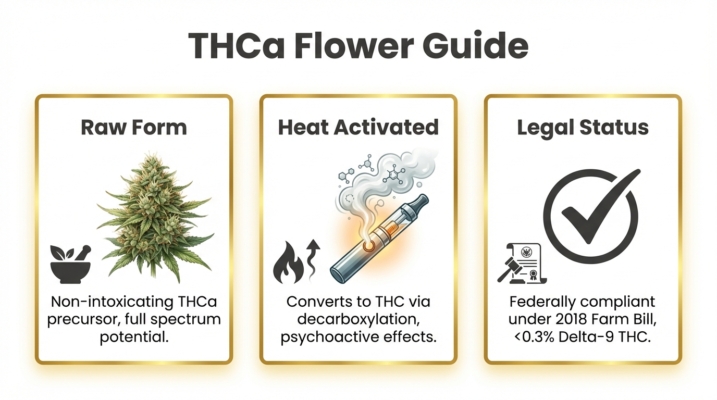
THCA flower keeps best in an airtight glass jar held at 58 to 62%…
Learn more
