



Delta 8

Delta 8 vs Delta 9: Complete Comparison
Let’s dive into the worlds of delta 8 and delta 9 THC. Delta 9…
Learn more
You must be 21+ to enter this site
 FREE SHIPPING $89+
 FREE GIFT ON $120+
 100% FEDERALLY LEGAL
 LAB TESTED FOR PURITY
FREE SHIPPING $89+
FREE GIFT ON $120+
100% FEDERALLY LEGAL
LAB TESTED FOR PURITY
FREE SHIPPING $89+
FREE GIFT ON $120+
100% FEDERALLY LEGAL
LAB TESTED FOR PURITY
FREE SHIPPING $89+
FREE GIFT ON $120+
100% FEDERALLY LEGAL
LAB TESTED FOR PURITY
FREE SHIPPING $89+
FREE GIFT ON $120+
100% FEDERALLY LEGAL
LAB TESTED FOR PURITY
FREE SHIPPING $89+
FREE GIFT ON $120+
100% FEDERALLY LEGAL
LAB TESTED FOR PURITY
FREE SHIPPING $89+
FREE GIFT ON $120+
100% FEDERALLY LEGAL
LAB TESTED FOR PURITY
FREE SHIPPING $89+
FREE GIFT ON $120+
100% FEDERALLY LEGAL
LAB TESTED FOR PURITY
LAB TESTED FOR PURITY
FREE SHIPPING $89+
FREE GIFT ON $120+
100% FEDERALLY LEGAL
LAB TESTED FOR PURITY
FREE SHIPPING $89+
FREE GIFT ON $120+
100% FEDERALLY LEGAL
LAB TESTED FOR PURITY
FREE SHIPPING $89+
FREE GIFT ON $120+
100% FEDERALLY LEGAL
LAB TESTED FOR PURITY
FREE SHIPPING $89+
FREE GIFT ON $120+
100% FEDERALLY LEGAL
LAB TESTED FOR PURITY
FREE SHIPPING $89+
FREE GIFT ON $120+
100% FEDERALLY LEGAL
LAB TESTED FOR PURITY
FREE SHIPPING $89+
FREE GIFT ON $120+
100% FEDERALLY LEGAL
LAB TESTED FOR PURITY
FREE SHIPPING $89+
FREE GIFT ON $120+
100% FEDERALLY LEGAL
LAB TESTED FOR PURITY

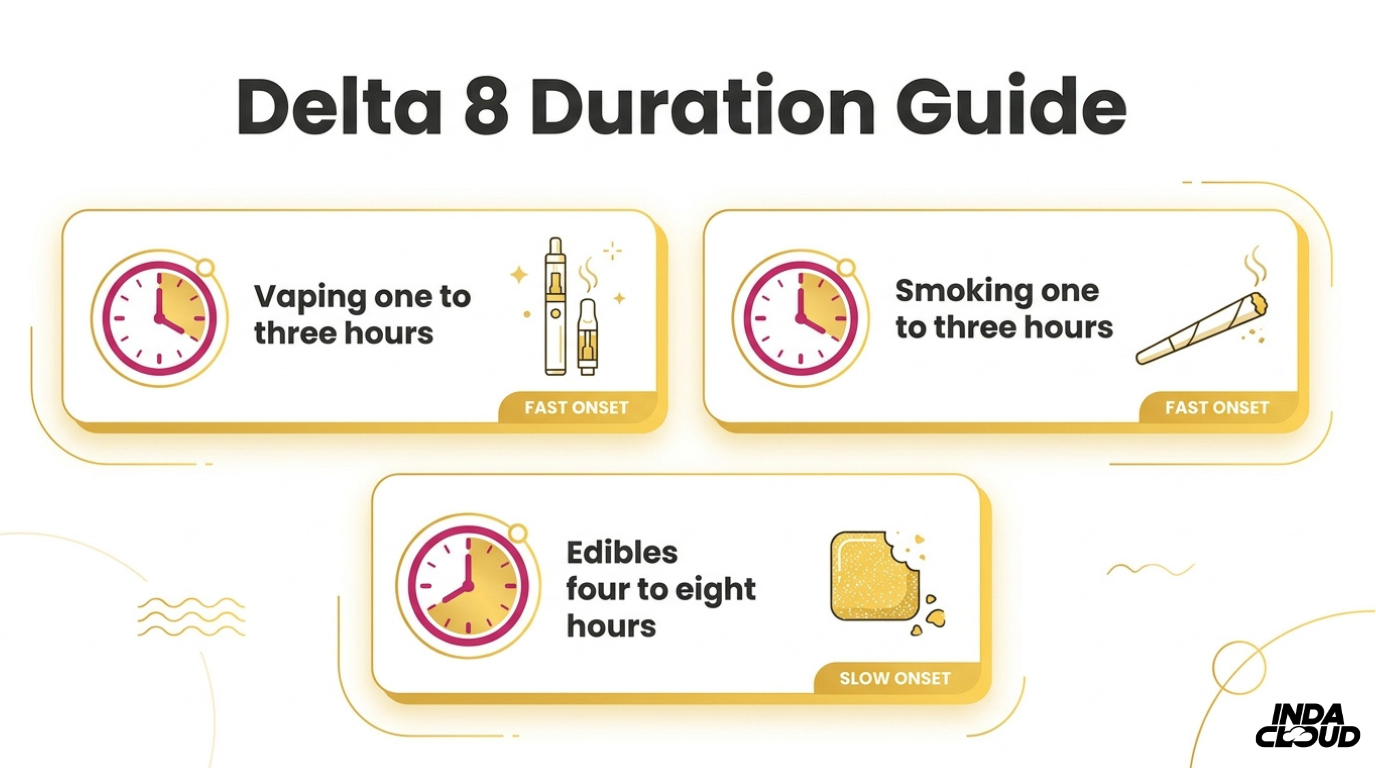
Delta 8 THC is a hemp-derived cannabinoid that produces a milder, shorter-lasting high than Delta 9 THC, with effect duration ranging from 1 to 8 hours depending on how you consume it.
This guide covers effect timelines by consumption method, onset speed and the phases of a Delta 8 high, the biological factors that shape duration, drug test detection windows, and practical strategies for choosing the right product.
Vaping and smoking Delta 8 deliver effects within minutes through rapid lung absorption, but the experience typically lasts only 1 to 3 hours. Edibles take a different route entirely; first-pass liver metabolism converts Delta 8 into 11-hydroxy-THC, which sustains effects for 4 to 8 hours with a slower, steadier buildup.
A Delta 8 high moves through three distinct phases: a smooth onset marked by gentle relaxation, a peak period of sustained euphoria and sensory engagement, and a gradual comedown that rarely produces the anxiety associated with Delta 9.
Dosage, tolerance, body composition, and metabolism all shift how long effects persist. New users starting at 5 to 10 mg often experience longer sessions than daily consumers taking the same amount, since frequent use desensitizes CB1 receptors over time.
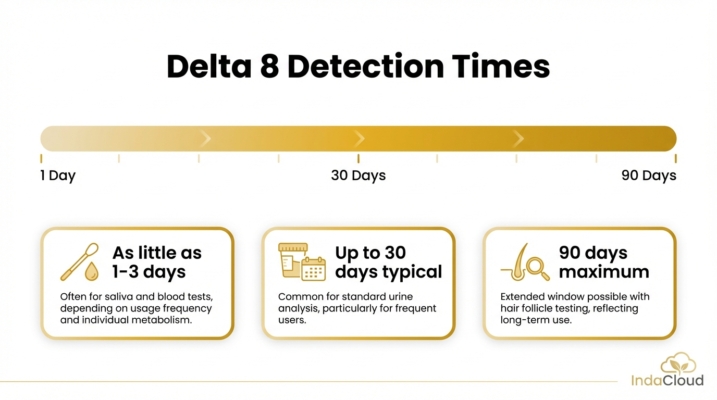
Delta 8 metabolites remain detectable in the body well after effects fade. Standard urine screening kits cross-react with Delta 8 compounds, producing positive results for 3 to 30 days depending on usage frequency. Hair tests extend that window to 90 days.
Pairing Delta 8 with healthy fats, selecting edibles for prolonged sessions, and verifying product quality through third-party lab reports all help you get more consistent, longer-lasting results from every dose.
Delta 8 effects last approximately 1 to 3 hours when you vape, making inhalation one of the shortest-duration methods. The experience depends on dosage, tolerance, and individual metabolism.
Vaping delivers Delta 8 THC directly through the lungs and into the bloodstream, bypassing the digestive system entirely. This rapid absorption pathway produces a fast onset but a comparatively brief window of noticeable effects. According to a study published by the National Institutes of Health, the bioavailability for inhaled THC ranges between 10% and 35%, producing a stronger psychoactive effect than oral ingestion. Because more of the compound reaches circulation quickly, the body also processes and clears it faster.
For most users, peak effects arrive within the first 15 to 30 minutes and gradually taper over the next hour or two. Experienced users with higher tolerance may find the effects fade closer to the one-hour mark, while occasional users often report effects lingering toward the three-hour end. The relatively short duration makes vaping a practical choice for those who want a controlled, time-limited experience rather than a prolonged session.
Choosing a quality vape product also matters. Lab-tested Delta 8 cartridges with verified cannabinoid content tend to deliver more predictable duration and intensity than unverified alternatives. Understanding how edibles compare in duration offers useful context for selecting the right method.
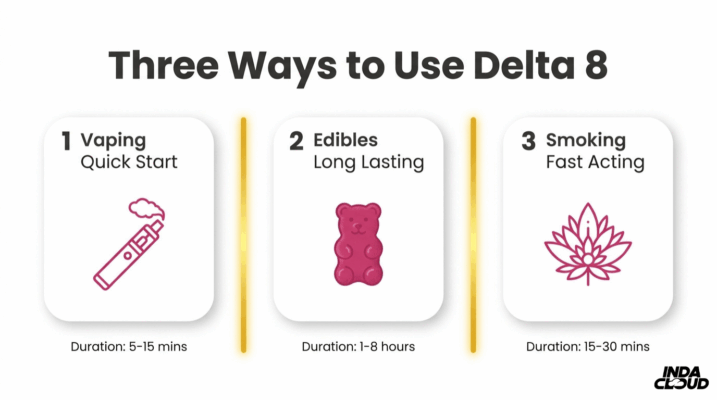
Delta 8 effects last approximately 4 to 8 hours when you eat edibles, making them the longest-lasting consumption method. This extended duration results from how the body processes cannabinoids through the digestive system. Several factors, including metabolism and dosage, shape the overall experience.
When consumed orally, Delta 8 THC passes through the stomach and into the liver before reaching the bloodstream. This process, known as first-pass metabolism, converts Delta 8 into 11-hydroxy-THC, a metabolite that crosses the blood-brain barrier more efficiently. According to research published in The Permanente Journal, oral THC has a bioavailability of approximately 4% to 12% due to this extensive first-pass metabolism. While that lower bioavailability means a slower onset, the gradual release of the metabolite produces effects that build steadily and sustain themselves far longer than inhaled methods.
Because the body absorbs edibles incrementally, peak effects typically arrive between 1.5 and 3 hours after ingestion and can plateau for an extended period. The comedown is equally gradual, often stretching another 1 to 2 hours beyond the peak. For most users, the total experience window from first noticeable effects to full resolution falls between 4 and 8 hours.
Several practical considerations shape where you land within that range:
This prolonged timeline is one reason edibles appeal to users seeking sustained relief or extended relaxation without redosing. However, the slow onset can tempt newcomers into taking a second dose too early. Patience is essential; waiting at least two full hours before considering additional intake helps avoid an unexpectedly intense experience.
For those prioritizing duration over rapid onset, edibles consistently deliver the longest-lasting Delta 8 effects among all product formats. Understanding how smoking Delta 8 flower compares helps complete the picture.
Delta 8 effects last approximately 1 to 3 hours when you smoke flower, with most users experiencing peak intensity within the first 30 to 60 minutes. The duration depends on dosage, tolerance, and individual metabolism.
Smoking Delta 8 flower delivers cannabinoids through the lungs, where they pass rapidly into the bloodstream. This inhalation pathway produces a bioavailability between 10% and 35%, according to a study published by the National Institutes of Health (PMC). Because inhaled THC bypasses the digestive system entirely, the effects arrive quickly but also taper sooner than with edibles.
The experience typically unfolds in a clear pattern:
Several factors can shift this timeline in either direction. Deeper inhalation increases cannabinoid absorption, while smaller, lighter puffs may produce a milder, shorter-lasting high. Experienced users with higher tolerance often report effects fading faster, whereas newcomers tend to feel the effects more intensely and for a longer stretch.
For those who prefer a smokable format but want slightly longer-lasting results, pairing Delta 8 flower with a small fatty snack before or during a session can help. Cannabinoids are fat-soluble, so healthy fats may support absorption and gently extend the experience. Smoking remains one of the most straightforward ways to control your Delta 8 intake in real time, since each puff provides near-immediate feedback on intensity.
Understanding how edible formats compare helps round out your expectations for different consumption methods.
Delta 8 onset time depends on the consumption method. Vaping and smoking produce effects within minutes, while edibles require significantly longer. The following subsections break down onset speed for vaped, edible, and smoked Delta 8 flower.
Vaped Delta 8 takes effect within 1 to 5 minutes. When inhaled, Delta 8 THC passes through lung tissue directly into the bloodstream, bypassing the digestive system entirely. This rapid absorption pathway is why vaping delivers the fastest onset of any consumption method.
Peak effects typically arrive within 15 to 30 minutes after the first puff. Because the onset is so quick, new users should wait several minutes between draws to gauge intensity before taking more. According to ScienceDirect’s review on Delta 8, Delta 9, and Delta 10 THC, Delta 8 exhibits weaker CB1 receptor affinity than Delta 9, which may account for a slightly milder initial sensation even with fast delivery.
Pairing vaped Delta 8 with a fat-containing snack can also enhance absorption, since cannabinoids are fat-soluble.
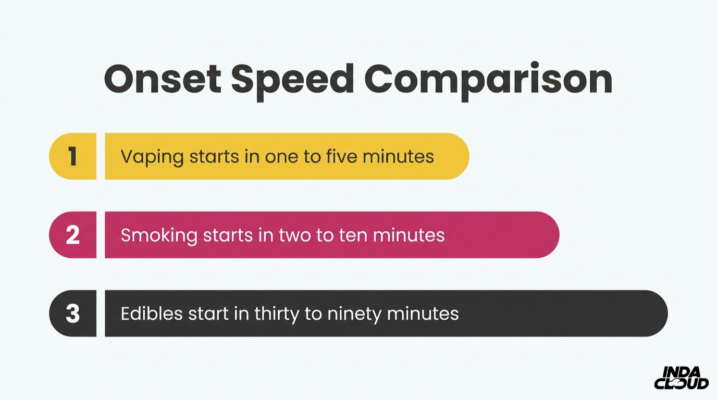
Delta 8 edibles take effect within 30 to 90 minutes after ingestion. The digestive system must first break down the edible before Delta 8 THC reaches the liver, where it undergoes first-pass metabolism. This conversion process delays onset considerably compared to inhalation methods.
Several factors influence how quickly edibles kick in:
Because the wait is longer, many users make the mistake of taking a second dose too soon. Patience during that initial window is essential to avoid overconsumption.
Smoked Delta 8 flower takes effect within 2 to 10 minutes. Like vaping, smoking delivers cannabinoids through the lungs for rapid bloodstream entry. Combustion, however, produces a slightly different absorption profile due to higher temperatures and the presence of plant material.
Most users notice initial effects within the first few puffs, with peak intensity building over the following 15 to 30 minutes. The onset speed is comparable to vaping, though combustion destroys a small portion of active cannabinoids during the process. For those who prefer immediate relief, smoked flower remains one of the most reliable options alongside vape products.
Understanding onset times across methods helps set realistic expectations for each session.
A Delta 8 high follows three distinct phases: onset, peak, and comedown. Each phase produces different sensations and intensity levels, shaped by the cannabinoid’s interaction with CB1 receptors.
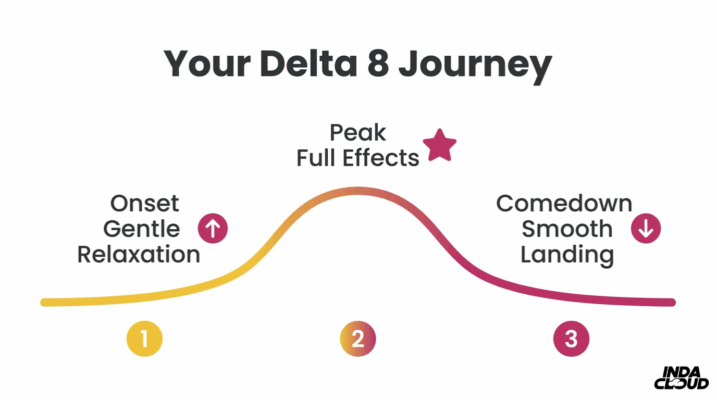
The Delta 8 onset phase is the initial period when effects first become noticeable. With inhalation methods like vaping, this phase typically begins within minutes as Delta 8 THC binds to CB1 cannabinoid receptors in the brain. Edibles require longer because the compound must pass through digestion first.
During onset, most users notice:
Because Delta 8 THC exhibits weaker CB1 affinity than Delta 9, the onset tends to feel smoother and more controlled. This gentler ramp-up is one reason the compound has gained such traction; according to Addiction Journal, online searches for Delta 8 THC exceeded 22.3 million in a single period, reflecting strong consumer curiosity about this milder experience.
The Delta 8 peak phase is when psychoactive effects reach their maximum intensity. For inhaled products, peak concentrations in the body typically arrive within one to two hours, while edibles may peak later due to slower absorption.
At peak intensity, users commonly experience:
Even at its strongest point, Delta 8’s peak generally feels less intense than a comparable Delta 9 experience. For most people, this translates to a functional, clear-headed high rather than an overwhelming one, which makes it a practical option for social settings or creative activities.
The Delta 8 comedown phase is the gradual tapering of effects as the cannabinoid is metabolized and cleared from active receptor sites. This phase tends to feel gentle rather than abrupt, with effects fading steadily over one to two hours depending on the consumption method.
Common sensations during the comedown include:
Unlike some Delta 9 experiences, the Delta 8 comedown rarely produces anxiety or paranoia. Most users describe it as a smooth landing. Staying hydrated and having a light snack can help ease the transition back to full alertness.
Understanding these phases helps you plan your sessions around your schedule and desired effects.
Several factors influence how long Delta 8 lasts, including dosage, tolerance, body composition, and consumption method. Each variable shifts both the intensity and duration of effects.
Dosage affects Delta 8 duration directly: higher doses produce longer-lasting effects, while lower doses wear off sooner. According to the Calm by Wellness Delta 8 Dosage Guide, a starting dose of 5 to 10 mg is recommended for new users to gauge sensitivity before gradually increasing.
Someone taking 10 mg of a Delta 8 gummy may feel effects for 3 to 4 hours, whereas a 50 mg dose can extend the experience well beyond 6 hours. This relationship is not perfectly linear, though. Once you exceed your personal threshold, increasing the dose amplifies intensity more than it extends duration. Starting low and titrating upward remains the safest approach to finding your ideal window.
Your tolerance level affects Delta 8 duration by determining how efficiently your CB1 receptors respond to the cannabinoid. Frequent users develop receptor desensitization over time, meaning the same dose produces shorter, less intense effects compared to someone with no prior exposure.
A first-time user taking 25 mg might experience effects lasting 5 or more hours, while a daily user at the same dose could feel effects fade within 2 to 3 hours. Tolerance builds gradually with consistent use, and taking periodic breaks allows receptors to resensitize. For anyone noticing diminished duration, a short tolerance break often restores the original response more effectively than simply increasing the dose.
Body weight and metabolism affect duration by changing how quickly your body processes Delta 8 THC. According to The Permanente Journal, oral THC has a low bioavailability of approximately 4% to 12% due to extensive first-pass metabolism in the liver.
Individuals with faster metabolic rates break down cannabinoids more quickly, leading to shorter effect windows. Body fat percentage also plays a role, since cannabinoids are fat-soluble and can accumulate in adipose tissue. Someone with higher body fat may experience a slower onset but prolonged effects as stored Delta 8 releases gradually. Conversely, leaner individuals with faster metabolisms tend to process and eliminate Delta 8 more rapidly.
The consumption method changes duration by altering how Delta 8 enters the bloodstream and how long the body takes to metabolize it. Inhalation methods like vaping deliver effects within minutes but typically last 1 to 3 hours, while edibles take 30 to 90 minutes to kick in yet can sustain effects for 4 to 8 hours.
This difference comes down to bioavailability and metabolic pathway. According to the National Institutes of Health, inhaled THC bioavailability ranges between 10% and 35%, producing a stronger but shorter psychoactive effect than oral ingestion. Edibles pass through the liver, converting Delta 8 into 11-hydroxy metabolites that extend the experience considerably.
Understanding how each method shapes your timeline helps you choose the right product for any situation.
Delta 8 stays in your system longer than its effects last, with detection windows varying by test type. The sections below cover urine, blood, hair, and saliva detection timelines.
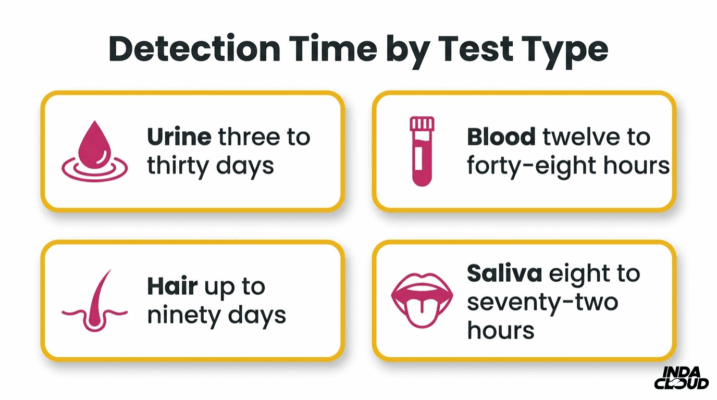
Delta 8 is detectable in a urine test for approximately 3 to 30 days, depending on usage frequency. Occasional users may clear metabolites within a few days, while daily consumers often test positive for a month or longer.
Standard screening panels do not distinguish between delta 8 and delta 9 THC. According to a U.S. Department of Justice report, all six commercially available urine cannabinoid immunoassay screening kits cross-reacted with delta-8-THC, 11-OH-delta-8-THC, and 8-beta-11-di-OH-delta-8-THC. This means even pure delta 8 consumption will likely trigger a positive result on a standard workplace drug screen. Anyone facing an upcoming test should plan accordingly, regardless of which THC isomer they consumed.
Delta 8 is detectable in a blood test for 12 to 48 hours in occasional users. According to Destiny Recovery Center, blood tests identify delta-8 metabolites within this 12-to-48-hour window for recent exposure, while heavy users may test positive for up to 30 days.
Blood testing reflects very recent consumption, which makes it common in roadside assessments and post-accident screenings. Because the detection window is shorter than urine testing for casual users, blood panels are rarely used for pre-employment screening. For anyone who consumes delta 8 regularly, though, metabolite accumulation in blood can extend detection far beyond the typical two-day window.
Delta 8 is detectable in a hair test for up to 90 days after consumption. Hair follicle testing captures the longest detection window of any standard drug screening method, making it difficult to avoid with short abstinence periods.
A study published in the Journal of Analytical Toxicology confirmed that hair drug testing can detect environmental exposure of Δ8-THC, Δ9-THC, Δ10-THC, and CBD, with carryover and crosstalk analyzed at 20 times the cutoff concentration. This sensitivity means even passive exposure can occasionally produce detectable levels. For frequent delta 8 users, hair testing is the most challenging screening to pass, since metabolites become embedded in the hair shaft as it grows.
Delta 8 is detectable in a saliva test for 8 to 72 hours in most occasional users. However, detection windows expand dramatically with heavier consumption patterns.
According to Santa Barbara Recovery, research on frequent cannabis use indicates that heavy users can test positive for THC in saliva for up to 29 days, compared to a window of 8 to 12 hours for occasional users. Saliva tests are gaining popularity in workplace and roadside settings because they are non-invasive and easy to administer. For infrequent delta 8 consumers, saliva screening presents the narrowest detection window among all test types, making it the least likely to flag past use.
Understanding these detection timelines helps when choosing products that match your lifestyle and testing requirements.
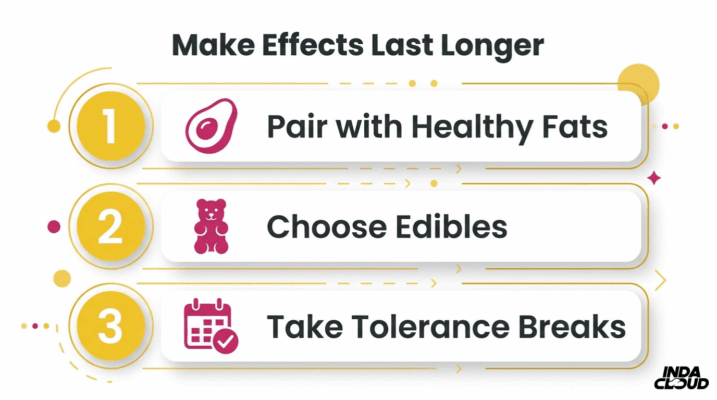
You can make Delta 8 effects last longer by pairing your dose with fatty foods, choosing edibles over inhalation, and managing your tolerance. These practical strategies maximize absorption and extend your experience.
Pair Delta 8 with healthy fats. Cannabinoids are fat-soluble, so consuming Delta 8 THC with healthy fats can enhance its absorption and extend its effects. A snack containing avocado, nuts, or coconut oil before dosing helps your body process more of the active compound. According to Mellow Fellow’s cannabinoid education resources, this simple pairing meaningfully boosts both intensity and duration.
Choose edibles for longer-lasting effects. Because oral THC undergoes first-pass metabolism in the liver, edibles produce a slower release that sustains effects for several hours. While onset takes longer, the tradeoff is a more prolonged experience compared to vaping or smoking.
Take tolerance breaks. Regular use builds CB1 receptor tolerance, which shortens perceived duration. Spacing sessions by a few days allows receptor sensitivity to reset, making each dose feel stronger and last longer without increasing the amount consumed.
Optimize your starting dose. Rather than taking more at once, find the minimum effective dose and build from there. Starting low preserves your sensitivity over time, which is one of the most overlooked ways to maintain longer, more consistent effects from Delta 8 THC.
Understanding how to extend your experience helps you get more value from every product you choose.
Delta 8 duration compares to Delta 9 THC by producing a shorter, less intense experience overall. The differences stem from receptor affinity, potency, and legal classification.
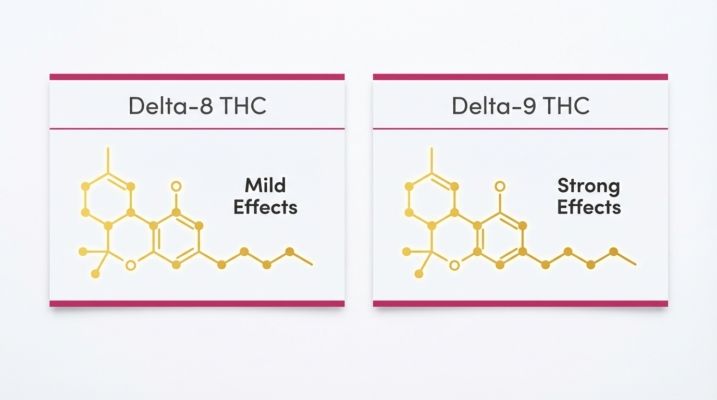
Delta-8-tetrahydrocannabinol is a positional isomer of Delta-9-THC with a similar pharmacological profile but slightly lower psychoactive potency, according to ScienceDirect. Because both cannabinoids target the same endocannabinoid receptors, their effects overlap considerably; however, the gap in intensity directly influences how long each one feels active.
In a survey of 521 delta-8-THC users published in the Journal of Cannabis Research, participants reported that delta-8-THC was significantly less intense than delta-9-THC and had a shorter duration of effects. MUSC scientist Dr. Michael Scofield reinforces this distinction, noting that Delta-8 “acts on the same sort of receptors in the brain but not quite to the same extent as delta-9-THC.” This weaker receptor engagement explains why Delta 8 highs typically taper off sooner.
For consumers weighing the two cannabinoids, several practical considerations stand out:
The legal landscape adds another layer of complexity. A proposed revision to the 2024 Farm Bill would impose limits on total THC, including delta-8-THC and other semi-synthetic cannabinoids in hemp products. Some states have already acted independently; Delta-8 is illegal under California state law, where using, possessing, or selling hemp and marijuana-derived delta-8 products is considered a violation.
For most users seeking a controlled, shorter session, Delta 8 offers a practical middle ground between CBD and full-strength Delta 9. Knowing the legal status in your state and choosing lab-tested products remain essential steps regardless of which cannabinoid you prefer.
You should choose Delta 8 products based on your desired onset time, effect duration, and quality verification. The following sections cover how IndaCloud’s lab-tested options fit different preferences and summarize the key duration insights from this article.
Yes, IndaCloud’s lab-tested Delta 8 vapes and edibles can help you match the right product to your lifestyle. IndaCloud carries Delta 8 vapes for faster onset and shorter sessions, along with Delta 8 edibles for slower, longer-lasting effects. Every product undergoes third-party lab testing, and each batch includes a Certificate of Analysis confirming cannabinoid potency and screening for contaminants like heavy metals and residual solvents.
Choosing between vapes and edibles ultimately comes down to how quickly you want to feel effects and how long you need them to last. For someone new to Delta 8, starting with a low-dose edible (5 to 10 mg) provides a controlled, extended experience, while a vape pen offers more immediate, adjustable sessions. IndaCloud organizes products by cannabinoid type, desired effect, and potency level, which simplifies that decision. With over 250,000 verified customers and all products federally legal at under 0.3% Delta 9 THC, IndaCloud provides a transparent, convenient starting point.
The key takeaways about Delta 8 duration are that consumption method, dosage, and individual metabolism collectively determine how long effects last. Here are the core insights:
For a reliable, lab-tested selection of Delta 8 vapes and edibles, IndaCloud can help you find the right fit.
Let’s dive into the worlds of delta 8 and delta 9 THC. Delta 9…
Learn more
Delta-8 THC is a naturally occurring cannabinoid found in cannabis plants that produces milder…
Learn more
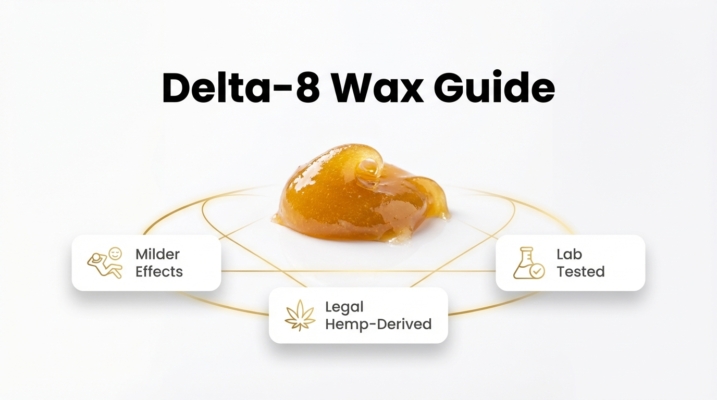
Delta-8 THC wax is a concentrated cannabis extract containing high levels of delta-8-tetrahydrocannabinol in…
Learn more
Delta-8 THC is a hemp-derived cannabinoid that stays in your system for as little…
Learn more
