



Delta 8

Delta 8 vs Delta 9: Complete Comparison
Let’s dive into the worlds of delta 8 and delta 9 THC. Delta 9…
Learn more
You must be 21+ to enter this site
 FREE SHIPPING $89+
 FREE GIFT ON $120+
 100% FEDERALLY LEGAL
 LAB TESTED FOR PURITY
FREE SHIPPING $89+
FREE GIFT ON $120+
100% FEDERALLY LEGAL
LAB TESTED FOR PURITY
FREE SHIPPING $89+
FREE GIFT ON $120+
100% FEDERALLY LEGAL
LAB TESTED FOR PURITY
FREE SHIPPING $89+
FREE GIFT ON $120+
100% FEDERALLY LEGAL
LAB TESTED FOR PURITY
FREE SHIPPING $89+
FREE GIFT ON $120+
100% FEDERALLY LEGAL
LAB TESTED FOR PURITY
FREE SHIPPING $89+
FREE GIFT ON $120+
100% FEDERALLY LEGAL
LAB TESTED FOR PURITY
FREE SHIPPING $89+
FREE GIFT ON $120+
100% FEDERALLY LEGAL
LAB TESTED FOR PURITY
FREE SHIPPING $89+
FREE GIFT ON $120+
100% FEDERALLY LEGAL
LAB TESTED FOR PURITY
LAB TESTED FOR PURITY
FREE SHIPPING $89+
FREE GIFT ON $120+
100% FEDERALLY LEGAL
LAB TESTED FOR PURITY
FREE SHIPPING $89+
FREE GIFT ON $120+
100% FEDERALLY LEGAL
LAB TESTED FOR PURITY
FREE SHIPPING $89+
FREE GIFT ON $120+
100% FEDERALLY LEGAL
LAB TESTED FOR PURITY
FREE SHIPPING $89+
FREE GIFT ON $120+
100% FEDERALLY LEGAL
LAB TESTED FOR PURITY
FREE SHIPPING $89+
FREE GIFT ON $120+
100% FEDERALLY LEGAL
LAB TESTED FOR PURITY
FREE SHIPPING $89+
FREE GIFT ON $120+
100% FEDERALLY LEGAL
LAB TESTED FOR PURITY
FREE SHIPPING $89+
FREE GIFT ON $120+
100% FEDERALLY LEGAL
LAB TESTED FOR PURITY

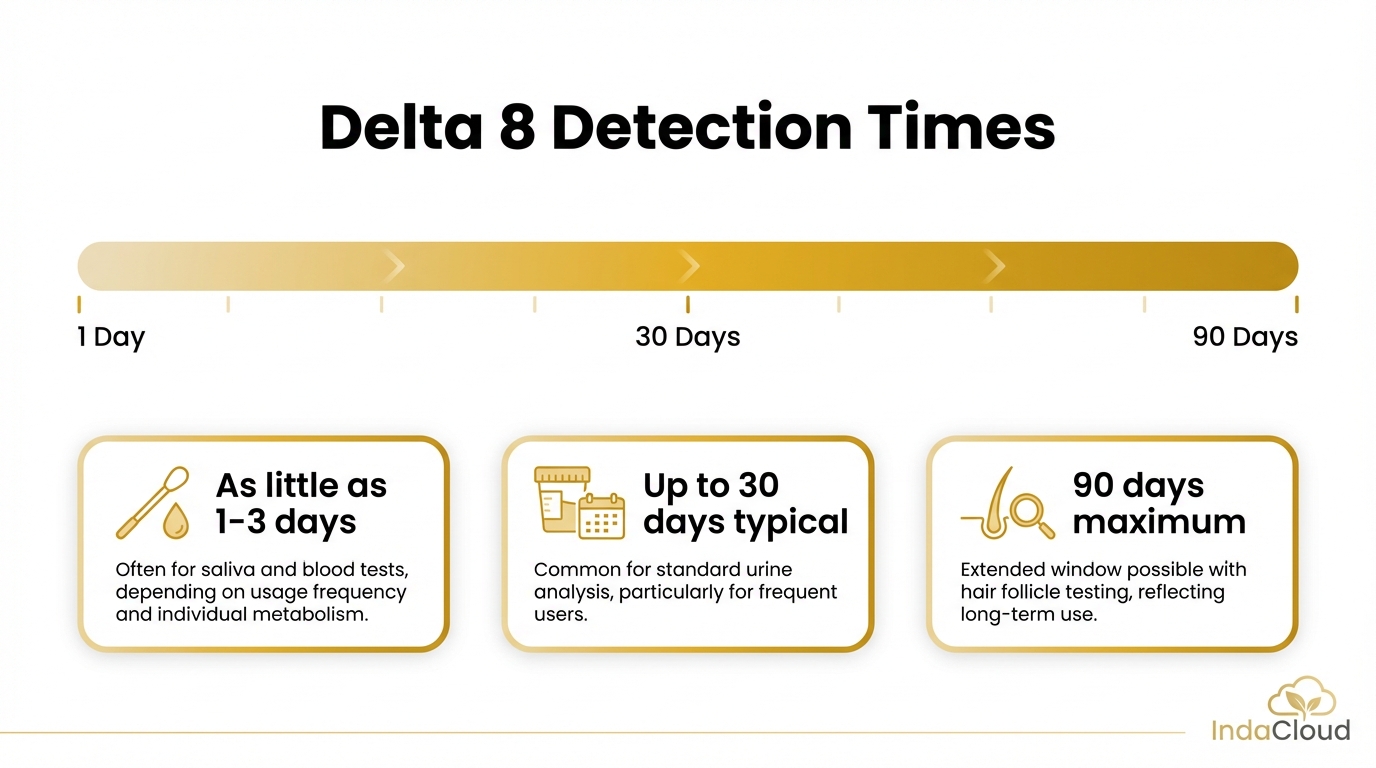
Delta-8 THC is a hemp-derived cannabinoid that stays in your system for as little as 1-3 days after a single use or up to 90 days depending on the drug test type and your usage pattern.
This guide covers detection windows by test type, the biological and lifestyle factors that influence clearance, drug test cross-reactivity, evidence-based detox strategies, the legal landscape surrounding Delta-8, and how to choose quality products.
Urine, blood, saliva, and hair tests each carry distinct detection timelines. Urine screens, the most common method in workplace testing, can flag THC metabolites for 3 to 30 days. Blood and saliva tests capture shorter windows of 1-3 days for occasional users, while hair follicle tests extend detection up to 90 days after consumption.
Several biological variables shift these timelines significantly. Usage frequency is the single largest factor; daily consumers accumulate metabolites in fat tissue far faster than the body can eliminate them. Body fat percentage, dosage, metabolic rate, and consumption method (vaping versus edibles, for example) all compound the equation.
Standard immunoassay drug screens cannot differentiate between Delta-8 and Delta-9 THC metabolites, so legal Delta-8 use can still produce a positive result. Even advanced confirmatory methods like GC-MS are not always configured to make this distinction in standard lab protocols.
No commercial detox product has scientific backing for faster THC elimination. Abstinence and time remain the only proven clearance methods; exercise and hydration play limited supporting roles at best.
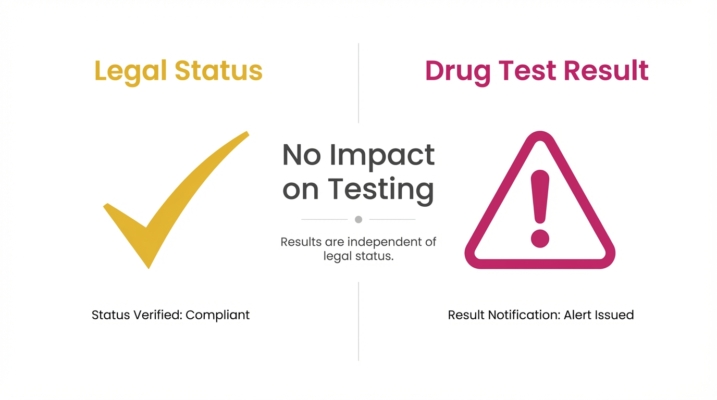
Delta-8’s legal status under the 2018 Farm Bill does not influence how drug tests interpret THC metabolites. Choosing lab-tested products with verified purity from reputable brands ensures you know exactly what you are consuming before making any decisions around use and testing.
Delta-8 THC is a naturally occurring cannabinoid and a constitutional isomer of Delta-9 THC. It shows up on drug tests because standard screening methods cannot tell these two compounds apart. Understanding its chemical structure, legal status, and how the body processes it explains why even legal Delta-8 use triggers positive test results.
Delta-8 THC shares the molecular formula C₂₁H₃₀O₂ with Delta-9 THC, differing only in the position of a single double bond in its chemical structure, according to the National Center for Biotechnology Information. This minor structural variation produces milder psychoactive effects, yet it creates a major problem at the testing lab. The body metabolizes both isomers into nearly identical compounds, which is why drug screens consistently flag Delta-8 users.
Most Delta-8 THC available today is synthetically converted from hemp-derived CBD rather than extracted directly from cannabis plants. The 2018 U.S. Farm Bill federally legalized hemp derivatives containing less than 0.3% Delta-9 THC, which opened the door for Delta-8 products. However, a 2020 DEA Interim Final Rule classified all synthetically derived tetrahydrocannabinols as Schedule I controlled substances, placing Delta-8’s legal status in a gray area that varies by state.
Given this regulatory complexity, choosing products from brands that prioritize transparency and third-party testing becomes essential. IndaCloud, for instance, subjects every product batch to comprehensive lab testing and makes detailed reports publicly available, helping consumers verify exactly what they’re purchasing regardless of the evolving legal landscape.
Despite this legal complexity, drug tests do not consider legality. Standard immunoassay drug screens detect THC metabolites as a class. As Quest Diagnostics has noted, these tests cannot differentiate between Delta-8 and Delta-9 THC metabolites, leading to a high potential for positive results among Delta-8 users. The identical molecular weight of both metabolites causes significant antibody cross-reactivity in presumptive testing panels.
THC is highly lipophilic, meaning it dissolves in and binds to fat tissue throughout the body. Once stored in adipose cells, THC metabolites release slowly back into the bloodstream over days or weeks. This fat-soluble nature is the primary reason detection windows extend well beyond the last use, particularly for regular consumers with higher body fat percentages.
For anyone using Delta-8 products and facing upcoming screening, the critical takeaway is straightforward: legal status does not equal test-safe status. The sections ahead break down exactly how long Delta-8 remains detectable across each major test type.
Delta-8 stays in your system for different lengths of time depending on the drug test used. Urine, blood, saliva, and hair tests each have distinct detection windows shaped by how they measure THC metabolites.
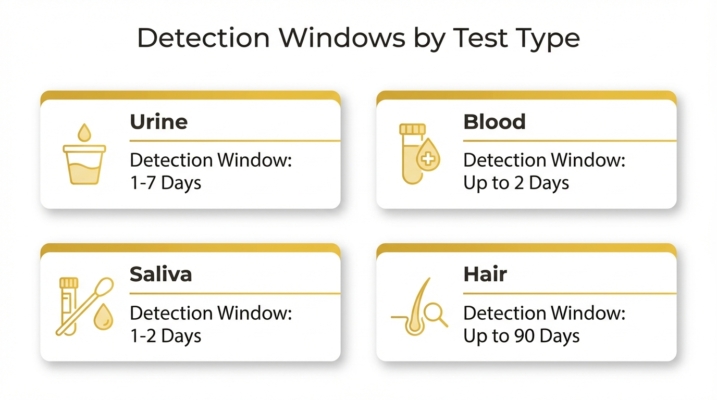
Delta-8 stays in your urine for approximately 3 to 30 days, depending on usage frequency. Urine tests are the most common screening method for THC metabolites because they offer a practical balance between detection window and cost. A single use may clear within three days, while daily or heavy consumption can produce positive results for a month or longer. Because THC is fat-soluble, metabolites accumulate with repeated exposure and release gradually into urine over time. For anyone facing a workplace or pre-employment screening, urine testing remains the most likely method encountered.
Delta-8 stays in your blood for 1 to 2 days after occasional use. However, for heavy, chronic users, blood tests can detect active THC for up to 25 to 30 days due to accumulation in fat stores, according to detection timeline data reported by Destiny RC. Blood tests measure parent THC rather than just metabolites, making them better suited for detecting recent impairment. This is why law enforcement sometimes favors blood draws in roadside testing scenarios. Once THC redistributes from the bloodstream into adipose tissue, though, blood concentrations drop quickly for infrequent users.
Delta-8 stays in your saliva for roughly 24 to 72 hours after use. Saliva tests detect parent THC deposited in the oral cavity during smoking, vaping, or ingestion. Because the compound clears from saliva relatively fast, this method primarily identifies very recent consumption. Frequent users may test positive slightly beyond the 72-hour mark, but saliva remains one of the shortest detection windows across all test types. Roadside and on-site workplace screenings increasingly use oral fluid collection for its convenience and non-invasive nature.
Delta-8 stays in your hair for up to 90 days after consumption. According to the American Addiction Centers, hair follicle tests have the longest detection window, capable of detecting THC metabolites for up to 90 days. THC metabolites enter the hair shaft through the bloodstream as new hair grows, creating a timeline of use that no other test type can match. While hair testing is less common due to higher costs, it is sometimes used for court-ordered screenings or positions requiring extensive background checks. A single or very infrequent use, however, may not always deposit enough metabolite to trigger a positive result.
Understanding these detection windows by test type helps you plan accordingly if a screening is approaching.
Several factors affect how long delta-8 stays in your system, including usage frequency, body composition, dosage, metabolism, and consumption method. Each variable shifts detection windows significantly.
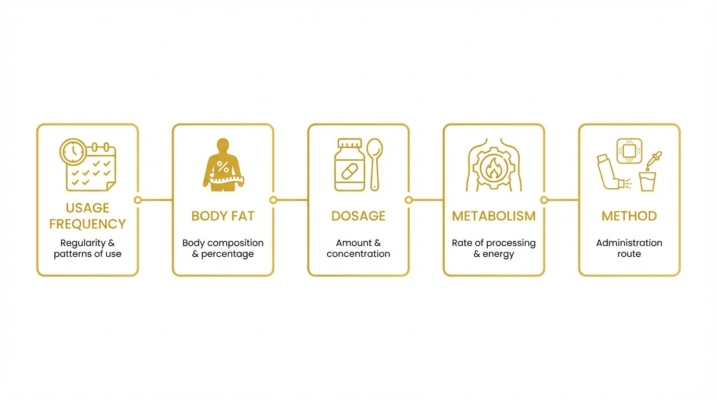
Frequency of use changes delta-8 detection times by determining how much THC metabolite accumulates in your body. A single session produces a small, quickly cleared amount. Regular use, however, causes metabolites to build up in tissues faster than the body can eliminate them.
Occasional users may test clean within a few days, while daily consumers can carry detectable levels for weeks. This accumulation effect is the single biggest variable in detection timelines. For anyone concerned about an upcoming test, the pattern of consumption over the preceding weeks matters far more than the last session alone.
Body fat percentage influences delta-8 retention because THC is highly lipophilic. According to a study published in the British Journal of Pharmacology, THC’s fat-soluble nature causes it to be stored in adipose tissue for extended periods, from which it is slowly released back into the bloodstream.
Individuals with higher body fat percentages retain delta-8 metabolites longer. As fat cells gradually release stored THC, the elimination timeline stretches. Leaner individuals tend to clear metabolites faster simply because they have fewer fat reserves acting as long-term storage. This is why two people with identical usage patterns can produce very different test results.
Dosage and potency affect how long delta-8 lingers by increasing the total volume of THC metabolites your body must process. A low-dose gummy produces far less metabolite than a high-potency concentrate consumed in the same sitting.
Higher doses saturate metabolic pathways, slowing overall clearance. Potency compounds the issue; a product with 50 mg of delta-8 per serving creates a substantially larger metabolic burden than one containing 10 mg. When preparing for a drug test, both the strength of the product and the amount consumed per session should be considered.
Your metabolism speeds up or slows down delta-8 clearance based on how efficiently your liver processes THC metabolites. The liver’s cytochrome P450 enzyme system breaks down delta-8 into metabolites that are then excreted through urine and feces.
Factors like age, genetics, liver health, and overall metabolic rate all influence this process. Younger individuals with faster basal metabolic rates generally eliminate cannabinoids more quickly. Hydration and diet also play supporting roles, though neither can override a fundamentally slow metabolism. In my experience, metabolic rate is the factor people underestimate most when estimating their personal clearance timeline.
The consumption method impacts delta-8 duration by altering how the cannabinoid enters and is processed by the body. Inhalation methods, such as vaping, deliver delta-8 rapidly into the bloodstream, producing faster onset but also quicker initial clearance. Edibles, by contrast, pass through the digestive system and undergo first-pass liver metabolism, creating a slower but more prolonged release of metabolites.
Edibles generally extend detection windows the longest due to their sustained metabolic conversion. Understanding your preferred method helps set realistic expectations before any screening.
Delta-8 stays in your system for as little as 1-2 days for occasional users and up to 30 days or more for heavy users. Detection times vary by use frequency, and the subsections below break down timelines for single, moderate, and daily use.
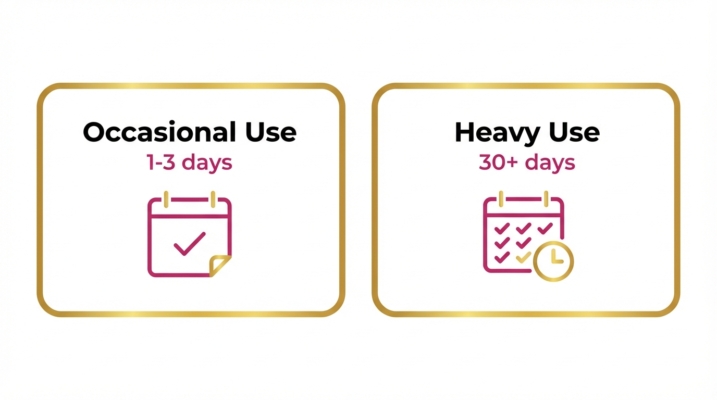
Delta-8 is detectable after a single use for approximately 1-3 days in most testing scenarios. THC metabolites from one session are typically cleared relatively quickly because the body has not accumulated significant cannabinoid stores in fat tissue.
According to Healthline, THC metabolites are typically detectable in urine for up to 3 days after a single use. Blood and saliva tests tend to show even shorter windows, often clearing within 24-48 hours. For someone facing a drug test after one-time use, a few days of abstinence is usually sufficient for urine clearance, though individual metabolism and body composition still play a role.
Delta-8 is detectable after moderate weekly use for roughly 5-14 days, depending on the test type and individual factors. Using delta-8 a few times per week allows THC metabolites to partially accumulate in adipose tissue without reaching the saturation levels seen in daily consumers.
Urine tests represent the most common screening method, and moderate users generally test positive for one to two weeks after their last session. Blood detection windows tend to be shorter, often falling in the 3-7 day range. Because the body has time between sessions to partially metabolize stored THC, clearance happens faster than it does for daily users. Still, those with higher body fat percentages may retain metabolites toward the longer end of this range.
Delta-8 is detectable after daily or heavy use for up to 30 days or longer in urine and 25-30 days in blood. Chronic consumption causes THC metabolites to accumulate extensively in fat stores, and the body releases them gradually over weeks.
Blood tests can detect active THC for 25-30 days in heavy, chronic users due to this accumulation in adipose tissue. Urine screening windows extend to 30 days or more because the kidneys continue filtering metabolites long after the last dose. For daily users preparing for a drug test, planning at least a full month of abstinence is the most reliable strategy. Product quality also matters here; Chemical & Engineering News has reported that delta-8 synthesized from CBD can contain contaminants like heavy metals and residual solvents, which adds another reason to be mindful of consumption habits.
Understanding these detection ranges by usage level helps set realistic expectations before any scheduled screening.
Yes, Delta-8 THC can make you fail a standard drug test. The reason comes down to how these tests are designed and what they actually detect. Understanding the science behind cross-reactivity explains why even legal hemp-derived cannabinoids trigger positive results.
Standard immunoassay drug screens, the type used in most workplace and pre-employment testing, target THC metabolites rather than the parent compound itself. Delta-8 and Delta-9 THC share nearly identical metabolic pathways, producing metabolites with the same molecular weight. According to Quest Diagnostics, standard immunoassay screens cannot differentiate between Delta-8 and Delta-9 THC metabolites, leading to a high potential for false-positive results for marijuana use among Delta-8 users. This structural similarity causes high antibody cross-reactivity, meaning the test registers any THC metabolite as a positive hit regardless of which cannabinoid produced it.
More advanced confirmatory methods, such as gas chromatography-mass spectrometry (GC-MS), can technically distinguish between the two isomers. However, standard lab protocols are often not configured to make this distinction, and interference can still occur during analysis. Most employers and testing facilities rely on the initial immunoassay result unless the individual specifically requests further differentiation, which is rarely an available option.
For anyone subject to drug testing, the practical takeaway is straightforward: treat Delta-8 THC the same as Delta-9 when it comes to screening risk. Legal status does not influence how a drug test interprets THC metabolites in your system. Understanding detection windows becomes essential when navigating both Delta-8 use and testing obligations.
The best ways to detox Delta-8 from your system are abstinence, time, hydration, and consistent exercise. Below, each common detox strategy is evaluated for effectiveness.
Drinking more water does not help flush Delta-8 faster in a meaningful way. Hydration supports general kidney function and urine production, but THC metabolites are stored in fat tissue, not water-soluble compartments. Increasing water intake may dilute urine concentration temporarily, which can actually raise suspicion during a drug screening if creatinine levels drop too low. Proper hydration is important for overall health, yet it should not be relied upon as a standalone detox method. For anyone facing a test, combining steady water intake with a longer abstinence window is far more practical than aggressive overhydration in the days before.
Exercise can help you eliminate Delta-8 sooner only in a limited, indirect way. Physical activity burns fat, and since THC metabolites accumulate in adipose tissue, fat loss gradually releases stored metabolites for elimination. However, a study published in Basic & Clinical Pharmacology & Toxicology on chronic cannabis users concluded that physical exercise or a 24-hour period of food deprivation is unlikely to cause sufficient changes in cannabinoid concentrations to alter drug testing interpretations. Regular exercise over weeks may slightly accelerate overall clearance, but intense workouts right before a test could temporarily spike metabolite levels in the bloodstream. Consistent, moderate activity paired with extended abstinence remains the more reliable approach.
Detox drinks or supplements do not work for reliable Delta-8 clearance. According to a review published in the Journal of Medical Toxicology, there is no scientific evidence to support the claims of commercial “detox” products for eliminating THC from the body; the only proven method is abstinence and time. Most detox drinks function by temporarily diluting urine or adding vitamins to mask dilution, neither of which actually removes THC metabolites from fat stores. Some products may even contain unregulated ingredients that introduce additional health risks. Spending money on unproven supplements is, in most cases, less effective than simply stopping use well ahead of any scheduled test.
Stopping Delta-8 use early enough before a test helps because it gives the body time to naturally metabolize and excrete stored THC. Since Delta-8 produces metabolites that standard immunoassay screens cannot distinguish from Delta-9 THC metabolites, according to Quest Diagnostics, the safest strategy is maximizing the abstinence window. Occasional users may clear detectable levels within a few days, while heavy users could need 30 days or more. With the rapid growth of Delta-8 availability across the U.S., more consumers face unexpected testing situations. Planning ahead and stopping use as early as possible remains the single most effective and evidence-backed approach to passing a drug test.
You should stop using delta-8 at least 2 to 4 weeks before a drug test, though heavy users may need 30 days or longer. The ideal abstinence window depends on your usage frequency, body composition, and the type of test you face.
Occasional users who consume delta-8 once or twice can often clear metabolites within 3 to 7 days of abstinence. Moderate weekly users should allow a minimum of 2 to 3 weeks. Daily or heavy users face the longest clearance timeline because THC is highly lipophilic, meaning it accumulates in adipose tissue and releases slowly back into the bloodstream over weeks. According to a study published in the British Journal of Pharmacology, this fat-soluble property causes THC to persist in the body far longer than most other substances.
For the safest approach, consider these guidelines based on test type:
No shortcut replaces time and abstinence. For anyone facing a scheduled drug test, the most reliable strategy is stopping delta-8 use as early as possible and allowing your body’s natural metabolism to clear stored metabolites. Understanding detection windows by test type helps you plan accordingly.
Delta-8 THC is federally legal under specific conditions, but its legal status does not protect users from failing a drug test. The legal gray area surrounding this cannabinoid creates confusion about both its legality and its implications for employment screening.
The 2018 U.S. Farm Bill federally legalized hemp and its derivatives, provided their Delta-9 THC concentration does not exceed 0.3% on a dry weight basis. Delta-8 THC derived from compliant hemp technically falls under this protection. However, a 2020 Interim Final Rule from the DEA states that “all synthetically derived tetrahydrocannabinols remain schedule I controlled substances,” creating a legal gray area for Delta-8 THC produced from CBD. Since most commercial Delta-8 is converted from hemp-derived CBD through a chemical process, its legal classification remains disputed at the federal level.
State laws complicate matters further. Several states have explicitly banned or restricted Delta-8 THC sales, while others permit them. This patchwork of regulations means legality depends entirely on where you live, not just federal guidelines.
Critically, legality has zero bearing on drug test outcomes. Standard drug screens detect THC metabolites without distinguishing between Delta-8 and Delta-9 sources. A product being legal to purchase does not make its metabolites invisible to testing panels. The FDA has issued numerous warning letters to companies for illegally marketing Delta-8 THC products and for selling them in packaging that may appeal to children, further underscoring the regulatory uncertainty surrounding these products.
For anyone facing a drug test, the practical takeaway is straightforward: legal Delta-8 use can still produce a positive result. A study published in Basic & Clinical Pharmacology & Toxicology on chronic cannabis users concluded that physical exercise or a 24-hour period of food deprivation is unlikely to cause sufficient changes in cannabinoid concentrations to alter drug testing interpretations. In other words, no quick workaround can offset the metabolites already stored in your system, regardless of the product’s legal status. Understanding both the legal landscape and testing science is essential for making informed decisions about Delta-8 use.
You can choose quality Delta-8 products with confidence by prioritizing third-party lab testing, transparent sourcing, and verified purity standards. The following sections cover how IndaCloud supports informed purchasing and the essential takeaways about Delta-8 detection.
Yes, IndaCloud’s lab-tested hemp-derived products can help you make informed Delta-8 decisions. IndaCloud subjects every product to comprehensive third-party testing, verifying potency and screening for contaminants like heavy metals and residual solvents. This matters because, as reported by Chemical & Engineering News, the vast majority of Delta-8 THC on the market is synthetically converted from hemp-derived CBD, a process that raises concerns about chemical impurities and reaction by-products.
This is why IndaCloud’s commitment to comprehensive third-party testing is particularly valuable, each batch is screened not just for potency but also for heavy metals and residual solvents, addressing the specific contamination risks associated with synthetic conversion processes.
IndaCloud addresses these concerns through several quality assurances:
In a market where unregulated products have contributed to thousands of adverse event reports, choosing a brand that prioritizes transparency is one of the most practical steps a consumer can take.
The key takeaways about how long Delta-8 stays in your system center on test type, usage frequency, and individual metabolism. Detection windows range from 1 to 3 days for blood and saliva tests in occasional users, up to 30 days or more in urine for chronic consumers, and as long as 90 days with hair follicle testing. According to the FDA, Delta-8 THC products carry real safety considerations, making it essential to understand how long metabolites persist before any drug screening.
Core points to remember:
Choosing lab-tested products from a transparent source like IndaCloud ensures you know exactly what you are consuming, which is the foundation of any responsible Delta-8 decision.
Let’s dive into the worlds of delta 8 and delta 9 THC. Delta 9…
Learn more
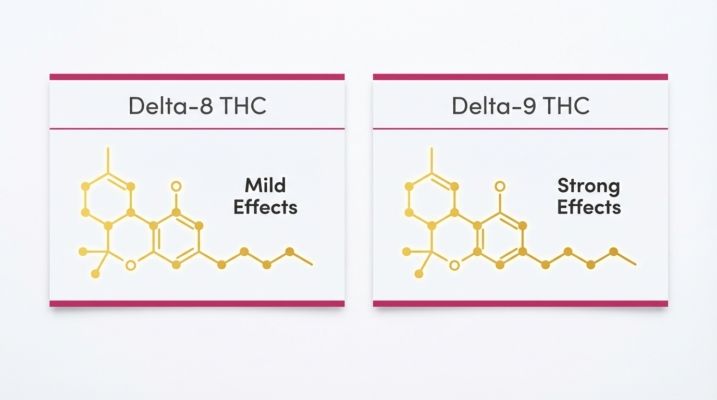
Delta-8 THC is a naturally occurring cannabinoid found in cannabis plants that produces milder…
Learn more
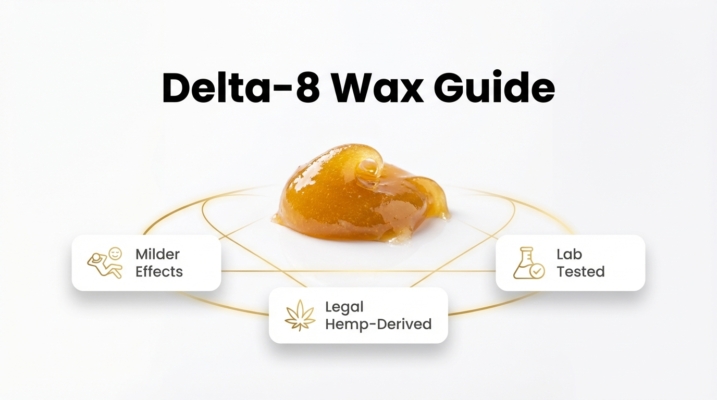
Delta-8 THC wax is a concentrated cannabis extract containing high levels of delta-8-tetrahydrocannabinol in…
Learn more
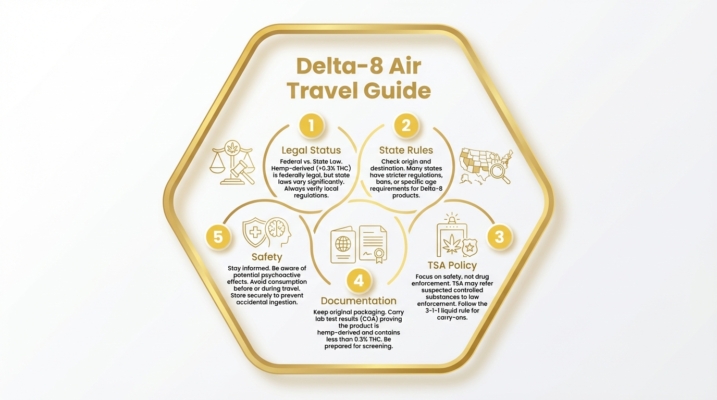
Flying with delta-8 THC in 2026 is a legal gray area shaped by federal…
Learn more
