


THCA

How Long Does THCA Stay in Your System?
Raw, unheated THCA clears your system in roughly 24 to 48 hours. Once you…
Learn more
You must be 21+ to enter this site
 FREE SHIPPING $89+
 FREE GIFT ON $120+
 100% FEDERALLY LEGAL
 LAB TESTED FOR PURITY
FREE SHIPPING $89+
FREE GIFT ON $120+
100% FEDERALLY LEGAL
LAB TESTED FOR PURITY
FREE SHIPPING $89+
FREE GIFT ON $120+
100% FEDERALLY LEGAL
LAB TESTED FOR PURITY
FREE SHIPPING $89+
FREE GIFT ON $120+
100% FEDERALLY LEGAL
LAB TESTED FOR PURITY
FREE SHIPPING $89+
FREE GIFT ON $120+
100% FEDERALLY LEGAL
LAB TESTED FOR PURITY
FREE SHIPPING $89+
FREE GIFT ON $120+
100% FEDERALLY LEGAL
LAB TESTED FOR PURITY
FREE SHIPPING $89+
FREE GIFT ON $120+
100% FEDERALLY LEGAL
LAB TESTED FOR PURITY
FREE SHIPPING $89+
FREE GIFT ON $120+
100% FEDERALLY LEGAL
LAB TESTED FOR PURITY
LAB TESTED FOR PURITY
FREE SHIPPING $89+
FREE GIFT ON $120+
100% FEDERALLY LEGAL
LAB TESTED FOR PURITY
FREE SHIPPING $89+
FREE GIFT ON $120+
100% FEDERALLY LEGAL
LAB TESTED FOR PURITY
FREE SHIPPING $89+
FREE GIFT ON $120+
100% FEDERALLY LEGAL
LAB TESTED FOR PURITY
FREE SHIPPING $89+
FREE GIFT ON $120+
100% FEDERALLY LEGAL
LAB TESTED FOR PURITY
FREE SHIPPING $89+
FREE GIFT ON $120+
100% FEDERALLY LEGAL
LAB TESTED FOR PURITY
FREE SHIPPING $89+
FREE GIFT ON $120+
100% FEDERALLY LEGAL
LAB TESTED FOR PURITY
FREE SHIPPING $89+
FREE GIFT ON $120+
100% FEDERALLY LEGAL
LAB TESTED FOR PURITY

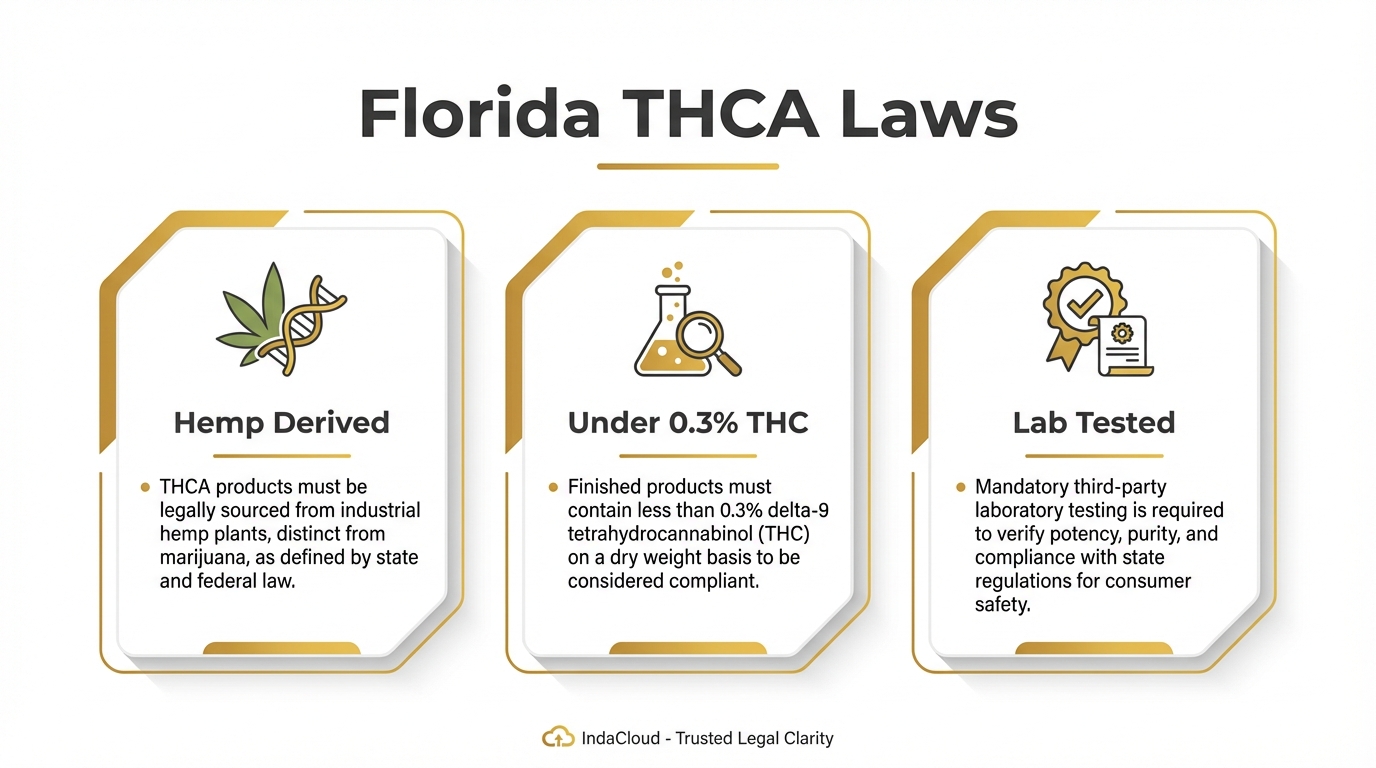
THCA is legal in Florida when derived from hemp containing no more than 0.3% delta-9 THC on a dry-weight basis, though evolving federal and state legislation is actively reshaping this framework. This guide covers the science behind THCA and THC, the federal and Florida laws governing legality, product availability and formats, quality and compliance verification, and the regulatory outlook beyond 2026.
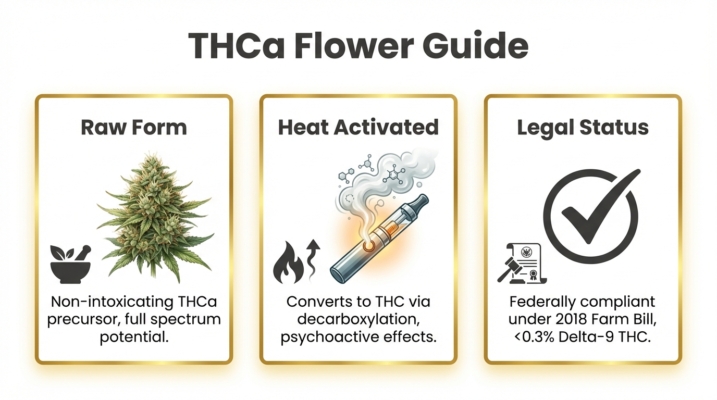
THCA is the non-psychoactive acidic precursor to THC found in raw cannabis. It only becomes intoxicating through decarboxylation when exposed to heat, which means legal compliance is measured at the point of sale rather than the point of consumption. This distinction is what allows high-THCA hemp flower to satisfy both federal and state thresholds while delivering psychoactive effects once smoked or vaped.
Florida Statute 581.217 defines hemp to include all cannabinoids, acids, and derivatives of Cannabis sativa L., explicitly covering THCA in its raw form. The 2018 Farm Bill provides the federal foundation for interstate hemp commerce, and the DEA’s 2020 interim final rule confirmed that compliant hemp cannabinoids fall outside Schedule I. However, P.L. 119-37, enacted in November 2025, shifted the federal definition from delta-9 THC to total THC concentration, putting pressure on Florida’s current framework.
Florida residents can purchase THCA flower, pre-rolls, vape cartridges, edibles, and concentrates both locally and online. No state-imposed possession limit applies to compliant hemp products, though THCA will produce a positive drug test once consumed.
Third-party lab verification, COA review steps, and sourcing standards help protect buyers from non-compliant products. This guide also compares Florida’s permissive stance to more restrictive states and examines how pending legislation like SB 1698 could narrow THCA access in future sessions.
THCA is tetrahydrocannabinolic acid, a naturally occurring cannabinoid found in raw cannabis plants. It differs from THC primarily because THCA is non-psychoactive in its natural acidic form, while THC produces intoxicating effects. The distinction between these two compounds carries significant legal and practical implications.
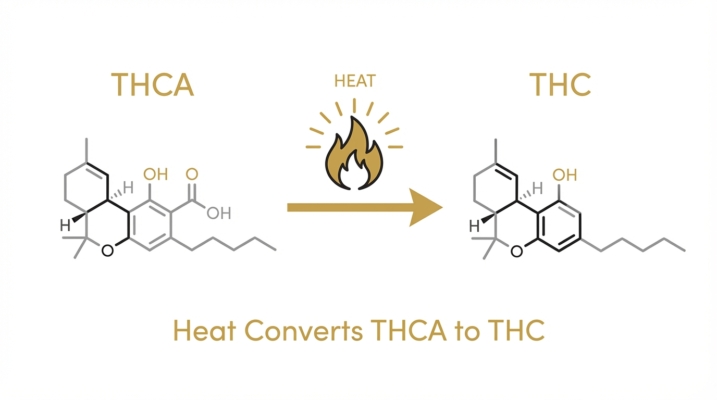
In the living cannabis plant, THCA serves as the direct precursor to THC. THCA synthase, an enzyme in Cannabis sativa, catalyzes the conversion of cannabigerolic acid (CBGA) into THCA, as documented in the Journal of Molecular Biology. Only when exposed to heat or light does THCA undergo decarboxylation, shedding its carboxyl group to become delta-9 THC. This means raw THCA flower, sitting on a shelf, contains minimal delta-9 THC and does not produce a high.
This conversion process is precisely what makes THCA legally distinct. A hemp-derived THCA product can test below 0.3% delta-9 THC before heating, satisfying federal and state thresholds. Once a consumer smokes or vapes that same product, however, the THCA converts into THC and produces psychoactive effects. From a legal perspective, the critical measurement happens at the point of sale, not at the point of consumption.
Compared to other hemp-derived cannabinoids, THCA occupies a unique position. According to Secret Nature, the key legal difference between delta-8 and THCA is that THCA converts into THC while delta-8 does not. Delta-8 remains chemically stable regardless of heat exposure, which means regulators treat it differently. THCA’s ability to transform into the primary psychoactive compound in cannabis makes its legal classification more complex and more dependent on when and how testing occurs.
For Florida consumers, understanding this distinction matters. The product in your hand may be federally compliant hemp, but the experience after decarboxylation closely mirrors traditional THC. This dual nature is what drives much of the regulatory debate surrounding THCA legality at both the federal and state level.
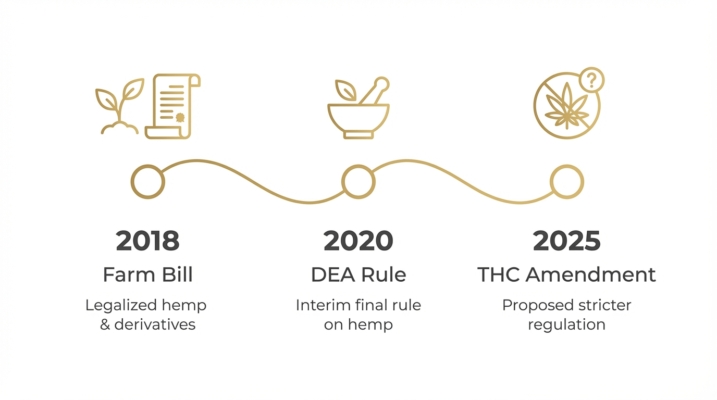
The legal status of THCA depends on federal hemp law because the 2018 Farm Bill created the legal distinction between hemp and marijuana based solely on delta-9 THC concentration. THCA is legal in Florida when derived from hemp and contains less than 0.3% delta-9 THC in its unheated form. This single federal threshold determines whether a cannabis-derived cannabinoid, including THCA, is classified as a lawful hemp product or a controlled substance.
Before the 2018 Farm Bill, all cannabis-derived compounds fell under the Controlled Substances Act regardless of their psychoactive properties. By defining hemp as cannabis containing no more than 0.3% delta-9 THC on a dry-weight basis, according to the Congressional Research Service, Congress effectively removed compliant cannabinoids from Schedule I. THCA, which is non-intoxicating in its raw acidic form, can meet this threshold even when present in high concentrations because the test measures only delta-9 THC, not THCA itself.
This federal framework is what gives states like Florida the legal foundation to permit THCA products. Without the Farm Bill’s hemp definition, no state-level allowance for THCA would hold up against federal drug scheduling. However, this also means any change at the federal level, such as the November 2025 amendment shifting the limit to total THC concentration, directly reshapes what Florida retailers and consumers can legally access. Understanding this federal dependency is essential before examining how Florida’s own statutes interpret and apply these rules.
THCA is legal under Florida state law in 2026 when derived from hemp that meets the state’s delta-9 THC threshold. The subsections below explain Florida’s hemp definition, recent legislative efforts, key bills, and how the state treats different THCA product forms.
Florida’s hemp definition includes THCA. Under Florida Statute 581.217, “hemp” means the plant Cannabis sativa L. and any part of that plant, including all derivatives, extracts, cannabinoids, isomers, acids, salts, and salts of isomers, that has a total delta-9-tetrahydrocannabinol concentration not exceeding 0.3 percent on a dry-weight basis. Because the statute references “acids” explicitly, THCA, the acidic precursor to THC, falls within this legal definition as long as the finished product stays below the delta-9 limit.
However, a significant federal shift now adds complexity. In November 2025, P.L. 119-37 amended the U.S. Code definition of hemp, changing the limit to total THC concentration rather than only delta-9 THC. This federal change could pressure Florida to update its own statute, since high-THCA products that were previously compliant may now face scrutiny at the federal level.
Florida’s 2024 legislative efforts attempted to tighten THCA rules but did not result in comprehensive new restrictions taking effect. Lawmakers introduced multiple bills targeting hemp-derived cannabinoid products, focusing on stricter definitions, age restrictions, and packaging requirements. While these proposals signaled growing regulatory concern over high-THCA products sold outside the medical marijuana framework, the session ended without enacting sweeping changes to the existing hemp statute. The 2024 efforts did, however, establish a legislative foundation that future sessions are likely to build upon, making ongoing monitoring essential for consumers and retailers.
SB 1698 and HB 1475 play a central role in shaping THCA regulation in Florida. According to the Florida Senate, SB 1698 addresses hemp extract products by defining “total delta-9-tetrahydrocannabinol concentration,” setting conditions for the manufacture, sale, and distribution of hemp extracts, and prohibiting products attractive to children. HB 1475 served as a companion measure with overlapping provisions. Together, these bills represent Florida’s most targeted attempt to regulate the cannabinoid product market, including THCA-containing items. Neither bill redefined THCA itself as a controlled substance, but both would impose stricter manufacturing and retail standards if fully enacted. For anyone purchasing THCA products, tracking the status of these bills remains critical.
Florida does not explicitly differentiate between THCA flower and concentrates under its current hemp statute. The state’s definition of legal hemp encompasses all derivatives, extracts, and cannabinoids from Cannabis sativa L., provided the delta-9 THC threshold is met. This means raw THCA flower and THCA concentrates are treated under the same statutory language. In practice, though, concentrates often contain higher cannabinoid densities, which may attract closer regulatory attention during testing and compliance checks. Proposed legislation like SB 1698 could eventually introduce product-type distinctions, particularly around extracts and edibles. Until such measures pass, both product forms occupy the same legal space under Florida law.
With state-level rules established, understanding how federal laws interact with Florida’s framework clarifies the full legal picture for THCA products.
The federal laws that affect THCA legality in Florida are primarily the 2018 Farm Bill and the DEA’s implementation of its amendments to the Controlled Substances Act. These two frameworks determine whether THCA hemp products qualify as legal hemp or fall under controlled substance restrictions.
The 2018 Farm Bill classifies THCA hemp products as legal hemp when they contain no more than 0.3% delta-9 THC on a dry-weight basis. According to the Congressional Research Service, the Agriculture Improvement Act of 2018 defines hemp as any part of the cannabis plant or its derivatives that stays within this threshold. Because the original law measured only delta-9 THC rather than total THC, THCA itself was not directly restricted.
This distinction matters significantly for THCA products. Since THCA is a precursor acid, not delta-9 THC, compliant hemp flower can contain high levels of THCA while still testing below the 0.3% delta-9 limit. NIST has since developed a Hemp Plant Reference Material to help labs accurately measure THC, CBD, and other compounds in cannabis products, improving testing consistency across the industry.
The DEA does not consider THCA a controlled substance when it is derived from compliant hemp. In 2020, the DEA published an interim final rule in the Federal Register to codify amendments the Agriculture Improvement Act of 2018 made to the Controlled Substances Act regarding marihuana, tetrahydrocannabinols, and other marihuana-related constituents.
Under this rule, hemp-derived cannabinoids that meet the Farm Bill’s 0.3% delta-9 THC threshold fall outside Schedule I controls. However, any cannabis material exceeding that limit remains classified as marihuana under federal law. For consumers in Florida, this means THCA products sourced from properly tested, Farm Bill-compliant hemp occupy a federally protected category. Our full guide on whether THCA is federally legal covers these protections in greater detail, though the legal landscape continues to evolve as regulators refine how THC concentration is measured.
Yes, you can buy THCA products in Florida right now, provided they are hemp-derived and contain no more than 0.3% delta-9 THC. The following sections cover availability of THCA flower, vapes, edibles, concentrates, and online ordering options.
Yes, you can purchase THCA flower in Florida. Hemp-derived THCA flower is available through licensed retailers, smoke shops, and online stores that ship to the state. Because THCA flower is the raw, unheated form of the cannabis plant, it qualifies as legal hemp when its delta-9 THC concentration does not exceed 0.3% on a dry-weight basis.
Buyers should verify that any THCA flower comes with a current certificate of analysis from a third-party lab. This confirms the product meets Florida’s THC threshold before purchase. Without that documentation, there is no reliable way to distinguish compliant hemp flower from non-compliant cannabis.
Yes, you can buy THCA vapes in Florida. Vape cartridges and disposable pens containing THCA distillate are widely sold both in brick-and-mortar shops and through online retailers. These products must still meet the 0.3% delta-9 THC limit to remain legally classified as hemp.
One important consideration often overlooked: vaping involves heat, which converts THCA into THC during use. While the product in its unheated state may test below the legal threshold, the user experience after decarboxylation is functionally psychoactive. Consumers should factor this into their purchasing decisions, especially regarding drug testing.
Yes, you can buy THCA edibles and concentrates in Florida. Products such as THCA diamonds, isolates, and infused edibles are available when derived from compliant hemp. Florida’s SB 1698, introduced in 2024, addressed hemp extract sales by defining total delta-9 THC concentration standards and prohibiting hemp extract products attractive to children.
Concentrates tend to carry higher THCA potency than flower or edibles. For this reason, confirming lab-verified cannabinoid profiles is especially critical with these product types. Choosing vendors who publish full panel test results protects buyers from unknowingly possessing non-compliant products.
Yes, you can order THCA products online and ship them to Florida. Federal law under the 2018 Farm Bill permits interstate commerce of hemp-derived products containing no more than 0.3% delta-9 THC on a dry-weight basis, according to the Congressional Research Service. Online retailers who comply with this federal definition can legally ship THCA flower, vapes, edibles, and concentrates directly to Florida addresses.
Online purchasing often provides advantages that local shops cannot match, including broader product selection, published lab reports, and detailed cannabinoid profiles. For Florida residents seeking reliable access to compliant THCA products, online ordering remains one of the most practical channels available.
The THCA product types available to Florida residents include flower, pre-rolls, vape cartridges, edibles, and diamonds or concentrates. Each format offers a distinct method of consumption, onset time, and experience.
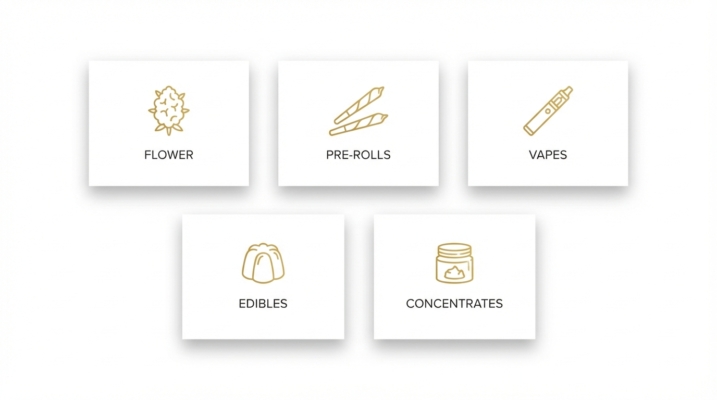
THCA flower is raw, unprocessed hemp bud containing high concentrations of tetrahydrocannabinolic acid. Because the cannabinoid remains in its acidic form until heated, THCA flower tests below the 0.3% delta-9 THC threshold required under federal and Florida hemp law. Consumers typically grind and smoke or vaporize the flower, which triggers decarboxylation and converts THCA into active THC. Strains are commonly available in indica, sativa, and hybrid varieties, letting users choose effects ranging from relaxation to uplift. For anyone who values the full-spectrum terpene profile of whole-plant cannabis, THCA flower remains one of the most versatile options on the market.
THCA pre-rolls are ready-to-smoke joints filled with ground THCA hemp flower. They eliminate the need for a grinder or rolling papers, making them one of the most convenient product formats for on-the-go use. Each pre-roll delivers the same cannabinoid and terpene content as loose flower once lit, since combustion triggers the heat-driven decarboxylation that converts THCA to THC. Pre-rolls are typically sold individually or in multi-packs and labeled by strain type. For newer consumers or those who prefer a consistent, pre-measured dose, this format simplifies the entire experience.
THCA vape cartridges contain concentrated THCA oil designed for use with standard 510-thread batteries or proprietary pen systems. Vaporization heats the oil just enough to convert THCA into THC without combustion, producing a smoother inhale with fewer byproducts than smoking. Effects typically onset within minutes, which makes cartridges a preferred choice for users seeking fast-acting relief or controlled dosing. Most cartridges feature strain-specific terpene profiles that mirror popular cannabis cultivars. Cartridge potency tends to be higher than flower, so starting with small draws is a practical approach for less experienced users.
THCA edibles are ingestible products, such as gummies, baked goods, and infused beverages, that contain tetrahydrocannabinolic acid. When consumed without additional heating, the THCA in these products does not convert to THC in significant amounts, so the experience differs from smoked or vaped formats. Some edibles are formulated to remain non-intoxicating, while others are designed to undergo partial conversion during digestion. Onset is slower compared to inhalation, often taking 45 to 90 minutes. Because dosing is pre-measured per serving, edibles offer a discreet and portion-controlled way to incorporate THCA into a daily routine.
THCA diamonds and concentrates are highly purified hemp extracts with THCA content that can exceed 90%. Diamonds are crystalline structures isolated during extraction, while other concentrate forms include live resin, badder, and shatter. These products are consumed through dabbing, which applies high heat to a small amount of concentrate, rapidly converting THCA to THC for potent, immediate effects. Due to their elevated potency, concentrates are best suited for experienced consumers with established tolerance levels. Proper storage in cool, dark environments helps preserve crystalline structure and prevent premature decarboxylation. With such a broad range of formats available, understanding quality markers like third-party lab testing becomes essential.
You can legally possess THCA in Florida without a specific quantity limit, provided the product qualifies as hemp under state law. Florida statute Section 581.217 defines hemp as Cannabis sativa L. and all its derivatives, extracts, cannabinoids, isomers, acids, and salts, with a total delta-9-tetrahydrocannabinol concentration not exceeding 0.3 percent on a dry-weight basis.
Because THCA is a non-psychoactive cannabinoid acid, it falls within this legal hemp definition as long as the finished product stays below the 0.3% delta-9 THC threshold. Florida does not impose gram limits or personal possession caps on hemp-derived products the way it restricts medical marijuana quantities. This distinction matters: medical marijuana patients face strict dispensing limits, while hemp consumers purchasing compliant THCA products do not encounter the same restrictions.
That said, the absence of a possession ceiling does not eliminate legal risk entirely. If a THCA product exceeds the 0.3% delta-9 THC limit, whether through poor manufacturing or decarboxylation during storage, it no longer qualifies as hemp and could be treated as a controlled substance. Buyers should always verify compliance through third-party lab reports before purchasing or carrying THCA products. Understanding how THCA converts to THC is equally important, especially when drug testing is a concern.
Yes, THCA converts to THC through decarboxylation, and it will likely show on a standard drug test. Understanding this conversion and its testing implications is essential for anyone using THCA products in Florida.
THCA transforms into psychoactive THC when exposed to heat or light. The chemical and practical differences between THCA and THC determine both legality and testing outcomes. Smoking, vaping, or cooking THCA flower triggers this non-enzymatic decarboxylation reaction, producing the same delta-9 THC that standard drug panels detect. Even without intentional heating, slow degradation can occur over time during storage.
Most workplace and clinical drug tests screen for THC metabolites, specifically 11-nor-9-carboxy-THC. Because THCA becomes THC upon consumption, the body processes it through identical metabolic pathways. A urine, blood, or hair test cannot distinguish whether the THC originated from marijuana or hemp-derived THCA products.
Accurate testing of the products themselves also presents challenges. According to the National Institute of Standards and Technology, its 2024 Hemp Plant Reference Material was developed to help labs accurately measure the amount of THC, CBD, toxic elements, and other compounds in cannabis products. This highlights how even laboratory-grade analysis requires standardized tools to differentiate THCA from THC reliably.
For Florida consumers, this creates a practical risk: a product legally purchased as THCA hemp could produce a positive drug test result once consumed. Individuals subject to employment screening, probation testing, or professional licensing requirements should weigh this reality carefully before using any THCA product, regardless of its legal status at point of sale.
With testing risks understood, knowing what distinguishes a high-quality THCA product becomes the next priority.
Florida buyers should look for third-party lab reports, verified THC compliance, and transparent product sourcing when evaluating THCA products. The following sections cover lab testing, THC limit verification, and sourcing standards.
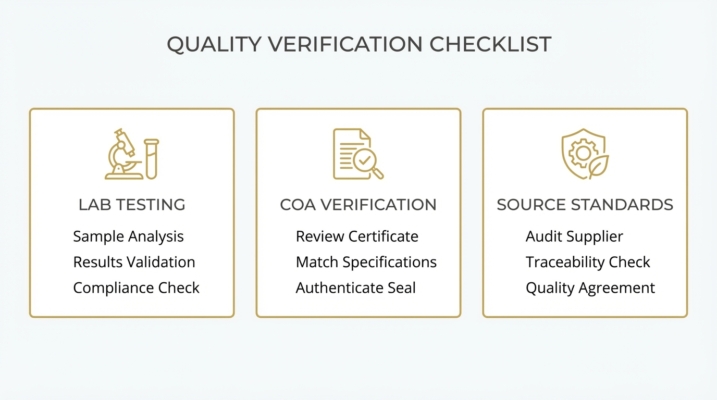
Third-party lab reports matter for THCA because they provide independent verification of cannabinoid content, potency, and purity. Without them, buyers have no objective way to confirm what is actually in a product.
A credible Certificate of Analysis (COA) from an accredited laboratory confirms:
According to the National Institute of Standards and Technology, NIST’s Hemp Plant Reference Material helps labs accurately measure THC, CBD, toxic elements, and other compounds in cannabis products. This kind of standardization raises the reliability bar for every COA a consumer reviews. Any brand unwilling to share current lab results should be treated as a red flag.
You can verify a THCA product meets the 0.3% THC limit by reviewing the product’s COA for its delta-9 THC concentration on a dry-weight basis. Florida law requires hemp products to stay at or below this threshold.
Key steps for verification include:
Since November 2025, federal law under P.L. 119-37 shifted the threshold to total THC concentration rather than delta-9 THC alone. Florida buyers should watch for COAs that reflect this updated standard, as older reports may not account for the broader measurement.
Product sourcing plays a critical role in THCA quality because growing conditions, cultivation practices, and post-harvest handling directly affect cannabinoid profiles and contaminant levels. Hemp grown in nutrient-poor soil or processed without proper controls often yields inconsistent THCA concentrations.
IndaCloud sources its hemp-derived products exclusively from U.S.-grown cannabis and subjects every batch to rigorous third-party testing for potency and purity. This approach ensures customers receive consistent cannabinoid profiles with verifiable compliance documentation.
Reliable sourcing indicators include:
Products sourced from unregulated or untraceable supply chains carry higher risks of mislabeled potency and contamination. For most Florida buyers, prioritizing brands that disclose their full supply chain is the single most practical way to reduce risk before even reading a lab report.
With quality benchmarks established, understanding how Florida’s THCA landscape compares to other states adds useful context.
Florida compares favorably to most states on THCA legality, though the landscape varies significantly across the country. Some states align closely with Florida’s permissive hemp framework, while others have moved to restrict or ban THCA products entirely.
THCA legality hinges on how each state defines hemp and whether it regulates total THC or only delta-9 THC. Florida’s statute mirrors the federal approach by measuring delta-9 THC concentration, which allows THCA products that fall below the 0.3% threshold. States such as Texas, Georgia, and North Carolina follow a similar model, permitting hemp-derived THCA sales without requiring a medical cannabis card.
Other states have taken a more restrictive path. Oregon, for instance, brought hemp-derived intoxicating cannabinoids under its regulated cannabis program. Idaho defines any amount of THC, including precursors like THCA, as illegal. Minnesota and several others now apply total THC testing that accounts for the conversion of THCA into delta-9 THC after decarboxylation, effectively limiting high-THCA flower sales.
The November 2025 amendment (P.L. 119-37) changed the federal hemp definition under Title 7, Section 1639o, to reference total THC concentration rather than only delta-9 THC. This federal shift puts pressure on permissive states, including Florida, to reconsider how raw THCA flower and concentrates are treated under existing law.
For consumers shopping across state lines, Florida currently remains one of the more accessible markets. Our THCA legality state-by-state guide provides a full breakdown by jurisdiction. However, what is legal in Florida may be prohibited in a neighboring state, so verifying local laws before purchasing or traveling with THCA products is essential. With federal standards tightening, even Florida’s framework could narrow in the coming legislative sessions.
Florida’s THCA laws could change after 2026 due to shifts at both the federal and state level. Recent federal amendments and ongoing state legislative activity signal that the current regulatory framework is far from permanent.
The most significant development arrived in November 2025, when P.L. 119-37 amended the federal definition of hemp under Title 7, Section 1639o, of the U.S. Code. According to the Congressional Research Service, this law changed the threshold from a delta-9 THC limit to a total THC concentration of less than 0.3% on a dry weight basis. Because THCA converts into THC when heated, this shift from delta-9-only testing to total THC measurement could reclassify high-THCA hemp products as controlled substances under federal law, even if they currently comply with Florida’s state definition.
At the state level, Florida’s legislature has already demonstrated interest in tightening hemp-derived cannabinoid regulation. SB 1698, introduced during the 2024 session, sought to redefine total delta-9-tetrahydrocannabinol concentration, restrict hemp extract sales attractive to children, and expand oversight by the Department of Agriculture and Consumer Services. Although that bill did not pass in its original form, its provisions reflect a clear legislative appetite for stricter controls on products like THCA flower and concentrates.
For consumers, the practical takeaway is straightforward: THCA products that are legal today may not remain legal indefinitely. Federal total-THC testing standards, once fully enforced, would likely narrow the range of compliant hemp products nationwide. Florida could adopt similar total-THC language in state statute, follow its own regulatory path, or maintain its current delta-9-only framework for longer than the federal government. Each scenario produces a different outcome for THCA availability.
Staying informed about both congressional action and Florida legislative sessions is the most reliable way to anticipate these changes before they affect product access.
Lab-tested THCA products can be shipped to Florida through online hemp retailers that provide third-party certificates of analysis and comply with federal hemp law. Below, explore Inda Cloud’s delivery options and key legal takeaways.
Yes, Inda Cloud’s hemp-derived products can be delivered to Florida. Inda Cloud ships lab-tested, federally legal cannabinoid products directly to consumers across the continental United States, including Florida. Every product contains less than 0.3% delta-9 THC, meeting both the 2018 Farm Bill threshold and Florida’s hemp definition under Section 581.217.
Inda Cloud’s product lineup includes THCA flower, pre-rolls, vape cartridges, edibles, and concentrates. All items undergo comprehensive third-party testing, with certificates of analysis available for verification before purchase. Orders ship within 48 hours in nondescript packaging, and qualifying orders over $89 receive free shipping. Backed by over 250,000 verified customers and a team of 35 cannabis experts, Inda Cloud offers a reliable way to access quality THCA products from home.
All IndaCloud products include comprehensive third-party certificates of analysis, ensuring transparency and compliance with both federal and Florida hemp regulations. The brand’s commitment to quality testing and U.S.-grown hemp has made it a trusted choice for consumers seeking verified THCA products.
The key takeaways about THCA legality in Florida are:
For Florida residents seeking compliant, lab-verified THCA products, browsing IndaCloud’s THCA flower Florida collection is a practical starting point. Prioritizing retailers that publish full certificates of analysis remains the single most effective safeguard against purchasing non-compliant items.
Raw, unheated THCA clears your system in roughly 24 to 48 hours. Once you…
Learn more
THCP binds cannabinoid receptors roughly 33 times harder than THC in lab testing. THCA,…
Learn more
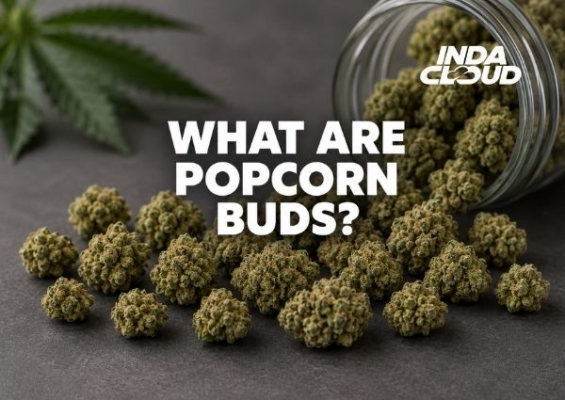
Popcorn buds are small, whole flower pulled out of a harvest and sorted by…
Learn more
THCA flower keeps best in an airtight glass jar held at 58 to 62%…
Learn more
