


THCA

How Long Does THCA Stay in Your System?
Raw, unheated THCA clears your system in roughly 24 to 48 hours. Once you…
Learn more
You must be 21+ to enter this site
 FREE SHIPPING $89+
 FREE GIFT ON $120+
 100% FEDERALLY LEGAL
 LAB TESTED FOR PURITY
FREE SHIPPING $89+
FREE GIFT ON $120+
100% FEDERALLY LEGAL
LAB TESTED FOR PURITY
FREE SHIPPING $89+
FREE GIFT ON $120+
100% FEDERALLY LEGAL
LAB TESTED FOR PURITY
FREE SHIPPING $89+
FREE GIFT ON $120+
100% FEDERALLY LEGAL
LAB TESTED FOR PURITY
FREE SHIPPING $89+
FREE GIFT ON $120+
100% FEDERALLY LEGAL
LAB TESTED FOR PURITY
FREE SHIPPING $89+
FREE GIFT ON $120+
100% FEDERALLY LEGAL
LAB TESTED FOR PURITY
FREE SHIPPING $89+
FREE GIFT ON $120+
100% FEDERALLY LEGAL
LAB TESTED FOR PURITY
FREE SHIPPING $89+
FREE GIFT ON $120+
100% FEDERALLY LEGAL
LAB TESTED FOR PURITY
LAB TESTED FOR PURITY
FREE SHIPPING $89+
FREE GIFT ON $120+
100% FEDERALLY LEGAL
LAB TESTED FOR PURITY
FREE SHIPPING $89+
FREE GIFT ON $120+
100% FEDERALLY LEGAL
LAB TESTED FOR PURITY
FREE SHIPPING $89+
FREE GIFT ON $120+
100% FEDERALLY LEGAL
LAB TESTED FOR PURITY
FREE SHIPPING $89+
FREE GIFT ON $120+
100% FEDERALLY LEGAL
LAB TESTED FOR PURITY
FREE SHIPPING $89+
FREE GIFT ON $120+
100% FEDERALLY LEGAL
LAB TESTED FOR PURITY
FREE SHIPPING $89+
FREE GIFT ON $120+
100% FEDERALLY LEGAL
LAB TESTED FOR PURITY
FREE SHIPPING $89+
FREE GIFT ON $120+
100% FEDERALLY LEGAL
LAB TESTED FOR PURITY

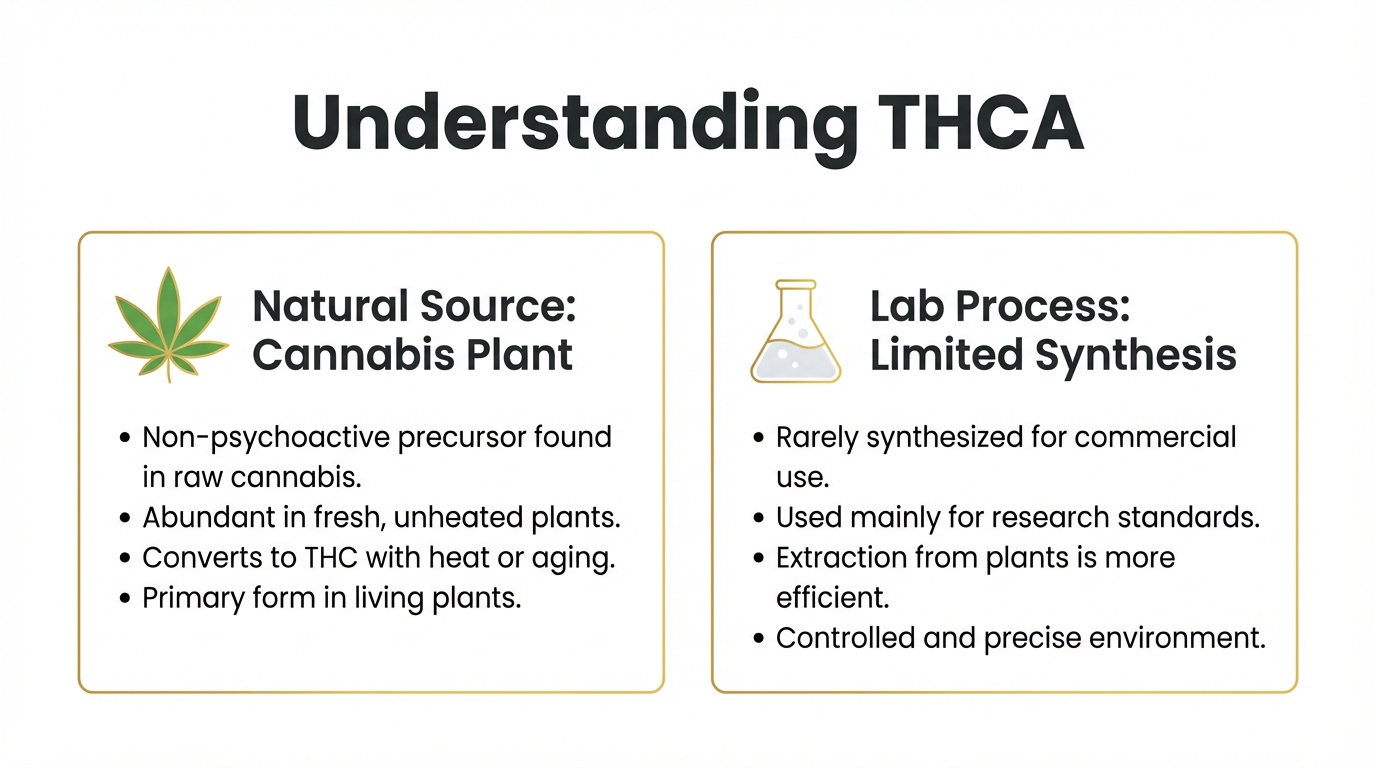
THCA (tetrahydrocannabinolic acid) is a naturally occurring cannabinoid produced by Cannabis sativa plants through an enzymatic biosynthetic pathway, though limited synthetic production in laboratory yeast has been demonstrated at research scale.
This guide covers THCA’s natural origins and biosynthesis, whether it can be produced synthetically, how to distinguish natural from synthetic products, the decarboxylation process that converts THCA into THC, its legal status in the United States, and the potential therapeutic benefits tied to its natural form.
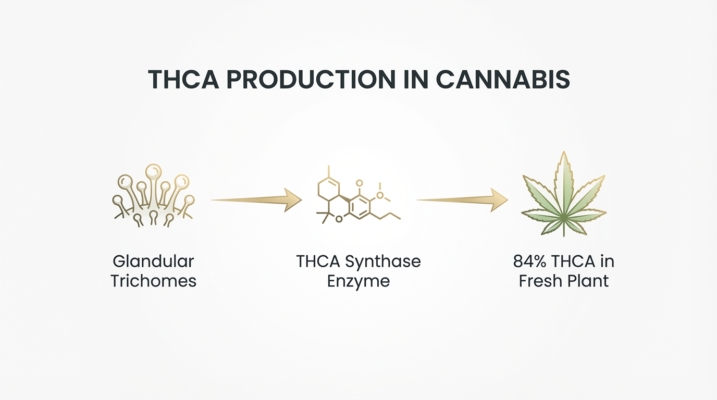
Cannabis plants biosynthesize THCA in glandular trichomes through the enzyme THCA synthase, which converts cannabigerolic acid (CBGA) into THCA. In fresh, unprocessed flower, THCA constitutes over 84% of total cannabinoid content while THC accounts for roughly 2%, making THCA the dominant compound in raw cannabis.
Synthetic THCA production has been achieved through recombinant biosynthesis in engineered yeast, but yields remain extremely low at approximately 8 mg per liter. The process requires extensive optimization and currently serves research purposes, not consumer markets. Synthetic THCA also lacks the full-spectrum matrix of minor cannabinoids and terpenes present in plant-derived products.
Consumers can verify natural origin through third-party lab testing and Certificates of Analysis that show complete cannabinoid profiles, terpene content, and contaminant screenings. Labels missing batch-specific COAs, strain information, or hemp sourcing details warrant skepticism.
IndaCloud makes this verification process straightforward by providing accessible third-party lab reports for every product batch, ensuring customers can confirm the natural hemp origin and purity of their THCA purchases.
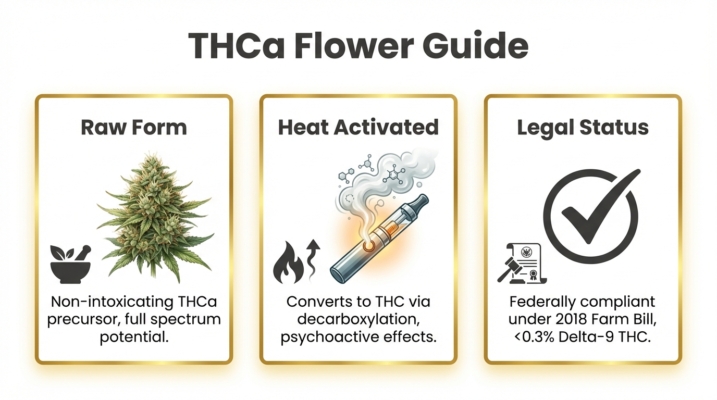
THCA converts to psychoactive THC only through heat during smoking, vaping, or cooking. Without decarboxylation, THCA remains non-intoxicating and follows its own distinct metabolic pathways, activating PPARγ receptors with potency 20-fold higher than THC while showing anti-inflammatory, neuroprotective, and anti-nausea activity in preclinical research.
Federal legality under the 2018 Farm Bill hinges on total THC content (including THCA after conversion) staying at or below 0.3% on a dry weight basis, though state regulations vary significantly.
THCA is a naturally occurring cannabinoid acid produced inside living cannabis plants. The sections below explain how cannabis biosynthesizes THCA and what role this compound serves before it ever encounters heat.
Cannabis plants produce THCA naturally through an enzymatic process that occurs in the glandular trichomes of female flowers. Phytocannabinoids are produced in Cannabis sativa L. in acidic form; decarboxylation into neutral cannabinoids like THC requires heating, processing, or prolonged storage.
In fresh cannabis biomass, the acidic precursors dominate. According to a 2017 study published in Cannabis and Cannabinoid Research (Nallathambi et al.), HPLC analysis of fresh cannabis extract showed THCA constituted 84.01% of the total peak area, while THC accounted for only 2.13%. The overwhelming majority of strains contain high THCA concentrations with only trace amounts (less than 1%) of CBDA.
When that same extract was baked at 150°C for three hours, THCA levels dropped 1,200-fold, confirming that heat triggers the conversion. Without deliberate heating, THCA remains the dominant cannabinoid in unprocessed flower. For anyone exploring raw cannabis products, this distinction is essential: what you find in a living plant is THCA, not THC.
THCA plays a distinct biological and pharmacological role separate from THC. Critically, THCA does not convert to Δ9-THC inside the body. Because decarboxylation is only partial during consumption and does not occur appreciably after absorption, THCA maintains its own metabolic and elimination pathways.
This independence has practical significance. According to a 2021 review in the Journal of Cannabis Research (Tahir et al.), the presence of THCA in biological samples forensically distinguishes plant-based cannabis use from prescribed synthetic Δ9-THC products like Marinol.
THCA-A, the primary isomer biosynthesized by cannabis, displays small but measurable binding at both hCB1 and hCB2 receptors, with approximate Ki values of 3.1 μM and 12.5 μM respectively. These interactions differ significantly from THC’s strong CB1 affinity, which is why THCA is considered non-intoxicating. Under U.S. federal law, hemp includes all cannabinoid acids with no more than 0.3% THC concentration. Beyond plant biology, biotechnological production of cannabinoid acid precursors including THCA is an actively pursued alternative to traditional cultivation.
Understanding THCA’s natural origin sets the stage for evaluating whether the compound qualifies as a naturally occurring cannabinoid.
THCA is a naturally occurring cannabinoid produced by Cannabis sativa plants. The enzyme THCA synthase converts cannabigerolic acid (CBGA) into THCA through a biosynthetic pathway within the plant’s glandular trichomes. According to a 2021 review in the Journal of Cannabis Research (Tahir et al.), 95% of the THC, CBD, and CBC in fresh cannabis biomass exist as their acidic precursors, with THCA being the dominant form. THCA synthase, a 76 kDa monomeric oxidoreductase first identified in 1995, catalyzes the stereospecific oxidative cyclization of CBGA’s geranyl group using a covalently bound FAD cofactor.
More than 180 cannabinoids have been identified from the cannabis plant, yet THCA stands apart as the most abundant in raw, unprocessed flower. HPLC analysis of fresh cannabis extract has confirmed that THCA constitutes over 84% of total cannabinoid content, while THC accounts for only about 2%. This ratio shifts dramatically with heat exposure; THCA converts to THC through decarboxylation during smoking, vaping, or cooking. For a deeper look at THCA effects and psychoactivity, including how heat bridges these two compounds, raw cannabis does not produce psychoactive effects until that thermal trigger is applied.
For consumers evaluating hemp-derived products, this natural origin matters. THCA is not a synthetic creation or a lab-engineered compound by default. It is the plant’s own primary cannabinoid, synthesized through genetically encoded enzymatic pathways that cannabis has refined over millennia. Understanding whether a THCA product preserves this natural profile or involves synthetic production methods is key to assessing its quality and safety.
Yes, THCA can be made synthetically in a lab through recombinant biosynthesis using engineered microorganisms. The process remains early-stage, with yields far below what cannabis plants produce naturally. Below, the two H3 sections explain how synthetic THCA is produced and where it diverges from its plant-derived counterpart.
Synthetic THCA is a lab-produced form of tetrahydrocannabinolic acid created through heterologous biosynthesis in engineered microorganisms rather than extracted from Cannabis sativa. Researchers insert cannabis genes, along with genes from Streptomyces species, into yeast cells that then generate THCA through fermentation.
According to a 2019 study by Luo et al., the full recombinant biosynthesis of THCA was demonstrated in Saccharomyces cerevisiae, yielding only 8 mg L⁻¹ of THCA-C5. That output was described as low and requiring systematic optimization. Insufficient biocatalytic rates across most enzymes, limited precursor delivery of acetyl-CoA and ATP, and inadequate NADH supply all constrain production. For consumers, this means lab-produced THCA remains a research tool, not a viable commercial source.
IndaCloud focuses exclusively on plant-derived THCA extracted from U.S.-grown hemp, ensuring customers receive the full spectrum of naturally occurring cannabinoids and terpenes rather than isolated synthetic compounds.
Synthetic THCA differs from natural THCA primarily in its production context, purity profile, and accompanying compound matrix, not in its core molecular identity. Both forms share the molecular formula C₂₂H₃₀O₄ and a molecular weight of 358.47 g/mol, with the same carboxyl group at the C-2 position of the resorcinyl ring.
Where the two diverge is the entourage environment. Plant-derived THCA exists alongside dozens of minor cannabinoids, terpenes, and flavonoids; average THCA concentration across New Jersey Medicinal Marijuana Program strains was 18.2%, surrounded by trace CBDA and CBGA. Synthetic THCA, produced in isolated yeast chassis, lacks this full-spectrum matrix entirely. That absence matters because the therapeutic profile of natural THCA, including its potent PPARγ binding activity with an IC₅₀ of 0.47 μM, has only been validated in plant-derived contexts.
For anyone prioritizing a complete cannabinoid experience, plant-derived THCA from verified hemp sources remains the more practical and well-characterized option. Understanding this distinction helps when evaluating how to tell if THCA products are natural or synthetic.
You can tell if THCA is natural or synthetic by examining third-party lab results and scrutinizing product labels. The following subsections cover what lab tests reveal about origin and which label details signal a synthetic product.
Third-party lab tests reveal whether THCA originates from natural hemp or synthetic processes by analyzing its full cannabinoid profile, terpene content, and purity markers. Natural THCA products display a broad spectrum of minor cannabinoids, such as CBDA, CBGA, and CBC, alongside a diverse terpene profile that reflects the source plant’s chemistry. Synthetic or heavily processed THCA, by contrast, typically shows an isolated cannabinoid spike with little to no supporting plant compounds.
According to a 2021 study published in the Journal of Cannabis Research (Tahir et al.), THCA does not convert to THC in vivo, and its presence in biological samples forensically distinguishes plant-based cannabis use from prescribed synthetic THC products like Marinol. This same principle applies to product testing: a Certificate of Analysis (COA) from an ISO-accredited lab should list individual cannabinoid concentrations, residual solvents, heavy metals, and pesticide screenings. If a COA shows only THCA at an unusually high percentage with zero minor cannabinoids, that isolation pattern warrants skepticism about the product’s natural origin.
The label red flags that indicate synthetic THCA products include missing COA references, vague sourcing language, and absent terpene or cannabinoid profiles. Trustworthy natural THCA products list the hemp strain, growing origin, batch number, and a scannable QR code linking to current lab results.
Watch for these specific warning signs:
For anyone navigating this market, choosing products backed by verifiable, batch-specific testing is the single most reliable way to confirm natural origin. Understanding lab reports and labels prepares you to evaluate what happens next: how THCA converts into THC through decarboxylation.
THCA converts into THC through a heat-driven chemical reaction called decarboxylation. This process removes the carboxyl group from the THCA molecule, transforming it into psychoactive THC. Below, we cover what decarboxylation means and whether smoking or vaping triggers this conversion.
Decarboxylation is a chemical reaction in which heat removes the carboxyl group (COOH) from THCA, converting it into the psychoactive cannabinoid THC. This reaction follows first-order kinetics and occurs during smoking, vaping, cooking, or prolonged storage at room temperature.
What makes this process especially significant is that it does not occur appreciably inside the body after absorption. According to a 2017 study in the British Journal of Pharmacology, this observation has found application in forensic science to distinguish between Δ9-THC presence from recreational marijuana consumption and that from medicinal use of dronabinol (Marinol), a synthetic Δ9-THC formulation.
For consumers, this means raw THCA flower remains non-psychoactive until heat is applied. Understanding decarboxylation is essential for anyone choosing between raw and heated cannabis products.
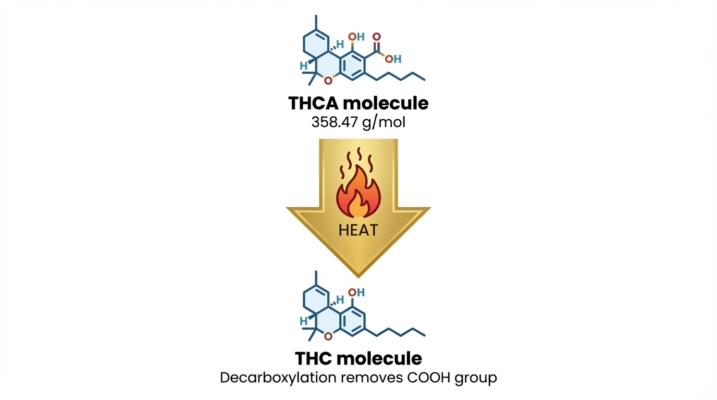
Yes, smoking or vaping THCA triggers rapid conversion to THC. The high temperatures produced by combustion and vaporization supply sufficient thermal energy to decarboxylate THCA almost instantly, removing its carboxyl group and yielding psychoactive Δ9-THC.
Combustion from smoking typically reaches 600°C or higher, while vaporizers operate between roughly 180°C and 230°C. Both temperature ranges far exceed the thresholds needed for efficient decarboxylation. This is precisely why THCA flower, which tests as non-psychoactive in its raw state, produces intoxicating effects once smoked or vaped.
For anyone exploring THCA products, this distinction matters: the method of consumption determines whether THCA remains in its original acidic form or converts into THC. Choosing between raw consumption and inhalation is ultimately choosing between a non-psychoactive and a psychoactive experience, so knowing how heat changes THCA helps guide that decision.
THCA legality in the United States depends on federal hemp definitions and individual state regulations. The sections below cover how the 2018 Farm Bill classifies legal THCA and why state-level rules create a patchwork of varying restrictions.
The 2018 Farm Bill defines legal THCA as a cannabinoid derived from hemp containing no more than 0.3% total THC on a dry weight basis. Under this framework, hemp includes all derivatives, extracts, cannabinoids, acids, and isomers of Cannabis sativa L. that fall within that threshold.
Critically, hemp testing must account for THCA’s potential conversion into THC. The total THC result reports the combined sum of THC and THCA content after decarboxylation or through a mathematical conversion factor. According to the USDA Agricultural Marketing Service, samples exceeding the acceptable hemp THC level must be disposed of under applicable regulations, and the 2018 Farm Bill directed the USDA to develop a regulatory program overseeing hemp production.
This total THC calculation is one of the most misunderstood aspects of THCA compliance. Products that appear low in Delta-9 THC can still exceed the legal threshold once THCA conversion is factored in, making third-party lab verification essential before purchase. For a full breakdown of whether THCA is federally legal and how each state interprets these thresholds, our dedicated legal guide covers the details.
THCA legality differs significantly at the state level. While the 2018 Farm Bill provides a federal baseline, individual states retain authority to impose stricter regulations on hemp-derived cannabinoids, including THCA. Some states permit THCA products aligned with federal hemp definitions, while others restrict or ban them entirely.
Market dynamics also reflect this regulatory variation. According to a 2019 study published in the Journal of Cannabis Research (Coogan), the trend in cannabis strains introduced into the New Jersey medical market favored higher THC content, with strain development and commercialization likely reflecting customer demand for high-THC options over CBD-dominant varieties. This demand pressure pushes THCA products into regulatory gray areas in states that scrutinize total THC levels more aggressively.
Before purchasing any THCA product, consumers should verify their specific state’s cannabinoid regulations. Understanding THCA’s distinction from THC helps clarify what protections and benefits natural THCA products can offer.
The difference between THCA and THC is a single carboxyl group that separates a non-psychoactive precursor from the compound responsible for cannabis’s high. Their molecular structures, psychoactive effects, and receptor interactions diverge in ways that matter for both consumers and lab testing.
THCA (tetrahydrocannabinolic acid) has the molecular formula C₂₂H₃₀O₄ and a molecular weight of 358.47 g/mol. THC shares the same core ring system but lacks the carboxyl group at the C-2 position of the resorcinyl ring. That extra carboxyl group is the reason THCA cannot fit efficiently into CB1 receptors in the brain. According to a 2017 study published in the British Journal of Pharmacology, freshly prepared and highly pure THCA (98%) has a low binding affinity for both CB1 and CB2 receptors, which explains why it does not produce intoxication.
When heat is applied through smoking, vaping, or cooking, decarboxylation removes that carboxyl group and converts THCA into THC. This newly formed THC binds CB1 receptors with far greater affinity, producing the euphoric and psychoactive effects consumers associate with cannabis. In raw, unheated flower, THCA dominates: THC exists only in trace amounts until heat triggers the conversion.
Beyond psychoactivity, the two compounds interact with entirely different biological pathways. THCA activates PPARγ receptors with potency 20-fold higher than THC, suggesting distinct therapeutic potential in areas like neuroprotection and inflammation. THCA also does not convert to THC inside the body after consumption, maintaining its own metabolic and elimination pathways. This biological independence is so reliable that forensic scientists use the presence of THCA in biological samples to distinguish plant-based cannabis use from prescribed synthetic THC products like Marinol.
For consumers shopping for THCA products, this distinction is practical, not just academic. Raw THCA flower and concentrations remain non-intoxicating until heated, giving users control over whether they experience psychoactive effects. Understanding this conversion process helps explain why the same compound can serve wellness-focused consumers in its raw form and recreational users once activated by heat.
The potential benefits of natural THCA span anti-inflammatory, neuroprotective, anti-nausea, and anti-proliferative activity. Because THCA does not produce psychoactive effects on its own, researchers are investigating it as a nonpsychoactive therapeutic alternative. For a comprehensive look at THCA effects on the body and how these mechanisms translate to everyday wellness, the following sections cover the most studied areas. The following areas represent the most studied benefits so far.
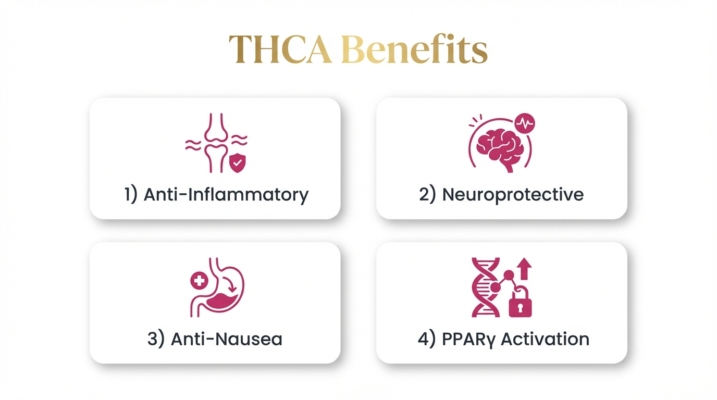
THCA reduces inflammation through receptor pathways distinct from THC. According to a 2017 study published in Cannabis and Cannabinoid Research (Nallathambi et al.), the anti-inflammatory activity of cannabis extracts on colon epithelial cells derives from a THCA-containing fraction, mediated at least partially via the GPR55 receptor. That same research found THCA suppressed COX-2 and MMP9 gene expression in colon tissue from IBD patients, leading investigators to suggest THCA over CBD for nonpsychoactive inflammatory bowel disease treatment. For anyone seeking plant-derived relief without intoxication, this pathway makes THCA a compelling cannabinoid to watch.
THCA demonstrates neuroprotective potential through PPARγ activation, a nuclear receptor involved in mitochondrial health and neuroinflammation. In a 2017 study published in the British Journal of Pharmacology (Nadal et al.), THCA at 20 mg/kg improved motor deficits and prevented striatal degeneration in mice treated with 3-nitropropionic acid, a neurotoxin used to model Huntington’s disease. THCA also attenuated microgliosis, astrogliosis, and proinflammatory markers including TNF-α, iNOS, IL-6, and COX-2. Notably, THCA proved more potent than rosiglitazone in inducing PGC-1α expression, a key regulator of mitochondrial biogenesis. These preclinical findings position THCA as one of the more promising nonpsychoactive cannabinoids for neurodegenerative research.
THCA produces anti-nausea and anti-emetic effects at doses where THC shows no comparable activity. A 2013 study in the British Journal of Pharmacology (Rock et al.) found that THCA at 0.05 and 0.5 mg/kg suppressed lithium chloride-induced vomiting in shrews and conditioned gaping in rats. Plasma analysis detected THCA but not THC in treated animals, indicating these effects are not caused by in vivo conversion to THC. This distinction matters because it confirms THCA acts through its own mechanisms, likely involving both CB1-dependent and CB1-independent pathways.
THCA exhibits anti-proliferative activity against certain cancer cell lines in laboratory settings. A 2013 study in the British Journal of Pharmacology (De Petrocellis et al.) reported that THCA achieved an IC₅₀ of 21.6 μM on DU-145 prostate cancer cells and 17.1 μM on LNCaP prostate cancer cells under serum-deprived conditions. While these results are strictly preclinical and do not constitute evidence of cancer treatment in humans, they add to the growing body of data suggesting THCA interacts with cellular proliferation pathways worth further investigation.
THCA activates PPARγ receptors with potency comparable to pharmaceutical agonists. A 2017 study in the British Journal of Pharmacology (Nadal et al.) measured THCA’s PPARγ binding IC₅₀ at 0.47 μM, placing it in the same range as rosiglitazone (0.29 μM), a clinically prescribed PPARγ full agonist. THCA’s PPARγ binding and transcriptional activities were 20-fold higher than those of THC. This receptor pathway underpins several of THCA’s observed effects, from neuroprotection to anti-inflammatory action, making PPARγ activation the mechanistic thread connecting much of its therapeutic promise. Understanding the source of THCA also shapes how reliably these benefits translate to consumer products.
The source of THCA matters for product quality because cultivation methods, plant genetics, and post-harvest handling directly influence cannabinoid purity, potency, and safety. Hemp-derived and marijuana-derived THCA differ in legal classification and chemical profiles, while lab testing confirms what consumers actually receive.
Hemp-derived THCA comes from Cannabis sativa plants containing no more than 0.3% delta-9 THC on a dry weight basis, as defined under U.S. federal law. Marijuana-derived THCA comes from plants that exceed this threshold, making it federally illegal regardless of the THCA content itself.
Both sources produce the same molecule, C₂₂H₃₀O₄, through identical enzymatic pathways. The practical differences are regulatory, not molecular. Hemp-derived THCA products can be shipped legally across state lines, while marijuana-derived THCA remains restricted to state-licensed dispensaries.
Where the distinction becomes meaningful is in the surrounding cannabinoid profile. Hemp strains bred for high THCA often carry different terpene and minor cannabinoid ratios than traditional marijuana cultivars. For consumers prioritizing legal access without sacrificing quality, hemp-derived THCA offers the most practical path forward.
Lab testing is critical for THCA purity and safety because it verifies cannabinoid content, detects contaminants, and confirms that a product meets legal THC thresholds. Without third-party analysis, consumers have no reliable way to distinguish pure, plant-derived THCA from adulterated or mislabeled products.
According to a 2016 study published in Cannabis and Cannabinoid Research (Wang et al.), UHPSFC/PDA-MS methods can simultaneously analyze acidic and neutral cannabinoids with correlation coefficients above 0.994, providing highly accurate potency readings. Older GC-based methods, by contrast, destroy THCA through heat before detection, making them unsuitable for directly measuring this cannabinoid.
A proper Certificate of Analysis should confirm:
Any THCA product sold without accessible, current lab results should be treated with skepticism. Verified testing separates trustworthy brands from those cutting corners, making it the single most reliable quality indicator available to consumers. Buyers looking for lab-verified hemp-derived THCA products can review batch-specific Certificates of Analysis before purchasing.
You should choose quality natural THCA products by verifying hemp sourcing, reviewing third-party lab results, and selecting brands committed to transparency. The following sections cover what Inda Cloud offers and the key takeaways from the natural vs. synthetic THCA discussion.
Yes, Inda Cloud’s hemp-derived THCA products can deliver a natural experience. IndaCloud sources 100% federally legal, U.S.-grown hemp flower and subjects every batch to comprehensive third-party lab testing for potency and purity. This commitment to transparency means customers can verify that THCA content originates from the plant itself, not a synthetic process.
IndaCloud offers THCA flower, pre-rolls, and THCA vapes across Indica, Sativa, and Hybrid strains, giving consumers multiple ways to experience this naturally occurring cannabinoid. Each product ships with accessible lab reports confirming cannabinoid profiles and the absence of harmful contaminants. For anyone prioritizing a plant-derived cannabinoid experience backed by verifiable quality standards, IndaCloud represents a straightforward, trustworthy option in an increasingly crowded market.
The key takeaways about whether THCA is natural or synthetic are:
Consumers who prioritize natural cannabinoid products should look for brands like IndaCloud that provide full lab transparency and source from U.S.-grown hemp.
Raw, unheated THCA clears your system in roughly 24 to 48 hours. Once you…
Learn more
THCP binds cannabinoid receptors roughly 33 times harder than THC in lab testing. THCA,…
Learn more
Popcorn buds are small, whole flower pulled out of a harvest and sorted by…
Learn more
THCA flower keeps best in an airtight glass jar held at 58 to 62%…
Learn more
