


Delta 8

Delta 8 vs Delta 9: Complete Comparison
Let’s dive into the worlds of delta 8 and delta 9 THC. Delta 9…
Learn more
You must be 21+ to enter this site
 FREE SHIPPING $89+
 FREE GIFT ON $120+
 100% FEDERALLY LEGAL
 LAB TESTED FOR PURITY
FREE SHIPPING $89+
FREE GIFT ON $120+
100% FEDERALLY LEGAL
LAB TESTED FOR PURITY
FREE SHIPPING $89+
FREE GIFT ON $120+
100% FEDERALLY LEGAL
LAB TESTED FOR PURITY
FREE SHIPPING $89+
FREE GIFT ON $120+
100% FEDERALLY LEGAL
LAB TESTED FOR PURITY
FREE SHIPPING $89+
FREE GIFT ON $120+
100% FEDERALLY LEGAL
LAB TESTED FOR PURITY
FREE SHIPPING $89+
FREE GIFT ON $120+
100% FEDERALLY LEGAL
LAB TESTED FOR PURITY
FREE SHIPPING $89+
FREE GIFT ON $120+
100% FEDERALLY LEGAL
LAB TESTED FOR PURITY
FREE SHIPPING $89+
FREE GIFT ON $120+
100% FEDERALLY LEGAL
LAB TESTED FOR PURITY
LAB TESTED FOR PURITY
FREE SHIPPING $89+
FREE GIFT ON $120+
100% FEDERALLY LEGAL
LAB TESTED FOR PURITY
FREE SHIPPING $89+
FREE GIFT ON $120+
100% FEDERALLY LEGAL
LAB TESTED FOR PURITY
FREE SHIPPING $89+
FREE GIFT ON $120+
100% FEDERALLY LEGAL
LAB TESTED FOR PURITY
FREE SHIPPING $89+
FREE GIFT ON $120+
100% FEDERALLY LEGAL
LAB TESTED FOR PURITY
FREE SHIPPING $89+
FREE GIFT ON $120+
100% FEDERALLY LEGAL
LAB TESTED FOR PURITY
FREE SHIPPING $89+
FREE GIFT ON $120+
100% FEDERALLY LEGAL
LAB TESTED FOR PURITY
FREE SHIPPING $89+
FREE GIFT ON $120+
100% FEDERALLY LEGAL
LAB TESTED FOR PURITY

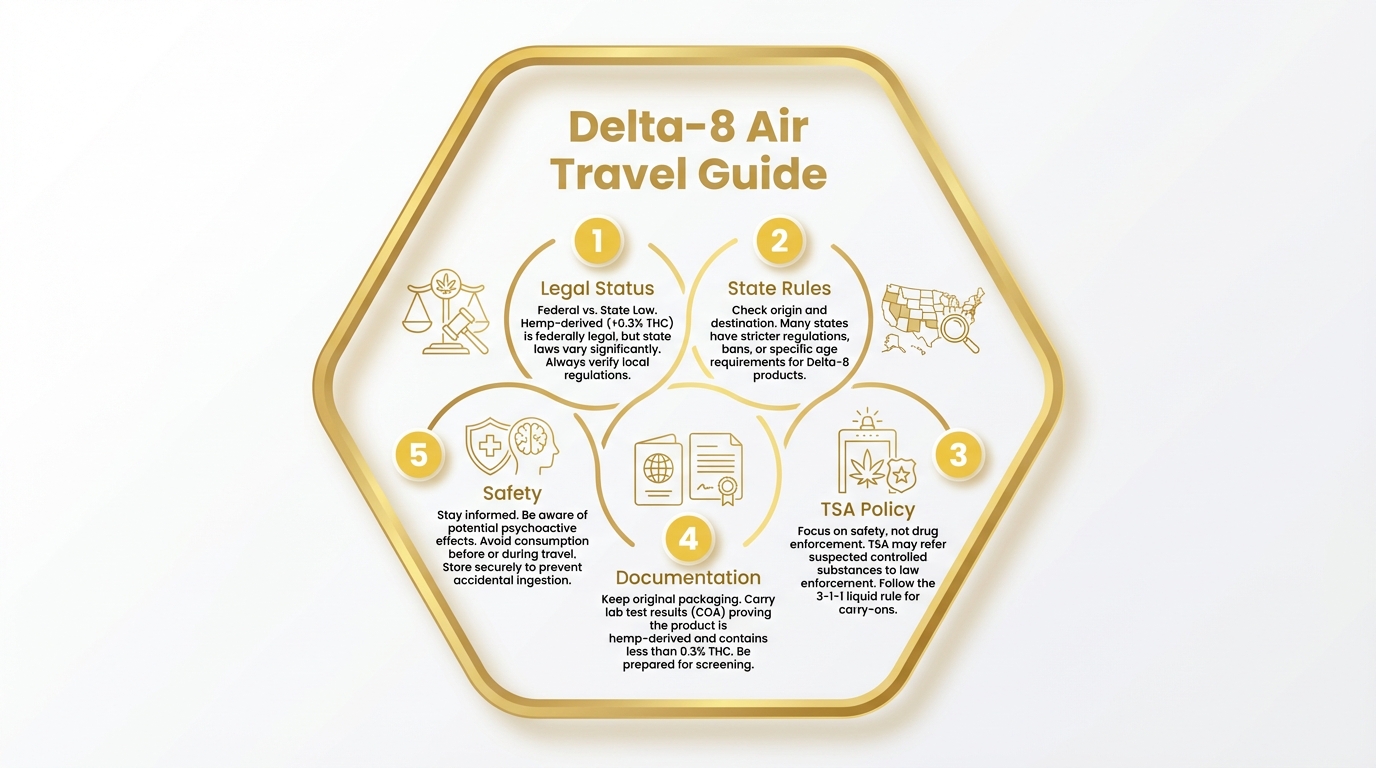
Flying with delta-8 THC in 2026 is a legal gray area shaped by federal hemp definitions, state-level bans, TSA procedures, airline prohibitions, and a major regulatory shift taking effect in November. This guide covers federal and state legality, domestic and international flight rules, packing and documentation strategies, travel risks, and how to source compliant products before your trip.
Federal law still permits hemp-derived delta-8 containing no more than 0.3% delta-9 THC under the 2018 Farm Bill, but P.L. 119-37 introduces a total THC concentration standard and new product exclusions starting November 12, 2026. TSA officers do not actively search for cannabis, yet any substance discovered during screening gets referred to local law enforcement, where outcomes vary by jurisdiction.
State restrictions add a second layer of complexity. At least ten states ban delta-8 outright, and others like Texas prohibit cannabinoid vapes and certain smokable hemp products. Travelers face legal exposure not only at departure and arrival but also during layovers in ban states where flight disruptions can force unexpected contact with local enforcement.
Product format determines packing rules. Edibles travel with the least scrutiny, vape cartridges must stay in carry-on baggage per FAA lithium battery regulations, and flower carries the highest risk because it is visually indistinguishable from marijuana. Batch-matched Certificates of Analysis and original packaging provide the strongest available proof of compliance at checkpoints.
International flights remain off-limits for delta-8 in nearly every scenario, since most countries classify all THC forms as controlled substances and customs agencies enforce importation bans without distinguishing hemp from marijuana. Domestically, verifying laws at every stop in your itinerary and sourcing lab-tested products from transparent retailers gives you the best foundation for informed, lower-risk travel.
Delta-8 THC occupies a complicated federal legal position for air travel in 2026. The 2018 Farm Bill, TSA checkpoint procedures, and potential enforcement outcomes each shape what travelers can expect.
The 2018 Farm Bill still protects delta-8 on flights, but only under narrow conditions. According to the Congressional Research Service, the 2018 Farm Bill defines hemp as any part of the cannabis plant or its derivatives containing no more than 0.3% delta-9 THC on a dry-weight basis. After its passage, hemp is no longer a controlled substance under the Controlled Substances Act.
This distinction matters because delta-8 THC derived from compliant hemp technically falls outside DEA scheduling — the full breakdown of why Delta-8 is legal under federal and state law explains this in depth. However, individual airlines enforce their own restrictions. Delta Air Lines, for example, does not allow passengers to transport marijuana on its flights, and many carriers apply similar blanket prohibitions to all cannabis-related products. Carrying Farm Bill-compliant documentation does not guarantee airline acceptance.
The TSA treats delta-8 products at checkpoints according to federal cannabis policy, not state law. TSA officers do not actively search for marijuana or other illegal drugs, but if any illegal substance is discovered during security screening, they refer the matter to law enforcement. Because delta-8 products often look and smell identical to illegal cannabis, this referral risk is real.
Product quality compounds the issue. According to the FDA, delta-8 THC products have not been evaluated or approved for safe use in any context, with concerns including variability in formulations, labeling accuracy, and THC concentrations. Some CBD product labeling does not reflect actual contents, meaning a product marketed as compliant could contain THC levels that exceed legal thresholds. For travelers, this makes third-party lab verification essential before packing any hemp-derived product.
If TSA finds delta-8 in your carry-on, the outcome depends on whether the product appears federally compliant. TSA officers assess the situation and, when a substance appears to violate federal law, refer it to local law enforcement at the airport. The officer making the referral does not determine legality; that decision falls to the responding agency.
Local law enforcement then evaluates the product based on both federal and applicable state laws. In states where delta-8 is banned, this referral could lead to confiscation or criminal charges. Even in permissive states, the process causes delays and missed flights. Carrying original packaging with clear labeling and a certificate of analysis reduces ambiguity, though it does not eliminate risk entirely.
With federal legality established, state-level restrictions add the next layer of complexity for travelers.
Several states ban Delta-8 THC outright, creating legal risks for travelers at departure, arrival, and even during layovers. The following subsections cover which departure states prohibit possession, which arrival states pose problems, and what happens if your connecting flight stops in a ban state.
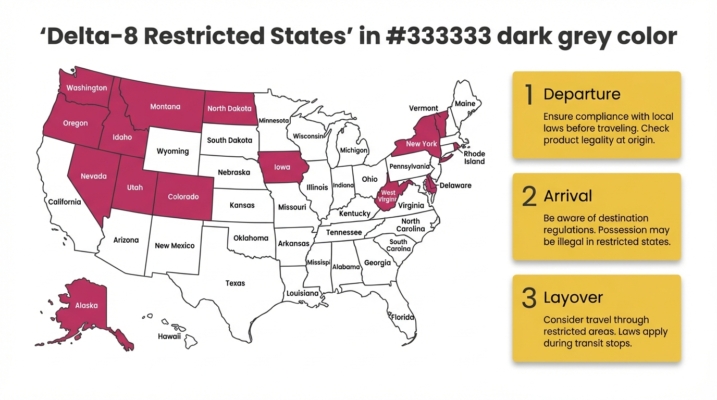
Departure states that prohibit possessing Delta-8 include Alaska, Colorado, Delaware, Idaho, Iowa, Montana, New York, North Dakota, Rhode Island, and Vermont. Carrying Delta-8 products in any of these states, even on the way to the airport, can result in confiscation or criminal charges before you ever reach a TSA checkpoint.
Texas presents a particularly complex situation. According to the Texas State Law Library, Texas law prohibits the sale of vapes and e-cigarettes containing any cannabinoids, including Delta-8 and CBD, with this ban taking effect in September 2025. Additional restrictions on smokable consumable hemp products followed in March 2026.
Arrival states could cause legal problems if they ban or restrict Delta-8 THC, even when the product is federally compliant. A Delta-8 gummy purchased legally in one state becomes contraband the moment you land in a state that prohibits it.
States with outright bans treat Delta-8 possession the same as any controlled substance violation. Others impose partial restrictions on product types, potency levels, or sales channels that may still affect personal possession. Because enforcement happens at the state level, local police at your destination airport operate under their own jurisdiction’s rules, not federal guidelines.
Travelers should treat arrival state law as the final authority on whether carrying Delta-8 is safe. Checking the legal status of your specific destination is the single most important step before flying with any hemp-derived THC product.
A layover in a state where Delta-8 is banned can expose you to that state’s laws, even if you never intended to stop there. Delta-8 is banned in Alaska, Colorado, Delaware, Idaho, Iowa, Montana, New York, North Dakota, Rhode Island, and Vermont, according to World Population Review, with additional states imposing restrictions.
If a flight disruption forces you to collect checked luggage or exit the secure terminal in a ban state, you technically possess a prohibited substance in that jurisdiction. Missed connections, weather delays, and cancellations can all create unplanned exposure to local enforcement.
For most travelers, the safest strategy is to avoid flying with Delta-8 on any itinerary that routes through a ban state. This small precaution eliminates a category of legal risk that is entirely outside your control once you board.
With state-level restrictions mapped out, understanding how to fly with Delta-8 on domestic routes requires product-specific guidance.
Yes, you can fly with delta-8 on domestic flights in 2026, but only if the product meets federal hemp requirements and is legal in both your departure and arrival states. The rules differ by product type: edibles, vape cartridges, and flower each carry distinct packing and compliance considerations.
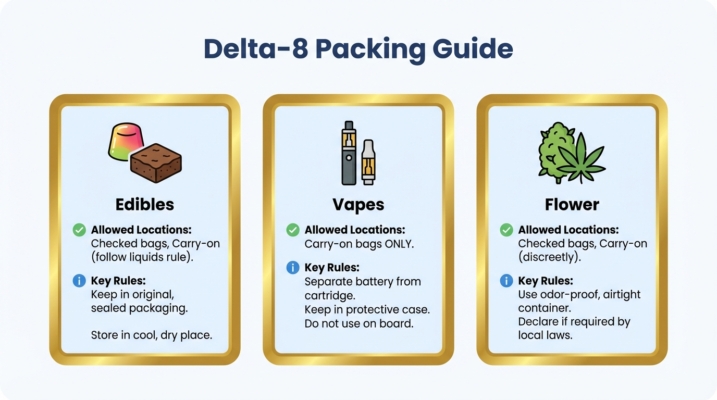
Yes, you can bring Delta-8 edibles on a domestic flight, provided they contain no more than 0.3% delta-9 THC on a dry weight basis and comply with the laws of both states in your itinerary. Edibles are the most discreet product format for air travel because they resemble standard food items and do not trigger the same visual scrutiny as flower or vapes.
Keep edibles in their original, sealed packaging with clear labeling that shows THC content and hemp origin. According to the TSA, security officers do not search for marijuana or other illegal drugs, but if any illegal substance is discovered during screening, the matter will be referred to law enforcement. For travelers heading through states with strict hemp laws, carrying third-party lab results alongside your edibles provides an additional layer of verification. Edibles are, in my experience, the lowest-risk delta-8 format for domestic flights.
Yes, you can bring Delta-8 vape cartridges on a domestic flight, but FAA regulations impose specific packing requirements. According to the Federal Aviation Administration, electronic smoking devices must be carried on one’s person or in carry-on baggage; they cannot go in checked luggage. Each lithium ion battery must not exceed 100 Wh, and recharging devices on board the aircraft is prohibited.
These rules apply to all battery-powered vaping devices regardless of what they contain. Beyond FAA compliance, your cartridge must still meet the 0.3% delta-9 THC threshold under federal law. Keep the original packaging intact, as it displays cannabinoid content and manufacturer details that could help verify legality if questioned. Note that some states, including Texas, prohibit vapes containing any cannabinoids, so always confirm destination laws before packing.
Yes, you can bring delta-8 flower or pre-rolls on a domestic flight if they meet federal hemp standards, though this product type carries the highest practical risk. Hemp flower looks and smells identical to marijuana, making it nearly impossible for security personnel or law enforcement to distinguish between the two without lab testing.
If a TSA officer or local law enforcement questions your flower, visual inspection alone cannot confirm its legality. Original packaging, a certificate of analysis from an accredited lab, and clear labeling showing total THC content become essential. Even with documentation, encounters at the checkpoint may cause delays. For travelers who prefer flower, this format demands more preparation than edibles or vapes. Understanding how upcoming federal changes after November 2026 may redefine compliant hemp products adds another reason to verify your product’s status before every trip.
No, you cannot fly internationally with delta-8 THC safely or legally in almost any scenario. Most countries classify all forms of THC as controlled substances, and crossing an international border with delta-8 carries severe legal consequences. The risks below cover customs enforcement, destination country laws, and Canada’s explicit prohibition.
Flying internationally with delta-8 is one area where I strongly advise travelers to exercise zero tolerance for risk. Even countries with relaxed cannabis cultures often maintain strict importation bans, and the consequences of a customs violation abroad far outweigh any convenience of bringing your own products.
According to the CDC Yellow Book, although U.S. and international policies have become more lenient concerning cannabidiol (CBD), international travelers should be aware of local laws when packing CBD-containing products, including gummies, lotions, oil, and vape cartridges. Even in international destinations where recreational marijuana use is legal, importation restrictions may exist, or definitive guidance may be unclear.
Key international travel risks include:
Leaving delta-8 at home before any international flight remains the only reliable way to avoid customs seizure, criminal prosecution, or detention abroad.
The TSA and airline policies on delta-8 in 2026 reflect federal cannabis restrictions that apply uniformly across U.S. air travel. Below, the TSA’s official position and individual airline rules clarify what travelers should expect.
The TSA’s official stance on hemp-derived THC permits products containing no more than 0.3 percent THC on a dry weight basis while prohibiting marijuana and most cannabis-infused items. According to the Transportation Security Administration, TSA security officers do not search for marijuana or other illegal drugs, but if any illegal substance is discovered during security screening, TSA will refer the matter to a law enforcement officer.
This distinction matters for delta-8 travelers. Products that meet the federal hemp threshold can technically pass through checkpoints, yet officers lack the tools to verify THC content on the spot and since the chemical differences between Delta-8 vs Delta-9 are invisible to field tests, compliance rests entirely on paperwork. When a product raises suspicion, local law enforcement makes the final call. Travelers carrying delta-8 should keep original packaging and lab reports accessible, since these documents are the most practical way to demonstrate compliance during a screening encounter.
Yes, major U.S. airlines have their own delta-8 rules, and most prohibit all forms of cannabis in both carry-on and checked baggage. Delta Air Lines explicitly does not allow passengers to transport marijuana on its flights. According to RIPT Dispensary’s airline policy review, all airlines prohibit cannabis in any form in both carry-on and checked baggage, with enforcement coordinated through TSA and federal compliance requirements.
These blanket bans rarely distinguish between delta-8 and delta-9 products. Even when a product qualifies as legal hemp under federal law, airline staff and gate agents typically follow simplified internal policies that treat all cannabis-related items identically. Violating an airline’s policy can result in confiscation or denied boarding, regardless of the product’s actual THC content. Checking your specific carrier’s prohibited items list before packing remains the safest approach when planning to travel with any hemp-derived product.
You should pack delta-8 products by following FAA device rules, keeping original packaging intact, and carrying documentation that verifies hemp compliance. The subsections below cover carry-on versus checked luggage decisions, vape storage requirements, and the value of lab reports.
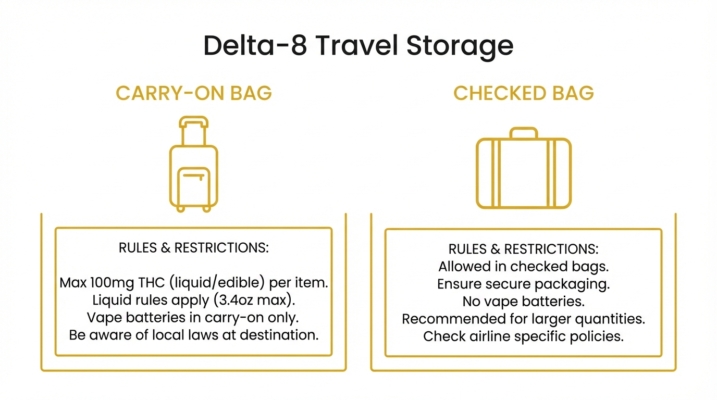
You should pack delta-8 in carry-on luggage for vape devices and either bag for non-electronic products, though significant restrictions apply to both. All airlines prohibit cannabis in any form in both carry-on and checked baggage, with enforcement coordinated through TSA and federal compliance requirements. Hemp-derived delta-8 that meets the 0.3% THC threshold occupies a gray area within these policies. For practical purposes, keeping products in your carry-on allows you to present documentation if questioned during screening. Edibles and tinctures stored in checked luggage avoid checkpoint scrutiny but remain subject to the same federal rules. Travelers who choose to fly with delta-8 should weigh airline prohibitions against their product’s verified compliance status before deciding on placement.
You should store delta-8 vapes in carry-on baggage or on your person to meet FAA rules. The Federal Aviation Administration requires all electronic smoking devices to be carried on one’s person or in carry-on baggage because they contain lithium batteries that pose fire risks in cargo holds. Each lithium-ion battery must not exceed 100 Wh, and recharging devices onboard the aircraft is not permitted. To stay compliant:
These precautions satisfy FAA hazardous materials guidelines while protecting your products during transit.
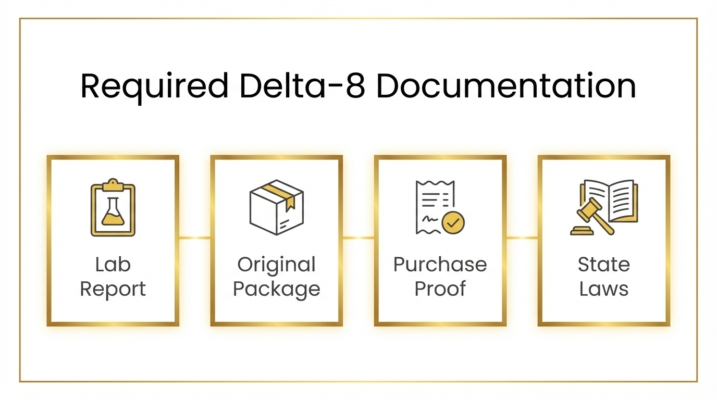
Yes, you should bring lab reports and original packaging as proof when flying with delta-8. Third-party certificates of analysis (COAs) verify that a product contains no more than 0.3% delta-9 THC, which is the threshold that distinguishes legal hemp from controlled cannabis. Original packaging displays cannabinoid content, batch numbers, and manufacturer information that supports your product’s legitimacy. According to the CDC Yellow Book, international travelers should be aware of local laws when packing CBD-containing products, including gummies, lotions, oil, and vape cartridges. Carrying printed or digital lab reports adds a layer of credibility if law enforcement or TSA officers question your products. This documentation cannot guarantee you will avoid scrutiny, but it provides the strongest available evidence of federal compliance.
Reputable online retailers like IndaCloud provide batch-matched Certificates of Analysis with every order and ship products in discreet packaging within 48 hours, making it easier for travelers to obtain properly documented delta-8 products before departure.
With packing strategies addressed, understanding the broader risks of flying with delta-8 helps you make a fully informed decision.
The risks of flying with delta-8 THC include criminal charges at your destination, product confusion with illegal cannabis, and failed drug screenings. Each risk carries distinct consequences depending on state laws, product labeling, and testing methods.
Yes, you could face criminal charges at your destination if that state classifies delta-8 THC as a controlled substance. Possessing delta-8 in states where it is banned, such as Colorado, New York, Idaho, or Vermont, can result in misdemeanor or felony drug charges depending on the quantity and local statutes. International destinations carry even steeper penalties; the Government of Canada confirms it is illegal to take cannabis across the Canadian border, including products containing any amount of THC. Law enforcement officers at your arrival airport operate under local jurisdiction, not federal TSA guidelines. For travelers, the safest approach is confirming legality at every stop before departure.
Yes, delta-8 could be confused with illegal cannabis products because standard field tests and visual inspections cannot distinguish hemp-derived THC from marijuana. Delta-8 gummies, vape cartridges, and flower look and smell identical to their delta-9 counterparts, giving law enforcement reasonable suspicion to detain or cite travelers.
The legal boundaries themselves remain difficult to verify on sight. According to the TSA, marijuana and certain cannabis-infused products remain illegal under federal law except for products containing no more than 0.3 percent THC on a dry weight basis or those approved by the FDA.
Compounding this confusion, product quality varies widely across the unregulated delta-8 market. Documented safety issues include contamination with heavy metals, solvents, and pesticides, as well as inaccurate labeling. For a deeper look at the full range of Delta-8 benefits and risks, including what to watch for in unregulated products, see our dedicated safety guide. Without standardized packaging, officers have little reason to treat an unlabeled delta-8 product differently from illegal cannabis.
Yes, delta-8 can cause you to fail an airport drug screening. Standard immunoassay urine tests detect THC metabolites without differentiating between delta-8 and delta-9 variants. According to a study published in the Journal of Medical Toxicology (NIH), delta-8-THC can show up positive on an immunoassay urine drug test and cross-react as a false positive for carboxy-delta-9-THC glucuronide on confirmatory testing.
While TSA officers do not actively search for drugs, any substance discovered during screening gets referred to law enforcement. A positive result combined with possession of THC products creates a compounding legal problem, especially in restrictive states. Travelers should stop using delta-8 well before flying to minimize detection risk — our complete breakdown of how long Delta-8 stays in your system covers urine, blood, saliva, and hair detection windows in detail.
Understanding these risks helps you make informed decisions about what documentation and precautions to prioritize before your trip.
You verify delta-8 legality before your trip by checking laws in both your departure and destination states, then confirming federal updates for 2026. The following steps cover departure state laws, destination state status, and reliable sources for legal changes.
You check your departure state’s current laws by reviewing its official health department or state legislature website for cannabinoid-specific regulations. Some states permit delta-8 sales but restrict specific product forms. Texas, for example, banned vapes and e-cigarettes containing any cannabinoids, including delta-8, effective September 2025, according to the Texas State Law Library. Start by searching your state’s name plus “delta-8 THC law 2026” on the official .gov domain. Pay attention to distinctions between possession, purchase, and consumption, since each may carry different rules. Confirming your departure state’s stance prevents problems before you even reach the airport.
You confirm your destination state’s delta-8 status by researching that state’s controlled substance schedules and any recent legislative amendments. Laws at your arrival point matter just as much as laws where you depart. Key steps include:
For travelers with layovers, the same verification process applies to every state where you physically exit the secure terminal area.
You can find reliable legal updates for 2026 through federal government sources, state legislature databases, and accredited legal information services. The Congressional Research Service, USDA Agricultural Marketing Service, and individual state law libraries publish current hemp and cannabinoid regulations. According to the CDC Yellow Book, even in international destinations where recreational marijuana use is legal, importation restrictions may exist or definitive guidance may be unclear. Bookmark these resources and recheck them within 48 hours of your departure date, since regulations shift quickly in this space. Relying on social media posts or forum threads for legal guidance is a risk no traveler should take when potential criminal charges are on the line.
With your legal research confirmed, practical travel tips can help you move through airports with greater confidence.
Tips that help you travel smoothly with Delta-8 include buying at your destination, carrying third-party lab results, and keeping proper documentation on hand. These strategies reduce risk at security checkpoints and in unfamiliar jurisdictions.
Yes, you should buy Delta-8 at your destination instead when traveling to states with clear legal status. Purchasing locally eliminates the risk of crossing jurisdictions where possession laws differ. A local retailer in a Delta-8-legal state sells products that already comply with that state’s regulations, removing the uncertainty of transporting products through layover states or airports with varying enforcement standards.
This approach also avoids potential issues with TSA screening entirely. According to the CDC Yellow Book, international travelers should be aware of local laws when packing CBD-containing products, including gummies, lotions, oil, and vape cartridges. The same principle applies domestically: knowing the rules where you land matters more than assuming your home state’s rules travel with you.
For travelers in states where delta-8 is legal, ordering from established retailers like IndaCloud ensures you receive lab-tested products that meet the 0.3% delta-9 THC threshold, with comprehensive documentation that supports federal compliance at checkpoints.
Third-party lab results protect you while traveling by providing verifiable proof that your Delta-8 product contains less than 0.3% delta-9 THC and is free of harmful contaminants. If law enforcement questions your product at an airport, a Certificate of Analysis (COA) from an accredited laboratory distinguishes legal hemp from illegal cannabis.
Reputable testing labs follow ISO/IEC 17025:2017 standards, as recognized by the American Association for Laboratory Accreditation. A valid COA confirms cannabinoid potency, heavy metal levels, solvent residues, and pesticide content. Without this documentation, security personnel have no way to verify your product’s legality on the spot, which increases the likelihood of confiscation or a law enforcement referral. Our Delta-8 buyer’s guide walks through every checkpoint — potency, purity, extraction method, and COA verification — so you know exactly what to look for. Always verify that the COA matches your product’s specific batch number before packing.
The documentation you should always carry with Delta-8 includes:
According to the TSA, officers do not search for marijuana or other illegal drugs, but if any illegal substance is discovered during screening, the matter is referred to law enforcement. Having documentation readily accessible can help resolve questions quickly. Keeping these materials organized in a single folder or digital file on your phone saves time and demonstrates responsible, informed travel.
You can get federally legal delta-8 delivered before you fly by ordering from a reputable online retailer that ships hemp-derived products directly to your door. Below, learn how Inda Cloud simplifies pre-flight purchasing and review the essential takeaways for flying with delta-8 in 2026.
Yes, Inda Cloud offers lab-tested delta-8 shipped to your door across the continental United States. Every product undergoes comprehensive third-party testing to verify cannabinoid content, purity, and compliance with the federal 0.3% delta-9 THC threshold. Inda Cloud ships orders within 48 hours in nondescript packaging, making it easy to stock up before a trip. The accompanying lab reports, known as Certificates of Analysis, serve as documentation you can carry through airport security. For travelers who want verified, federally compliant delta-8 without the guesswork of gas station brands, ordering ahead from a reputable, transparent retailer is the most practical approach.
The key takeaways about flying with delta-8 in 2026 center on a rapidly shifting legal landscape that demands careful preparation:
Planning ahead, verifying laws at every point in your itinerary, and sourcing lab-tested Delta-8 products from trusted retailers like Inda Cloud gives you the best chance of traveling smoothly and legally.
Let’s dive into the worlds of delta 8 and delta 9 THC. Delta 9…
Learn more
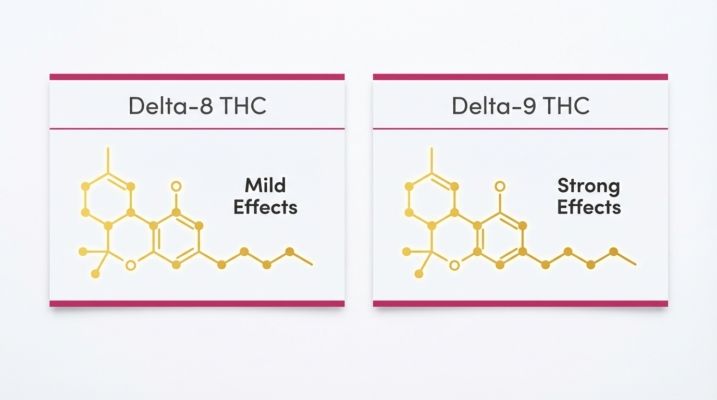
Delta-8 THC is a naturally occurring cannabinoid found in cannabis plants that produces milder…
Learn more
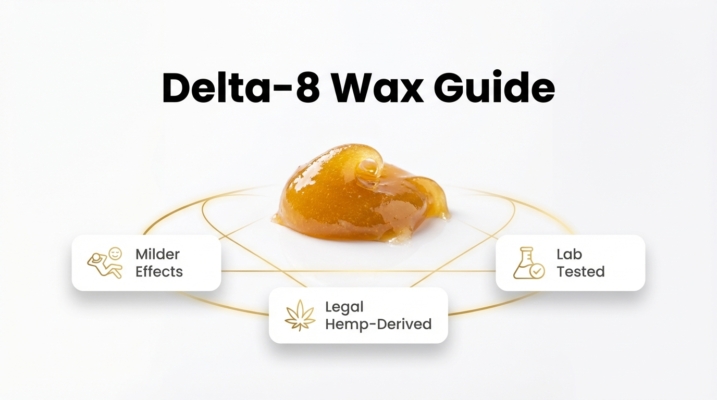
Delta-8 THC wax is a concentrated cannabis extract containing high levels of delta-8-tetrahydrocannabinol in…
Learn more
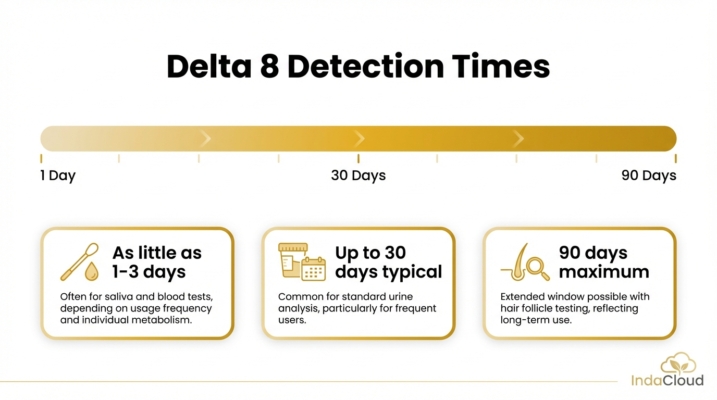
Delta-8 THC is a hemp-derived cannabinoid that stays in your system for as little…
Learn more
