


THCA

How Long Does THCA Stay in Your System?
Raw, unheated THCA clears your system in roughly 24 to 48 hours. Once you…
Learn more
You must be 21+ to enter this site
 FREE SHIPPING $89+
 FREE GIFT ON $120+
 100% FEDERALLY LEGAL
 LAB TESTED FOR PURITY
FREE SHIPPING $89+
FREE GIFT ON $120+
100% FEDERALLY LEGAL
LAB TESTED FOR PURITY
FREE SHIPPING $89+
FREE GIFT ON $120+
100% FEDERALLY LEGAL
LAB TESTED FOR PURITY
FREE SHIPPING $89+
FREE GIFT ON $120+
100% FEDERALLY LEGAL
LAB TESTED FOR PURITY
FREE SHIPPING $89+
FREE GIFT ON $120+
100% FEDERALLY LEGAL
LAB TESTED FOR PURITY
FREE SHIPPING $89+
FREE GIFT ON $120+
100% FEDERALLY LEGAL
LAB TESTED FOR PURITY
FREE SHIPPING $89+
FREE GIFT ON $120+
100% FEDERALLY LEGAL
LAB TESTED FOR PURITY
FREE SHIPPING $89+
FREE GIFT ON $120+
100% FEDERALLY LEGAL
LAB TESTED FOR PURITY
LAB TESTED FOR PURITY
FREE SHIPPING $89+
FREE GIFT ON $120+
100% FEDERALLY LEGAL
LAB TESTED FOR PURITY
FREE SHIPPING $89+
FREE GIFT ON $120+
100% FEDERALLY LEGAL
LAB TESTED FOR PURITY
FREE SHIPPING $89+
FREE GIFT ON $120+
100% FEDERALLY LEGAL
LAB TESTED FOR PURITY
FREE SHIPPING $89+
FREE GIFT ON $120+
100% FEDERALLY LEGAL
LAB TESTED FOR PURITY
FREE SHIPPING $89+
FREE GIFT ON $120+
100% FEDERALLY LEGAL
LAB TESTED FOR PURITY
FREE SHIPPING $89+
FREE GIFT ON $120+
100% FEDERALLY LEGAL
LAB TESTED FOR PURITY
FREE SHIPPING $89+
FREE GIFT ON $120+
100% FEDERALLY LEGAL
LAB TESTED FOR PURITY


Does THCA Help With Sleep?
In recent years, there has been growing interest in the potential therapeutic effects of cannabinoids on sleep, with compounds like THC and CBD garnering significant attention. However, one cannabinoid that has emerged as a subject of curiosity in sleep health is THC A.
This article delves into the question: Does THCa help with sleep? By reviewing current research and personal experiences, we investigate how THCa may contribute to improving sleep quality and managing sleep disturbances.
Yes. THCA, the non-intoxicating cannabinoid found in raw cannabis, has been suggested to potentially help with sleep-related issues such as insomnia, chronic pain, and anxiety. Its interaction with the endocannabinoid system may offer health benefits related to sleep and overall well-being.
THCA and THC have distinct effects on sleep, stemming from their differing chemical compositions and interactions with the endocannabinoid system.
While THC is known for its sedative properties and potential to induce drowsiness, THCA primarily exists in its non-intoxicating form until heated. Consequently, THCA’s effects on sleep are less pronounced compared to THC.
However, some users report that consuming THCA-rich products before bedtime may promote relaxation and aid in falling asleep, albeit to a lesser extent than THC.
Further research is needed to fully understand the nuanced impacts of THCA on sleep quality and duration.
Tetrahydrocannabinolic acid is believed to offer various benefits, including potential improvements in sleep quality, modulation of inflammation, pain management, and altered perception of sleep cycles. These effects may contribute to better overall sleep patterns and enhanced restfulness.
Research suggests that THCA plays a crucial role in regulating the endocannabinoid system, which is closely linked to sleep-wake cycles. By interacting with the CB1 and CB2 receptors, THCA may help reduce anxiety and stress levels, promoting relaxation and making it easier to fall asleep.
Studies have also shown that the anti-inflammatory properties of THCA could alleviate conditions that disrupt sleep, such as arthritis or chronic pain. Its potential to enhance the production of serotonin, a neurotransmitter associated with mood and sleep, may further contribute to its positive effects on sleep quality.
When considering the use of THCA for improving sleep, it is essential to determine the appropriate dosage, preferred medication form, and suitable route of administration. Understanding these factors can optimize the potential sleep-enhancing effects of THCA.
The recommended dosage of THCA for sleep varies depending on individual factors such as tolerance, metabolism, and the severity of sleep disturbances.
However, starting with a low dose of around 1-2 milligrams of THCA per day and gradually increasing as needed is a common approach. For individuals with more severe sleep issues, doses of up to 5-10 milligrams of THCA per day may be appropriate.
Individuals seeking to optimize their THCA dosage for sleep should prioritize open communication with healthcare experts to ensure safe and effective use. It is crucial to share specific health conditions, current medications, and any past experiences with cannabis products to receive tailored advice.
The different forms of THCA available today offer various consumption methods, each with its own benefits for promoting sleep. Some options include:
Each of these forms have unique bioavailability and absorption rates. Choosing the best form of THCA for sleep may depend on factors like onset time, duration of effects, and individual preferences.
While THCA is generally well-tolerated, there may be potential side effects associated with its use for sleep. Understanding these risks is crucial for safe and effective sleep management.
Using THCA for sleep carries certain risks, especially when combined with other medications or medical conditions. Some potential risks include:
THCA may interact with other medications or supplements commonly used for sleep management due to its pharmacological effects and metabolic pathways. It may alter the way certain drugs are broken down, leading to either decreased effectiveness or increased toxicity. This highlights the importance of consulting a healthcare provider before combining THCA with any other sleep aids.
The sedative properties of THCA may have additive effects when used in conjunction with other sleep medications, potentially leading to excessive drowsiness or respiratory depression. Monitoring for signs of central nervous system depression is essential in such cases to avoid serious complications.
Apart from THCA, there are other cannabinoids and sleep aids that can be considered as alternatives for improving sleep quality.
Various cannabinoids, including THC and CBD, have shown potential in aiding sleep and managing sleep-related conditions such as insomnia. Understanding the effects of different cannabinoids on sleep can provide insights into alternative sleep aids.
Regarding THC, its sedative properties can help induce sleep by interacting with the endocannabinoid system in the body, promoting relaxation and reducing the time it takes to fall asleep. On the other hand, CBD is known for its calming effects, which can help alleviate anxiety and pain, contributing to a more restful sleep.
Other lesser-known cannabinoids like CBN and CBG may also play a role in sleep management through their potential sedative and anti-inflammatory properties.
The legal status and safety of THCA for sleep use depend on regulatory approvals, individual state laws, and FDA guidelines. Ensuring the legality and safety of THCA products is essential for responsible sleep supplementation.
THCA faces legal restrictions and regulations that vary by jurisdiction, especially concerning its classification as a medicine or supplement.
Regarding the legal aspects of using THCA, it’s crucial to consider the diverse regulations in different regions. Some places may deem it a controlled substance, while in others, it could be classified as a medicinal product or health supplement. Generally, the legality of THCA usage is determined by its intended purpose and concentration levels.
Given the sensitive nature of personal health information, privacy considerations are also paramount. Users must be aware of data protection laws that govern the collection and sharing of information related to THCA consumption. Failure to adhere to these regulations can lead to legal repercussions.
Yes, THCA has the potential to show up on a drug test, depending on various factors.
While THCA itself is not psychoactive, it can convert to THC when exposed to heat, such as during smoking or vaping.
THC, being the psychoactive component of cannabis, is typically screened for in drug tests. Therefore, if THCA-containing products are consumed or if exposure to heat occurs, resulting in the conversion of THCA to THC, there is a possibility that THC metabolites may be detected in drug tests.
It’s essential for individuals subject to drug testing to be aware of the components in the products they consume and the potential for THC metabolites to appear in their system.
The safety of long-term THCA use for sleep remains a topic of ongoing research and debate, with considerations for potential health risks, tolerance development, and cumulative effects over time.
While short-term use may offer benefits, concerns arise regarding the implications of prolonged THCA consumption. Research indicates that prolonged THCA use may lead to dependency, diminishing its efficacy and requiring higher doses for the desired effect.
The buildup of THCA in the body may also pose concerns for liver function and overall health. To mitigate these risks, continuous monitoring and updated research findings are imperative to ensure the long-term safety of THCA usage.
Related Post:
While the potential benefits of THCA for sleep are promising, further research is needed to fully understand its efficacy and safety profile. THCA may offer relief for sleep-related issues such as insomnia, anxiety, and chronic pain, thanks to its interaction with the endocannabinoid system.
Understanding the recommended dosage, different forms of THCA, and potential risks associated with its use is essential for individuals seeking sleep support. Consulting with a healthcare professional can also provide personalized guidance and ensure safe and effective utilization of THCA for improved sleep quality and overall well-being.
THCA has sedative and calming properties that may help induce sleep and improve sleep quality.
Yes. But while THCA is generally considered safe, it is important to consult with a healthcare professional before using it for sleep, especially if you have any underlying medical conditions or take other medications.
Yes. Some individuals have reported using THCA for insomnia and experiencing positive results. However, further research is needed to fully understand its effectiveness for this condition.
Raw, unheated THCA clears your system in roughly 24 to 48 hours. Once you…
Learn more
THCP binds cannabinoid receptors roughly 33 times harder than THC in lab testing. THCA,…
Learn more

Popcorn buds are small, whole flower pulled out of a harvest and sorted by…
Learn more
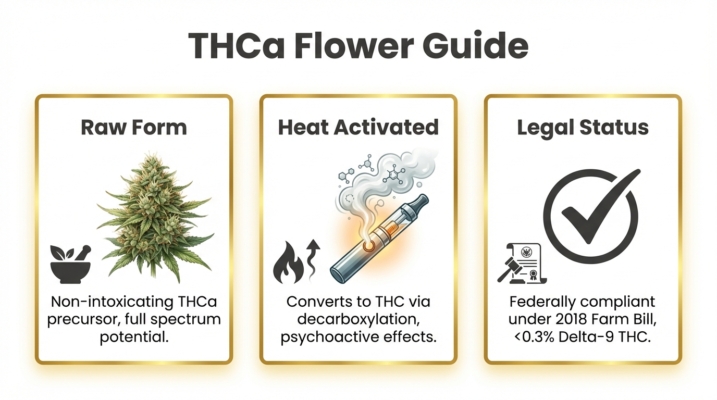
THCA flower keeps best in an airtight glass jar held at 58 to 62%…
Learn more
