 FREE SHIPPING $89+
 FREE GIFTS ALL ORDERS $120+
 100% FEDERALLY LEGAL
  LAB TESTED FOR PURITY


Hash vs Weed: What’s the Difference?

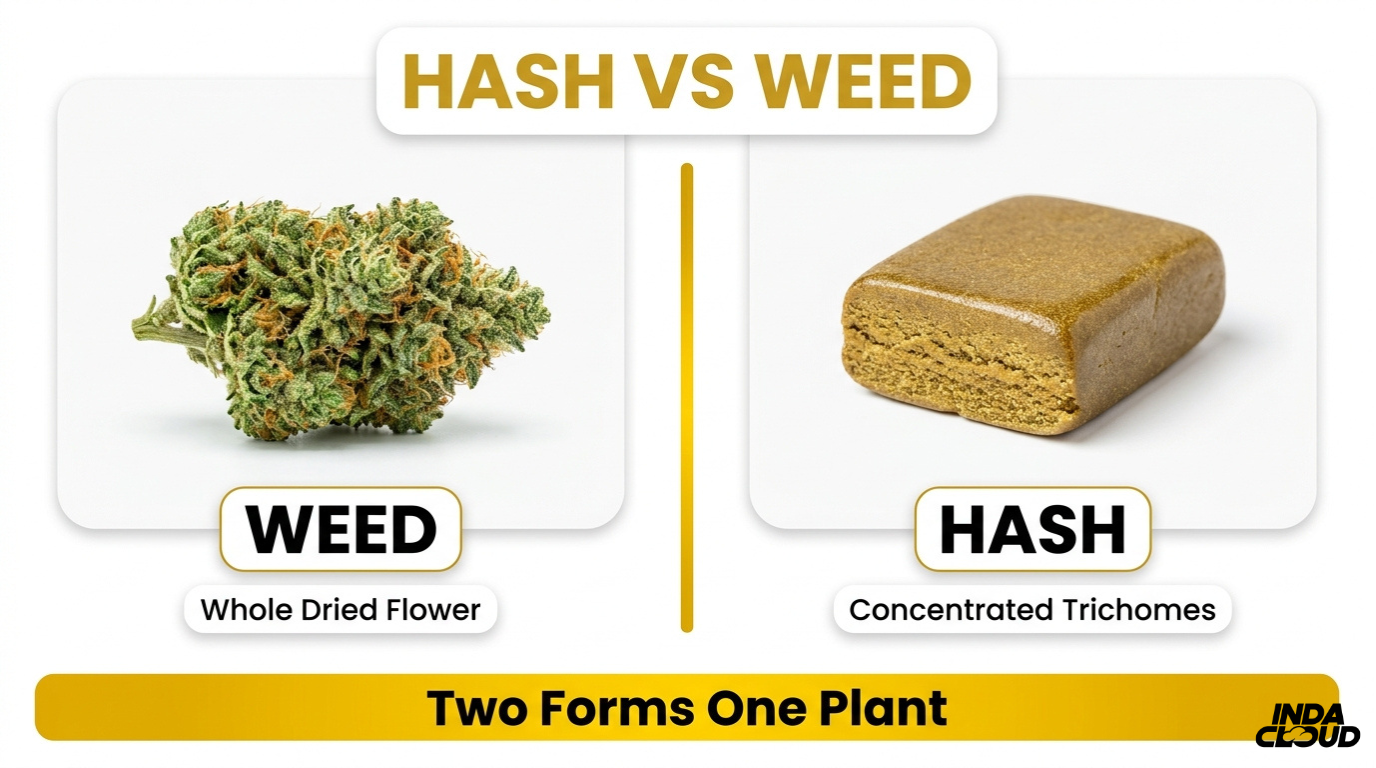
Hash is a concentrated cannabis product made by isolating and compressing trichome resin glands from the Cannabis sativa plant, while weed refers to the dried, cured flower of that same plant in its whole botanical form.
This guide covers the botanical foundations and production processes behind each product, their potency and consumption differences, the major types of hash and their cultural origins, sensory and pricing comparisons, the legal landscape in the United States, and how beginners can choose between them.
Weed retains its full plant structure after harvesting, trimming, drying, and curing, containing more than 421 identified chemicals distributed across stems, leaves, and calyxes. Hash strips away that plant material entirely, concentrating the trichomes that house roughly 95% of the plant’s cannabinoids and terpenes into a dense, compressed form.
Production methods for hash range from ancient hand-rolling traditions in regions like Afghanistan and Morocco to modern solventless techniques including dry sifting, ice water extraction, and rosin pressing. Each method yields distinct textures, colors, and purity levels.
THC potency separates the two products most dramatically. Flower typically ranges from 15% to 25% THC, while hash concentrates that resin to 40% to 65% or higher. This potency gap shapes consumption methods, with flower suited to joints, pipes, and dry herb vaporizers, and hash often requiring dabbing rigs or specialized techniques.
Six major hash varieties, from bubble hash to Afghan hash, each reflect unique regional traditions and extraction approaches that influence flavor, effect, and price. Hash generally costs more per gram due to extraction labor, though its dose efficiency can offset the sticker price.
Federal law, state regulations, and the 2018 Farm Bill each treat these products differently, creating a legal framework where hemp-derived concentrates below 0.3% delta-9 THC occupy a federally compliant space that marijuana-derived hash does not.
What Is Weed and What Is It Made From?
Weed is the dried flower of the Cannabis sativa plant, consumed for its psychoactive and therapeutic compounds. It contains a complex chemical profile shaped by cannabinoids, terpenes, and the plant’s unique resin-producing structures.
Cannabis sativa contains more than 421 chemicals, of which 61 are identified as cannabinoids, according to a study published in PubMed Central. THC and CBD are the most recognized, but dozens of minor cannabinoids contribute to the plant’s overall effects. The two main glandular trichome types, sessile and stalked, house approximately 95% of the plant’s cannabinoids and terpenes within their globose heads. These tiny, resin-rich structures coat the surface of mature cannabis flower, giving it a frosty, crystalline appearance.
After harvesting, cannabis undergoes several postharvest operations to preserve quality:
- Trimming removes excess leaves from the flower, either manually or mechanically.
- Drying, traditionally done by hang-drying, reduces moisture to prevent mold.
- Curing allows slow chemical changes that improve flavor and smoothness.
- Storage in controlled conditions maintains potency and freshness over time.
The resulting product, often called bud or flower, is what most people recognize as weed. Its quality depends heavily on cultivation methods, genetics, and how carefully each postharvest step is executed. For anyone comparing hash vs weed, understanding this foundation matters; weed is the whole dried flower, while hash is a concentrated product derived from it.
What Is Hash and How Is It Produced?
Hash is a cannabis concentrate made by separating and compressing trichome resin glands from the cannabis plant. Production methods range from ancient hand-rolling techniques to modern solventless extraction processes.
Trichomes, the tiny resin-producing structures on cannabis flowers, house approximately 95% of the plant’s cannabinoids and terpenes, according to Ripper Seeds. These glandular structures, primarily sessile and stalked types, contain the concentrated compounds that give hash its potency. By isolating trichomes from the surrounding plant material, producers create a product that is denser in active compounds than unprocessed flowers.
Historical evidence indicates that hashish production originated in Central Asia, eventually spreading to regions like Morocco, Afghanistan, and Lebanon. In these geographic centers, traditional dry-sieving and hand-pressing methods remain culturally significant to this day. Moroccan and Afghan producers typically dry-sieve cannabis over fine screens to collect resinous trichomes, which are then pressed or hand-rolled into dense blocks.
Modern hash production relies on several solventless extraction methods:
- Dry sifting uses layered screens to mechanically separate trichome heads from dried plant material.
- Ice water extraction (bubble hash) freezes trichomes with ice-cold water and agitation, then filters them through micron-sized mesh bags.
- Rosin pressing applies controlled heat and pressure to cannabis flower or hash to squeeze out resin without solvents.
Each technique preserves the plant’s natural cannabinoid and terpene profile while concentrating active compounds into a smaller, more potent form. For those exploring the broader landscape of cannabis products, understanding how hash differs from standard flower starts with recognizing this fundamental distinction in processing.
How Does the Production Process Differ for Hash vs Weed?
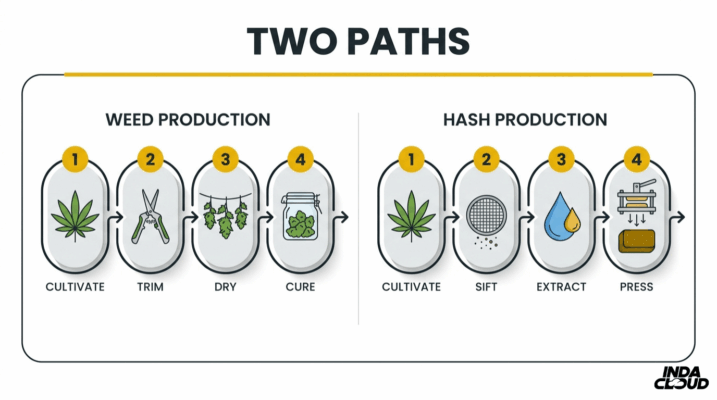
The production process differs for hash vs weed in that weed undergoes harvesting and curing of the whole flower, while hash requires an additional extraction step to isolate concentrated trichomes. The sections below cover each process.
How Is Weed Harvested and Cured?
Weed is harvested and cured through a multi-stage postharvest process designed to preserve cannabinoids and terpenes. According to a 2022 review in Bioengineering, cannabis undergoes trimming (manual or mechanical), drying (traditionally hang-drying), curing, and storage to ensure quality and consistency.
The key steps include:
- Harvesting occurs when trichomes reach peak maturity, typically indicated by their color shift from clear to milky white.
- Trimming removes excess leaves from the flower, either by hand or with mechanical trimmers.
- Drying involves hang-drying branches in a controlled environment at low humidity for 7 to 14 days.
- Curing seals dried buds in airtight containers, where slow moisture equalization develops smoother flavor and more stable potency.
Proper curing is arguably the most overlooked step in cannabis production, yet it makes the biggest difference in the final smoking experience.
How Is Hash Extracted From Cannabis Trichomes?
Hash is extracted from cannabis trichomes by mechanically separating the resin glands from plant material, then compressing the collected resin into a concentrated form. There are several solventless extraction methods, such as dry sifting, ice water extraction, and rosin pressing.
Traditional Moroccan and Afghan hashish production involves dry-sieving dried cannabis plants over fine screens to collect resinous trichomes, which are then pressed or hand-rolled into blocks, according to a review published in ScienceDirect.
The primary solventless methods include:
- Dry sifting uses layered screens to shake loose trichome heads from dried flower through progressively finer mesh.
- Ice water extraction (bubble hash) uses ice-cold water and agitation to freeze and snap trichome heads off the plant, then filters them through micron-sized mesh bags.
- Rosin pressing applies heat and pressure directly to cannabis flower or hash to squeeze out resin without any solvents.
Each method yields varying grades of purity, but all share one goal: isolating the trichome-rich resin that contains the highest concentration of cannabinoids and terpenes. Understanding these extraction techniques helps clarify why hash and weed produce such different experiences when consumed.
What Does Hash Look Like Compared to Weed?
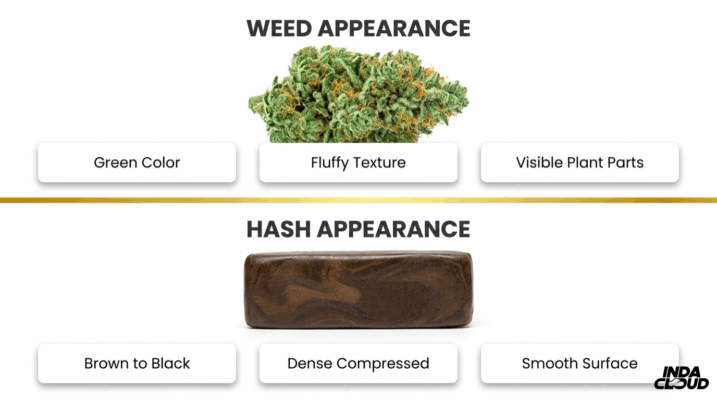
Hash looks like a dense, compressed solid that ranges from light blonde to nearly black, while weed looks like dried green flower buds with visible leaves and orange pistils. Their physical differences reflect how each product is made and what plant material it contains.
Weed, or cannabis flower, retains its natural botanical structure after harvesting and curing. Dried buds typically appear in shades of green, sometimes accented with purple or amber hues, and are covered in a frosty layer of trichomes that give the surface a crystalline shimmer. The texture is fluffy yet slightly sticky, and individual calyxes, sugar leaves, and hair-like pistils remain visually distinct. Breaking open a bud reveals a layered interior with a noticeable resinous aroma.
Hash, by contrast, has a uniform, compacted appearance because it consists almost entirely of isolated trichome heads pressed together. Color varies widely depending on production method and region of origin. Dry sift hash often appears sandy gold or light brown, while hand-pressed varieties like Afghan hash tend toward dark brown or black with a smooth, almost glossy exterior. Bubble hash can range from blonde to deep amber and sometimes has a crumbly, granular texture rather than a solid block form.
The key visual differences between hash and weed include:
- Shape: Weed comes as loose, irregularly shaped buds; hash is pressed into bricks, balls, slabs, or loose granules.
- Color range: Weed is predominantly green; hash spans from golden blonde through brown to nearly black.
- Texture: Weed feels airy and slightly sticky; hash feels dense, pliable, or crumbly depending on the type.
- Surface detail: Weed shows visible plant anatomy like trichomes and pistils; hash presents a smooth or powdery surface with no plant structures.
- Size consistency: Weed buds vary in size and shape; pressed hash has a more uniform, manufactured appearance.
Because hash concentrates the resin glands that house approximately 95% of the plant’s cannabinoids and terpenes, according to Ripper Seeds, its compact form packs considerably more active material per gram than loose flower. This density difference is often the easiest way to distinguish the two at a glance. For anyone comparing products side by side, recognizing these visual cues helps set expectations for potency and consumption method before the first use.
How Do THC Potency Levels Compare in Hash vs Weed?
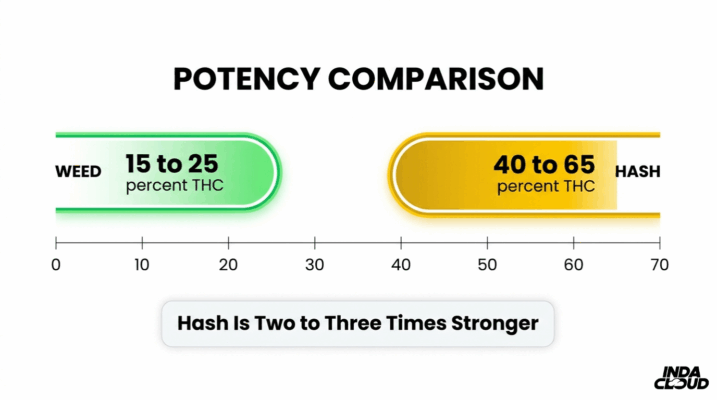
THC potency levels in hash are significantly higher than in weed. Cannabis flower typically contains 15–25% THC, while hash concentrates that resin into a denser product ranging from 40–65% THC. The subsections below break down how potency has shifted over time and what drives the difference.
What Is the Average THC Content in Weed?
The average THC content in weed ranges from approximately 15% to 25% for most dispensary-grade flowers. According to the National Institute on Drug Abuse, delta-9 THC potency in illegal cannabis products seized by law enforcement quadrupled from 3.96% to 16.14% between 1995 and 2022, while dispensary flower can exceed 40% in some cases.
Several factors influence THC levels in flower:
- Strain genetics determine the plant’s cannabinoid production ceiling.
- Growing conditions, including light, nutrients, and climate, affect trichome density.
- Harvest timing impacts peak cannabinoid concentration.
- Curing and storage preserve or degrade THC after harvest.
Even at its strongest, flower distributes cannabinoids across plant material that includes stems, leaves, and cellulose, which dilutes overall potency compared to concentrated products.
What Is the Average THC Content in Hash?
The average THC content in hash ranges from 40% to 65%, though some modern solventless concentrates can push higher. Hash achieves this elevated potency because the production process isolates trichome heads, where approximately 95% of the plant’s cannabinoids and terpenes reside, and compresses them without the diluting plant material found in flower.
The specific extraction method affects final potency:
- Bubble hash filtered through fine micron bags typically yields 50–60% THC.
- Dry sift hash screened from dried cannabis produces similar concentrations.
- Rosin hash pressed with heat and pressure can reach the upper end of the potency spectrum.
Traditional hand-pressed varieties like Moroccan or Afghan hash tend to fall in the 30–50% range due to less refined separation techniques. For most consumers, hash delivers roughly two to three times the THC concentration of flower per gram.
Why Is Hash More Potent Than Flower?
Hash is more potent than flower because it concentrates isolated trichomes into a dense product stripped of non-resinous plant material. Cannabis trichomes, the small glandular structures covering the plant’s surface, house the vast majority of cannabinoids and terpenes. When these trichome heads are separated through dry sifting, ice water extraction, or pressing, the resulting product contains a far higher proportion of active compounds per gram.
Flower, by contrast, includes the full botanical structure. Cannabinoids make up only a fraction of the bud’s total weight, with the rest consisting of fiber, chlorophyll, and water content. This structural difference alone explains why hash consistently tests at two to four times the THC percentage of the source flower it was derived from. For anyone comparing hash vs weed, potency per dose is one of the most important practical distinctions to understand before choosing a consumption method.
How Do the Consumption Methods Differ for Hash and Weed?
The consumption methods for hash and weed differ primarily in preparation and delivery. Weed is commonly smoked or vaped in its flower form, while hash requires specific techniques suited to its concentrated texture. The sections below cover how each is consumed and whether combining them is effective.
How Is Weed Typically Smoked or Vaped?
Weed is typically smoked or vaped using several common methods:
- Joints involve rolling ground flowers in paper for direct combustion.
- Pipes and bongs use a bowl to hold flowers, with bongs filtering smoke through water.
- Dry herb vaporizers heat flowers below combustion temperature, releasing cannabinoids as vapor.
According to a 2024 review in The Permanente Journal, vaporization of cannabis has rapid onset within 0 to 10 minutes and pharmacokinetics similar to combustion, though inhalation topography influences the experience. Multi-modal use, where consumers alternate between smoking and vaping, is common among regular users. Vaping tends to produce a cleaner flavor profile because terpenes are preserved at lower temperatures.
How Is Hash Usually Consumed?
Hash is usually consumed through methods designed for its dense, resinous form. Because hash is a concentrated product, it does not burn the same way loose flower does, so it benefits from specific techniques:
- Pipe or bowl smoking involves crumbling hash into small pieces and lighting it directly.
- Hot knifing presses a hash between two heated knife tips, producing vapor that is inhaled.
- Dabbing uses a heated nail or banger on a dab rig to vaporize hash at controlled temperatures.
- Edible infusion incorporates hash into butter or oil for cooking, though onset is delayed compared to inhalation.
For those who prefer portability, hash can also be loaded into concentrate-compatible vaporizers. Dabbing remains one of the most efficient methods because it vaporizes hash cleanly without combustion byproducts.
Can You Mix Hash and Weed Together?
Yes, you can mix hash and weed together, and many consumers do so to boost potency. This combination, sometimes called “crowning a bowl” or “twaxing a joint,” layers crumbled hash on top of or inside ground flower. The flower provides an even burn while the hash adds concentrated cannabinoids and richer flavor. Start with a small amount of hash relative to the flower, especially if you are less experienced with concentrates, since the combined effect is noticeably stronger than flower alone.
With consumption methods clarified, understanding the various types of hash reveals how texture and production shape each product’s character.
What Are the Different Types of Hash?
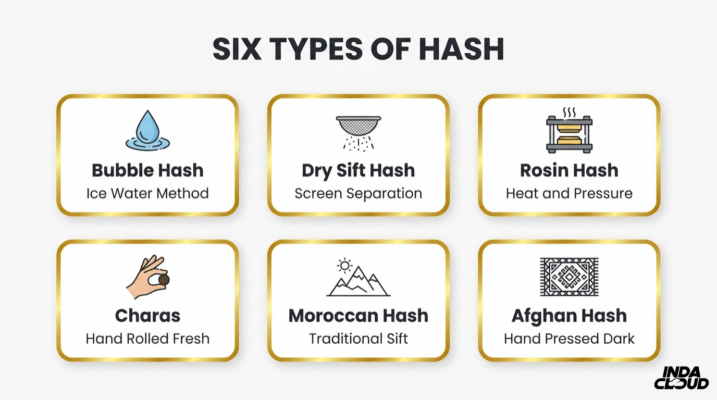
The different types of hash are bubble hash, dry sift hash, rosin hash, charas, Moroccan hash, and Afghan hash. Each type reflects a distinct extraction method, regional tradition, or modern technique.
Bubble Hash
Bubble hash is a solventless concentrate made using ice-cold water and agitation. The process freezes trichome heads, making them brittle enough to snap off the plant material. These separated trichomes are then filtered through a series of micron-sized mesh bags, producing grades of varying purity. The name comes from the way high-quality specimens bubble when exposed to flame. Bubble hash ranges from sandy blonde to dark brown, depending on purity and strain. Full-melt grades, which leave virtually no residue, represent the highest quality. For anyone prioritizing a clean, solvent-free product, bubble hash remains one of the most respected options available.
Dry Sift Hash
Dry sift hash is a concentrate produced by mechanically separating trichomes from dried cannabis using fine screens. According to a guide on solventless hash making from Overgrow, dry sifting involves passing plant material over progressively finer mesh screens to isolate resin glands by size. The result is a powdery, golden kief that can be pressed into solid blocks. Quality depends heavily on screen micron size and technique; multiple passes yield increasingly pure product. Dry sift is one of the oldest and simplest hash-making methods, requiring no water, heat, or solvents. Its straightforward process makes it a popular choice for home producers.
Rosin Hash
Rosin hash is a solventless extract created by applying heat and pressure to cannabis flower or hash. A rosin press squeezes resin directly from the starting material, producing a translucent, sap-like concentrate in seconds. No chemicals or solvents touch the product at any stage. Rosin retains a rich terpene profile because the extraction occurs at relatively low temperatures compared to other methods. Starting material quality directly determines the final product; pressing high-grade bubble hash yields what many consider the pinnacle of solventless concentrates. The accessibility of rosin presses has made this technique increasingly popular among both commercial producers and enthusiasts.
Charas
Charas is a form of hand-rolled hash made from live cannabis plants. Unlike most hash types that use dried and cured material, charas production involves rubbing fresh, resinous flowers between the palms. The friction and body heat cause trichomes to stick together, forming a dark, pliable resin that is collected from the hands. This method originated in the Indian subcontinent, particularly in regions like the Himalayas, where it holds deep cultural significance. Charas typically has a soft, sticky texture and a distinctly earthy, spicy aroma. The labor-intensive process limits large-scale production, keeping it a specialty product tied to its geographic roots.
Moroccan Hash
Moroccan hash is a dry-sieved concentrate traditionally produced in Morocco’s Rif Mountain region. Dried cannabis plants are beaten over fine screens to separate trichome heads, and the collected resin powder is then compressed into firm, uniform slabs. Traditional Moroccan hash has a sandy brown exterior with a lighter, crumbly interior. Its effects tend to be mellow and cerebral compared to more potent modern concentrates. Morocco remains one of the world’s largest hash-producing regions, and this style of pressed, dry-sieved hash has influenced concentrate culture globally. Modern Moroccan producers have also begun adopting higher-grade sieving techniques.
Afghan Hash
Afghan hash is a hand-pressed concentrate with roots in one of the world’s oldest hashish-producing regions. Historical evidence indicates that hashish production originated in Central Asia and spread to geographic centers like Morocco, Afghanistan, and Lebanon, where traditional dry-sieving and hand-pressing methods remain culturally significant. Afghan hash is typically dense, dark, and highly malleable, with a smooth, spicy flavor profile. Producers often add small amounts of water or tea during pressing to achieve its characteristic pliability. The result is a potent, long-lasting concentrate prized for its heavy, sedating effects. Afghan hash represents a living tradition that has shaped global hash culture for centuries.
With each type reflecting unique methods and origins, the next consideration is how these concentrates actually feel compared to smoking flowers.
How Do the Effects of Hash and Weed Differ?
The effects of hash and weed differ in intensity, duration, and subjective quality due to their distinct cannabinoid concentrations. Below, the specific experiential and temporal differences are explored.
How Does the High From Hash Feel Compared to Weed?
The high from hash feels more physically sedating and intensely concentrated compared to weed, which tends to produce a broader, more euphoric experience. Hash delivers concentrated cannabinoids in each dose, often resulting in heavier body effects and deeper relaxation. Weed flower, with its fuller terpene and cannabinoid profile, typically creates a more layered, cerebral high. A within-person comparison study published in Drug and Alcohol Dependence found that marijuana flower produced greater positive subjective effects compared to cannabis concentrates, suggesting pharmacological differences beyond THC concentration alone. This finding is worth noting: higher potency does not automatically translate to a more enjoyable experience, making flower the preferred starting point for those who value a well-rounded high.
How Long Do the Effects of Hash Last vs Weed?
The effects of hash last longer than weed in most cases because hash delivers a higher concentration of THC per dose. When smoked or vaporized, weed typically produces effects lasting one to three hours, while hash effects can persist for two to four hours or longer depending on potency and consumption method. Onset timing is similar for both when inhaled, generally within minutes. However, when hash is incorporated into edibles, the duration extends considerably due to how the liver metabolizes THC into the more potent 11-hydroxy-THC. For anyone exploring concentrates, starting with a small amount and waiting before re-dosing remains the most practical approach to managing duration and intensity.
Understanding these experiential differences helps inform which product suits a given occasion or tolerance level.
Does Hash or Weed Have a Stronger Smell and Flavor?
Hash generally has a stronger, more concentrated smell and flavor than weed because it contains a denser concentration of terpenes extracted from cannabis trichomes. Weed produces a broader, more varied aromatic profile that differs significantly by strain.
Cannabis trichomes house approximately 95% of the plant’s cannabinoids and terpenes, according to botanical research published by Ripper Seeds. Since hash is made by isolating and compressing these trichomes, it packs those aromatic compounds into a much smaller volume. The result is an earthy, spicy, and often pungent aroma that tends to linger longer than flower smoke.
Weed flower, by contrast, retains its full plant material, which dilutes the terpene concentration across stems, leaves, and calyxes. Individual strains can smell fruity, piney, skunky, or floral depending on their unique terpene ratios. This variety makes flower’s aroma more complex but typically less intense per gram than pressed hash.
For anyone comparing the two side by side, hash delivers a richer, deeper flavor when smoked or vaporized, while weed offers a lighter, more nuanced taste. Understanding these sensory differences can help when evaluating price and value between the two forms.
Is Hash More Expensive Than Weed?
Hash is generally more expensive than weed on a per-gram basis. The higher cost reflects the additional labor, equipment, and raw material required to produce a concentrated product from cannabis trichomes. Cannabis sativa contains more than 421 chemicals, of which 61 are cannabinoids, according to a study published in PubMed Central. Hash isolates these compounds into a denser form, meaning producers need several grams of flower to yield a single gram of concentrate. This extraction overhead drives the price above standard flowers.
Market conditions also influence the gap. Factors that affect hash pricing relative to weed include:
- Extraction method complexity: Solventless techniques like bubble hash or rosin pressing require specialized equipment and skilled labor.
- Starting material quality: Premium flower produces higher-grade hash, raising input costs.
- Regional availability: States with mature cannabis markets tend to show narrower price differences than newer markets.
- Product type: Traditional pressed hash costs less per gram than full-melt or live rosin varieties.
For budget-conscious consumers, flowers remain the more affordable entry point. However, hash offers greater potency per gram, so smaller quantities may deliver comparable effects. When evaluating cost, factoring in dose efficiency alongside sticker price gives a more accurate picture of overall value.
Understanding pricing sets useful context for the legal landscape that shapes where and how these products can be purchased.
Is Hash Legal Compared to Weed in the United States?
Hash legality compared to weed in the United States depends on the source plant, THC concentration, and jurisdiction. Federal law, state regulations, and the 2018 Farm Bill each create distinct legal frameworks.
What Is the Federal Legal Status of Hash and Weed?
The federal legal status of hash and weed is that both remain illegal under the Controlled Substances Act when derived from marijuana. The CSA classifies marijuana, including its extracts and concentrates, as a Schedule I substance. Hash produced from marijuana flower carries the same federal prohibition as the flower itself; the concentrated form does not create a separate legal category. No distinction exists at the federal level between possessing cannabis flower and possessing marijuana-derived hash. This uniform classification means that federal enforcement treats all marijuana concentrates identically to whole-plant cannabis, regardless of form or potency.
How Do State Laws Treat Hash Differently From Weed?
State laws treat hash differently from weed primarily through possession limits and penalty structures. Many legal states set separate weight allowances for flower and concentrates, typically permitting fewer grams of hash or concentrate than loose flower. Some states also impose higher taxes on concentrates based on THC content. In states where cannabis remains prohibited, possession of hash can carry harsher penalties than flower because concentrates are classified under more serious offense tiers. Consumers should verify their specific state’s regulations, since concentrate rules vary widely even among the 24 states where adult-use cannabis is currently legal.
Are Hemp-Derived Concentrates Legal Under the 2018 Farm Bill?
Hemp-derived concentrates are legal under the 2018 Farm Bill when they contain no more than 0.3% delta-9 THC on a dry weight basis. According to 2019 FDA congressional testimony, the 2018 Farm Bill removed hemp, defined as Cannabis sativa L. and its derivatives at or below that threshold, from the definition of marijuana under the federal Controlled Substances Act. This distinction makes hemp-derived hash and concentrates federally permissible while marijuana-derived versions remain Schedule I.
The practical result is significant: products like hemp-derived delta-8, CBD concentrates, and THCa flower that test below 0.3% delta-9 THC occupy a legal space that marijuana concentrates cannot. For consumers seeking legal access, hemp-derived concentrates offer a compliant pathway to explore cannabinoid products without navigating state dispensary systems.
Which Is Better for Beginners — Hash or Weed?
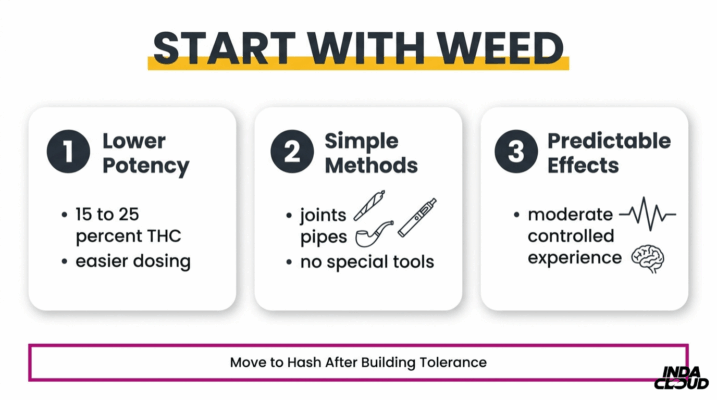
Weed is generally better for beginners because it offers lower THC potency and easier dosing control. The reasons come down to potency, consumption simplicity, and predictability of effects.
Flower typically contains moderate THC levels, while hash concentrates those cannabinoids into a much stronger product. For someone without established tolerance, that potency gap matters significantly. According to the National Institute on Drug Abuse, cannabis flower and concentrates in dispensaries can have THC concentrations of more than 40%, a threshold that hash products frequently approach. Starting with flower allows new users to take smaller, more controlled doses and gauge their response before exploring concentrated forms.
Beginners benefit from weed’s straightforward consumption methods:
- Joints and pre-rolls require no specialized equipment or technique.
- Dry herb vaporizers offer rapid onset within 0 to 10 minutes with gentler inhalation.
- Pipes provide simple, single-hit dosing that limits overconsumption.
Hash, by contrast, often requires dabbing rigs, precise temperature control, or careful crumbling into bowls. These extra steps introduce variables that can overwhelm someone still learning their preferences. The forgiving nature of flowers, where each inhale delivers a moderate and predictable amount of THC, makes it far more practical for building comfort with cannabis.
That said, beginners curious about concentrates should consider hemp-derived options that stay within federally legal THC limits, offering a gentler introduction to concentrated cannabinoid products.
How Can You Explore Hemp-Derived Cannabinoid Products Safely?
You can explore hemp-derived cannabinoid products safely by prioritizing lab-tested options, verifying third-party certificates of analysis, and starting with low doses. The following sections cover a trusted source for compliant products and the core distinctions between hash and weed.
Can IndaCloud’s Lab-Tested Hemp Products Offer an Alternative?
Yes, IndaCloud’s lab-tested hemp products can offer an alternative for consumers seeking federally legal cannabinoid experiences. IndaCloud provides 100% federally compliant hemp-derived products, including edibles, vapes, flower, and concentrates, all containing less than 0.3% delta-9 THC. Every batch undergoes comprehensive third-party testing for potency and purity, with certificates of analysis available to customers. Backed by over 250,000 verified users and a team of 35+ cannabis experts, IndaCloud delivers directly across the continental United States. For anyone curious about concentrated or flower-based cannabinoid products, this approach removes the legal uncertainty that often surrounds traditional hash and marijuana purchases.
What Are the Key Takeaways About Hash vs Weed?
The key takeaways about hash vs weed center on their source material, potency, and consumption methods:
- Hash is a concentrated cannabis product made from isolated trichomes, while weed refers to dried, cured cannabis flower.
- Hash typically delivers higher THC concentrations, with dispensary concentrates exceeding 40%, compared to flower averaging around 16%.
- Production methods differ significantly; weed requires harvesting, drying, and curing, whereas hash involves extraction techniques like dry sifting, ice water extraction, or rosin pressing.
- Both products share the same origin plant, Cannabis sativa, but hash condenses cannabinoids into a denser, more potent form.
- Beginners generally find flower easier to dose, while hash suits experienced users seeking stronger effects.
Understanding these distinctions helps consumers choose products that match their tolerance and preferences, whether through traditional cannabis or federally legal hemp-derived alternatives from brands like IndaCloud.
