


Blogs

Are THC Gummies Legal? A 2026 State-by-State Guide
Yes, THC gummies are legal to buy in most of the United States right…
Learn more
You must be 21+ to enter this site
 FREE SHIPPING $89+
 FREE GIFT ON $120+
 100% FEDERALLY LEGAL
 LAB TESTED FOR PURITY
FREE SHIPPING $89+
FREE GIFT ON $120+
100% FEDERALLY LEGAL
LAB TESTED FOR PURITY
FREE SHIPPING $89+
FREE GIFT ON $120+
100% FEDERALLY LEGAL
LAB TESTED FOR PURITY
FREE SHIPPING $89+
FREE GIFT ON $120+
100% FEDERALLY LEGAL
LAB TESTED FOR PURITY
FREE SHIPPING $89+
FREE GIFT ON $120+
100% FEDERALLY LEGAL
LAB TESTED FOR PURITY
FREE SHIPPING $89+
FREE GIFT ON $120+
100% FEDERALLY LEGAL
LAB TESTED FOR PURITY
FREE SHIPPING $89+
FREE GIFT ON $120+
100% FEDERALLY LEGAL
LAB TESTED FOR PURITY
FREE SHIPPING $89+
FREE GIFT ON $120+
100% FEDERALLY LEGAL
LAB TESTED FOR PURITY
LAB TESTED FOR PURITY
FREE SHIPPING $89+
FREE GIFT ON $120+
100% FEDERALLY LEGAL
LAB TESTED FOR PURITY
FREE SHIPPING $89+
FREE GIFT ON $120+
100% FEDERALLY LEGAL
LAB TESTED FOR PURITY
FREE SHIPPING $89+
FREE GIFT ON $120+
100% FEDERALLY LEGAL
LAB TESTED FOR PURITY
FREE SHIPPING $89+
FREE GIFT ON $120+
100% FEDERALLY LEGAL
LAB TESTED FOR PURITY
FREE SHIPPING $89+
FREE GIFT ON $120+
100% FEDERALLY LEGAL
LAB TESTED FOR PURITY
FREE SHIPPING $89+
FREE GIFT ON $120+
100% FEDERALLY LEGAL
LAB TESTED FOR PURITY
FREE SHIPPING $89+
FREE GIFT ON $120+
100% FEDERALLY LEGAL
LAB TESTED FOR PURITY

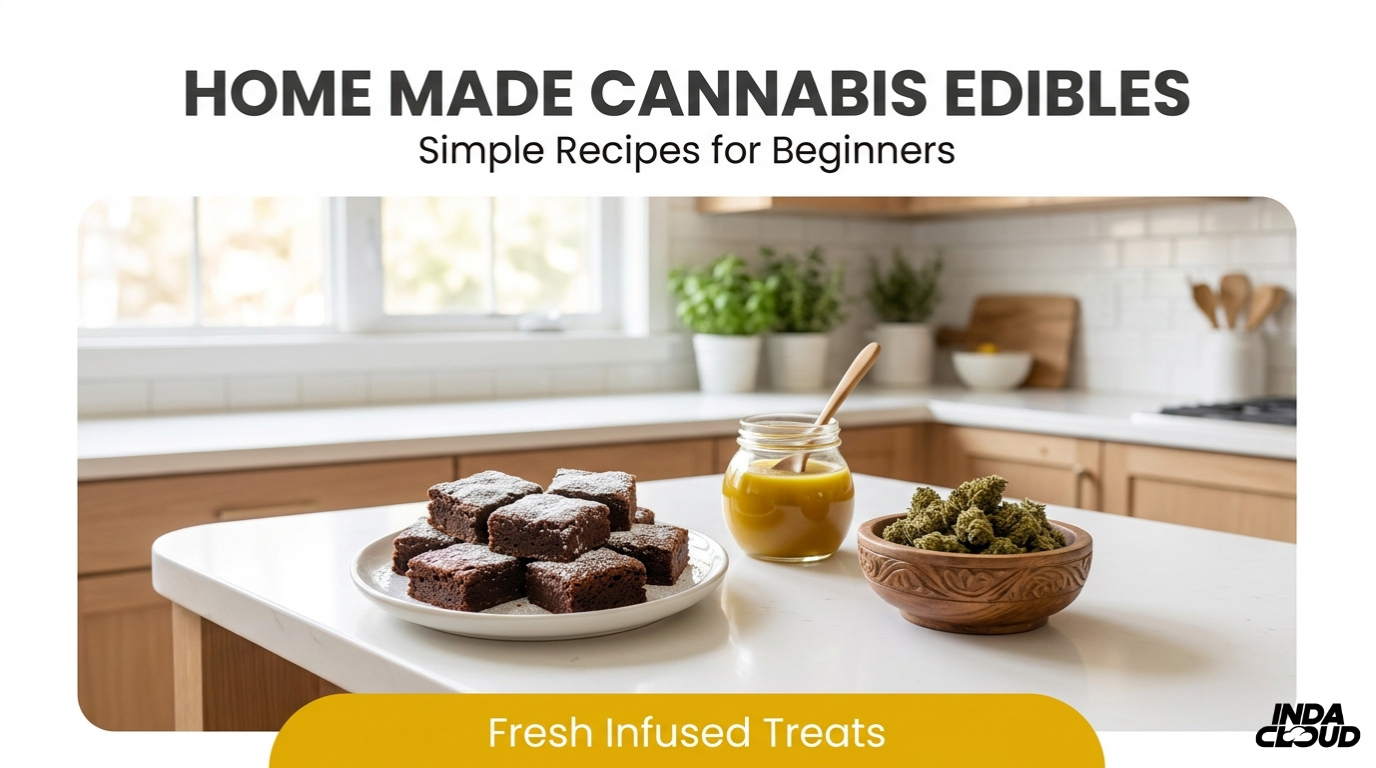
Making edibles at home is the process of infusing activated cannabis into fat-based ingredients like butter or coconut oil, then incorporating that infused fat into recipes such as brownies, gummies, and beverages.
This guide covers the science behind activating cannabis, methods for infusing fats, beginner-friendly recipes, precise dosage calculation, and legal considerations for home preparation in the United States.
Activation starts with decarboxylation, a heat-driven conversion of inactive THCA into psychoactive THC. Temperatures between 220°F and 245°F held for 30 to 45 minutes produce the most reliable results, and skipping this step leaves edibles with little to no potency.
Fat infusion is where cannabinoids transfer into a cooking-ready base. Cannabutter and coconut oil are the two primary carriers, each simmered with decarboxylated flower at 160°F to 180°F for two to four hours. Coconut oil binds cannabinoids more efficiently due to its higher saturated fat content, while butter delivers familiar flavor for baked goods.
Recipes range from classic cannabis brownies that need only 20 minutes of prep and 25 to 30 minutes of baking, to no-bake options like chocolate truffles, homemade gummies, and infused beverages that use tinctures or coconut oil as a base.
Accurate dosing ties the entire process together. A simple formula using cannabis weight, THC percentage, and extraction efficiency determines milligrams per serving. First-time consumers benefit from starting at 2.5 to 5 mg of THC and waiting up to two hours before considering more, since edible effects can last up to 12 hours.
Legal status varies by state, though hemp-derived products containing less than 0.3% Delta-9 THC by dry weight remain federally compliant under the 2018 Farm Bill, offering an accessible starting point nationwide.
Cannabis edibles are food and beverage products infused with cannabinoids, primarily THC or CBD, that deliver effects through digestion rather than inhalation. These products range from baked goods and gummies to chocolates and infused drinks. Understanding how edibles work at a basic level is essential before learning to make them at home.
Unlike smoking or vaping, edibles pass through the digestive system before reaching the bloodstream. According to a study published by the National Institutes of Health (PMC), ingested THC has a low oral bioavailability of 4% to 12% and is metabolized in the liver by CYP2C and CYP3A enzymes into 11-OH-THC, a psychoactive metabolite, and then into 11-COOH-THC, which is non-psychoactive. This liver metabolism, known as first-pass processing, is what makes edible effects feel stronger and last longer than inhaled cannabis for many users.
Because cannabinoids bind to fats during infusion, most homemade edible recipes rely on a fat-based carrier such as butter or coconut oil. The cannabinoids are first activated through decarboxylation, then infused into the fat, which can be incorporated into virtually any recipe. This flexibility is a major reason the edibles category continues to expand rapidly; Global Market Insights valued the global cannabis edibles market at USD 14.8 billion in 2025, projecting a compound annual growth rate of 15% from 2026 to 2035.
For anyone interested in making edibles at home, grasping these fundamentals sets the stage for choosing the right ingredients, mastering decarboxylation, and calculating accurate dosages in the sections ahead.
You should make edibles at home instead of buying them because homemade edibles offer significant cost savings, full ingredient control, and customizable potency. The core advantages fall into three areas: cost efficiency, dietary personalization, and dosage flexibility.
Making cannabis edibles at home is more cost-effective over time compared to purchasing retail products. According to a 2024 price analysis by Zaleaf, the national average price for THC edibles in the United States is $13.86 per package, with value pricing typically falling between $0.10 and $0.30 per milligram of THC. When factoring in brand markups and heavy state taxes at licensed dispensaries, frequent consumers save considerably by preparing their own batches with bulk flower and basic kitchen staples.
Homemade edibles also give you complete control over every ingredient. Store-bought options often contain artificial additives, excess sugar, or allergens that may not align with your dietary needs. At home, you can substitute coconut oil for butter, use organic sweeteners, or build entirely vegan and gluten-free recipes without compromise. This level of customization simply is not available with prepackaged products.
Dosage precision improves with homemade preparation as well. Commercial edibles lock you into fixed milligram amounts per serving, which may be too strong or too mild for your tolerance. When you infuse your own butter or oil, you control the cannabis-to-fat ratio and the number of servings per batch, allowing you to dial in a dose that matches your comfort level exactly. For anyone who values knowing precisely what goes into their body, homemade edibles remain the most transparent option available.
The ingredients you need to make cannabis edibles are quality cannabis flower, a fat source for infusion, and standard baking supplies. Each component plays a specific role in potency and flavor.
The cannabis strain that works best for homemade edibles depends on the effects you want. Indica strains produce relaxing, body-heavy effects suited for evening edibles. Sativa strains deliver energizing, uplifting results better for daytime treats. Hybrid strains offer a balanced middle ground.
Key strain selection factors include:
According to Global Market Insights, the global cannabis edibles market reached USD 14.8 billion in 2025 and is projected to grow at a 15% CAGR through 2035. This rapid expansion reflects growing consumer interest in strain-specific, precisely dosed homemade edibles.
The type of fat you should use for infusion is one with high saturated fat content, since THC is fat-soluble and binds most effectively to saturated fatty acids. Butter and coconut oil are the two most popular choices among home cooks.
For most beginners, coconut oil provides the strongest extraction potential, while butter delivers familiar flavor in classic recipes like brownies and cookies.
The kitchen tools and equipment you need are mostly items already found in a standard kitchen, plus a few essentials for safe infusion:
Precision matters most during decarboxylation and infusion, so an oven thermometer and kitchen scale are the two most critical investments. With these tools prepared, the next step is understanding decarboxylation and why it activates your cannabis before cooking.
Decarboxylation is the heat-activated chemical process that converts THCA in raw cannabis into THC, the compound responsible for psychoactive effects. Without it, edibles will not produce the expected potency. The following sections cover oven method steps, optimal temperature and timing, and the consequences of skipping this step.
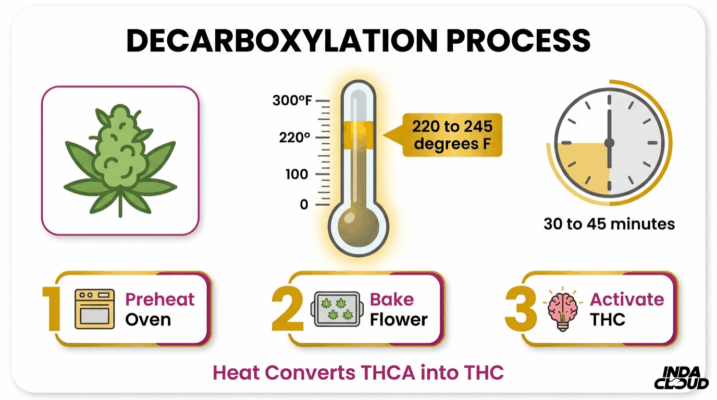
You decarboxylate cannabis in an oven by spreading ground flower evenly on a parchment-lined baking sheet and heating it at a low, controlled temperature. The process follows a simple sequence:
Keeping pieces uniform in size ensures even heat distribution, which prevents some material from under-converting while other portions degrade.
The best decarb results come from temperatures between 220°F and 245°F (105–118°C) maintained for 30 to 45 minutes, according to FreshBros, which identifies this range as optimal for maximizing psychoactive potency during THCA-to-THC conversion. Lower temperatures within this window preserve more terpenes, while higher temperatures speed conversion slightly at the cost of flavor complexity.
Exceeding 284°F (140°C) risks cannabinoid degradation and significant terpene loss, effectively reducing both potency and taste. For most home cooks, setting the oven to 230°F for 35 minutes offers the most reliable balance between full conversion and terpene retention.
If you skip decarboxylation, your edibles will contain mostly THCA instead of THC. THCA is the raw, non-psychoactive acid form found in unheated cannabis; it does not produce intoxicating effects when ingested. The result is an edible that tastes like cannabis yet delivers little to no noticeable potency.
This is the single most common mistake beginners make when learning how to make edibles. Cooking temperatures in most recipes, particularly those for baked goods, are too high and too brief to achieve reliable conversion on their own. Decarbing separately before infusion gives you full control over the activation process, ensuring consistent results across every serving.
With decarboxylation complete, the next step is infusing your activated cannabis into a fat like butter or coconut oil.
You make cannabutter for edibles by slowly infusing decarboxylated cannabis into melted butter at low heat, then straining and chilling the result. The sections below cover stovetop and slow cooker methods, ideal simmer times, and proper straining and storage techniques.
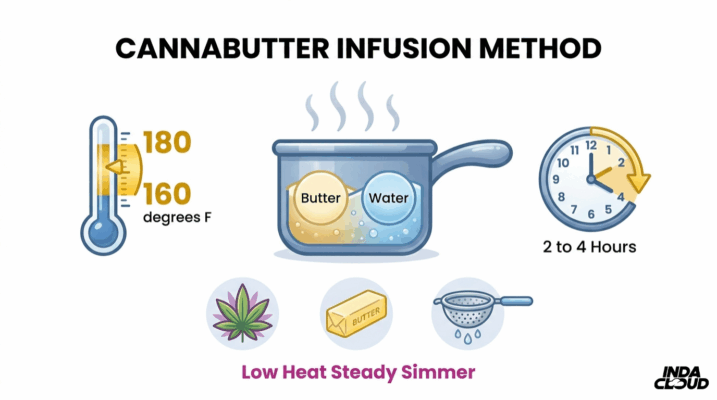
You infuse butter on the stovetop by melting it with water in a saucepan, adding decarboxylated cannabis, and maintaining a low simmer for two to three hours.
The water layer prevents scorching and separates easily during chilling. According to Mission Dispensaries, a standard batch of 12 cannabis brownies requires only half a cup of cannabutter infused with 4 grams of high-quality flower, with roughly 20 minutes of prep time. For most home cooks, the stovetop method strikes the best balance between simplicity and control.
You make cannabutter using a slow cooker by combining melted butter, water, and decarboxylated cannabis on a low setting for four to six hours. This hands-off method reduces the risk of overheating because slow cookers maintain steadier temperatures than open stovetops.
Slow cookers are especially practical for larger batches, since the extended, gentle heat allows thorough cannabinoid extraction without constant monitoring.
You should simmer cannabutter for two to four hours at 160°F to 180°F for full potency. Shorter infusions under two hours leave cannabinoids trapped in the plant material, while simmering beyond four hours risks degrading THC into less desirable compounds.
Temperature matters as much as duration. Exceeding 200°F accelerates cannabinoid breakdown and terpene loss, producing a weaker, harsher-tasting butter. A kitchen thermometer is essential; visual cues alone are unreliable for maintaining the narrow target range. If using a stovetop, two to three hours is typically sufficient. Slow cookers benefit from the longer end of the window, around four hours, because their heating elements cycle on and off. Consistent low heat over the right duration maximizes extraction without sacrificing potency.
You strain and store cannabutter properly by filtering the infusion through cheesecloth into a container, then refrigerating until the butter solidifies.
Stored in an airtight container, cannabutter keeps for up to two weeks in the refrigerator or up to six months in the freezer. Labeling each batch with the date and estimated potency per tablespoon helps maintain accurate dosing across future recipes. With your cannabutter ready, the next step is exploring alternative infusion bases like cannabis coconut oil.
You make cannabis coconut oil by simmering decarboxylated flower in melted coconut oil at low heat, then straining the plant material. The process closely mirrors cannabutter preparation, with key differences in fat composition and versatility.
The infusion process differs from cannabutter primarily in fat structure and handling. Coconut oil contains a higher percentage of saturated fat than butter, which binds cannabinoids more efficiently during extraction. Butter includes water content and milk solids that must be separated after infusion; coconut oil eliminates this step entirely, producing a cleaner finished product with less post-processing.
Both methods use the same temperature range of 160°F to 180°F maintained for 2 to 4 hours. However, coconut oil solidifies uniformly at room temperature without the layered separation that butter undergoes when cooled. This makes straining through cheesecloth simpler, since there is no water layer to drain. For home cooks who want a streamlined workflow, coconut oil reduces the margin for error during the final filtering stage.
You should choose coconut oil over butter when a recipe calls for dairy-free fat, when you need a longer shelf life, or when versatility matters. Coconut oil suits vegan and allergy-friendly edibles, a growing priority given that a 2024 NIH study found 31% of cannabis edible products now carry “vegan,” “gluten-free,” or “natural” labeling.
Key reasons to choose coconut oil over butter include:
For most home cooks exploring edibles beyond baked goods, coconut oil offers greater flexibility than cannabutter alone. With your infused oil ready, the next step is putting it to work in a simple recipe.
An easy cannabis brownie recipe for beginners uses cannabutter as a direct substitute for regular butter in a standard brownie recipe. The sections below cover step-by-step baking instructions and how to adapt any existing brownie recipe for cannabutter.
The step-by-step instructions for cannabis brownies are:
According to Mission Dispensaries, a standard batch of 12 cannabis brownies prepared with 1/2 cup of cannabutter requires approximately 20 minutes of prep time and 25 to 30 minutes of baking.
You adjust a regular brownie recipe for cannabutter by replacing the standard butter with an equal amount of cannabutter in the recipe. A 1:1 substitution ratio works for most recipes; if a recipe calls for 1/2 cup of butter, use 1/2 cup of cannabutter instead.
A few practical adjustments improve results:
For anyone who prefers precision without the effort, Inda Cloud offers lab-tested edibles that deliver consistent dosing in every serving.
Other easy cannabis edible recipes you can try include homemade gummies, chocolate truffles, and infused beverages. Each recipe uses cannabutter or cannabis oil as its base, offering versatile ways to enjoy homemade edibles beyond brownies.
You make cannabis gummies at home by combining cannabis tincture or infused coconut oil with flavored gelatin and a sweetener. The basic process involves:
According to a MunchMakers extraction methods comparison, standard stovetop infusion typically achieves 70 to 80% THC extraction efficiency, so factoring this into your dosage calculation ensures each gummy delivers a consistent amount. Gummies also suit dietary preferences easily; a 2021 NIH review found 31% of cannabis edible products carry labels like “vegan,” “gluten-free,” or “natural.” Using agar powder instead of gelatin creates a fully plant-based version.
You make cannabis chocolate truffles by blending melted chocolate with warm cannabis-infused coconut oil or cannabutter. Start by melting dark or milk chocolate in a double boiler, then stir in your infused fat until the mixture is smooth and glossy. Allow it to cool in the refrigerator for about an hour until firm enough to scoop. Roll portions into small balls, then coat them in cocoa powder, crushed nuts, or powdered sugar.
Chocolate’s natural fat content bonds well with cannabinoids, helping distribute THC evenly throughout each truffle. Portioning with a small cookie scoop keeps dosage consistent across the batch. For most home cooks, this is one of the simplest no-bake cannabis recipes available.
You infuse cannabis into beverages by dissolving a fat-based cannabis infusion, tincture, or water-soluble THC extract into your drink of choice. Because THC is fat-soluble, beverages with a fat component, such as lattes, smoothies, or hot chocolate, absorb cannabinoids more effectively than plain water.
According to Calc420, optimal cannabis infusion into fats uses a ratio of 7 to 14 grams of flower per cup of butter or oil, maintained at 160°F to 180°F for 2 to 4 hours. Popular infused beverage options include:
Water-soluble THC emulsions offer faster onset times compared to fat-based infusions, making them a practical choice for drinks without a creamy base. With these versatile recipes in hand, precise dosage calculation becomes the next essential step.
You calculate the right dosage for homemade edibles by using a simple formula that accounts for cannabis weight, THC percentage, and extraction efficiency. The following subsections cover determining THC content in infused butter, safe starting doses, and even distribution across a batch.
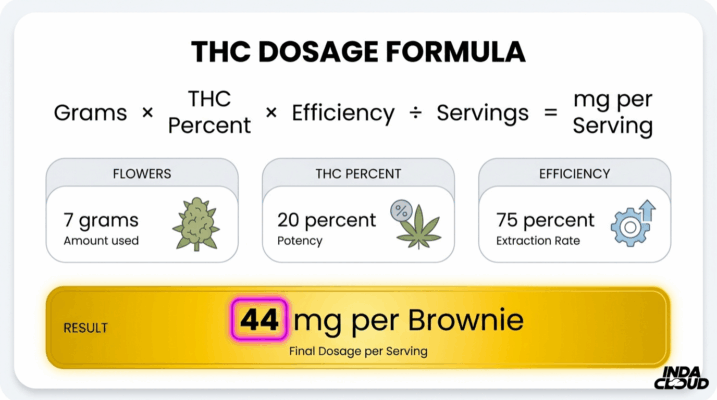
The milligrams of THC in your infused butter are calculated by multiplying the weight of cannabis (in grams) by its THC percentage and your extraction efficiency, then dividing by the number of servings. According to MunchMakers, the formula is: (grams of cannabis × THC% × extraction rate) ÷ total servings = mg THC per serving.
For example, if you infuse 7 grams of flower testing at 20% THC with a 75% stovetop extraction efficiency, the total available THC is 1,050mg (7 × 0.20 × 1,000 × 0.75). Divided across 24 servings, each contains roughly 44mg. Always check your flower’s lab-tested potency, since even small percentage differences significantly shift the final dose per serving.
A safe starting dose for first-time edible users is 2.5mg to 5mg of THC. Medical cannabis research recommends this range to minimize the risk of overconsumption and adverse effects, according to published dosing guidelines from Stoops NYC.
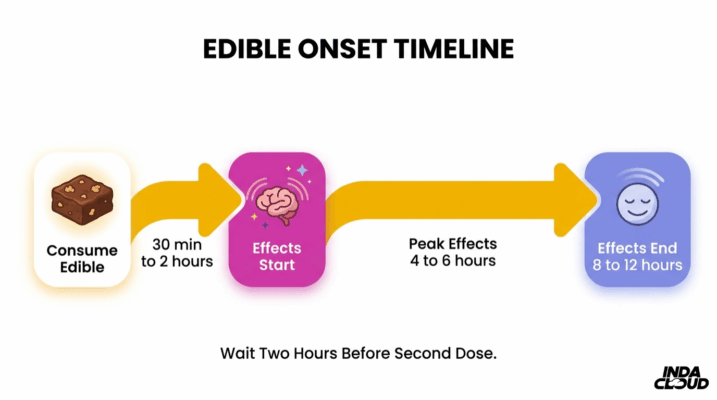
This conservative approach accounts for the delayed onset typical of edibles, which can catch inexperienced consumers off guard. Waiting at least two hours before considering an additional dose prevents the most common mistake new users make: re-dosing too soon because they “don’t feel anything yet.” Gradually increasing by 2.5mg increments over subsequent sessions allows you to find your ideal threshold without an uncomfortable experience.
You distribute dosage evenly across a batch by thoroughly mixing your infused fat into the batter or base before portioning. Inconsistent stirring is the primary cause of “hot spots,” where one serving contains significantly more THC than another.
To improve consistency:
Precision at this stage is what separates a reliably dosed batch from an unpredictable one. With dosage dialed in, understanding onset timing helps you manage the full experience.
Edibles typically take 30 minutes to 2 hours to kick in, and their effects can last up to 12 hours. According to a National Institutes of Health review, onset times and duration depend on individual metabolism and whether food is already in the stomach. THC consumed orally passes through the digestive system before reaching the liver, where CYP2C and CYP3A enzymes convert it into 11-OH-THC, a potent psychoactive metabolite. This liver processing, called first-pass metabolism, explains why edibles hit slower but often feel stronger than inhaled cannabis. Eating on an empty stomach may speed onset slightly, while high-fat meals can increase absorption. Patience matters most here; consuming a second dose before the first takes effect is one of the most common edible mistakes. For anyone making homemade edibles for the first time, understanding this delayed timeline helps prevent overconsumption and ensures a more controlled experience.
Common mistakes to avoid when making edibles include overheating cannabis, distributing potency unevenly, and consuming too much too quickly. The following sections cover each error and how to prevent it.
Overheating your cannabis during cooking degrades cannabinoids and destroys terpenes, resulting in weaker or ineffective edibles. THC begins breaking down into CBN, a less psychoactive compound, when temperatures climb too high. Exceeding 284°F (140°C) significantly increases the risk of this cannabinoid degradation and terpene loss, according to data from Ripper Seeds.
To protect potency, keep infusion temperatures between 160°F and 180°F and never let your butter or oil reach a rolling boil. Using a kitchen thermometer or a double boiler setup gives you reliable temperature control throughout the process. Low, slow heat preserves the compounds that actually produce the effects you want.
You prevent uneven potency across servings by thoroughly mixing your infused fat into the batter or base before portioning. Cannabutter and cannabis oil can separate during cooling, concentrating THC in certain areas. Without consistent stirring, one brownie might deliver a strong dose while the next has almost none.
Practical steps to ensure even distribution include:
Accurate dosing at home matters more than ever. Effective in 2026, cannabis lab testing standards will tighten with mandatory ISO 17025 accreditation and potency audits to ensure accurate consumer labeling, according to CannabisRegulations.ai. Home cooks should hold themselves to a similar standard of precision.
You should never consume too much too quickly because edibles have a delayed onset that makes overconsumption dangerously easy. Unlike inhaled cannabis, ingested THC must pass through the digestive system and liver before reaching the bloodstream. This process typically takes 30 minutes to 2 hours, with effects lasting up to 12 hours depending on individual metabolism, according to a study published in the National Institutes of Health (PMC).
Starting with 2.5 to 5 mg of THC and waiting at least two hours before considering a second dose is the safest approach for beginners. Eating a heavy meal beforehand can further delay onset, tempting impatient users to take more. Patience is the single most important skill when consuming homemade edibles.
With these common pitfalls addressed, proper storage keeps your finished edibles fresh and potent over time.
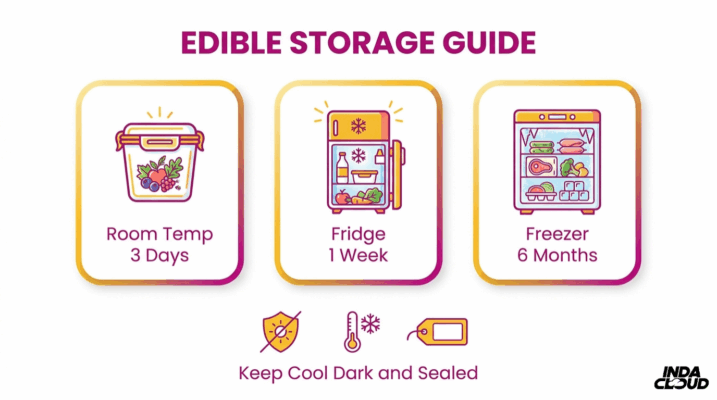
You should store homemade cannabis edibles in airtight containers, kept in cool and dark environments to preserve potency and freshness. Proper storage prevents THC degradation, mold growth, and flavor loss.
Homemade edibles lack the commercial preservatives found in store-bought products, which makes storage technique especially important. Without proper handling, cannabutter-based baked goods can spoil within days at room temperature. The key factors that affect shelf life are temperature, light exposure, moisture, and air contact.
Follow these storage guidelines based on edible type:
Light and heat accelerate cannabinoid degradation over time, gradually reducing THC potency. Opaque containers or storage in a dark pantry help protect against this. For long-term storage, freezing is the most reliable method. Wrap individual portions in parchment paper before placing them in freezer-safe bags to prevent freezer burn and simplify dosing later.
Labeling is equally critical. Mark each container with the date of preparation, the estimated THC content per serving, and the type of edible inside. This practice prevents accidental overconsumption, particularly in households with children or guests unfamiliar with cannabis products. According to a 9Realms comparison of store-bought versus homemade THC brownies, homemade batches require more careful storage attention since they lack the stabilizers and sealed packaging that extend commercial product shelf life.
For anyone making edibles regularly, investing in vacuum-sealed bags or mason jars with tight lids makes a meaningful difference in consistency and safety. With proper storage habits in place, understanding your local legal framework ensures your homemade edibles stay compliant as well.
Homemade cannabis edibles are legal in the United States only where state law permits recreational or medical marijuana use. As of early 2026, 24 U.S. states and Washington, D.C. have enacted laws allowing recreational marijuana, according to a U.S. Congressional Research Service report, with possession limits varying by state, such as 1 ounce in Alaska and 2.5 ounces in Arizona. In states without legal recreational or medical programs, making cannabis edibles at home remains a criminal offense under both state and federal law.
Federal law still classifies marijuana as a Schedule I controlled substance, so no federal protection exists for homemade marijuana edibles regardless of where you live. However, hemp-derived products containing less than 0.3% Delta-9 THC by dry weight are federally compliant under the 2018 Farm Bill, offering a legal alternative in all 50 states. Before making edibles at home, always verify your state’s specific possession limits, home preparation rules, and any local restrictions that may apply.
For those seeking a simpler path, hemp-derived edibles provide a convenient, federally legal option without the patchwork of state marijuana regulations.
Hemp-derived edibles can simplify your experience by eliminating the need for decarboxylation, infusion, and dosage calculations entirely. Pre-made, lab-tested options offer consistent potency and convenience. The following sections cover Inda Cloud’s ready-to-use alternative and the key takeaways from this guide.
Yes, Inda Cloud lab-tested edibles can offer a convenient alternative to homemade preparation. Each product undergoes comprehensive third-party testing for potency and purity, removing the guesswork that comes with DIY dosage calculations and inconsistent infusion results.
Inda Cloud ships hemp-derived Delta-9 THC edibles directly to consumers across the continental United States. All products contain less than 0.3% Delta-9 THC by dry weight, maintaining federal compliance under the 2018 Farm Bill. The lineup includes gummies, baked goods, and specialty items in pre-dosed servings.
For anyone who values consistency without the multi-hour process of making cannabutter or coconut oil from scratch, pre-made edibles represent the most practical path. Inda Cloud backs this convenience with a team of over 35 cannabis experts and verified results from more than 250,000 customers.
The key takeaways about making easy cannabis edibles center on mastering three fundamentals: decarboxylation, proper infusion, and accurate dosing.
Homemade edibles reward patience and precision. Still, when time or confidence is limited, Inda Cloud’s pre-dosed, lab-tested edibles deliver a reliable experience without any kitchen prep.
Yes, THC gummies are legal to buy in most of the United States right…
Learn more

Raw, unheated THCA clears your system in roughly 24 to 48 hours. Once you…
Learn more
Yes, edibles show up on drug tests. Standard panels detect THC edibles exactly the…
Learn more
Green Wednesday is the Wednesday before Thanksgiving, the cannabis industry’s second-biggest shopping day of…
Learn more
