



Blogs

Are THC Gummies Legal? A 2026 State-by-State Guide
Yes, THC gummies are legal to buy in most of the United States right…
Learn more
You must be 21+ to enter this site
 FREE SHIPPING $89+
 FREE GIFT ON $120+
 100% FEDERALLY LEGAL
 LAB TESTED FOR PURITY
FREE SHIPPING $89+
FREE GIFT ON $120+
100% FEDERALLY LEGAL
LAB TESTED FOR PURITY
FREE SHIPPING $89+
FREE GIFT ON $120+
100% FEDERALLY LEGAL
LAB TESTED FOR PURITY
FREE SHIPPING $89+
FREE GIFT ON $120+
100% FEDERALLY LEGAL
LAB TESTED FOR PURITY
FREE SHIPPING $89+
FREE GIFT ON $120+
100% FEDERALLY LEGAL
LAB TESTED FOR PURITY
FREE SHIPPING $89+
FREE GIFT ON $120+
100% FEDERALLY LEGAL
LAB TESTED FOR PURITY
FREE SHIPPING $89+
FREE GIFT ON $120+
100% FEDERALLY LEGAL
LAB TESTED FOR PURITY
FREE SHIPPING $89+
FREE GIFT ON $120+
100% FEDERALLY LEGAL
LAB TESTED FOR PURITY
LAB TESTED FOR PURITY
FREE SHIPPING $89+
FREE GIFT ON $120+
100% FEDERALLY LEGAL
LAB TESTED FOR PURITY
FREE SHIPPING $89+
FREE GIFT ON $120+
100% FEDERALLY LEGAL
LAB TESTED FOR PURITY
FREE SHIPPING $89+
FREE GIFT ON $120+
100% FEDERALLY LEGAL
LAB TESTED FOR PURITY
FREE SHIPPING $89+
FREE GIFT ON $120+
100% FEDERALLY LEGAL
LAB TESTED FOR PURITY
FREE SHIPPING $89+
FREE GIFT ON $120+
100% FEDERALLY LEGAL
LAB TESTED FOR PURITY
FREE SHIPPING $89+
FREE GIFT ON $120+
100% FEDERALLY LEGAL
LAB TESTED FOR PURITY
FREE SHIPPING $89+
FREE GIFT ON $120+
100% FEDERALLY LEGAL
LAB TESTED FOR PURITY

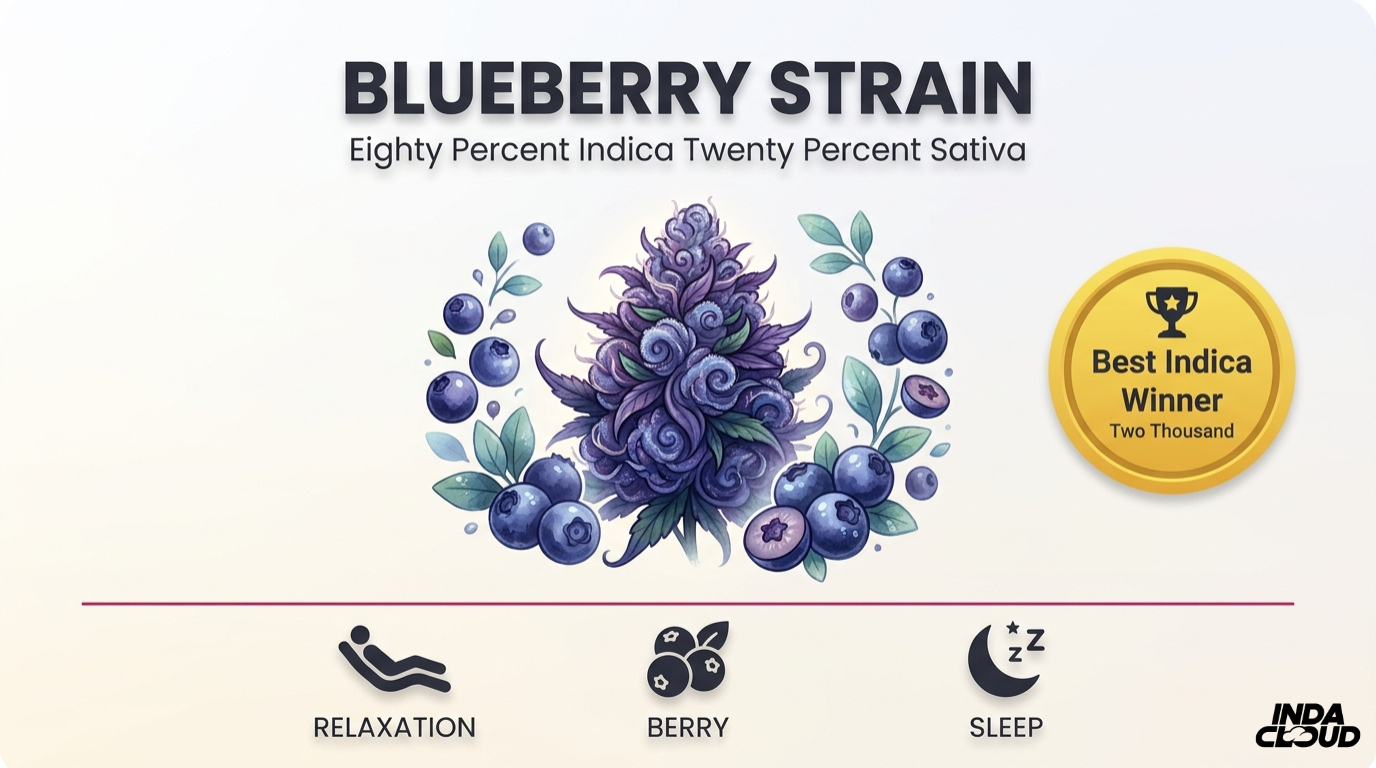
The Blueberry strain is an indica-dominant hybrid (80% indica, 20% sativa) created by legendary breeder DJ Short in the late 1970s using Afghani, Highland Thai, and Purple Thai landrace genetics. It won Best Indica at the 2000 High Times Cannabis Cup and remains one of the most recognized cultivars in cannabis history.
This guide covers Blueberry’s genetic origins and breeding history, its sensory profile and terpene chemistry, the strain’s effects and medical applications, potential side effects and strain comparisons, and how to consume or grow it.
DJ Short developed Blueberry by crossing a male Afghani landrace (one generation removed from Afghanistan) with two Thai females, producing a stable cultivar his son JD Short has called one of “the most reliable true-breeding strains on the market.” That three-way landrace foundation is rare among modern hybrids.
Blueberry buds are dense and compact with deep purple hues, bright orange pistils, and heavy trichome coverage. Myrcene dominates the terpene profile at 25 to 40% of total content, joined by caryophyllene and pinene; together they produce the strain’s signature sweet berry aroma and flavor.
The effects deliver a heavy, relaxing body high paired with gentle mental euphoria, typically lasting 2 to 4 hours. Medical users commonly reach for Blueberry to address stress, chronic pain, insomnia, and anxiety.
Common side effects stay mild: dry mouth, dry eyes, and occasional dizziness. Compared to descendants like Blue Dream, Blueberry Kush, and Blue Cheese, the original Blueberry offers a smoother, more purely sedating experience with a cleaner berry taste.
The origins and genetics of the Blueberry strain trace back to the late 1970s, when legendary breeder DJ Short combined landrace genetics from Afghanistan and Thailand. The following sections cover the strain’s creator, its parent strains, and when it first gained widespread recognition.
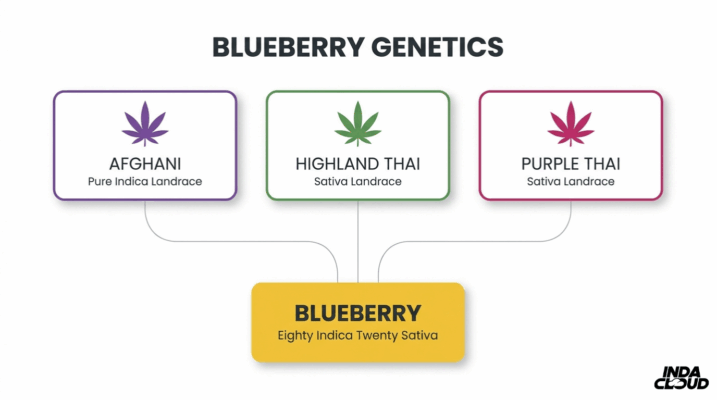
DJ Short created the Blueberry strain. Working in the United States during the late 1970s, DJ Short developed this cultivar by crossing a male Afghani landrace with two Thai females: Highland Thai and Purple Thai. According to Weedmaps, the Afghani male was only one generation removed from Afghanistan, preserving its pure landrace genetics. Before finalizing Blueberry, the breeding process produced the famous Flo strain from an Afghani male and Purple Thai female cross. DJ Short’s meticulous selection across multiple generations resulted in one of the most iconic indica-dominant cultivars in cannabis history. His son, JD Short, has described these genetics as “some of the most reliable true-breeding strains on the market,” a testament to the stability DJ Short achieved through careful phenotype selection.
The parent strains crossed to create Blueberry are Afghani, Highland Thai, and Purple Thai. Afghani is a pure indica landrace known for dense bud structure, heavy resin production, and deeply relaxing physical effects. Highland Thai and Purple Thai are both sativa-leaning landraces originating from Thailand, contributing uplifting cerebral qualities and vibrant coloration to the hybrid.
This three-way genetic foundation gives Blueberry its distinctive character:
Few modern strains can claim such a well-documented landrace lineage, which is partly why Blueberry remains a foundational building block in cannabis breeding programs decades later.
The Blueberry strain first gained major recognition in 2000 when it won first place at the 13th High Times Cannabis Cup. Submitted by the Noon coffeeshop in Amsterdam, Blueberry took top honors in the Cannabis Cup category, cementing its reputation on the global stage. While DJ Short had been refining the genetics since the late 1970s, this award brought Blueberry widespread commercial attention and consumer demand. The victory validated over two decades of selective breeding, transforming Blueberry from an underground favorite into one of the most sought-after cultivars worldwide.
With its award-winning pedigree and stable landrace genetics established, Blueberry’s physical characteristics are equally distinctive.
The Blueberry strain looks like a classic indica with vivid purple coloring, smells like sweet berries layered with earthy depth, and tastes like fresh blueberries with vanilla undertones. Here is a closer look at each sensory dimension.
The visual characteristics of Blueberry buds are unmistakably indica: dense, compact, and richly pigmented. According to Leafwell, Blueberry produces dense, compact, indica-style buds that often display striking deep blue or purple hues. These colors intensify when plants experience cooler nighttime temperatures during flowering.
Beyond the purple and blue tones, Blueberry buds feature vibrant green undertones covered in bright orange pistils. A thick layer of frosty trichomes blankets the entire surface, giving each nug a sugared appearance. This heavy resin production signals potency before the flower is ever broken apart. Few strains match this combination of color contrast and trichome density, which is one reason Blueberry remains a visual benchmark for indica cultivars.
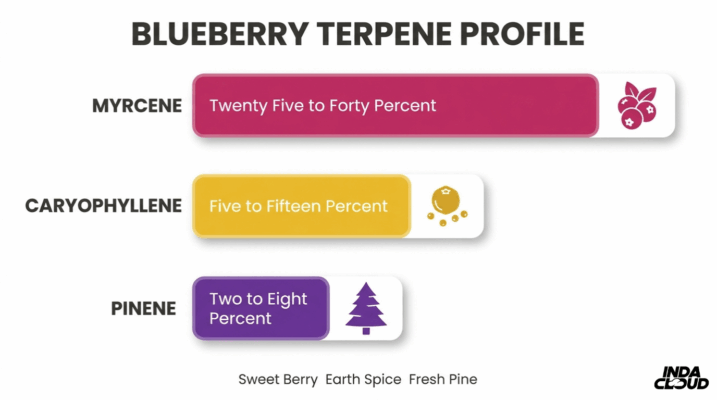
The terpenes that define the Blueberry strain’s aroma are myrcene, caryophyllene, and pinene. According to Xtra Laboratories, myrcene typically dominates Blueberry terpene profiles at 25 to 40 percent of total terpene content. This high myrcene concentration produces the signature sweet, berry-forward scent that gives the strain its name.
Caryophyllene adds a peppery, slightly spicy layer beneath the sweetness, while pinene contributes a fresh, forest-like sharpness. Together, these three terpenes create a complex aroma that balances fruity sweetness with earthy warmth. When the buds are broken open, the berry fragrance intensifies significantly. This terpene combination is part of why Blueberry has become a cornerstone in flavor-based breeding programs.
The Blueberry strain tastes like ripe, sweet blueberries with creamy vanilla notes when smoked or vaped. On the inhale, the berry flavor is immediate and pronounced, coating the palate with a smooth, almost dessert-like sweetness. The exhale introduces subtle earthy and floral undertones that prevent the taste from becoming one-dimensional.
Vaping at lower temperatures tends to preserve more of the delicate terpene flavors, making the blueberry and vanilla notes sharper and cleaner. Smoking through combustion adds a slightly toasted, herbal quality to the finish. In 2026, sweet and dessert-themed cannabis strains like Blueberry continue to drive flavor-based breeding trends, reinforcing how influential this strain’s taste profile has become across the market. Understanding how Blueberry looks, smells, and tastes helps clarify its genetic classification.
The Blueberry strain is an indica-dominant hybrid with an 80% indica and 20% sativa genetic split. This classification reflects its parent lineage and explains the strain’s characteristically relaxing effects.
Blueberry was prepared by crossing three strains: Highland Thai, Purple Thai, and Afghani Indica, according to a report published in the British Medical Journal. The Thai genetics contribute the sativa minority, while the Afghani landrace anchors the heavy indica dominance. This combination produces grape-shaped, olive green nugs coated in a frosty layer of tiny amber crystal trichomes, a physical structure typical of indica-leaning cultivars.
For anyone seeking a strain that leans heavily toward physical relaxation without being a pure indica, Blueberry occupies an ideal middle ground. That small sativa percentage adds just enough cerebral brightness to keep the experience from feeling one-dimensional, which helps explain the strain’s enduring appeal across decades of cannabis culture.
The THC and CBD levels in the Blueberry strain place it in the moderate-to-high potency range for an indica-dominant hybrid. According to lab testing averages compiled by SeedFinder, DJ Short Blueberry phenotypes show a THC content of 18.5% and a CBD content of 0.2%. This cannabinoid ratio means Blueberry delivers noticeable psychoactive effects while offering minimal CBD counterbalance.
For most consumers, that 18.5% THC sweet spot hits a practical balance: strong enough to produce genuine relaxation and euphoria, yet manageable enough that newer users won’t feel overwhelmed. The trace CBD level at 0.2% is too low to produce significant standalone effects, though it may contribute subtly through the entourage effect alongside Blueberry’s dominant terpenes. Understanding these levels helps set realistic expectations before choosing the right Blueberry product for your needs.
The effects of the Blueberry strain span deep physical relaxation, uplifted mood, and lasting euphoria. Below, each aspect is covered in detail: body effects, mental and mood influence, and typical duration.
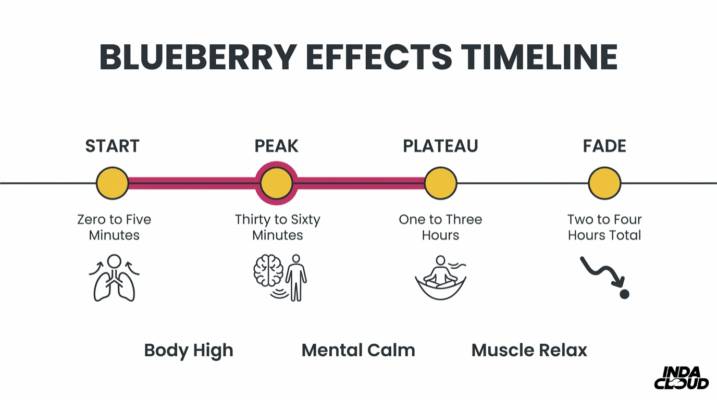
Blueberry affects your body by delivering a heavy, relaxing body high that settles into the muscles and limbs. According to MMJ Health, Blueberry is known for a heavy, relaxing body high combined with mental euphoria, making it suitable for evening use. This physical sedation often starts in the chest and spreads outward, loosening tension throughout the body.
Because of its indica-dominant genetics, the strain tends to produce a “couch-lock” sensation at higher doses. For anyone looking to wind down after a long day, this deep body relaxation is one of Blueberry’s most consistent and valued qualities.
Blueberry affects your mind and mood by producing a gentle wave of mental euphoria alongside its physical effects. Rather than racing thoughts or overstimulation, this strain encourages a calm, contented headspace. Users often describe feeling happy, stress-free, and mentally at ease within minutes of consumption.
The mood elevation tends to be warm rather than energizing, which makes Blueberry a poor choice for productivity but an excellent one for unwinding. This balanced mental effect, neither too sedating nor too cerebral, is part of what has kept the strain popular for decades. For most evening consumers, prioritizing a strain that calms the mind without causing mental fog yields the best experience.
The effects of Blueberry typically last between 2 to 4 hours on average. Myrcene, which dominates Blueberry terpene profiles at 25 to 40% of total terpene content according to Xtra Laboratories, plays a key role in this duration by enhancing sedation and prolonging relaxation.
Several factors influence how long effects persist:
The sweet flavors of fresh blueberries combine with the relaxing effects to produce a long-lasting sense of euphoria that tapers gradually rather than dropping off abruptly. Understanding these effects helps when exploring Blueberry’s potential medical applications.
The potential medical benefits of the Blueberry strain center on stress relief, pain management, and sleep support. Below, each benefit is explored individually.

Yes, Blueberry can help with stress and anxiety. Its indica-dominant genetics deliver a calming body effect that many users find effective for quieting racing thoughts and reducing tension. According to a VapeFully guide, Blueberry is utilized as an alternative treatment for chronic pain, chronic fatigue, insomnia, and anxiety. The strain’s myrcene-rich terpene profile likely contributes to these anxiolytic properties, since myrcene is associated with sedative and muscle-relaxant effects. For anyone managing daily stress, Blueberry’s slow-onset relaxation makes it a practical evening option. Higher-potency variants like Blueberry Caviar, which reaches a 60% potency level, may intensify these effects, so starting with a lower dose is wise for newer users.
Yes, Blueberry can help with pain and inflammation. Its heavy indica body high targets muscle soreness, joint stiffness, and general physical discomfort. The combination of myrcene and caryophyllene in Blueberry’s terpene profile supports this effect; caryophyllene binds to CB2 receptors, which are directly involved in inflammatory response. This is why “Does indica help with nerve pain?” ranks among the most common Google searches related to the Blueberry strain. For chronic pain sufferers who prefer a natural approach, Blueberry’s full-body relaxation offers meaningful relief without the stimulating cerebral effects that sativa-leaning strains tend to produce.
Yes, Blueberry can help with insomnia and sleep issues. Its deeply sedating indica effects make it one of the more reliable strains for promoting restful sleep. According to a study published in the Journal of Psychoactive Drugs, medical cannabis patients use the Blueberry strain specifically for nighttime relief and to enhance sleep. The strain’s relaxing body high gradually eases users into drowsiness, while its euphoric mental effects help quiet the anxious thoughts that often prevent sleep onset. For those struggling with inconsistent sleep patterns, Blueberry works best when consumed 30 to 60 minutes before bed.
With its medical applications established, understanding potential side effects helps users consume Blueberry responsibly.
The possible side effects of the Blueberry strain are generally mild but worth knowing before your first session. Most reactions involve temporary discomfort that subsides as effects wear off.
According to Nurse Wellness, some of the most commonly reported side effects include dry mouth, dry eyes, and dizziness. These are typical responses to indica-dominant strains with moderate THC content. Staying hydrated before and during use helps reduce dry mouth and dry eyes considerably. Starting with a low dose is the most reliable way to minimize dizziness, especially for newer consumers.
Higher THC intake can also intensify unwanted reactions. Consuming too much may lead to tachycardia or paranoia, particularly in users with lower tolerance levels. For most people, keeping doses modest and choosing a comfortable setting prevents these stronger side effects entirely. With side effects understood, exploring how Blueberry compares to similar strains helps narrow down the right choice.
The Blueberry strain compares to similar strains by offering a more indica-heavy, sedating experience with a distinctive berry terpene profile. The subsections below compare Blueberry directly to Blue Dream, Blueberry Kush, and Blue Cheese.
Blueberry compares to Blue Dream as a parent strain to its offspring. Blue Dream is a sativa-dominant hybrid created by crossing Blueberry with Haze, while Blueberry itself is a pure indica-leaning cultivar of Purple Thai, Highland Thai, and Afghani. This genetic distinction produces very different experiences.
According to DC Collective, Blueberry won 1st place for Best Indica at the 2000 High Times Cannabis Cup, cementing its reputation for deep physical relaxation. Lab testing averages show DJ Short Blueberry phenotypes at 18.5% THC and 0.2% CBD. Blue Dream typically tests higher in THC and delivers energizing, cerebral effects suited for daytime use.
Blueberry’s terpene profile, dominated by myrcene, caryophyllene, and pinene, leans heavily toward sedation. Blue Dream inherits some of that berry sweetness but adds a hazier, more uplifting character. For anyone seeking nighttime relaxation over daytime productivity, original Blueberry remains the stronger choice.
Blueberry compares to Blueberry Kush as a parent to a more potent descendant. Blueberry Kush is a cross between Blueberry and OG Kush, combining Blueberry’s fruity terpene profile with OG Kush’s earthy, fuel-like undertones. Both strains are indica-dominant and produce heavy body relaxation.
The key difference lies in intensity. Blueberry Kush typically tests at higher THC levels than classic Blueberry, which averages around 18.5% THC. That added potency from the OG Kush side makes Blueberry Kush feel heavier and more sedating. Blueberry, by contrast, offers a gentler entry point with a cleaner berry flavor. For users who want the iconic blueberry taste without overwhelming couch-lock, the original Blueberry is often the better fit.
Blueberry compares to Blue Cheese as the sweeter, more straightforward parent strain. Blue Cheese is a cross between Blueberry and UK Cheese, blending fruity berry notes with a pungent, savory funk that polarizes users. Blueberry keeps its flavor profile clean and dessert-like, with myrcene, caryophyllene, and pinene driving a soothing, approachable aroma.
Both strains deliver relaxing indica effects, but Blue Cheese introduces a sharper mental edge from its Cheese genetics. Blueberry tends to produce a smoother euphoria with less cognitive stimulation. Scientific analysis identifies myrcene, caryophyllene, and pinene as the terpenes responsible for Blueberry’s consistently calming experience.
For those who prefer sweet over savory, Blueberry is the clear winner in the flavor department. With multiple Blueberry-descended strains now available, understanding these distinctions helps match the right cultivar to your preferences.
The best ways to consume the Blueberry strain include smoking flower, vaping, and edibles. Each method delivers the strain’s signature berry flavor and relaxing effects differently.
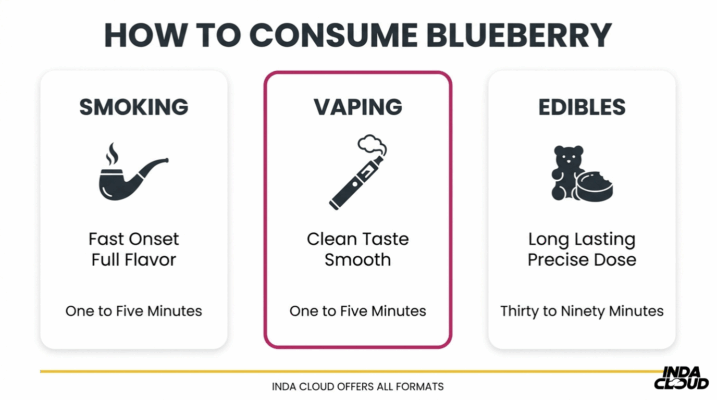
Smoking Blueberry flower is one of the best ways to experience its full terpene profile and fast-acting effects. When combusted, the strain’s myrcene-dominant terpene blend releases the sweet berry aroma Blueberry is known for, and effects typically onset within minutes. Smoking also preserves the entourage effect between cannabinoids and terpenes more directly than some processed formats. However, combustion does produce tar and irritants, which makes it less ideal for users with respiratory sensitivity. For those who enjoy traditional consumption and want immediate results, smoking Blueberry flower in a pipe, bong, or joint remains one of the most straightforward options.
Vaping is a better option for Blueberry when flavor preservation and smoother inhalation are priorities. Vaporizers heat cannabis below the combustion point, which extracts cannabinoids and terpenes without producing smoke or tar. This lower-temperature process tends to highlight Blueberry’s sweet, fruity flavor more cleanly than smoking. Onset time remains rapid, usually within one to five minutes, similar to smoking. Vaping also produces less odor, making it a more discreet choice. For users who want to taste the full berry and pine notes driven by myrcene, caryophyllene, and pinene while reducing respiratory irritation, vaping Blueberry through a quality dry herb vaporizer or a strain-specific cartridge is a strong alternative.
Yes, you can find Blueberries in edible form. Blueberry-infused edibles, including gummies, baked goods, and other treats, are widely available in both dispensary and hemp-derived markets. Edibles process through the digestive system, so effects take longer to onset (typically 30 to 90 minutes) but tend to last significantly longer than inhaled methods. This makes edibles a practical choice for sustained relaxation or evening use. Because dosing is pre-measured, edibles also offer more precise control over intake. For anyone seeking Blueberry’s calming effects without any inhalation, edibles represent the most accessible consumption method. With methods covered, growing conditions determine how well Blueberry expresses these qualities.
Growing the Blueberry strain requires attention to temperature control, training methods, and a moderate flowering period. Key considerations include indoor environment management, yield optimization techniques, and expected timelines.
The Blueberry strain flowers in 7 to 9 weeks and can yield between 18 to 25 ounces per plant, according to I Love Growing Marijuana (ILGM). For optimal indoor growth, Blueberry requires a stable temperature range between 70°F and 80°F (21°C to 27°C). Cooler nighttime temperatures during late flowering can enhance the strain’s signature purple and blue coloring.
Blueberry responds well to the Sea of Green (SOG) cultivation method, which maximizes yields by encouraging early flowering in closely spaced plants. Its compact, indica-dominant structure makes it naturally suited to this approach. Growers should also monitor humidity carefully during the dense bud development phase, since tightly packed flowers can trap moisture and invite mold.
For those who prefer to enjoy Blueberry without cultivating it, hemp-derived products offer a convenient alternative.
You can experience Blueberry with hemp-derived products through federally legal options like vapes, flower, edibles, and pre-rolls that feature Blueberry genetics. The sections below cover where to find these products and summarize key strain takeaways.
Yes, Inda Cloud offers hemp-derived products that feature Blueberry and similar berry-forward strain profiles. As a leading online retailer of hemp-derived cannabinoid products, Inda Cloud carries a diverse catalog of federally legal options, all containing less than 0.3% delta-9 THC in compliance with the 2018 Farm Bill. Product categories that may showcase Blueberry-inspired flavors and genetics include:
Every Inda Cloud product undergoes third-party lab testing to verify purity and potency. Orders ship directly to customers across the continental United States, with free shipping on purchases over $89.
The key takeaways about the Blueberry strain center on its legendary genetics, distinctive sensory profile, and versatile effects. DJ Short created this indica-dominant hybrid in the late 1970s by crossing Afghani, Purple Thai, and Highland Thai landrace genetics, producing one of the most award-winning cultivars in cannabis history. Here are the essential points to remember:
For anyone seeking Blueberry’s celebrated qualities in a legal, lab-tested format, Inda Cloud provides a convenient way to explore hemp-derived products from home.
Yes, THC gummies are legal to buy in most of the United States right…
Learn more

Raw, unheated THCA clears your system in roughly 24 to 48 hours. Once you…
Learn more

Yes, edibles show up on drug tests. Standard panels detect THC edibles exactly the…
Learn more

Green Wednesday is the Wednesday before Thanksgiving, the cannabis industry’s second-biggest shopping day of…
Learn more
