


THCA

How Long Does THCA Stay in Your System?
Raw, unheated THCA clears your system in roughly 24 to 48 hours. Once you…
Learn more
You must be 21+ to enter this site
 FREE SHIPPING $89+
 FREE GIFT ON $120+
 100% FEDERALLY LEGAL
 LAB TESTED FOR PURITY
FREE SHIPPING $89+
FREE GIFT ON $120+
100% FEDERALLY LEGAL
LAB TESTED FOR PURITY
FREE SHIPPING $89+
FREE GIFT ON $120+
100% FEDERALLY LEGAL
LAB TESTED FOR PURITY
FREE SHIPPING $89+
FREE GIFT ON $120+
100% FEDERALLY LEGAL
LAB TESTED FOR PURITY
FREE SHIPPING $89+
FREE GIFT ON $120+
100% FEDERALLY LEGAL
LAB TESTED FOR PURITY
FREE SHIPPING $89+
FREE GIFT ON $120+
100% FEDERALLY LEGAL
LAB TESTED FOR PURITY
FREE SHIPPING $89+
FREE GIFT ON $120+
100% FEDERALLY LEGAL
LAB TESTED FOR PURITY
FREE SHIPPING $89+
FREE GIFT ON $120+
100% FEDERALLY LEGAL
LAB TESTED FOR PURITY
LAB TESTED FOR PURITY
FREE SHIPPING $89+
FREE GIFT ON $120+
100% FEDERALLY LEGAL
LAB TESTED FOR PURITY
FREE SHIPPING $89+
FREE GIFT ON $120+
100% FEDERALLY LEGAL
LAB TESTED FOR PURITY
FREE SHIPPING $89+
FREE GIFT ON $120+
100% FEDERALLY LEGAL
LAB TESTED FOR PURITY
FREE SHIPPING $89+
FREE GIFT ON $120+
100% FEDERALLY LEGAL
LAB TESTED FOR PURITY
FREE SHIPPING $89+
FREE GIFT ON $120+
100% FEDERALLY LEGAL
LAB TESTED FOR PURITY
FREE SHIPPING $89+
FREE GIFT ON $120+
100% FEDERALLY LEGAL
LAB TESTED FOR PURITY
FREE SHIPPING $89+
FREE GIFT ON $120+
100% FEDERALLY LEGAL
LAB TESTED FOR PURITY

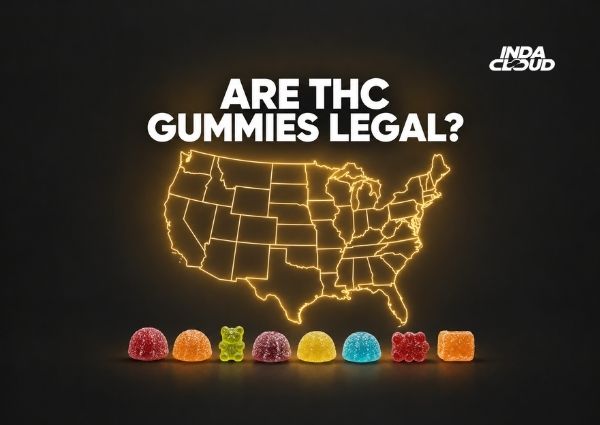
Yes, THC gummies are legal to buy in most of the United States right now, but the full answer depends on three things: which plant the THC came from, which state you live in, and which date you are standing on.
Hemp-derived gummies, like the ones in our THC gummies collection, ship legally to most states under federal law. Marijuana-derived gummies stay locked inside state-licensed dispensary systems. Those are two different legal worlds for the same molecule.
The date matters because of one fact worth knowing upfront: a federal law signed in November 2025 changes the legal definition of hemp, effective November 12, 2026. This guide walks through all three variables, state by state, so you know exactly where your gummies stand.
Last verified: August 19, 2026. State and federal rules on this topic change fast, so check your state’s current law before you order.
The delta-9 THC in a hemp gummy is chemically identical to the delta-9 THC in a dispensary gummy; the legal difference comes entirely from the plant it was extracted from. Federal law draws the line at the farm, not at the finished product.
The 2018 Farm Bill defined hemp as cannabis containing less than 0.3% THC by dry weight and removed it from the Controlled Substances Act. Any cannabis plant testing at or below that threshold is hemp under federal law. Anything above it is marijuana, still a Schedule I substance federally.
Here is the part most guides skip: the 0.3% limit applies to the plant, measured on a dry weight basis. It does not cap the finished gummy. A gummy is heavy, so 0.3% of its weight leaves real room for THC.
That math is how a fully compliant hemp-derived gummy can carry 10 mg, 20 mg, or more of real delta-9 THC per piece. Our Grape Dispensary Grade Delta-9 gummies hold 20 mg per gummy and ship direct to your door, which the hemp pathway makes possible. If you want the full legal mechanics, our guide to how delta-9 gummies are legal goes deeper.
Marijuana-derived gummies live under state law instead. They sell only through a licensed dispensary to buyers 21 or older, typically capped around 10 mg per serving and 100 mg per package, and carrying them across state lines is a federal crime.
The Farm Bill also opened the door to a wider cannabinoid family: delta-8, delta-10, THCA, HHC, and THCP all trace their legal status to the same hemp definition. One of those matters for the next section. THCA converts to delta-9 THC when heated, and how the law counts it is about to change.
Browse our delta-9 gummies collection to see what compliant hemp-derived delta-9 looks like in practice: labeled per-serving doses, batch-tested, under the plant-level threshold.
Federal law sets a floor, and state law is free to sit well above it. Congress legalizing hemp did not require any state to allow hemp products, so the map is a patchwork.
States restrict hemp-derived THC gummies with three levers. They ban specific cannabinoids, most often delta-8. They cap milligrams per serving or per package below what federal law allows. Or they restrict the sales channel, permitting in-store sales while blocking online shipping.
Any one of those levers can make a gummy that is perfectly legal in Colorado a violation one state over. That is why the state-by-state section below matters more than the federal rules.
A federal law signed on November 12, 2025 rewrites the definition of hemp, and the new definition takes effect on November 12, 2026 unless Congress acts.
The law is Section 781 of the Continuing Appropriations Act (H.R. 5371), signed November 12, 2025 with a one-year transition period.
This is not the One Big Beautiful Bill Act from July 2025. That law contained no hemp provisions. The hemp redefinition rode in on the November appropriations bill.
Section 781 makes three changes to what counts as legal hemp.
First, the 0.3% standard shifts from delta-9 THC to total THC, and total THC includes THCA. Products that relied on measuring THC before heat conversion, like THCA flower, get counted at their converted potency.
Second, finished hemp products face a cap of 0.4 mg total THC per container. That is per container, not per serving. A single 10 mg gummy exceeds the cap 25 times over, and a 30-count jar exceeds it by three orders of magnitude.
Third, synthetic and semi-synthetic cannabinoids are excluded from the hemp definition entirely. Delta-8 synthesized from CBD, HHC, and likely THCP and THCH fall outside the definition because of how they are made, regardless of the hemp origin of the starting material.
| Product category | Status today | Status after Nov 12, 2026 (as written) |
| Hemp-derived delta-9 gummies (10 mg+) | Federally legal under the 0.3% plant standard | Exceeds the 0.4 mg per-container cap |
| THCA flower | Legal where delta-9 tests under 0.3% pre-heat | Counted as total THC, including THCA |
| Delta-8 products (converted from CBD) | Federally legal, banned in some states | Excluded as semi-synthetic |
| Non-intoxicating CBD | Legal | Unaffected |
| Dispensary marijuana products | State-legal in licensed markets | Unaffected |
| Industrial hemp (fiber, grain, seed) | Legal | Unaffected |
The date has not moved, but Congress is actively negotiating around it. In August 2026, the Senate passed its FY27 continuing resolution (H.R. 6500) by a 90 to 6 vote with a limited extension of the Section 781 deadline from November 12 to December 11, 2026. The measure still needs House approval and the President’s signature, and the House is not expected to act until it returns from recess in September.
Read the fine print on that extension. It covers only naturally occurring cannabinoids. The exclusion for non-naturally-produced cannabinoids, including delta-8 made from CBD, would still take effect in November either way.
The White House has signaled support: the Office of Management and Budget issued a statement in early August backing the Senate version, with senior advisers recommending the President sign it. Support is a signal, and a signal is still short of a signature.
Longer-term reform bills exist but none has become law. Rep. Baird’s Hemp Planting Predictability Act (H.R. 7024) and Rep. Mace’s American Hemp Protection Act (H.R. 6209) take different routes, a two-year delay and a full repeal of Section 781 respectively, and both are pending. The House Agriculture Committee also advanced a 2026 Farm Bill in March that leaves the new restrictions untouched.
So treat this as a planning question rather than a prediction. The law is signed and the date is set. A short extension may pass, the scope may narrow for roughly a month, and delta-8 is carved out of the reprieve regardless. Nothing changes for dispensary products, industrial hemp, or non-intoxicating CBD.
Most states currently allow hemp-derived THC gummies, a smaller set allows marijuana-derived gummies through licensed dispensaries, and a handful restrict or ban both. The useful way to read the map is by tier, since states cluster into four recognizable buckets.
| Tier | Marijuana gummies | Hemp-derived gummies | Example states |
| Fully legal (adult-use) | Legal, 21+, dispensary | Generally legal, sometimes tightly regulated | California, Colorado, Illinois, New York |
| Medical use only | Legal with a card | Often the only option without a card | Florida, Arkansas, Georgia (low-THC) |
| Restrictive / ban states | Illegal or CBD / low-THC only | Banned or heavily capped | Idaho, Kansas, Nebraska, Iowa, Hawaii |
| Recent or pending changes | Varies | Rules actively moving | Texas, Alabama, Florida |
In adult-use states, both marijuana-derived and hemp-derived gummies are broadly available to anyone 21 or older. THC gummies are legal in Colorado through both the recreational dispensary system and the hemp channel.
Some adult-use states regulate hemp-derived products more tightly than their dispensary products, largely to protect the licensed market. California is the clearest example, with emergency hemp rules that restrict intoxicating hemp products even while dispensary shelves stay full.
In medical-only states, marijuana-derived gummies require a card, and hemp-derived gummies fill the gap for everyone else. That is the position most of our customers in Florida and Arkansas are in: no card, no dispensary access, hemp as the legal route.
Georgia sits here too, with a low-THC medical program narrow enough that hemp-derived gummies are the practical option for most adults.
Some states have closed the hemp pathway locally, banned specific cannabinoids, or capped potency so low that standard gummies do not qualify. Idaho, Kansas, and Nebraska anchor this tier, and Iowa joined it with strict per-serving and per-container caps.
Shipping restrictions are the practical signal here. We do not ship to Alaska, Hawaii, or Washington state, and we do not ship to states where delta-8 is illegal. When a retailer will not ship a product to your state, that exclusion usually maps directly onto state law.
A few states are moving targets, and their state guides carry the current detail this hub cannot track week to week.
Texas has restricted delta-8, delta-10, and THCP in waves since 2025, while hemp-derived delta-9 remains available. Our Texas gummies collection shows what currently ships there, which is the availability signal in action.
Alabama’s HB 445 imposed potency caps on consumable hemp products. Florida remains permissive after the SB 1698 veto, but FDACS has tightened packaging and labeling enforcement under Rule 5K-4.034.
For any state in this tier, check the dedicated state guide before you order, because these rules change faster than any annual guide can track.
Read the certificate of analysis, because the label alone will not tell you whether a gummy complies with your state’s rules. A COA is the third-party lab report behind the batch, and four checks on it settle the question.
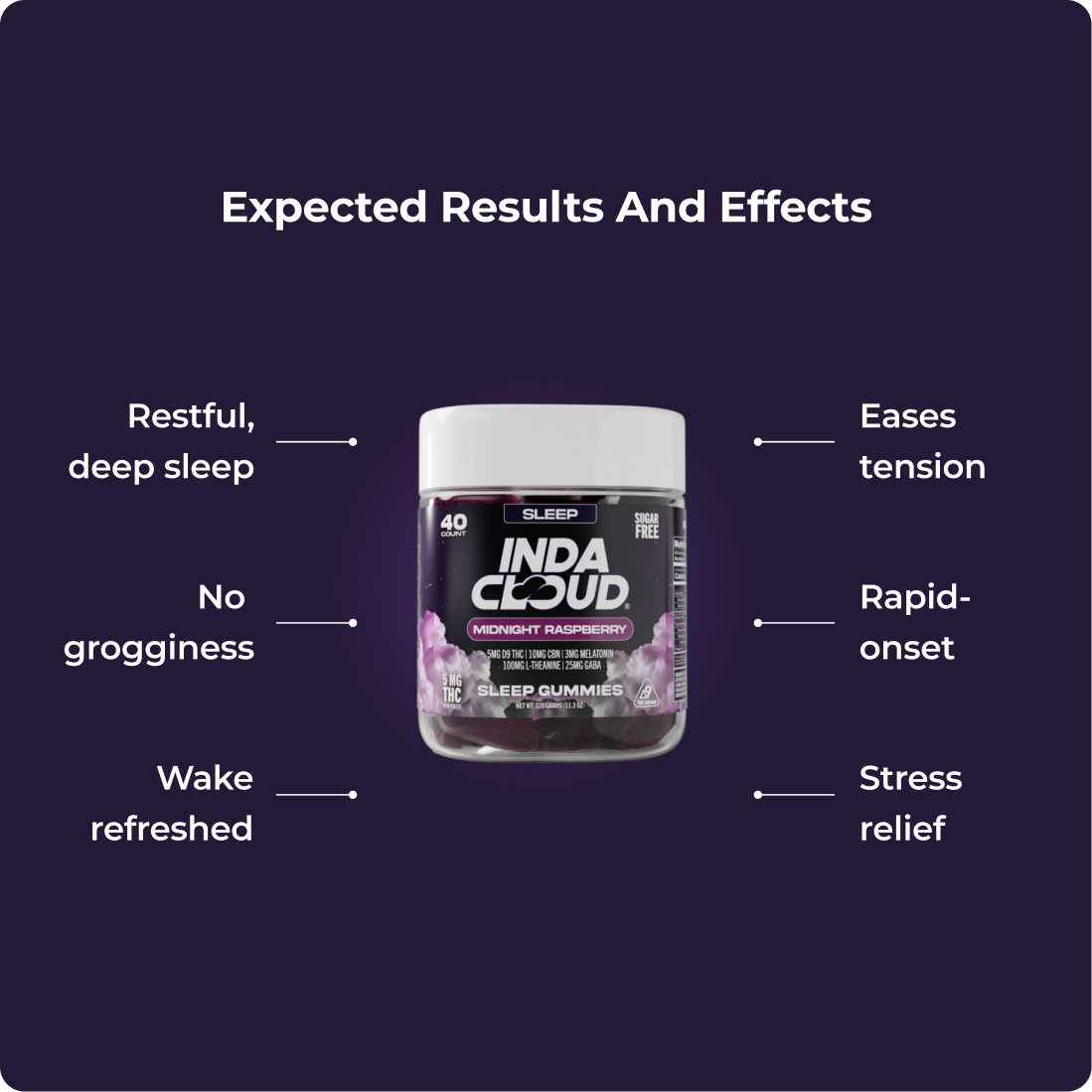
Match the batch number first. The COA should correspond to the batch printed on your package, since a generic product-level report proves nothing about what you are holding. We publish batch-level COAs for every product at our COA page, including hero products like our sugar-free sleep gummies jar, so you can run this check before ordering.
Check total THC, not just delta-9. Some states already count THCA and other cannabinoids toward their limits, and federal law joins them in November. A COA that only reports delta-9 hides the number that may matter.
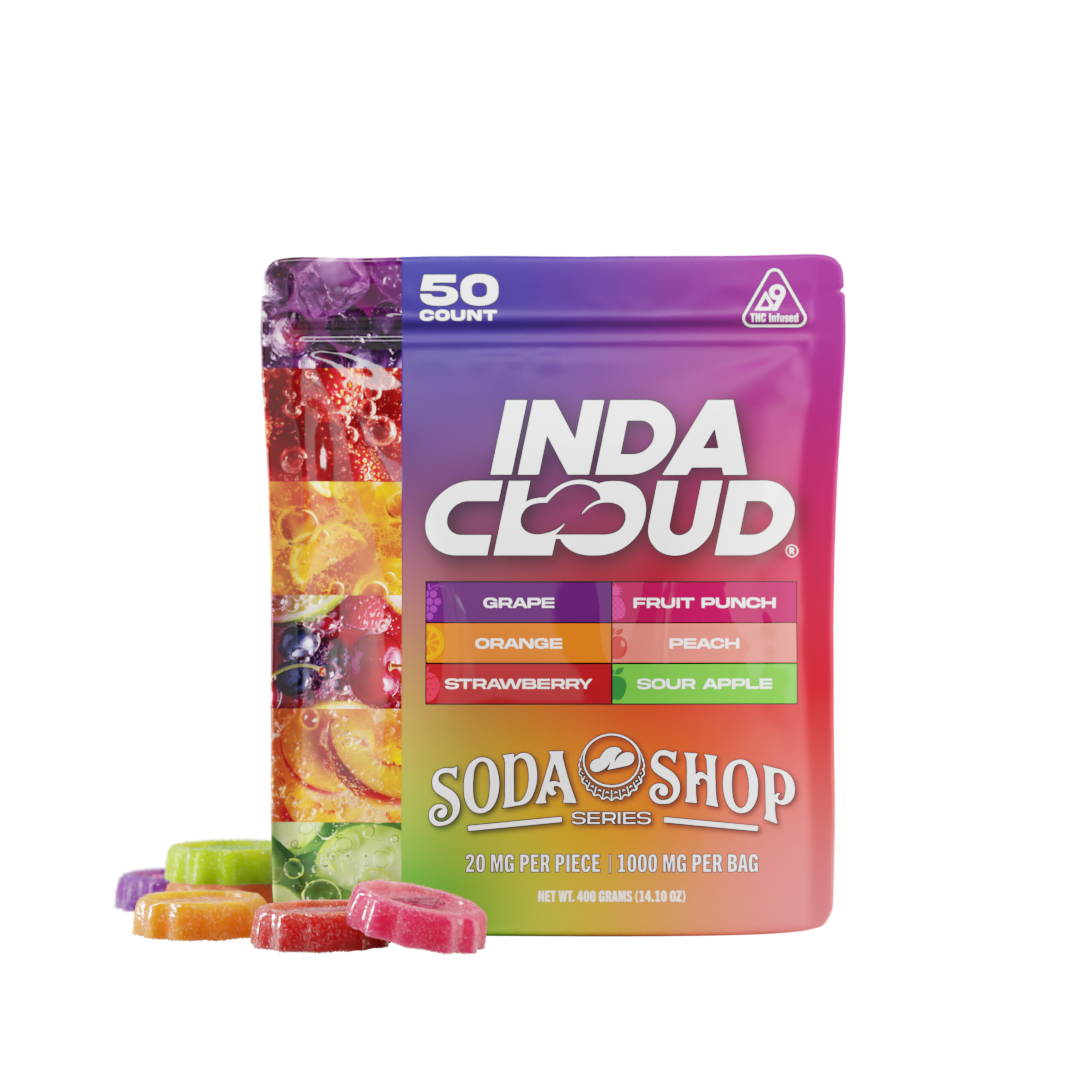
Do the per-serving versus per-package math. Many state caps are written per package, so a compliant 20 mg serving inside a 1,000 mg jar can still fail a package-level cap. Take our 50-count delta-9 gummy jar: each gummy is 20 mg, the jar totals 1,000 mg, and it is the per-container figure you check against your state’s rule.
Confirm the cannabinoid source. Hemp-derived delta-9 extracted from the plant and delta-8 synthesized from CBD occupy different federal positions now, and the gap widens after November. A trustworthy seller states the source plainly.
Finally, confirm the seller ships to your state.
Flying with marijuana-derived gummies is a federal offense, even between two states where they are legal, because federal law governs air travel. Crossing state lines by car with dispensary products carries the same problem.
Hemp-derived gummies occupy a different position under the current definition. TSA’s own policy states that products containing no more than 0.3% THC on a dry weight basis fall under the 2018 Farm Bill carve-out, while officers remain required to refer anything that appears illegal to law enforcement. A different position is not the same as cleared.
Note that this analysis changes if the November definition takes effect, since most hemp gummies would no longer fit the federal carve-out. For a fuller treatment, see our guide to flying with Delta-8, which covers the documentation and screening side.
You must be 21 or older to buy THC gummies almost everywhere, whether from a licensed dispensary or a consumable hemp retailer. We age-verify at checkout for the same reason.
Public consumption remains prohibited in most jurisdictions even where possession is legal, so a legal gummy still cannot be eaten on a park bench in most cities. Licensed markets also set per-transaction and daily purchase limits, typically mirroring the possession limit.
Store gummies in child-resistant packaging, away from children and pets. And the standard caveat applies to everything above: this is general information, not legal advice, and your state’s rules may be stricter than federal law.
Yes. Hemp-derived delta-9 is the same psychoactive, intoxicating molecule as dispensary delta-9, and a 10 mg gummy delivers a real dose either way. The 0.3% figure describes the source plant, so it says nothing about how a gummy feels. Start low, go slow, and wait two hours before re-dosing.
No. Amazon prohibits products containing THC, so anything sold there as a “hemp gummy” contains no meaningful THC or is mislabeled. Legal hemp-derived THC gummies sell through dedicated retailers that publish COAs and verify age at checkout.
They can. Drug tests screen for THC metabolites and cannot tell hemp-derived THC from marijuana-derived THC, since the molecule is identical. If you are tested for work, treat a hemp gummy exactly like any other THC product.
Yes, in states that permit consumable hemp sales and shipping. Federal law allows hemp-derived products to move in interstate commerce under the current definition, while individual states can block shipping to their residents. If a retailer ships to your state, that is a reasonable working signal.
Three questions settle whether a THC gummy is legal for you: was it derived from hemp or marijuana, what does your state allow, and are you looking at the rules before or after November 12, 2026. The first determines the federal pathway, the second sets the real limits, and the third is why this page carries a verification date.
The reader’s job stays the same through all of it. Read the COA, check total THC against your state’s per-container cap, confirm the source, and confirm the seller ships to you.
When you are ready to put that checklist to work, our best gummies collection is a lab-tested starting point, with batch-level COAs posted for every product.
Raw, unheated THCA clears your system in roughly 24 to 48 hours. Once you…
Learn more
Yes, edibles show up on drug tests. Standard panels detect THC edibles exactly the…
Learn more
Green Wednesday is the Wednesday before Thanksgiving, the cannabis industry’s second-biggest shopping day of…
Learn more
Sit in on any smoke session and you’ll hear blunt, joint, and spliff thrown…
Learn more
