


Blogs

Are THC Gummies Legal? A 2026 State-by-State Guide
Yes, THC gummies are legal to buy in most of the United States right…
Learn more
You must be 21+ to enter this site
 FREE SHIPPING $89+
 FREE GIFT ON $120+
 100% FEDERALLY LEGAL
 LAB TESTED FOR PURITY
FREE SHIPPING $89+
FREE GIFT ON $120+
100% FEDERALLY LEGAL
LAB TESTED FOR PURITY
FREE SHIPPING $89+
FREE GIFT ON $120+
100% FEDERALLY LEGAL
LAB TESTED FOR PURITY
FREE SHIPPING $89+
FREE GIFT ON $120+
100% FEDERALLY LEGAL
LAB TESTED FOR PURITY
FREE SHIPPING $89+
FREE GIFT ON $120+
100% FEDERALLY LEGAL
LAB TESTED FOR PURITY
FREE SHIPPING $89+
FREE GIFT ON $120+
100% FEDERALLY LEGAL
LAB TESTED FOR PURITY
FREE SHIPPING $89+
FREE GIFT ON $120+
100% FEDERALLY LEGAL
LAB TESTED FOR PURITY
FREE SHIPPING $89+
FREE GIFT ON $120+
100% FEDERALLY LEGAL
LAB TESTED FOR PURITY
LAB TESTED FOR PURITY
FREE SHIPPING $89+
FREE GIFT ON $120+
100% FEDERALLY LEGAL
LAB TESTED FOR PURITY
FREE SHIPPING $89+
FREE GIFT ON $120+
100% FEDERALLY LEGAL
LAB TESTED FOR PURITY
FREE SHIPPING $89+
FREE GIFT ON $120+
100% FEDERALLY LEGAL
LAB TESTED FOR PURITY
FREE SHIPPING $89+
FREE GIFT ON $120+
100% FEDERALLY LEGAL
LAB TESTED FOR PURITY
FREE SHIPPING $89+
FREE GIFT ON $120+
100% FEDERALLY LEGAL
LAB TESTED FOR PURITY
FREE SHIPPING $89+
FREE GIFT ON $120+
100% FEDERALLY LEGAL
LAB TESTED FOR PURITY
FREE SHIPPING $89+
FREE GIFT ON $120+
100% FEDERALLY LEGAL
LAB TESTED FOR PURITY

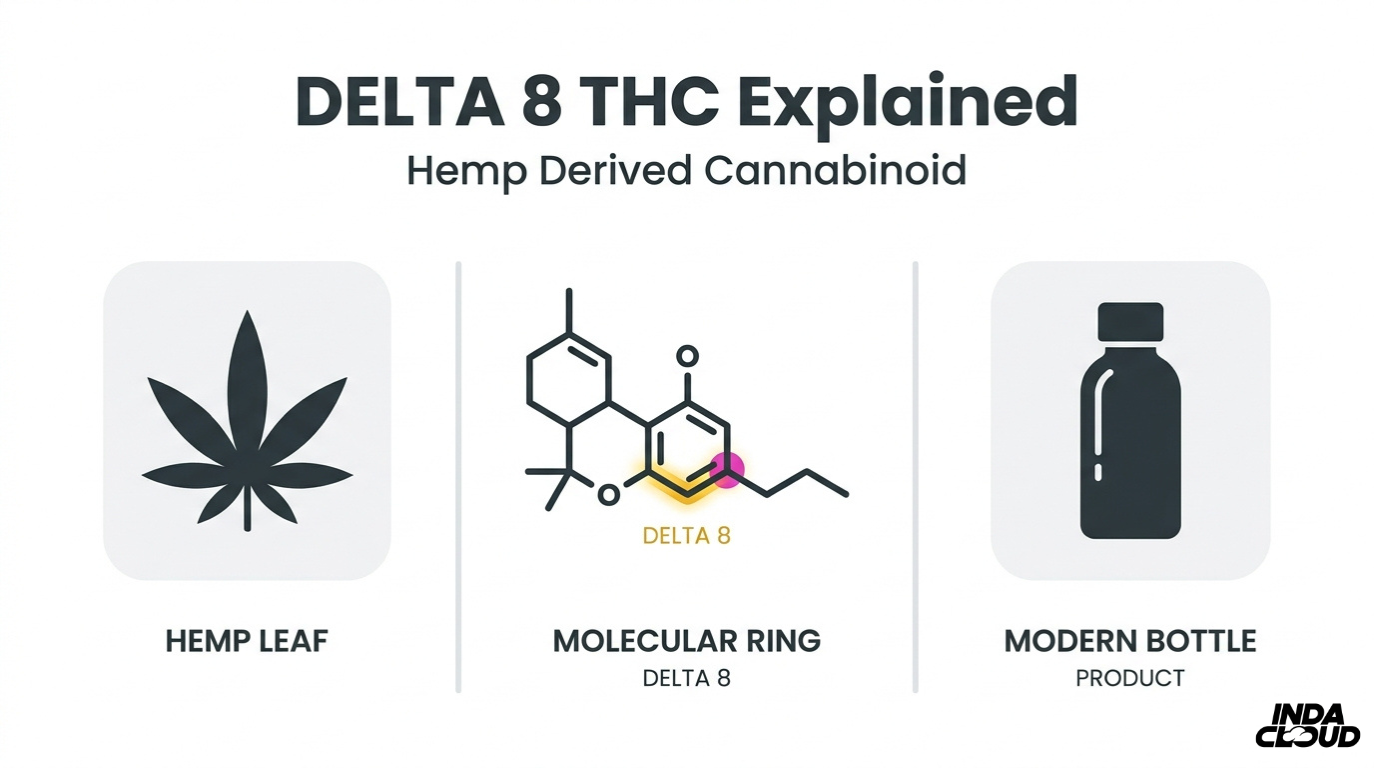
Delta 8 THC is a psychoactive cannabinoid derived from hemp through acid-catalyzed conversion of CBD, producing a milder high than Delta 9 THC. Raw hemp contains less than 0.1% Delta 8 naturally, so virtually all commercial products are semi-synthetic rather than simply extracted.
This guide covers Delta 8’s chemistry and how it compares to Delta 9 THC, its psychoactive effects and duration, the legal landscape surrounding hemp-derived cannabinoids, potential benefits and safety risks, and how to choose quality-tested products.
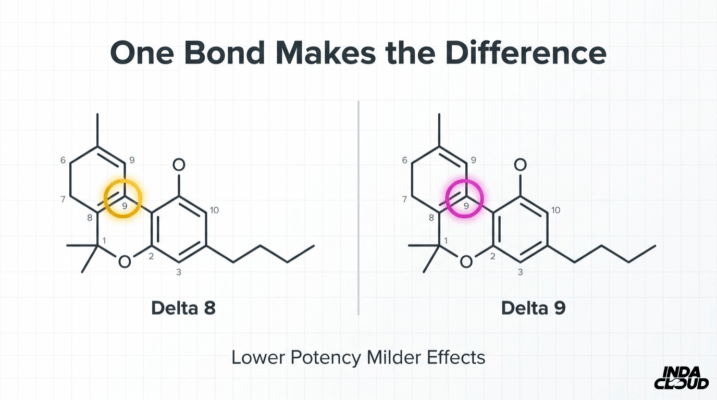
Delta 8 differs from Delta 9 by a single double-bond position in its molecular ring, which lowers its CB1 receptor binding affinity and produces an estimated 50%–75% of Delta 9’s potency. Onset ranges from minutes when inhaled to over an hour with edibles, and effects can last up to eight hours depending on format.
Users commonly report mild euphoria, relaxation, and altered sensory perception with less anxiety than Delta 9. However, paranoia and side effects like drowsiness or increased heart rate can still occur at higher doses.
The 2018 Farm Bill legalized hemp derivatives containing under 0.3% Delta 9 THC, yet approximately 20 states have banned or restricted Delta 8 as of 2025. Standard drug tests cannot distinguish between Delta 8 and Delta 9 metabolites, adding another layer of consideration for consumers.
Research points to antiemetic, analgesic, and anxiolytic properties, though large-scale clinical trials remain limited. Unregulated products carry real contamination risks from residual solvents, heavy metals, and unknown byproduct isomers.
Verifying batch-specific Certificates of Analysis from accredited labs is the most reliable way to confirm potency, purity, and legal compliance before purchasing any Delta 8 product.
Delta 8 THC is a psychoactive cannabinoid derived from hemp through a chemical conversion process. The sections below cover how it is produced, its molecular structure, and how it compares to Delta 9 THC.
Delta 8 THC is derived from the hemp plant primarily through a laboratory conversion process, not direct extraction. Raw hemp typically contains less than 0.1% Delta 8 THC, making natural isolation impractical. Instead, manufacturers start with hemp-derived CBD, which is abundant in raw hemp, and convert it through acid-catalyzed isomerization.
According to Abdel-Kader et al. (2024) in Molecules, Delta 8 THC is typically formed from nonenzymatic isomerization of Delta 9 THC and/or cyclization of CBD, since it occurs naturally in only trace amounts. Raw hemp is high in CBD and CBDA but low in all THC forms; Delta 8 products are therefore “enriched” or “converted” rather than simply extracted. This distinction matters because the final product is semi-synthetic, not a naturally concentrated plant compound.
The chemical structure of Delta 8 THC is a tricyclic terpenoid sharing the molecular formula C₂₁H₃₀O₂ with a molecular weight of 314.5 g/mol. According to the National Center for Biotechnology Information (PubChem), the defining structural feature is a double bond positioned between carbon atoms 8 and 9 in the tetrahydrocannabinol ring.
This single bond placement is what distinguishes Delta 8 from other THC isomers. While the overall carbon skeleton remains identical to Delta 9 THC, that shifted double bond alters how the molecule interacts with cannabinoid receptors. For consumers, this small molecular difference translates into noticeably different potency and effects.
Delta 8 THC differs from Delta 9 THC in the position of one double bond: carbon atoms 8–9 versus 9–10. This seemingly minor shift produces measurable differences in receptor binding, potency, and onset time.
According to Tagen and Klumpers (2022) in the British Journal of Pharmacology, Delta 8 THC’s CB1 binding affinity (Ki) ranges from approximately 4.3 nM to 44 nM, generally lower than Delta 9 THC, resulting in reduced psychotropic potency. Delta 8 also shows high CB2 receptor affinity, with Ki values from approximately 0.23 nM to 15 nM.
Key pharmacological differences include:
For most consumers exploring legal cannabinoid options, Delta 8 represents a practical middle ground between CBD’s non-intoxicating profile and Delta 9’s full-strength effects. Understanding these receptor-level differences helps explain its growing appeal in the hemp-derived market.
The psychoactive effects of Delta 8 THC include mild euphoria, relaxation, altered sensory perception, and increased appetite. The sections below cover how Delta 8 interacts with cannabinoid receptors, what the high feels like, how long effects last, and whether anxiety is a concern.
Delta 8 THC interacts with the endocannabinoid system by binding to CB1 and CB2 receptors throughout the body. CB1 receptors, concentrated in the brain and central nervous system, mediate the psychoactive effects users experience. CB2 receptors, found primarily in peripheral tissues and immune cells, influence inflammatory and immune responses.
What makes this interaction distinct is Delta 8’s lower CB1 binding affinity compared to Delta 9 THC. This weaker receptor engagement is the primary reason Delta 8 produces a less intense high. Because the compound still activates both receptor types, users get a functional psychoactive experience without the overwhelming intensity that stronger cannabinoids can produce.
A Delta 8 THC high feels like a milder, more clear-headed version of a traditional Delta 9 THC experience. According to a 2022 study published in the Journal of Cannabis Research by Kruger and Kruger, common subjective effects reported by users include euphoria, relaxation, altered sensory perception, and increased appetite.
Many users describe the experience as “cannabis lite,” offering functional relaxation without heavy cognitive impairment. This makes Delta 8 a practical option for those who want mild psychoactive effects while remaining productive. For most people exploring cannabinoids for the first time, this gentler profile provides a more approachable entry point than jumping straight to higher-potency alternatives.
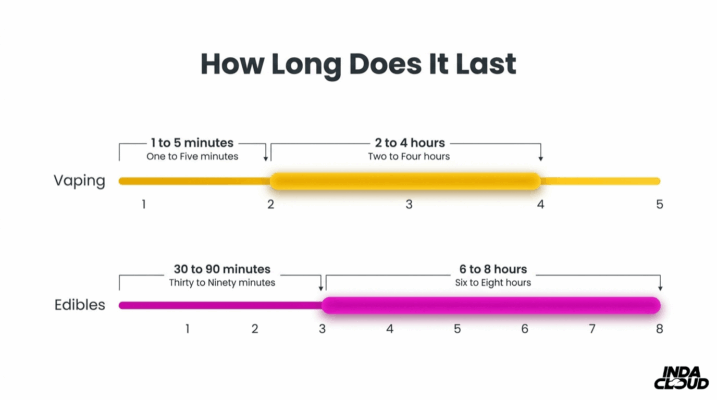
Delta 8 THC effects typically last between 3 and 8 hours, depending on the consumption method and individual metabolism. Inhalation produces effects within 1 to 5 minutes that generally peak within 30 minutes and taper over 2 to 4 hours. Oral consumption, such as edibles, takes 30 to 90 minutes for onset but can sustain effects for 6 to 8 hours.
One factor worth noting: because most commercial Delta 8 is converted from CBD, some products may contain iso-THC byproducts whose long-term effects remain poorly understood. Starting with a low dose of 5 to 10 mg and waiting at least two hours before redosing is a sound harm-reduction approach, especially with edibles.
Yes, Delta 8 THC can cause anxiety or paranoia, though these reactions occur less frequently than with Delta 9 THC. A 2022 study by Kruger and Kruger in the Journal of Cannabis Research confirmed that while anxiety and paranoia are reported less often with Delta 8, they can still occur, particularly at high doses.
Individual sensitivity, tolerance level, and dosage all influence the likelihood of these side effects. Users prone to THC-related anxiety should start with the lowest available dose and choose a calm, familiar environment. Responsible dosing remains the most effective way to minimize unwanted psychological effects.
Understanding how Delta 8 affects the mind sets the stage for comparing it to the raw hemp plant it comes from.
The difference between Delta 8 and hemp is that hemp refers to the whole Cannabis sativa plant containing hundreds of compounds, while Delta 8 THC is one specific cannabinoid found in trace amounts within that plant. The sections below cover raw hemp’s compound profile, Delta 8’s natural occurrence, and how Delta 8 compares to CBD.
The compounds that make raw hemp different from Delta 8 are its broad spectrum of naturally occurring cannabinoids, terpenes, flavonoids, and fatty acids. Raw hemp is high in CBD and CBDA while remaining low in all THC forms. It also contains minor cannabinoids such as CBG, CBN, and CBC, along with dozens of terpenes that contribute to aroma and the entourage effect.
Delta 8 THC products, by contrast, are enriched or converted formulations concentrated around a single psychoactive cannabinoid. According to Flourish Software (2024), raw hemp typically contains less than 0.1% Delta 8 THC, making the compound virtually absent in unprocessed plant material. Thinking of hemp as a raw ingredient and Delta 8 as a refined extract is the clearest way to understand the distinction.
Yes, Delta 8 THC is naturally present in the hemp plant, but only in trace concentrations too small for commercial extraction. According to Abdel-Kader et al. (2024) in Molecules, Delta 8 THC is typically formed from nonenzymatic isomerization of Delta 9 THC and cyclization of CBD rather than through the plant’s own enzymatic pathways.
Because natural levels are so low, virtually all Delta 8 products on the market rely on laboratory conversion of hemp-derived CBD. This semi-synthetic process is what separates commercially available Delta 8 from the raw hemp flower it originates from. Consumers should recognize that “hemp-derived” does not mean the compound was simply extracted in its natural form.
Delta 8 THC compares to CBD from hemp primarily in psychoactivity: Delta 8 is psychoactive and produces a mild high, while CBD is non-intoxicating. This single distinction shapes how each compound is used, regulated, and perceived by consumers.
Key differences include:
For users who want wellness support without any high, CBD is the straightforward choice. Delta 8 suits those seeking a milder psychoactive experience compared to Delta 9 THC, though that choice carries additional legal and testing considerations worth evaluating before purchase.
Delta 8 THC is legal at the federal level under the 2018 Farm Bill, but state laws vary significantly. The sections below cover the Farm Bill’s language, state-level bans, federal-state conflicts, and the DEA’s position.
The 2018 Farm Bill (7 U.S.C. § 1639o) defines hemp as “the plant Cannabis sativa L. and any part of that plant, including the seeds thereof and all derivatives, extracts, cannabinoids, isomers, acids, salts, and salts of isomers… with a delta-9 tetrahydrocannabinol concentration of not more than 0.3 percent on a dry weight basis.” Because this definition restricts only Delta 9 THC concentration, Delta 8 THC derived from compliant hemp falls outside the federal prohibition. The statute’s plain language neither names nor explicitly bans Delta 8, which is why the cannabinoid entered the commercial market so rapidly after 2018. This legal gray area, however, does not guarantee protection at the state level.
As of 2025, approximately 20 states have banned or strictly restricted Delta 8 THC. States with outright bans or severe restrictions include:
Because Delta 8 THC is popular among young adults and in states where recreational Delta 9 THC is illegal, according to LoParco et al. (2023) in Addiction, regulators in several jurisdictions have moved to close what they view as a loophole. Consumers should always verify their own state’s current statutes before purchasing, since legislative updates can occur quickly.
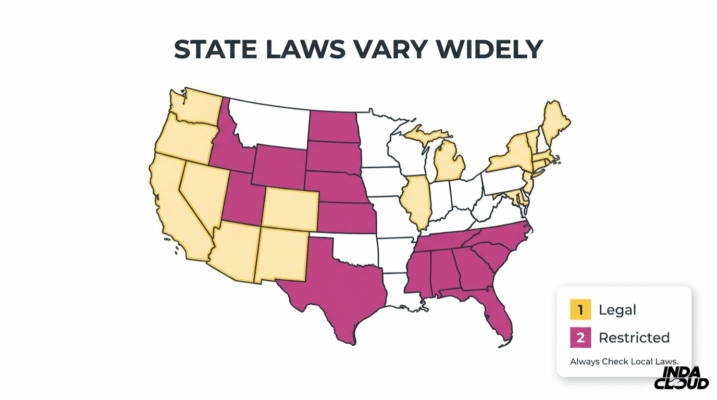
Federal law conflicts with state regulations because the 2018 Farm Bill permits hemp-derived cannabinoids nationally, while individual states retain authority to impose stricter controls. A product that is federally compliant can still be illegal to purchase, possess, or sell in a state that has enacted its own ban on Delta 8 THC. This patchwork creates confusion for consumers and retailers alike. In practice, state law enforcement follows local statutes regardless of federal legality, meaning possession of a Farm Bill-compliant Delta 8 product in a restricted state can still carry penalties.
The DEA has not formally scheduled Delta 8 THC as a controlled substance when it is derived from hemp containing less than 0.3% Delta 9 THC. The agency’s 2020 Interim Final Rule reaffirmed that “synthetically derived tetrahydrocannabinols” remain Schedule I, which introduced ambiguity around acid-catalyzed CBD conversion processes. Whether a specific Delta 8 product qualifies as “synthetically derived” depends on its manufacturing method, and the DEA has not issued definitive guidance resolving this question. For consumers, this regulatory uncertainty reinforces the importance of purchasing from brands that provide transparent lab results and full compliance documentation.
Understanding the legal landscape is essential, but knowing how to identify safe, compliant products matters just as much.
The potential benefits of Delta 8 THC include antiemetic, analgesic, anxiolytic, and neuroprotective properties. The following sections cover relaxation, pain and nausea relief, and why some users choose Delta 8 over Delta 9.
Yes, Delta 8 THC can help with relaxation and stress. Its anxiolytic properties interact with CB1 receptors in the central nervous system, producing a calming effect without the intense psychoactive surge associated with Delta 9 THC. Many users report that lower doses promote a sense of ease and mental quiet, making it a popular choice for unwinding after a long day. Because its binding affinity at CB1 is generally lower than Delta 9, the relaxation tends to feel more manageable. For anyone sensitive to THC or prone to overthinking, this gentler profile makes Delta 8 one of the more approachable cannabinoid options for stress support.
Delta 8 THC does offer potential pain and nausea relief. Its analgesic properties stem from activation of both CB1 and CB2 receptors, which modulate pain signaling throughout the body. A 1995 pediatric study by Abrahamov et al. found a 100% success rate in preventing chemotherapy-induced vomiting in children treated with Delta 8 THC, with negligible psychoactive side effects. The antiemetic potential is particularly noteworthy because it suggests effectiveness even at doses that produce minimal intoxication. While large-scale clinical trials remain limited, the existing evidence points to Delta 8 as a cannabinoid worth monitoring for both pain management and nausea control.
Some users prefer Delta 8 over Delta 9 THC because it delivers a milder, more functional high with reduced risk of anxiety and paranoia. Delta 8 is estimated to have 50%–75% of Delta 9’s potency, which appeals to those who want subtle psychoactive effects without feeling overwhelmed. Its wider legal availability in states where recreational Delta 9 remains prohibited also plays a significant role.
Key reasons users choose Delta 8 include:
For many consumers, this combination of accessibility and a gentler effect profile makes Delta 8 a practical entry point into cannabinoid use. Understanding product quality becomes essential at this stage, especially when evaluating risks and side effects.
The risks and side effects of Delta 8 THC range from mild short-term discomfort to serious safety concerns tied to unregulated manufacturing. Below, we cover common side effects, sourcing dangers, and drug testing implications.
Short-term side effects Delta 8 THC can cause include dry mouth, red eyes, increased heart rate, drowsiness, and temporary cognitive impairment. At higher doses, some users experience dizziness, lethargy, or slurred speech. Although Delta 8 produces milder psychoactive effects than Delta 9, it is not free of adverse reactions.
A 1995 pediatric study by Abrahamov et al. found a 100% success rate in preventing chemotherapy-induced vomiting with Delta 8 THC, noting negligible psychoactive side effects in that clinical setting. However, recreational use at uncontrolled doses carries different risk profiles. Starting with 5 to 10 mg and waiting at least two hours before redosing helps minimize unwanted effects, especially for newer users.
Delta 8 THC is not reliably safe when derived from unregulated sources. Because Delta 8 occurs in only trace amounts in raw hemp, nearly all commercial products require chemical conversion from CBD. Without proper manufacturing oversight, this process can leave behind harmful contaminants, including residual solvents, heavy metals, and unknown byproduct isomers.
The lack of federal quality standards means product purity varies wildly between brands. Some products tested by independent labs have revealed Delta 9 THC levels exceeding the legal 0.3% threshold, along with unreacted CBD and residual acids from the isomerization process. Consumers should only purchase Delta 8 products backed by batch-specific Certificates of Analysis from ISO 17025 accredited laboratories. Choosing tested products from transparent brands is one of the most practical steps anyone can take to reduce exposure risk.
Delta 8 THC will show up on a drug test. Standard urine drug tests detect THC metabolites and cannot distinguish between Delta 8 and Delta 9 THC, according to research published in the Journal of Analytical Toxicology. This means Delta 8 use can produce a positive result identical to one caused by traditional marijuana.
Anyone subject to workplace screening, probation testing, or athletic drug testing should be aware of this limitation. There is currently no commercially available test that differentiates between the two THC isomers at the metabolite level. If passing a drug test is a concern, avoiding all THC-containing products remains the only reliable approach.
Understanding these risks helps inform smarter purchasing decisions and safer consumption habits.
You choose safe and legal Delta 8 THC products by verifying third-party lab results, reading Certificates of Analysis carefully, and selecting the product type that matches your desired experience. The following sections cover lab testing, COA interpretation, and how format shapes effects.
Third-party lab tests are essential for Delta 8 THC because the FDA has not evaluated this cannabinoid for safe use, leaving product quality entirely dependent on manufacturer standards. Independent testing by an outside laboratory confirms that a product contains the advertised Delta 8 THC concentration, falls below the 0.3% Delta 9 THC legal threshold, and is free from harmful contaminants. Without this verification, consumers risk exposure to residual solvents, heavy metals, or unlisted cannabinoids left over from the CBD-to-Delta-8 conversion process. Always confirm that the brand publishes current, batch-specific lab reports before purchasing. Skipping this step is the single most common mistake new buyers make.
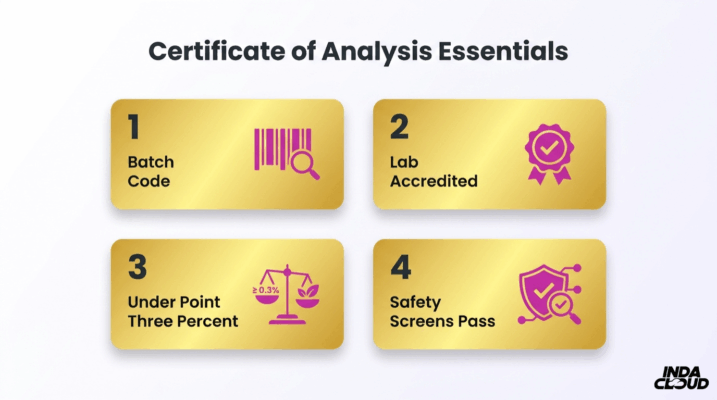
You should look for several key details on a Delta 8 Certificate of Analysis to confirm product safety and potency. According to the Fresh Bros COA Guide (2026), consumers and retailers are advised to interpret COAs from ISO 17025 accredited laboratories, which follow internationally recognized testing standards.
Essential items to verify on a COA include:
Missing accreditation credentials, absent safety panel results, or a lack of batch-specific identification are red flags that should prompt you to choose a different product.
Product type affects your Delta 8 THC experience primarily through differences in onset time, duration, and bioavailability. Inhalation methods like vape cartridges deliver effects within one to five minutes, while edibles such as gummies require 30 to 90 minutes due to first-pass hepatic metabolism. Bioavailability also varies significantly; inhaled Delta 8 reaches 11% to 45% absorption, compared to roughly 6% for oral consumption.
For beginners, edibles offer easier dose control, though the delayed onset demands patience. Vapes suit users who prefer fast-acting, shorter-duration effects. Choosing the right format depends on your lifestyle, tolerance, and desired intensity. With product quality confirmed through lab testing, matching the format to your needs completes a smart purchasing decision.
You can get premium hemp-derived Delta 8 THC delivered directly to your door through IndaCloud’s online store. The sections below cover IndaCloud’s lab-tested product line and the essential takeaways on Delta 8 THC effects and legality.
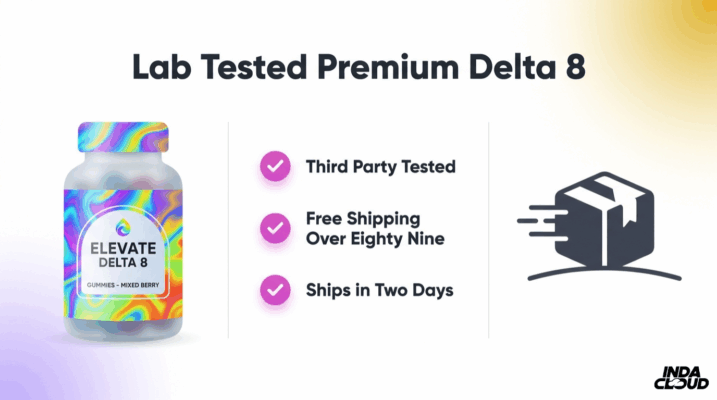
Yes, IndaCloud offers lab-tested Delta 8 THC products across multiple categories, including edibles, vape cartridges, and flowers. Every product undergoes comprehensive third-party testing to confirm potency, purity, and compliance with the federal 0.3% Delta 9 THC limit. IndaCloud ships directly to consumers across the continental United States, with orders processed within 48 hours and free shipping on orders over $89. Backed by a team of over 35 cannabis experts and trusted by more than 250,000 verified customers, IndaCloud provides detailed lab reports so buyers can verify exactly what they are consuming. Nondescript packaging ensures privacy at delivery.
The key takeaways about Delta 8 THC effects and legality center on three core points: its milder psychoactive profile, its complex legal status, and the critical importance of product quality.
For anyone exploring Delta 8 THC, choosing a transparent, lab-tested source like IndaCloud is one of the most practical steps toward a safer, more consistent experience.
Yes, THC gummies are legal to buy in most of the United States right…
Learn more

Raw, unheated THCA clears your system in roughly 24 to 48 hours. Once you…
Learn more
Yes, edibles show up on drug tests. Standard panels detect THC edibles exactly the…
Learn more

Green Wednesday is the Wednesday before Thanksgiving, the cannabis industry’s second-biggest shopping day of…
Learn more
