



Blogs

Are THC Gummies Legal? A 2026 State-by-State Guide
Yes, THC gummies are legal to buy in most of the United States right…
Learn more
You must be 21+ to enter this site
 FREE SHIPPING $89+
 FREE GIFT ON $120+
 100% FEDERALLY LEGAL
 LAB TESTED FOR PURITY
FREE SHIPPING $89+
FREE GIFT ON $120+
100% FEDERALLY LEGAL
LAB TESTED FOR PURITY
FREE SHIPPING $89+
FREE GIFT ON $120+
100% FEDERALLY LEGAL
LAB TESTED FOR PURITY
FREE SHIPPING $89+
FREE GIFT ON $120+
100% FEDERALLY LEGAL
LAB TESTED FOR PURITY
FREE SHIPPING $89+
FREE GIFT ON $120+
100% FEDERALLY LEGAL
LAB TESTED FOR PURITY
FREE SHIPPING $89+
FREE GIFT ON $120+
100% FEDERALLY LEGAL
LAB TESTED FOR PURITY
FREE SHIPPING $89+
FREE GIFT ON $120+
100% FEDERALLY LEGAL
LAB TESTED FOR PURITY
FREE SHIPPING $89+
FREE GIFT ON $120+
100% FEDERALLY LEGAL
LAB TESTED FOR PURITY
LAB TESTED FOR PURITY
FREE SHIPPING $89+
FREE GIFT ON $120+
100% FEDERALLY LEGAL
LAB TESTED FOR PURITY
FREE SHIPPING $89+
FREE GIFT ON $120+
100% FEDERALLY LEGAL
LAB TESTED FOR PURITY
FREE SHIPPING $89+
FREE GIFT ON $120+
100% FEDERALLY LEGAL
LAB TESTED FOR PURITY
FREE SHIPPING $89+
FREE GIFT ON $120+
100% FEDERALLY LEGAL
LAB TESTED FOR PURITY
FREE SHIPPING $89+
FREE GIFT ON $120+
100% FEDERALLY LEGAL
LAB TESTED FOR PURITY
FREE SHIPPING $89+
FREE GIFT ON $120+
100% FEDERALLY LEGAL
LAB TESTED FOR PURITY
FREE SHIPPING $89+
FREE GIFT ON $120+
100% FEDERALLY LEGAL
LAB TESTED FOR PURITY

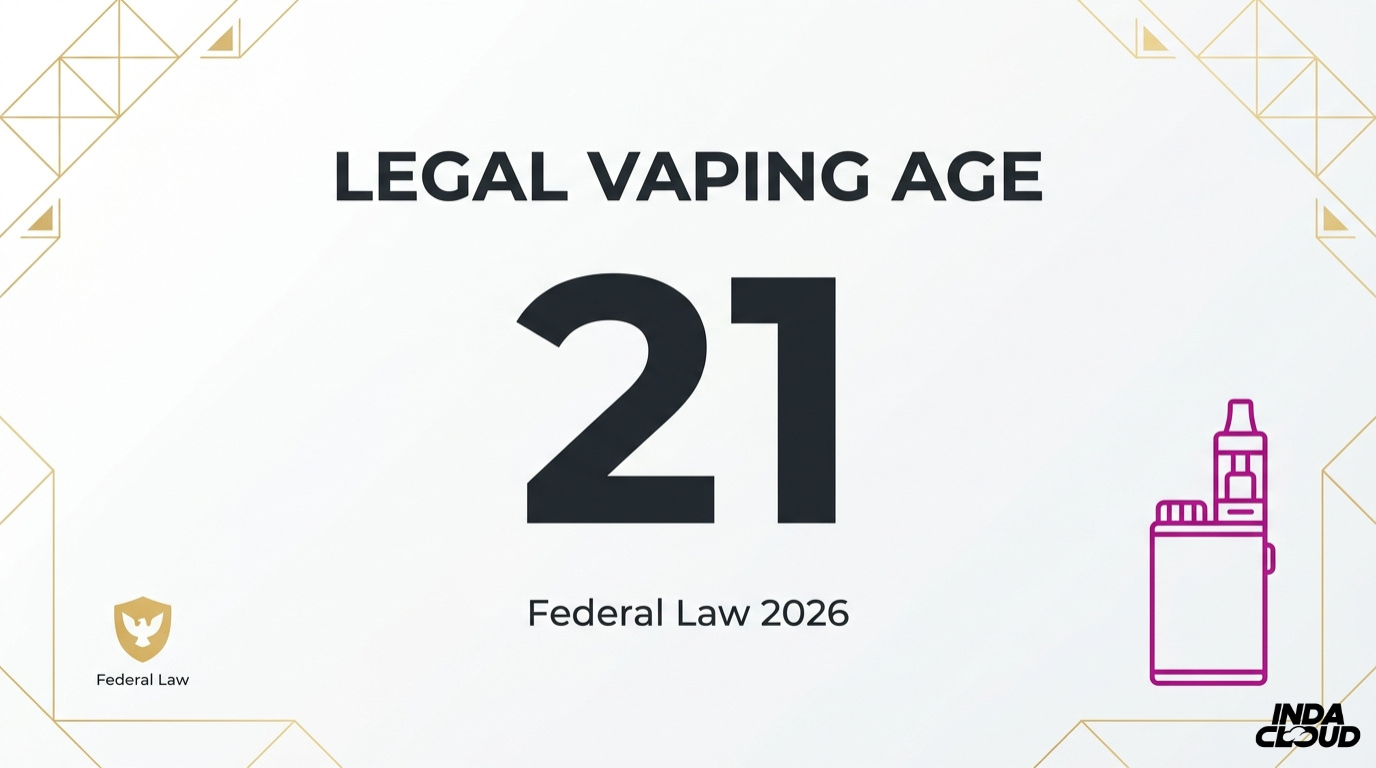
The legal vaping age in the United States is 21. Federal law, known as Tobacco 21, sets this minimum for all tobacco and vaping products sold nationwide, including e-cigarettes, nicotine vapes, hemp-derived options, and nicotine-free devices.
This guide covers the federal and state legal framework, product-specific age rules, consequences and enforcement for violations, online purchasing and age verification, international comparisons, and where legal adults can find compliant hemp vapes.
The Tobacco 21 law, signed in December 2019, amended the Federal Food, Drug, and Cosmetic Act to raise the minimum sale age from 18 to 21. No state can set a lower threshold, though many impose additional penalties on both retailers and underage buyers.
State enforcement varies significantly. California’s STAKE Act levies fines up to $10,000 for repeat flavored tobacco violations, while Florida caps retailer penalties at $500. States like Texas and Georgia also penalize underage buyers directly through fines, community service, and license suspensions.
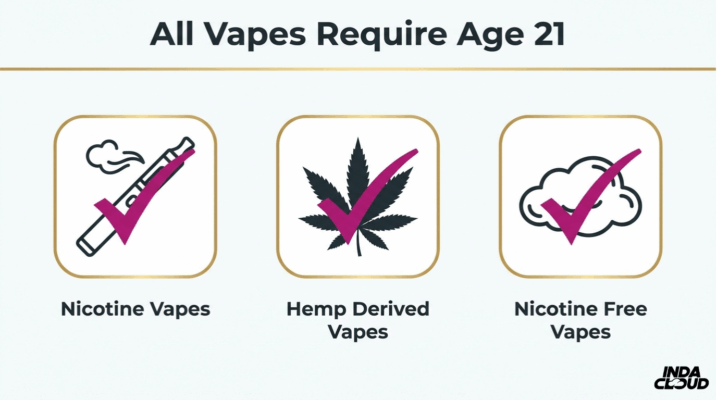
The 21-and-over requirement applies uniformly across nicotine vapes, hemp-derived vapes, and nicotine-free devices. New 2026 federal rules count every form of THC toward the legal limit, reshaping compliance for hemp vape retailers and consumers alike.
Online vape purchases require third-party identity verification; simple age-gate checkboxes no longer satisfy federal standards. The PACT Act prohibits USPS shipment of e-cigarettes, and major carriers like FedEx and UPS have voluntarily stopped shipping them to consumers.
No exceptions exist for military members, and no grandfather clauses protect previous legal buyers under 21. For adults who meet the age requirement, compliant retailers like Inda Cloud offer lab-tested hemp vapes shipped directly through verified ordering at indacloud.co.
The federal minimum vaping age in the United States is 21. This age requirement applies to all tobacco and vaping products sold nationwide, including e-cigarettes, nicotine vapes, and hemp-derived options. On December 20, 2019, the President signed legislation amending the Federal Food, Drug, and Cosmetic Act, raising the federal minimum age for sale of tobacco products from 18 to 21 years, according to the U.S. Food and Drug Administration. Known as “Tobacco 21” or “T21,” this law took effect immediately upon signing, making it illegal for any retailer to sell e-cigarettes or other tobacco products to anyone under 21.
This federal floor means no state can set a lower minimum age, though some states impose additional penalties. In Hawaii, for instance, any person under twenty-one who violates the tobacco and vaping law faces a $10 fine for the first offense and $50 for subsequent offenses under HRS § 709-908. For anyone shopping legally as an adult, understanding this baseline is essential before exploring state-specific rules and product categories covered in the sections ahead.
The legal vaping age changed from 18 to 21 primarily because of a youth vaping epidemic that prompted federal lawmakers to act. Rising e-cigarette use among teenagers, aggressive marketing of flavored products, and mounting public health data drove Congress to raise the minimum purchase age nationwide in December 2019.
Nicotine poses particular risks to developing brains, and research consistently showed that most adult smokers started before age 21. By raising the legal threshold, legislators aimed to create a wider buffer between high school students and legal purchasers who could supply them. The age increase also aligned the vaping purchase age with the legal drinking age, simplifying enforcement and public understanding.
States have reinforced this federal shift with their own penalty structures. According to the California Department of Public Health, the STAKE Act defines increased civil penalties for retail violations ranging from $1,000 to $1,500 for initial offenses and up to $5,000 to $10,000 for subsequent illegal flavored tobacco sales. These escalating fines reflect how seriously regulators treat underage access prevention.
The move to 21 also brought the United States closer to stricter global standards, though approaches vary internationally. In the United Kingdom, for instance, vaping remains legal for adults aged 18 and over, with a new Vaping Products Duty of £2.20 per 10ml taking effect from October 1, 2026. While the UK chose taxation over a higher age threshold, both strategies share the goal of reducing youth uptake.
For adult consumers navigating this landscape, the age change means consistent ID verification requirements at every point of sale, whether in person or online. Understanding Tobacco 21 and how it specifically applies to vaping products is essential for staying compliant.
The Tobacco 21 law is a federal regulation that raised the minimum legal sale age for all tobacco products, including e-cigarettes and vapes, from 18 to 21 across the United States. Signed into law in December 2019, this legislation amended the Federal Food, Drug, and Cosmetic Act and took effect immediately. The law applies to every type of vaping product sold at retail, whether it contains nicotine derived from tobacco, synthetic nicotine, or no nicotine at all.
Under Tobacco 21, retailers cannot legally sell any tobacco or vaping product to anyone younger than 21. This federal baseline applies nationwide, though individual states may impose additional penalties on retailers or buyers who violate the age requirement. In New York, for example, retailers that sell tobacco or vaping products to customers younger than 21 face fines of up to $1,000 for a first offense and $2,000 for subsequent violations, according to Cancer Network.
The law’s reach extends beyond U.S. borders in concept, if not jurisdiction. Countries like Canada have adopted parallel frameworks; Canada’s Tobacco and Vaping Products Act regulates the manufacture, sale, labelling, and promotion of vaping products while prohibiting the furnishing of these products to young persons. For anyone purchasing vapes in the United States in 2026, however, the Tobacco 21 law remains the governing federal standard.
For adults 21 and over, understanding how this law intersects with state-specific rules is equally important, since penalties and enforcement vary significantly by state.
You have to be 21 to buy a vape in every U.S. state, since federal law sets the nationwide minimum. However, state-level penalties for retailers and underage buyers vary significantly.
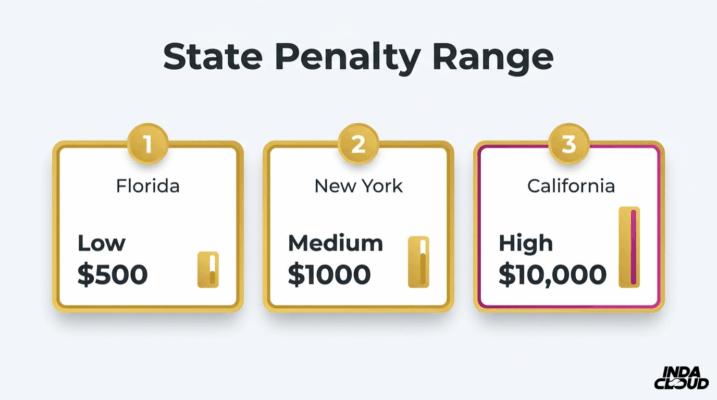
You have to be 21 years old to vape in California. The state enforces this minimum through the STAKE Act, which defines increased civil penalties for retail violations. According to the California Department of Public Health, penalties range from $1,000 to $1,500 for initial offenses and climb to $5,000 to $10,000 for subsequent illegal flavored tobacco sales. California’s aggressive enforcement framework makes it one of the strictest states for vape sales compliance.
You have to be 21 years old to vape in Texas. The state takes the unusual step of penalizing underage buyers directly. According to the Texas Comptroller of Public Accounts, an individual younger than 21 who possesses, purchases, consumes, or accepts a cigarette or e-cigarette faces fines up to $100. This buyer-side penalty supplements the federal retailer restrictions, giving Texas a dual enforcement approach that targets both sides of the transaction.
You have to be 21 years old to vape in Florida. Retailers who sell tobacco or vaping products to minors face penalties under Florida state law. A person who violates the statute by selling to someone underage is guilty of a noncriminal violation, punishable by a fine of not more than $500, according to the Florida Legislature (Florida Statutes, Section 569). Compared to states like California, Florida’s retailer fines remain relatively modest, though repeat violations can trigger license reviews.
You have to be 21 years old to vape in New York. The state imposes escalating fines on retailers caught selling to underage customers. According to Cancer Network, penalties for New York retailers that sell tobacco or vaping products to customers younger than 21 include fines of up to $1,000 for a first offense and $2,000 for subsequent violations. New York’s tiered penalty structure incentivizes compliance from the first sale.
You have to be 21 years old to vape in Illinois. The state enforces retailer compliance through escalating fines tied to repeat violations. According to Illinois law (720 ILCS 675), for a fourth or subsequent offense in a 24-month period, a tobacco retailer shall be fined $800 if it does not have a training program that facilitates compliance. This structure rewards retailers who invest in staff training programs.
You have to be 21 years old to vape in Ohio. Purchasing tobacco or alternative nicotine products under 21 is illegal statewide. According to NBC4 WCMH-TV, retailers face fines up to $250 for a first offense and $1,500 for a fifth offense. Ohio’s penalty scale is gradual, building from relatively low initial fines to amounts that can threaten a retailer’s bottom line after multiple violations.
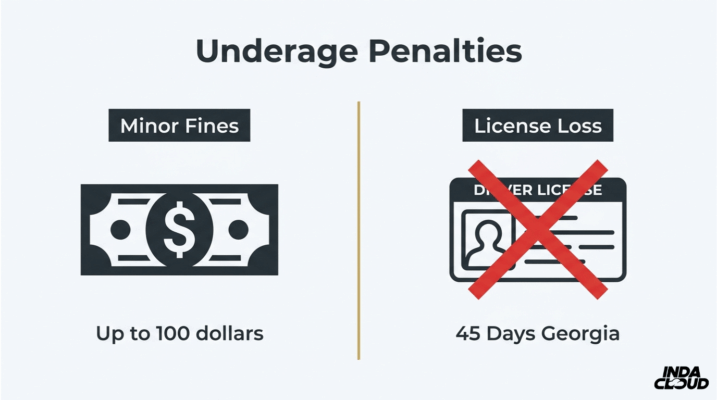
You have to be 21 years old to vape in Georgia. The state stands out by imposing non-monetary penalties on underage buyers. According to Justia Law, Georgia law (OCGA § 16-12-171) mandates that any individual under 21 who purchases or possesses vapor products may be punished with up to 20 hours of community service and a 45-day driver’s license suspension for a third violation. These consequences extend well beyond a simple fine.
You have to be 21 years old to vape in Pennsylvania. The state’s Act 112 targets repeat retailer offenders with substantial penalties. According to the Pennsylvania Petroleum Association, a third violation within a 12-month period triggers civil penalties of at least $1,000 but not more than $1,500 per day per product, along with potential license suspension. Pennsylvania’s per-day penalty structure can accumulate quickly for non-compliant retailers.
You have to be 21 years old to vape in Hawaii. Notably, Hawaii was among the first states to raise its tobacco age to 21 before federal law followed. Under Hawaii law (HRS § 709-908), any person under 21 who violates the tobacco or vaping law faces a $10 fine for a first offense and $50 for subsequent offenses. While these underage buyer fines are the lowest of any state covered here, federal retailer penalties still apply statewide.
With state penalties clarified, the next consideration is whether this age applies to all vape product types.
Yes, the vaping age applies to all vape products sold in the United States. Federal law sets 21 as the minimum purchase age regardless of product type. The sections below clarify how this requirement covers nicotine vapes, hemp-derived vapes, and nicotine-free vapes.
Yes, the minimum age applies to nicotine vapes. Federal law makes it unlawful for any retailer to sell a tobacco product containing nicotine from any source, including synthetic or non-tobacco nicotine, to anyone younger than 21. This applies to all nicotine-containing e-cigarettes, pod systems, and disposable vapes without exception.
Shipping restrictions reinforce this rule. According to the Bureau of Alcohol, Tobacco, Firearms and Explosives, the PACT Act amendment prohibits sellers from using the USPS to ship e-cigarettes, vapes, and flavored and smokeless tobacco products. Major private carriers like FedEx and UPS have also voluntarily stopped shipping e-cigarette products to consumers, making underage online purchases significantly harder.
Yes, the minimum age applies to hemp-derived vapes. Every state that permits the sale of hemp-derived vape products requires buyers to be at least 21 years old. Hemp vapes containing Delta-8 THC, Delta-9 THC, THCa, or other cannabinoids fall under both state cannabis regulations and, in many cases, tobacco product laws when sold alongside nicotine devices.
Regulatory scrutiny over hemp vapes has intensified. Under new federal rules for 2026, every form of THC, including Delta-8, THCa, and minor isomers, counts toward the legal limit. This shift makes age verification and product compliance even more critical for retailers. For consumers, the takeaway is straightforward: no legal retailer will sell a hemp-derived vape to anyone under 21.
Yes, the minimum age applies to nicotine-free vapes in most jurisdictions. While federal tobacco law specifically targets products containing nicotine, the majority of states have enacted broader legislation that covers all vaping devices and e-liquids regardless of nicotine content. State definitions of “vapor products” or “electronic smoking devices” typically encompass any device that aerosolizes a liquid for inhalation.
A handful of states have narrower definitions tied strictly to nicotine, which can create confusion. However, most retailers enforce a blanket 21-and-over policy for all vape products to maintain compliance across state lines. From a practical standpoint, treating every vape purchase as age-restricted is the safest approach for both sellers and buyers.
With product-specific rules clarified, understanding the consequences of underage purchases adds another layer of awareness.
If you get caught vaping underage, consequences range from fines and community service to driver’s license suspension, depending on the state. Penalties target both the minor and the retailer who sold the product.
The severity of punishment varies significantly by jurisdiction. In Texas, an individual younger than 21 who possesses, purchases, consumes, or accepts an e-cigarette faces fines up to $100, according to the Texas Comptroller of Public Accounts. Other states impose steeper consequences: Georgia law (OCGA § 16-12-171) mandates up to 20 hours of community service and a 45-day driver’s license suspension for a third violation by a minor in possession of vapor products. Hawaii takes a lighter approach, fining underage violators $10 for a first offense and $50 for subsequent offenses.
Retailers face separate, often harsher penalties for selling to minors:
At the federal level, the maximum penalty for violating the Federal Food, Drug, and Cosmetic Act’s tobacco provisions reaches $21,903 for a single violation. For most underage individuals, a first offense results in a fine or mandatory education program rather than criminal charges. Repeated violations, however, escalate quickly. Getting caught vaping underage creates a legal record that can complicate future opportunities, making compliance with the 21-and-over requirement far simpler than dealing with the fallout.
Yes, you can buy vapes online, but federal law requires rigorous age verification before any purchase ships. The PACT Act and FDA regulations govern how online retailers confirm a buyer is 21 or older.
Online vape purchases face strict shipping and identity requirements. According to the Bureau of Alcohol, Tobacco, Firearms and Explosives, the PACT Act amendment prohibits sellers from using the USPS to ship e-cigarettes, vapes, and flavored and smokeless tobacco products. Major private carriers like FedEx and UPS have also voluntarily stopped shipping e-cigarette products to consumers, leaving only specialized adult-signature carriers for legal fulfillment.
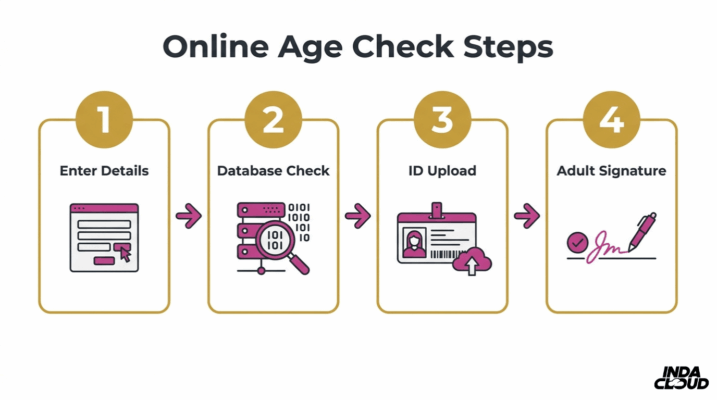
The FDA now requires third-party identity verification for online tobacco and vape sales. Simple age-gate checkboxes, where a buyer clicks to confirm their birthdate, are no longer sufficient for compliance. Retailers must use database-matching services that cross-reference a buyer’s name, date of birth, and address against public records before processing the order. An adult signature is then required at the point of delivery.
For anyone exploring legal hemp-derived options, these same verification standards apply. Understanding how retailers check your age in person adds another layer of protection at brick-and-mortar locations.
No, the vaping age is not different from the smoking age in the United States. Federal law sets 21 as the minimum purchase age for all tobacco products, including both traditional cigarettes and e-cigarettes. This unified standard means there is no legal distinction between buying a pack of cigarettes and buying a vape device.
The Tobacco 21 legislation, signed in December 2019, explicitly grouped e-cigarettes under the same regulatory umbrella as combustible tobacco. Before this change, some states maintained separate or lower age thresholds for vaping products while restricting cigarette sales to those 18 and older. That patchwork no longer exists at the federal level.
According to Hawai’i Pacific University’s student handbook, Hawaii law (HRS § 709-908) confirms that any person under twenty-one years of age who violates tobacco or vaping provisions faces identical penalties, reinforcing that both product categories share the same age requirement.
Some confusion persists because nicotine-free or hemp-derived vapes might seem like they fall outside tobacco regulations. However, most states apply the 21-and-over standard broadly across all vaping devices, regardless of whether the product contains nicotine. For consumers wondering whether a different rule applies to one product type over another, the practical answer remains consistent: you must be 21 to purchase any vape or cigarette product in the United States.
Understanding this unified age requirement helps clarify whether any legal exemptions might apply to specific groups.
There are no federal exceptions or exemptions to the vaping age of 21. The law applies uniformly regardless of military status or prior purchasing history. Below, the most commonly asked exemption questions are addressed.
No, military members do not have a vaping age exemption. The Tobacco 21 law applies equally to all individuals, including active-duty service members, reservists, and veterans under 21. Unlike some earlier state-level tobacco laws that once carved out military exceptions, the federal legislation signed in December 2019 contains no such provision. Retailers on and off military installations must verify that buyers are at least 21, with no exceptions for military identification.
This is a point that surprises many people, since the legal drinking age on overseas bases sometimes differs. For domestic tobacco and vaping purchases, however, the rule is absolute.
No, there are no grandfather clauses for previous legal buyers. When the federal minimum age rose from 18 to 21 in December 2019, the change applied immediately to all retail transactions. Individuals who had legally purchased vapes or tobacco products at 18, 19, or 20 before the law changed lost that purchasing ability overnight. According to the FDA, the Tobacco 21 legislation became effective immediately upon signing, making it illegal for a retailer to sell any tobacco product, including e-cigarettes, to anyone under 21.
No state has enacted a grandfather provision to override this federal standard. For adults 21 and over seeking compliant products, understanding how retailers verify age is the next essential step.
The vaping age laws in other countries vary, with most nations setting the minimum purchase age at 18. Key differences exist in how the United Kingdom, Canada, and Australia regulate vape sales and access.
The United Kingdom sets its legal vaping age at 18. According to GOV.UK, a new Vaping Products Duty of £2.20 per 10ml is set to take effect from October 1, 2026, adding a financial layer to existing age restrictions. Unlike the U.S. approach of raising the age to 21, the UK has focused on taxation and marketing restrictions to curb youth access while keeping the threshold at 18.
Canada regulates vaping through its Tobacco and Vaping Products Act (TVPA), which prohibits furnishing vaping products to young persons. Provincial governments set specific minimum ages, with most provinces requiring buyers to be 19. This split between federal framework and provincial enforcement mirrors how Canadian alcohol laws operate, creating a patchwork that varies by region.
Australia takes the most restrictive approach among major English-speaking nations. Selling or supplying vaping products to anyone under 18 is an offence, regardless of whether the person holds a prescription. Since 2024, Australia has moved toward a prescription-only model for nicotine vapes, making it one of the strictest regulatory environments globally.
For adults 21 and over in the United States, these international differences highlight how vaping regulation remains a country-by-country decision with no universal standard. Understanding your local laws before purchasing ensures full compliance wherever you are.
Retailers verify your age when you buy a vape by checking a government-issued photo ID before completing the sale. The specific requirements depend on whether you purchase in-store or online.
In-store, cashiers must confirm your date of birth using a valid photo ID such as a driver’s license, state ID, passport, or military ID. According to the FDA’s final rule effective September 30, 2024, retailers must use a photo ID to verify the age of anyone under 30 attempting to purchase cigarettes, smokeless tobacco, and covered tobacco products. Customers who appear 30 or older may not always be carded, but many retailers adopt “card everyone” policies to minimize compliance risk.
Online retailers face stricter verification standards. Simple age-gate checkboxes no longer satisfy federal requirements. Instead, online vape sellers must use third-party identity verification services that cross-reference personal details against public records databases. These systems typically require:
For retailers that cut corners on verification, the consequences are steep. Repeated violations can trigger escalating fines, license suspensions, and even no-tobacco-sale orders from the FDA. This layered enforcement structure makes proper age verification not just a legal obligation but a business survival issue.
Understanding how age verification works at the point of sale helps clarify the broader compliance framework shaping where legal adults can purchase vape products.
Legal hemp-derived vapes for adults 21 and over are available through compliant online retailers that verify age and ship directly to consumers. Below, learn how IndaCloud meets these requirements and review the key takeaways on vaping age laws in 2026.
Yes, IndaCloud can deliver lab-tested hemp vapes to your door across the continental United States. Every product undergoes third-party lab testing to verify purity, potency, and federal compliance. Under federal law, it is unlawful to sell any nicotine-containing tobacco product to anyone younger than 21, and hemp-derived vapes carry similar age-verification requirements at checkout.
IndaCloud uses third-party identity verification during the online ordering process, going beyond simple age-gate checkboxes. Orders ship with discreet packaging and arrive within days. All hemp vape products contain less than 0.3% Delta-9 THC, keeping them within the federally legal threshold. For adults 21 and over seeking a convenient dispensary alternative, this direct-to-consumer model pairs rigorous compliance with a streamlined purchasing experience.
The key takeaways about vaping age requirements in 2026 are that federal and state laws uniformly set 21 as the minimum purchase age, enforcement penalties have intensified, and new THC regulations reshape the hemp vape market.
Core points to remember:
For adults 21 and over who want compliant, lab-tested hemp vapes, IndaCloud offers a trusted option at indacloud.co.
Yes, THC gummies are legal to buy in most of the United States right…
Learn more
Raw, unheated THCA clears your system in roughly 24 to 48 hours. Once you…
Learn more

Yes, edibles show up on drug tests. Standard panels detect THC edibles exactly the…
Learn more
Green Wednesday is the Wednesday before Thanksgiving, the cannabis industry’s second-biggest shopping day of…
Learn more
