


Blogs

Are THC Gummies Legal? A 2026 State-by-State Guide
Yes, THC gummies are legal to buy in most of the United States right…
Learn more
You must be 21+ to enter this site
 FREE SHIPPING $89+
 FREE GIFT ON $120+
 100% FEDERALLY LEGAL
 LAB TESTED FOR PURITY
FREE SHIPPING $89+
FREE GIFT ON $120+
100% FEDERALLY LEGAL
LAB TESTED FOR PURITY
FREE SHIPPING $89+
FREE GIFT ON $120+
100% FEDERALLY LEGAL
LAB TESTED FOR PURITY
FREE SHIPPING $89+
FREE GIFT ON $120+
100% FEDERALLY LEGAL
LAB TESTED FOR PURITY
FREE SHIPPING $89+
FREE GIFT ON $120+
100% FEDERALLY LEGAL
LAB TESTED FOR PURITY
FREE SHIPPING $89+
FREE GIFT ON $120+
100% FEDERALLY LEGAL
LAB TESTED FOR PURITY
FREE SHIPPING $89+
FREE GIFT ON $120+
100% FEDERALLY LEGAL
LAB TESTED FOR PURITY
FREE SHIPPING $89+
FREE GIFT ON $120+
100% FEDERALLY LEGAL
LAB TESTED FOR PURITY
LAB TESTED FOR PURITY
FREE SHIPPING $89+
FREE GIFT ON $120+
100% FEDERALLY LEGAL
LAB TESTED FOR PURITY
FREE SHIPPING $89+
FREE GIFT ON $120+
100% FEDERALLY LEGAL
LAB TESTED FOR PURITY
FREE SHIPPING $89+
FREE GIFT ON $120+
100% FEDERALLY LEGAL
LAB TESTED FOR PURITY
FREE SHIPPING $89+
FREE GIFT ON $120+
100% FEDERALLY LEGAL
LAB TESTED FOR PURITY
FREE SHIPPING $89+
FREE GIFT ON $120+
100% FEDERALLY LEGAL
LAB TESTED FOR PURITY
FREE SHIPPING $89+
FREE GIFT ON $120+
100% FEDERALLY LEGAL
LAB TESTED FOR PURITY
FREE SHIPPING $89+
FREE GIFT ON $120+
100% FEDERALLY LEGAL
LAB TESTED FOR PURITY

THC, or delta-9-tetrahydrocannabinol, is the primary psychoactive compound in the cannabis plant. It produces the “high” associated with marijuana by binding to cannabinoid receptors in the brain and body.
This guide covers THC science and pharmacology, cannabinoid types and comparisons, product formats and consumption methods, potency and label reading, safety and drug testing, and legality and compliance.
THC works through the endocannabinoid system, binding to CB1 receptors in the central nervous system as a partial agonist. Different consumption methods produce dramatically different absorption profiles; inhalation delivers effects within minutes, while oral formats delay onset but extend duration significantly.
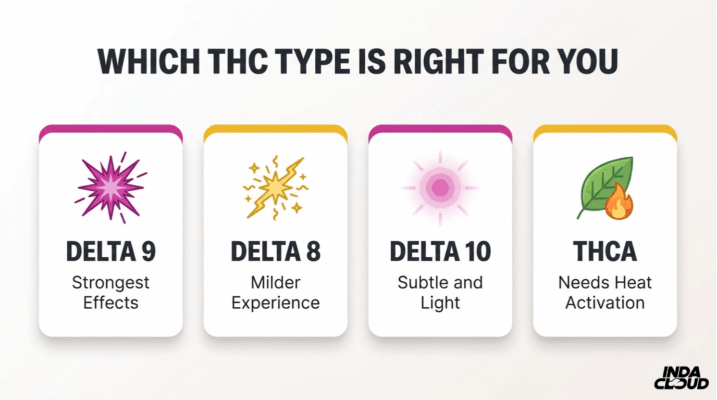
Several THC variants exist beyond standard delta-9, including delta-8, delta-10, THCA, and blended formulations. Each differs in molecular structure, potency, and psychoactive intensity, with delta-9 serving as the benchmark and delta-8 producing milder effects.
Consumer products range from flower, vapes, and concentrates to gummies, drinks, tinctures, and topicals. Potency varies widely across formats, making accurate label reading and third-party lab verification essential for informed purchasing.
Heavy or prolonged use carries documented psychiatric and cognitive risks, and all THC variants can trigger positive drug test results. Detection windows range from one day to several weeks depending on usage frequency and test type.
Federal legality hinges on the 2018 Farm Bill, which permits hemp-derived products containing no more than 0.3% delta-9 THC on a dry weight basis. State laws vary considerably, making local verification a necessary step before any purchase.
THC is delta-9-tetrahydrocannabinol, the primary psychoactive compound found in the cannabis plant. It produces the “high” associated with marijuana by binding to cannabinoid receptors in the brain and body. According to a landmark study published by PMC (National Center for Biotechnology Information), the structure of THC was first determined in Israel by Mechoulam and Gaoni in 1964.
Since that discovery, THC has become one of the most widely studied plant compounds in pharmacology. It occurs naturally in cannabis flowers as an acidic precursor called THCA, which converts to active THC through heat. Today, THC appears in a broad range of consumer products, from edibles and vapes to tinctures and topicals, and it remains at the center of ongoing conversations about legality, safety, and therapeutic potential.
THC stands for tetrahydrocannabinol, the primary psychoactive compound found in the cannabis plant. This chemical is responsible for the “high” associated with marijuana use and represents one of over 100 cannabinoids identified in cannabis.
Tetrahydrocannabinol’s full chemical name is delta-9-tetrahydrocannabinol, often written as Δ9-THC in scientific literature. The structure of THC was first determined in Israel by Mechoulam and Gaoni in 1964, according to research published by the National Center for Biotechnology Information. That discovery laid the groundwork for decades of cannabinoid science, eventually leading to the identification of the endocannabinoid system in the early 1990s.
While “THC” most commonly refers to delta-9-THC, the abbreviation also serves as an umbrella term covering several structural variants, such as delta-8 THC, delta-10 THC, and THCA. Each variant shares the core tetrahydrocannabinol structure but differs slightly in molecular arrangement, which influences potency and effects. Understanding what THC stands for provides the foundation for navigating the broader landscape of cannabinoid types and products.
Yes, THC does get you high. Delta-9 THC is the primary psychoactive compound in cannabis, responsible for the euphoria, altered perception, and relaxation commonly associated with marijuana use. The intensity of this high depends on the THC type, dosage, and consumption method.
THC produces its psychoactive effects by binding to CB1 receptors concentrated in the central nervous system. According to a study published in Frontiers in Pharmacology, THC acts as a partial agonist at cannabinoid receptors and exhibits very high binding affinity with the CB1 receptor. This receptor activation triggers dopamine release, which creates the characteristic feelings of euphoria and sensory enhancement.
Not all forms of THC produce equal highs. Delta-9 THC delivers the strongest psychoactive experience, while delta-8 THC produces milder effects. THCA, the raw acidic precursor found in unheated cannabis flower, is non-psychoactive until heat converts it into active THC. The method of consumption also matters; inhalation delivers THC to the brain faster than edibles, producing a more immediate and intense onset.
For anyone exploring THC products for the first time, understanding this psychoactive potential helps guide smarter dosing and product choices.
THC works in the body by interacting with the endocannabinoid system, a signaling network that regulates mood, pain, appetite, and memory. The sections below explain the receptor mechanism, the endocannabinoid system itself, and how different consumption methods change absorption.
The endocannabinoid system (ECS) is a biological signaling network that maintains internal balance across numerous physiological processes. Its discovery in the early 1990s was triggered by the identification of specific membrane receptors for THC, according to a 2019 review published in Nature. The ECS relies on naturally produced compounds called endocannabinoids, which bind to cannabinoid receptors throughout the body. When THC enters the system, it mimics these endocannabinoids, attaching to the same receptor sites and altering normal signaling patterns. This molecular mimicry is what produces THC’s wide-ranging effects on mood, pain perception, and appetite.
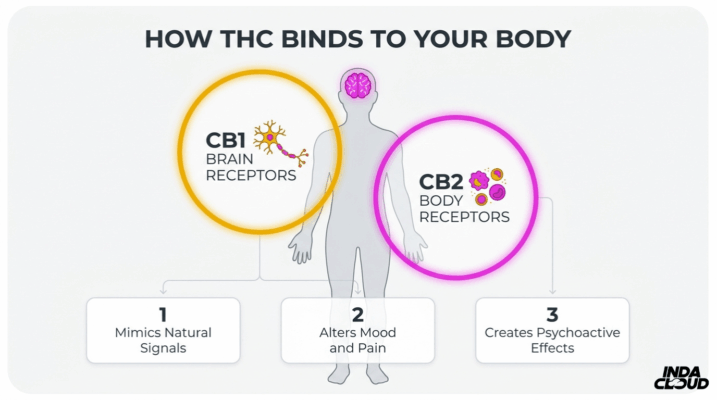
THC binds to CB1 and CB2 receptors as a partial agonist, meaning it activates these receptors without producing a full response. CB1 receptors are primarily expressed in the central nervous system, while CB2 receptors are found in the peripheral nervous system, immune cells, and various organs. According to a study in Frontiers in Pharmacology (2018), THC exhibits very high binding affinity with the CB1 receptor, which explains its pronounced psychoactive effects. Beyond CB1 and CB2, phytocannabinoids like THC can also interact with other receptor types. This multi-receptor activity accounts for the compound’s complex influence on both brain function and immune response.
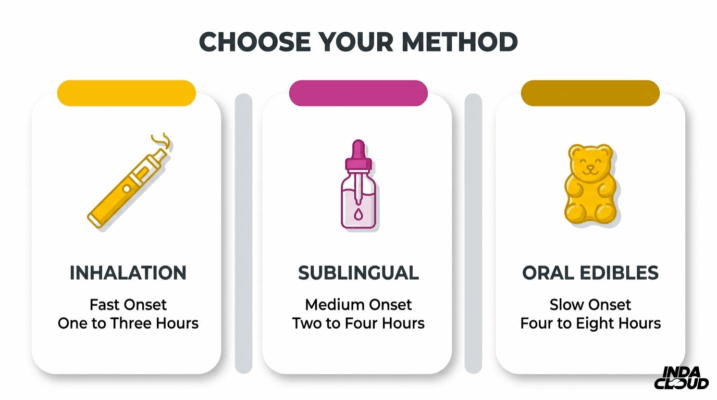
THC absorption differs by consumption method primarily in speed, intensity, and duration. Inhalation produces a bioavailability of approximately 12% to 35%, with THC concentrations reaching the brain faster than through oral routes, according to a 2023 review in the International Journal of Molecular Sciences. Oral ingestion, by contrast, delays onset, lowers peak plasma concentrations, and extends the overall duration of effects. Sublingual administration falls between these two methods, with an estimated relative bioavailability of around 13%. For anyone choosing among THC products, this variability in absorption directly shapes the timing and intensity of each experience.
Understanding how THC interacts with the body helps clarify why its effects vary so widely from person to person and product to product.
The common effects of THC span both psychoactive and physical responses, ranging from euphoria and relaxation to altered sensory perception and increased appetite. THC produces these effects by binding to CB1 receptors concentrated throughout the central nervous system.
Because THC acts as a partial agonist at cannabinoid receptors, according to a 2018 study published in Frontiers in Pharmacology, its effects vary in intensity depending on dose, tolerance, and delivery method. CB1 receptor activation in the brain influences mood, memory, coordination, and pain signaling, which explains why a single compound can produce such a wide range of experiences.
The most commonly reported effects of THC include:
Not everyone experiences THC identically. Individual factors like body weight, prior cannabis exposure, and even genetics influence how strongly these effects manifest. Lower doses tend to produce mild relaxation and subtle mood shifts, while higher doses amplify psychoactive intensity and increase the likelihood of uncomfortable responses like anxiety or paranoia.
For those exploring THC for the first time, starting with a low dose and choosing a comfortable setting makes a meaningful difference in overall experience quality. Understanding how delivery method shapes onset and duration helps set realistic expectations before that first session.
The side effects and safety risks of THC range from mild short-term discomfort to serious long-term health concerns. Common acute effects include dry mouth, red eyes, impaired coordination, anxiety, and increased heart rate. Prolonged or heavy use carries more significant psychiatric and cognitive risks that deserve careful consideration.
Short-term side effects typically resolve once THC is metabolized, but intensity varies based on dose, tolerance, and consumption method. Higher-potency products and oral formats, which produce delayed but prolonged effects, increase the likelihood of overconsumption.
The long-term risks are more concerning. According to a study published by the National Institutes of Health, heavy or prolonged cannabis use has been linked to psychiatric disorders such as schizophrenia, depression, and anxiety. Cannabis use also affects brain function outcomes, particularly during working memory tasks, as reported by JAMA Network Open. These cognitive effects appear most pronounced in younger users whose brains are still developing.
Vulnerable populations face elevated risks:
Despite these risks, past-year cannabis use stayed at historically high levels in 2023 among adults aged 19 to 30 and 35 to 50, according to the National Institute on Drug Abuse. This growing prevalence makes informed, responsible use more important than ever. For most adults, starting with low doses and choosing lab-tested products with verified potency labels remains the most practical way to minimize adverse effects. Understanding your individual tolerance and consulting a healthcare provider before regular use can further reduce safety risks.
THC comes from the cannabis plant, specifically Cannabis sativa L., where it develops naturally in the plant’s resinous trichomes. The sections below cover the botanical origin, the chemical conversion process, and the key distinction between hemp and marijuana sources.
Cannabis sativa L. produces THC primarily in the trichomes of female flowers. These tiny, crystal-like glands concentrate cannabinoids, terpenes, and flavonoids during the plant’s flowering stage. The raw, living plant does not contain significant amounts of active THC; instead, it produces THCA, the acidic precursor. Environmental factors like light exposure, temperature, and genetics influence how much THCA a given cultivar accumulates. Centuries of selective breeding have produced cannabis varieties ranging from low-cannabinoid industrial hemp to high-potency marijuana strains.
THCA converts to THC through decarboxylation, a heat-driven chemical reaction that removes a carboxyl group from the THCA molecule. This transformation occurs when cannabis is smoked, vaped, or baked. According to a study published in Industrial & Engineering Chemistry Research by the American Chemical Society, decarboxylation of THCA-A to THC follows first-order kinetics, with THCA showing the fastest decarboxylation rate among acidic cannabinoids. Without sufficient heat, the conversion remains incomplete, which is why raw cannabis produces minimal psychoactive effects. Temperature and duration both determine conversion efficiency, making decarboxylation a critical step in producing any active THC product.
Hemp-derived THC and marijuana-derived THC share identical molecular structures but differ in legal classification and source plant concentration. The 2018 Farm Bill defines hemp as cannabis containing no more than 0.3% delta-9 THC on a dry weight basis, according to the Congressional Research Service. Cannabis exceeding that threshold is classified as marijuana under federal law. Hemp-derived products, including those sold by brands like IndaCloud, use compliant hemp as their source material. Marijuana-derived THC products remain restricted to state-licensed dispensaries. The chemical effects on the body are the same regardless of source; only the legal framework and cannabinoid concentration differ.
With THC’s botanical and chemical origins established, understanding how it enters consumer products reveals the full journey from plant to experience.
THC is used in consumer products through multiple delivery formats, each offering distinct onset times, durations, and bioavailability profiles. The primary methods include inhalation, oral ingestion, sublingual absorption, and topical application.
Inhalation through vapes, pre-rolls, and flower delivers THC with a bioavailability of approximately 12% to 35%, according to a study published in the International Journal of Molecular Sciences. THC concentrations reach the brain faster than the blood immediately after inhalation, producing rapid psychoactive effects. Oral products like gummies, edibles, drinks, and capsules follow a different pharmacokinetic profile. Effects are delayed, peak concentrations are lower, and duration extends significantly compared to inhalation.
Sublingual products such as tinctures and oils placed under the tongue offer a middle ground. A clinical evaluation published in The Permanente Journal estimated the relative bioavailability of sublingual THC at approximately 13%. Topical products, including creams and balms, deliver THC locally without significant systemic absorption.
These format differences matter when choosing a product. For consumers prioritizing fast relief, inhalation formats remain the most efficient delivery method. For those seeking longer, more gradual effects, oral formats provide extended duration with a slower return to baseline.
The main types of THC include delta-9, delta-8, delta-10, THCA, THC blends, and synthetic cannabinoids. Each type differs in chemical structure, potency, and legal classification.
Delta-9 THC is the primary psychoactive compound in cannabis and the most widely recognized form of tetrahydrocannabinol. It produces the characteristic “high” associated with marijuana by binding to CB1 receptors in the central nervous system. Delta-9 THC occurs naturally in both marijuana and hemp plants, though concentrations vary significantly. Under the 2018 Farm Bill, hemp-derived products must contain no more than 0.3% delta-9 THC on a dry weight basis to remain federally legal. This threshold is what separates legal hemp products from controlled marijuana. For most consumers, delta-9 remains the benchmark against which all other THC variants are measured.
Delta-8 THC is a naturally occurring cannabinoid found in trace amounts in the cannabis plant. According to the American Chemical Society, the only difference between delta-8 and delta-9 THC is the location of a double bond between two carbons in their molecular structures. This small structural shift produces milder psychoactive effects. Many users describe delta-8 as offering a smoother, less intense experience than delta-9. However, most commercial delta-8 is synthesized from hemp-derived CBD through chemical conversion, not extracted directly from plant material. The FDA has noted that delta-8 THC products have not been evaluated or approved for safe use. Consumers should verify third-party lab results before purchasing any delta-8 product.
Delta-10 THC is another minor cannabinoid isomer found in cannabis. It shares the same chemical formula as delta-8 and delta-9 but features a double bond at the tenth carbon chain position. According to a study published in the Journal of Analytical Toxicology, very little information is available about the potency of delta-10 THC. Anecdotal reports suggest delta-10 produces lighter, more energizing effects compared to the sedating qualities often associated with delta-8. Like delta-8, commercial delta-10 is typically manufactured through isomerization of CBD. Because research remains limited, approaching delta-10 products with informed caution is particularly important.
THCA is the raw, non-psychoactive acidic precursor to delta-9 THC found naturally in living cannabis plants. According to a study published in Industrial & Engineering Chemistry Research, decarboxylation of THCA to THC follows first-order kinetics, with THCA showing the fastest decarboxylation rate among acidic cannabinoids. This means THCA converts to psychoactive THC when exposed to heat through smoking, vaping, or cooking. In its unheated form, THCA does not produce intoxicating effects. Hemp-derived THCA flower has gained popularity because it remains federally compliant when raw yet delivers traditional THC effects once heated.
THC blends combine two or more cannabinoid types into a single product to create tailored effects. Common combinations include:
These formulations leverage what researchers call the entourage effect, where multiple cannabinoids work synergistically. Blends allow consumers to customize intensity and character in ways single-cannabinoid products cannot. For anyone exploring different THC experiences, blended products offer a practical starting point for discovering preferred ratios.
Synthetic cannabinoids are laboratory-manufactured compounds designed to mimic THC’s interaction with cannabinoid receptors. Unlike plant-derived THC variants, these chemicals are not extracted from cannabis. They are often far more potent and unpredictable than natural cannabinoids, carrying significantly higher risks of adverse reactions. Products containing synthetic cannabinoids, sometimes marketed under names like “K2” or “Spice,” have been linked to serious health emergencies. Hemp-derived cannabinoids such as delta-8, delta-9, and delta-10 THC contribute to emerging toxicological concerns, according to a 2025 review in Current Opinion in Toxicology, but synthetic versions pose even greater dangers. Consumers should always choose lab-tested, plant-derived products over synthetic alternatives.
With each THC type offering distinct properties, understanding how they compare helps narrow the right choice.
THC exists in several distinct forms, and the differences between delta-8, delta-9, delta-10, and THCA come down to molecular structure, potency, and psychoactive behavior. According to the American Chemical Society, the only difference between delta-8 and delta-9 THC is the location of a double bond between two carbons in their molecular structures. That small structural shift, however, changes how each compound interacts with CB1 receptors and, consequently, how strong its effects feel.
Delta-9 THC is the most abundant psychoactive cannabinoid in cannabis and serves as the benchmark for potency. Delta-8 THC binds to the same receptors but produces milder effects. A study published in the Journal of Analytical Toxicology confirmed that delta-8 THC is slightly less potent than delta-9 THC in humans, and very little information is available about the potency of delta-10 THC. Delta-10, the least studied of the three, is generally reported to produce even subtler effects, though rigorous clinical data remains limited.
THCA stands apart from all three because it is non-psychoactive in its raw, unheated form. Only when exposed to heat through smoking, vaping, or cooking does THCA convert into active delta-9 THC. Key distinctions include:
For anyone choosing between these forms, potency expectations should guide the decision. Delta-9 suits those who want full-strength effects, delta-8 works well for a gentler experience, and THCA flower appeals to users who want versatility, since it remains non-psychoactive until heated. Understanding these molecular and experiential differences helps match the right cannabinoid to the right moment.
The difference between THC and CBD comes down to psychoactivity, receptor binding, and legal classification. Both are cannabinoids found in the cannabis plant, but they produce distinct effects and serve different purposes. The sections below break down their core contrasts across intoxication, how they interact with the body, legal status, and product applications.
THC acts as a partial agonist at CB1 receptors in the central nervous system, which is what produces its characteristic high. CBD, by contrast, has very low affinity for CB1 receptors and does not cause intoxication. According to a 2018 study published in Frontiers in Pharmacology, THC exhibits a very high binding affinity with the CB1 receptor, while CBD interacts with the endocannabinoid system through indirect modulation rather than direct receptor activation.
This pharmacological distinction shapes nearly every practical difference between the two compounds:
For consumers choosing between the two, the decision often depends on whether psychoactive effects are desired. Many users combine both cannabinoids to leverage the entourage effect, where THC and CBD work synergistically to modulate each other’s impact. Understanding these distinctions helps buyers select the right cannabinoid profile for their needs, especially when evaluating hemp-derived THC products versus CBD alternatives.
Hemp-derived THC and marijuana-derived THC are chemically identical molecules distinguished solely by their plant source and legal classification. The sections below cover the legal definition separating them, how their chemical profiles compare, and what this distinction means for consumers.
Hemp THC is legally different from marijuana THC because of the 2018 Farm Bill’s delta-9 THC concentration threshold. According to the Congressional Research Service, the 2018 Farm Bill defines hemp as any part of the cannabis plant or its derivatives containing no more than 0.3% delta-9 THC on a dry weight basis. Cannabis exceeding that limit is classified as marijuana under the Controlled Substances Act. Prior to the 2018 Farm Bill, all Cannabis sativa L. fell within the CSA regardless of THC concentration.
This single percentage threshold created the legal framework that allows hemp-derived THC products to be sold federally, while marijuana-derived THC remains a Schedule I substance at the federal level.
Hemp-derived and marijuana-derived THC are chemically the same compound. Delta-9 THC from hemp and delta-9 THC from marijuana share an identical molecular structure, the same receptor binding behavior, and equivalent psychoactive properties. The cannabis plant produces THC through the same biosynthetic pathway regardless of whether the cultivar is classified as hemp or marijuana.
What differs is concentration. Hemp cultivars are bred to stay below 0.3% delta-9 THC, while marijuana strains often contain 15% to 30% or more. Because THC interacts with CB1 receptors identically in both cases, the effects at equivalent doses are indistinguishable. For most consumers, the practical difference comes down to legal status and product formulation rather than pharmacology.
The source of THC matters for consumers because it determines federal legality, product availability, and purchasing options. Hemp-derived THC products can be shipped across state lines and purchased online in most states without visiting a licensed dispensary. Marijuana-derived THC products require state-legal dispensary access and cannot cross state lines.
However, consumers should note that no universal guidelines exist for cannabis labeling requirements in the United States, which leads to significant variability in state testing and label reporting. This inconsistency makes third-party lab testing especially important when choosing any THC product. For anyone prioritizing both legal compliance and verified quality, hemp-derived options from brands that publish independent lab results offer the most accessible and transparent path to THC products.
Understanding this legal and quality distinction helps clarify what types of THC products are available and how they are formulated.
Products that contain THC span inhalables, edibles, beverages, concentrates, sublingual formats, and topicals. Each delivery method affects onset time, duration, and overall experience differently.
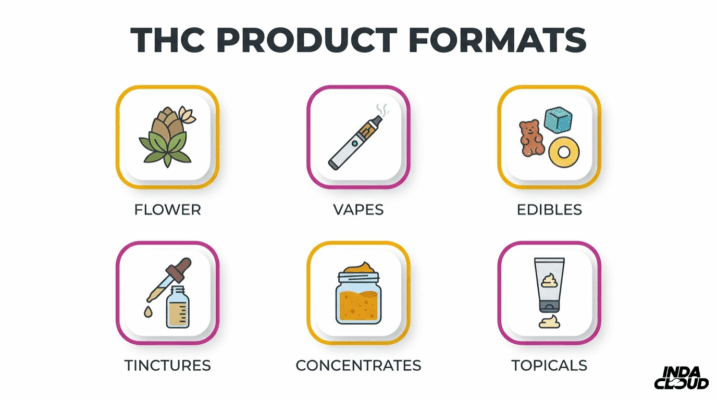
THC flower is the raw, dried bud of the cannabis plant harvested for its cannabinoid content. Hemp-derived THCa flower, in its unheated form, remains non-psychoactive until combustion or vaporization triggers decarboxylation, converting THCa into active delta-9 THC. Available in indica, sativa, and hybrid strains, flower gives users direct control over dosage through how much they pack or grind. For those who prefer a traditional smoking experience with full-spectrum terpene profiles, flower remains one of the most popular formats on the market.
THC pre-rolls are pre-ground cannabis flower rolled into ready-to-smoke joints. They eliminate the need for grinders, papers, or rolling skill, making them one of the most convenient inhalable options. Pre-rolls come in strain-specific varieties, including indica, sativa, and hybrid blends, and may be infused with concentrates for added potency. Single pre-rolls suit solo sessions, while multi-packs work well for social settings.
THC vapes are electronic devices that heat cannabis oil or distillate to produce inhalable vapor. Vaping avoids combustion, which reduces exposure to tar and certain byproducts associated with smoking. Most vape devices use a battery-powered heating element paired with a chamber or cartridge containing THC extract. Effects from vaping typically onset within minutes, making this format popular among users who want fast-acting results with portable, discreet hardware.
THC cartridges are pre-filled glass or ceramic containers that attach to a compatible 510-thread battery. Disposables combine the cartridge and battery into a single, all-in-one unit that requires no assembly or charging. Both formats contain concentrated THC distillate or live resin oil and deliver vapor with a simple inhale. Cartridges offer the advantage of swapping flavors or strains on one device, while disposables prioritize grab-and-go simplicity with no maintenance required.
THC gummies are chewy, flavored edibles infused with a measured dose of THC per piece. Precise dosing per gummy makes them one of the easiest formats for controlling intake, especially for newer users. Gummies come in a wide range of flavors, potencies, and cannabinoid blends, including delta-8, delta-9, and THCa options. Because they pass through the digestive system, onset is slower compared to inhalation but the effects generally last longer.
THC edibles are food products infused with cannabinoids, including baked goods, chocolates, candies, and savory snacks. Beyond gummies, the edible category covers cookies, brownies, cereal bites, and specialty treats like popping crystals. Oral ingestion means THC is metabolized by the liver, where it converts to 11-hydroxy-THC, a metabolite that often produces more intense and prolonged effects. Patience with onset timing is essential; effects can take 30 minutes to two hours to fully develop.
THC drinks are beverages infused with water-soluble cannabinoid formulations. Options include THC-infused sodas, seltzers, teas, and flavored waters. Nano-emulsion technology, used in many modern formulations, breaks THC into smaller particles that absorb faster than traditional edibles. This gives drinks a quicker onset, often within 15 to 30 minutes, while still offering a smoke-free, socially familiar consumption experience.
THC syrup is a liquid cannabis concentrate with a viscous, syrup-like consistency. Users can consume it directly, mix it into beverages, or drizzle it over food. Syrups offer flexible dosing since users can measure exact amounts with a provided dropper or cap. Like other oral formats, THC syrup passes through digestion before reaching the bloodstream, so effects are delayed compared to inhalation but tend to be sustained.
THC concentrates are highly potent cannabis extracts with significantly elevated cannabinoid levels compared to flower. Common forms include wax, shatter, budder, crumble, and live resin. Concentrates are produced through extraction processes that isolate THC and terpenes from plant material. Because potency can reach well above typical flower levels, concentrates are generally better suited for experienced users who have established their tolerance.
THC dabs are concentrated cannabis extracts vaporized on a heated surface called a nail or banger, typically housed within a dab rig. Extracts used for dabbing include shatter, wax, rosin, and live resin. According to a study published in the International Journal of Molecular Sciences, inhalation of cannabis produces a bioavailability of approximately 12% to 35%, and concentrates maximize this efficiency through high cannabinoid density. Dabbing delivers rapid, potent effects suited to users comfortable with advanced consumption methods.
THC tinctures are liquid cannabis extracts typically suspended in alcohol or carrier oil. Administered sublingually by placing drops under the tongue, tinctures allow THC to absorb through the mucous membranes and enter the bloodstream without full digestive processing. A clinical evaluation published in The Permanente Journal estimated the relative bioavailability of sublingual THC at approximately 13%. Tinctures offer precise, dropper-based dosing and a discreet, smoke-free option.
THC oils are concentrated cannabis extracts dissolved in a carrier oil such as MCT or hemp seed oil. While similar to tinctures, oils are often formulated for versatility: they can be taken sublingually, added to food, or used in capsule form. Oil consistency and cannabinoid concentration vary by product, so checking milligram-per-serving labels is important for accurate dosing. Oils suit users looking for a multipurpose format without inhalation.
THC capsules are pre-measured doses of cannabis oil enclosed in a gelatin or vegetarian shell. Each capsule contains a fixed amount of THC, removing guesswork from dosing entirely. Capsules are swallowed like any standard supplement, making them familiar and convenient for users who prefer a no-taste, no-smell option. Since capsules are processed through digestion, their onset and duration profile mirrors other oral formats.
THC topicals are cannabis-infused creams, balms, lotions, and patches applied directly to the skin. THC in topical form interacts with localized cannabinoid receptors without typically producing systemic psychoactive effects, since most formulations do not penetrate deeply enough to reach the bloodstream in significant amounts. Topicals are commonly chosen for targeted application to specific areas of the body. With such a wide range of product formats available, understanding how each one differs by onset and duration helps users match the right option to their needs.
THC products differ by onset, duration, and format based on their route of administration and how THC enters the bloodstream. Inhalation, ingestion, sublingual absorption, and topical application each produce distinct timelines and intensity profiles.
Inhalation methods, such as vapes, pre-rolls, and dabs, deliver THC directly to the lungs, where it rapidly crosses into the bloodstream. According to a study published in the Journal of the Neurological Sciences (via PMC), THC concentrations are higher in the brain than in the blood immediately after inhalation, producing a stronger psychoactive effect than ingestion. Effects typically begin within minutes and peak quickly, though they tend to fade sooner than oral alternatives.
Oral formats, including gummies, edibles, capsules, drinks, and syrups, follow a fundamentally different pathway. THC passes through the digestive system and undergoes first-pass metabolism in the liver, which converts delta-9 THC into 11-hydroxy-THC, a potent metabolite. As documented by PMC, onset of effects is delayed, peak concentrations are lower, and duration of pharmacodynamic effects generally are extended with a delayed return to baseline when THC is administered orally compared to inhalation. This slower but longer-lasting profile makes edibles better suited for sustained experiences, though it also increases the risk of overconsumption when users dose again too soon.
Sublingual products like tinctures and oils sit between these two extremes. Absorbed through mucous membranes under the tongue, they partially bypass first-pass metabolism. A clinical evaluation published in The Permanente Journal estimated the relative bioavailability of sublingual THC at approximately 13%, placing it below inhalation’s 12% to 35% range but offering a faster onset than standard edibles.
Topicals represent a distinct category entirely. Creams and balms apply THC directly to the skin for localized effects without meaningful systemic absorption, meaning they generally do not produce psychoactive results.
For anyone comparing these formats, the practical takeaway is straightforward: faster onset usually means shorter duration, and slower onset typically delivers a more prolonged experience. Matching the right format to the right situation is one of the most important decisions a THC consumer can make, and understanding these pharmacokinetic differences turns that choice from guesswork into informed selection.
THC lasts anywhere from one to eight hours depending on the consumption method and individual factors. Inhalation produces the shortest duration, while edibles extend effects significantly.
The duration of THC effects depends on how the cannabinoid enters the bloodstream. When THC is inhaled through smoking or vaping, effects typically peak within minutes and taper off over one to three hours. Oral consumption tells a different story. According to a PMC review published by the National Center for Biotechnology Information, onset of effects is delayed, peak concentrations are lower, and duration of pharmacodynamic effects generally are extended with a delayed return to baseline when THC is administered orally compared to inhalation. Edibles can produce effects lasting four to eight hours because the liver metabolizes THC into 11-hydroxy-THC, a potent metabolite that prolongs the experience.
Several factors influence how long THC effects persist:
For practical purposes, most people can expect noticeable effects to diminish within two hours after vaping or smoking, while edible users should plan for a longer window. Understanding these timelines helps when selecting between a quick session and an extended experience.
THC stays in your system from one day to several weeks, depending on usage frequency, body composition, and the type of drug test administered. Detection windows vary significantly across urine, blood, saliva, and hair testing methods.
According to a 2016 study published in PMC, urine offers a detection window ranging from one day after consumption to several weeks, while hair and meconium provide the longest detection windows among biological specimens. For infrequent users, urine tests may return negative within a few days, but chronic or heavy use causes THC metabolites to accumulate in fat tissue, extending detectability for weeks.
Body fat percentage, hydration levels, and metabolic rate all influence how quickly the body clears THC-COOH, the primary metabolite screened in standard drug panels. Because THC is lipophilic, it binds to adipose tissue and releases slowly over time. This makes individual clearance timelines highly variable, even among people consuming identical amounts.
For anyone subject to workplace or legal testing, understanding these variables is essential before choosing any THC product.
THC strength varies widely depending on the product type, cannabinoid variant, and concentration. Factors like consumption method, individual tolerance, and formulation all influence perceived potency. The subsections below cover what determines THC strength, typical potency ranges across products, and how different THC types compare.
THC potency is determined by several interacting factors:
Raw potency numbers only tell part of the story. A 20% THC flower and a 20mg THC gummy deliver very different experiences because bioavailability and onset timing differ drastically between formats.
Different THC products range from mild to extremely potent, depending on format and concentration:
Beginners benefit most from starting with low-dose edibles or tinctures, where precise milligram control reduces the risk of overconsumption.
Potency differs between delta-9, delta-8, and delta-10 THC based on their molecular structure and receptor binding affinity. Delta-9 THC is the strongest of the three, serving as the benchmark for cannabis potency. According to a study published in the Journal of Analytical Toxicology, delta-8 THC is slightly less potent than delta-9 THC in humans, and very little information is available about the potency of delta-10 THC.
The structural distinction is subtle; only the position of a single double bond between two carbons separates these molecules. Yet that small difference meaningfully alters how each variant interacts with the endocannabinoid system. For those seeking strong effects, delta-9 products remain the standard, while delta-8 and delta-10 suit users who prefer gentler experiences.
Understanding potency across THC types and products helps consumers make informed purchasing decisions and dose accurately.
You read THC potency and product labels by checking the cannabinoid percentage, total milligrams, serving size, and third-party lab results listed on the packaging. The sections below cover what each label element means and why consistent labeling remains a challenge.
THC percentage on a label indicates the concentration of tetrahydrocannabinol by weight in that product. For flower, a label reading 20% THC means 200 milligrams of THC per gram of dried cannabis material. For edibles and tinctures, total milligrams and per-serving milligrams matter more than a percentage, since the product weight varies widely.
Higher percentages do not always guarantee stronger effects. Terpene profiles, other cannabinoids, and individual tolerance all influence the experience. Reading both the THC percentage and the full cannabinoid profile gives a more accurate picture of what to expect from any product.
Total THC represents the maximum amount of THC available after decarboxylation, while active THC (delta-9 THC) reflects what is already in its psychoactive form. Raw cannabis contains mostly THCA, which converts to active THC when heated. According to a study published in the American Chemical Society’s Industrial & Engineering Chemistry Research, decarboxylation of THCA-A to THC follows first-order kinetics, with THCA showing the fastest decarboxylation rate among acidic cannabinoids.
Labels use a standard formula to calculate total THC: (THCA × 0.877) + delta-9 THC. This conversion factor accounts for the molecular weight lost during decarboxylation. For consumers buying flower or pre-rolls, total THC is the more meaningful number because THCA will convert upon smoking or vaping.
THC labels vary between products because there are no universal guidelines for cannabis labeling requirements in the United States, according to a 2025 study published in PMC. This leads to significant variability in state testing standards and label reporting formats.
Key differences across products include:
State regulations dictate which cannabinoids must be listed, whether terpene data is required, and how serving sizes are defined. This inconsistency makes comparing products across state lines particularly difficult, which is why checking third-party lab reports (Certificates of Analysis) remains the most reliable way to verify what a product actually contains.
You use a Certificate of Analysis by reviewing the independent lab report that verifies a product’s cannabinoid content, potency, and safety. A COA confirms whether the labeled THC percentage matches actual test results and screens for contaminants such as pesticides, heavy metals, residual solvents, and microbial impurities.
When reading a COA, focus on these elements:
Reputable brands make COAs accessible through QR codes on packaging or downloadable links on their websites. For anyone serious about knowing exactly what they consume, the COA is the single most trustworthy document available. Understanding these label elements helps you select products with confidence and clarity.
You choose the right THC product by matching your desired effects, tolerance level, and lifestyle preferences to the correct format, potency, and cannabinoid type. The key factors include consumption method, onset speed, duration, and third-party testing verification.
The factors that matter most when selecting a THC product are:
Prioritizing lab-tested products over unverified options is one of the most practical steps any consumer can take, regardless of experience level.
Your experience level affects product choice by determining the appropriate potency, format, and cannabinoid variant. New users should start with mild formats like low-dose edibles or delta-8 THC products, which produce a less intense experience. Delta-8 THC is slightly less potent than delta-9 THC in humans, making it a common entry point. Experienced consumers often gravitate toward concentrates, dabs, or high-potency vapes that deliver stronger effects more rapidly. Matching product strength to personal tolerance prevents overconsumption and helps maintain a consistent, enjoyable experience. With product selection clarified, understanding what beginners specifically need before their first purchase becomes the next practical step.
Beginners should know their local laws, preferred product format, and ideal dosage before buying THC. The sections below cover starting low with dosage, understanding hemp-derived legality, and reading lab results.
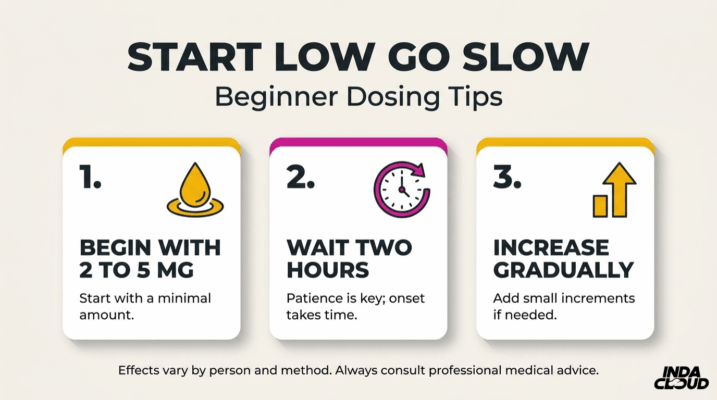
Beginners should start with a low THC dose because individual tolerance varies significantly, and overconsumption can cause uncomfortable side effects like anxiety or dizziness. A common starting point is 2.5 to 5 milligrams of THC per serving, particularly with edibles. According to a PMC study, onset of effects is delayed and duration is extended when THC is administered orally compared to inhalation, making it easy to consume too much before feeling anything. Waiting at least two hours before taking more allows the full effect to develop. Patience at this stage builds a safer, more enjoyable foundation for future use.
Hemp-derived THC products are legal for beginners to buy at the federal level because the 2018 Farm Bill defines hemp as cannabis containing no more than 0.3% delta-9 THC on a dry weight basis, according to the Congressional Research Service. Products meeting this threshold, including many delta-8, delta-9, and THCA items, fall outside the Controlled Substances Act. State laws vary considerably, however, so verifying local regulations before purchasing remains essential. Beginners benefit from choosing retailers that clearly display compliance information and ship only to states where their products are permitted.
Beginners can read lab results on THC products by checking the Certificate of Analysis, which lists cannabinoid potency, contaminant screening, and batch identification. Key values to look for include total THC percentage, CBD content, and test results for pesticides, heavy metals, and residual solvents. A PMC review notes there are no universal guidelines for cannabis labeling requirements in the United States, leading to significant variability in state testing and label reporting. This inconsistency makes third-party lab verification even more important. Choosing brands that publish full, up-to-date lab reports for every batch protects beginners from mislabeled or unsafe products.
With these fundamentals in place, proper storage and pre-purchase checks help maintain product quality over time.
THC should be stored in a cool, dark, airtight environment, and you should check for third-party lab results, clear labeling, and compliant THC content before buying. The subsections below cover proper storage practices and essential pre-purchase verification steps.
THC products should be stored in airtight, light-resistant containers kept at cool, stable temperatures. Heat, light, and oxygen accelerate cannabinoid degradation, reducing potency over time. Glass jars with sealed lids work well for flower and edibles, while vape cartridges should remain upright in a drawer or cabinet away from direct sunlight.
Humidity control also matters. Excess moisture promotes mold growth on flower, while overly dry conditions degrade trichomes. Keeping storage areas between 60°F and 70°F with moderate humidity preserves product integrity longest. For edibles and tinctures, refrigeration can extend shelf life without compromising cannabinoid content. Always store THC products out of reach of children and pets.
You should check third-party lab results, THC concentration, ingredient transparency, and legal compliance before buying a THC product. According to a 2025 PMC review, there are no universal guidelines for cannabis labeling requirements in the United States, leading to significant variability in state testing and label reporting. This makes independent verification essential.
Key factors to verify before purchase include:
Given the labeling inconsistencies across states, prioritizing brands that publish accessible lab reports is one of the most reliable ways to ensure product safety and accurate potency.
Before buying a THC product, you should check third-party lab results, THC potency on the label, ingredient transparency, and compliance with federal hemp regulations. The subsections below cover lab testing, label accuracy, and sourcing verification.
Third-party lab testing matters because it independently verifies that a THC product contains what the label claims. Labs screen for cannabinoid potency, residual solvents, heavy metals, and pesticide contamination. Without these results, consumers have no reliable way to confirm product safety or accurate THC concentration. According to a 2025 study published in PMC, there are no universal guidelines for cannabis labeling requirements in the United States, leading to significant variability in state testing and label reporting. This inconsistency makes independent lab verification even more critical. Always look for a certificate of analysis (COA) before purchasing any THC product.
Reading THC product labels accurately requires checking several key data points:
Overlooking any of these details increases the risk of consuming a mislabeled or non-compliant product.
The sourcing and compliance red flags to avoid include missing COAs, vague origin claims, and products sold without clear cannabinoid breakdowns. Brands that do not disclose whether their hemp is U.S.-grown or refuse to share lab results should raise immediate concern. Products marketed with health claims unapproved by any regulatory body also signal poor compliance practices. Prioritizing verified, transparent brands is the most practical safeguard for both legality and personal safety. With these purchasing checkpoints in place, understanding broader THC legality helps complete the picture.
THC is legal in some forms at the federal level and varies significantly by state. Federal law, state cannabis programs, and product type all determine legality. The subsections below cover the 2018 Farm Bill framework, state-level variation, and what hemp-derived THC compliance requires.
The 2018 Farm Bill defines hemp as any part of the cannabis plant or its derivatives containing no more than 0.3% delta-9 THC on a dry weight basis, according to the Congressional Research Service. This distinction separated hemp from marijuana under federal law.
Prior to the 2018 Farm Bill, all Cannabis sativa L. fell within the Controlled Substances Act regardless of THC concentration. The Farm Bill created a legal pathway for hemp-derived cannabinoid products, including those containing delta-8 THC, delta-9 THC within the 0.3% threshold, and THCA. Products exceeding 0.3% delta-9 THC remain federally classified as controlled substances.
THC is not legal in all 50 states under the same rules. While the 2018 Farm Bill legalized hemp-derived cannabinoids federally, individual states retain authority to restrict or ban specific THC products within their borders.
State-level THC legality falls into several categories:
Consumers should verify their state’s current regulations before purchasing any THC product, since laws change frequently.
A THC product is federally compliant when it derives from hemp and contains no more than 0.3% delta-9 THC on a dry weight basis. This threshold, established by the 2018 Farm Bill, applies to the finished product.
Key compliance factors include:
For consumers navigating this complexity, choosing brands that publish certificates of analysis is one of the most reliable ways to confirm a product meets federal standards. Understanding legality helps inform decisions about drug testing, which is the next practical concern for many THC users.
Yes, THC can show up on a drug test. Standard immunoassay screenings detect THC metabolites, primarily 11-nor-9-carboxy-THC (THC-COOH), which the body produces after processing any form of THC. Detection depends on the test type, usage frequency, and the specific THC variant consumed.
Urine testing is the most common method used by employers and institutions. According to a 2016 study published by PMC at the National Center for Biotechnology Information, urine offers a detection window ranging from one day after consumption to several weeks, while hair and meconium provide the longest detection windows. Occasional users may test clean within a few days, but heavy or chronic users can produce positive results for 30 days or longer.
All THC variants, including delta-8, delta-9, delta-10, and even THCA after heat exposure, can trigger a positive result. THCA converts to THC through decarboxylation when smoked or vaped, meaning products labeled as “non-psychoactive” may still produce detectable metabolites. Because most drug tests screen for THC-COOH rather than a specific THC isomer, hemp-derived products containing any THC type carry real risk for anyone subject to testing.
For anyone facing upcoming screenings, the safest approach is to discontinue all THC-containing products well in advance. Understanding your own usage patterns and the detection window of each test type helps you make informed decisions about timing and product selection.
Yes, THC gummies are legal to buy in most of the United States right…
Learn more

Raw, unheated THCA clears your system in roughly 24 to 48 hours. Once you…
Learn more
Yes, edibles show up on drug tests. Standard panels detect THC edibles exactly the…
Learn more

Green Wednesday is the Wednesday before Thanksgiving, the cannabis industry’s second-biggest shopping day of…
Learn more
