FREE SHIPPING $89+
 FREE GIFTS ALL ORDERS $120+
 100% FEDERALLY LEGAL
  LAB TESTED FOR PURITY
  GREEN DAY EXCLUSIVE SALE
  42% SITEWIDE*
  AUTO-APPLIED AT CHECKOUT


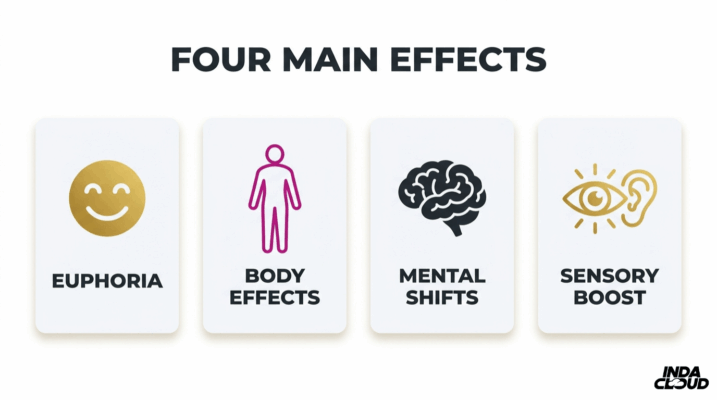
A Delta-9 THC high is a multi-layered psychoactive experience combining euphoria, physical relaxation, cognitive shifts, and amplified sensory perception. The specific character of the high depends on dosage, consumption method, individual biology, and the product’s terpene profile.
This guide covers what the high actually feels like, how long it lasts across different consumption methods, the factors that shape intensity and duration, therapeutic benefits and potential risks, and how hemp-derived Delta-9 THC compares to marijuana and Delta-8 options.
Delta-9 THC produces a wave of elevated mood driven by dopamine release, alongside physical sensations like body heaviness, increased heart rate, and muscle relaxation. Cognitive effects include altered thought patterns, short-term memory impairment, and dose-dependent time distortion linked to THC’s activity in CB1-receptor-dense brain regions.
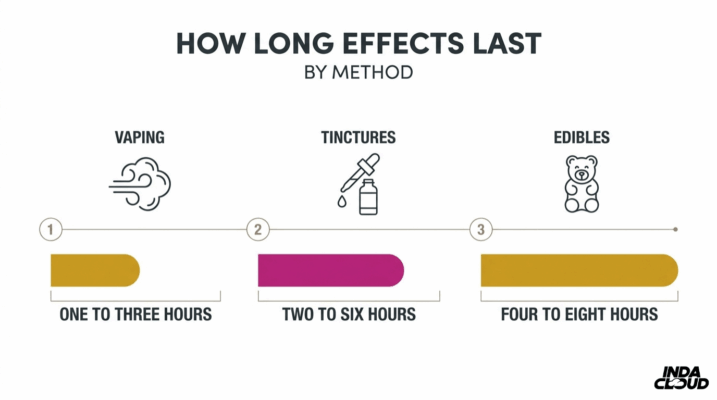
Duration varies significantly by method. Inhaled THC peaks within minutes and subsides within one to three hours, while edibles produce a slower, more intense high lasting four to eight hours due to liver conversion into 11-hydroxy-THC. Tinctures fall between the two, offering onset within 15 to 60 minutes.
Several biological and behavioral variables shift the experience. Tolerance builds through CB1 receptor downregulation with repeated use, body fat percentage affects how long THC remains stored, and terpenes like myrcene and limonene shape whether the high leans toward calming or energizing.
Benefits range from stress relief and sleep support to creative stimulation and social ease, though overconsumption can trigger anxiety, paranoia, and elevated heart rate. Certain populations, including pregnant individuals and adolescents, should avoid use entirely.
Hemp-derived Delta-9 THC is federally legal under the 2018 Farm Bill when products contain no more than 0.3% THC on a dry weight basis, making lab-tested options from brands like Inda Cloud accessible across most U.S. states without a dispensary visit.
What Does a Delta-9 THC High Feel Like?
A Delta-9 THC high feels like a layered experience combining euphoria, physical relaxation, altered cognition, and heightened sensory awareness. The sections below break down each dimension of the high.
What Is the Euphoric Sensation From Delta-9 THC?
The euphoric sensation from Delta-9 THC is a wave of elevated mood, happiness, and mental uplift that most users describe as the defining feature of the high. Delta-9 THC triggers this euphoria by binding to CB1 receptors in the brain’s reward system, prompting a surge of dopamine release.
This feeling often arrives as a warm sense of contentment, sometimes accompanied by uncontrollable laughter or a deep appreciation for simple pleasures. The intensity scales with dosage; lower amounts tend to produce a gentle, giggly mood lift, while higher doses can create an almost overwhelming sense of bliss. For many people, this euphoric phase is the most sought-after part of the experience.
How Does Delta-9 THC Affect Your Body Physically?
Delta-9 THC affects your body physically through a range of sensations that span relaxation, appetite stimulation, and cardiovascular changes. Most users notice a heavy, warm feeling in the limbs, often called a “body high,” along with dry mouth and red eyes.
According to an NIH report on Delta-9 THC exposure cases, acute ingestion can lead to central nervous system depression and tachycardia, observed in 23% of reported cases. Increased heart rate is one of the most consistent physical effects, particularly at higher doses. Muscle tension often decreases noticeably, which is why many users gravitate toward THC for evening relaxation. These physical effects tend to be more pronounced with edibles than with inhaled products, given the slower but more intense absorption pathway.
What Mental and Cognitive Effects Does Delta-9 THC Produce?
The mental and cognitive effects Delta-9 THC produces include altered thought patterns, impaired short-term memory, and shifts in time perception. Racing or looping thoughts are common, and many users report difficulty holding onto a single train of thought.
According to a 2025 study published by the National Institutes of Health, acute cannabis use interferes with multiple cognitive domains, specifically attention, executive function, learning, memory, language, motor coordination, and social cognition. The degree of impairment depends on amount consumed, frequency of use, and age of onset. Despite these impairments, some users find that lower doses spark creative or divergent thinking before stronger cognitive effects set in.
How Does Delta-9 THC Change Sensory Perception?
Delta-9 THC changes sensory perception by amplifying how the brain processes sight, sound, taste, and touch. Colors may appear more vivid, music can feel more immersive, and food often tastes significantly richer.
These perceptual shifts stem from THC’s interaction with CB1 receptors in sensory processing regions of the brain. Time distortion is another hallmark; minutes can feel like hours, and sequences of events may seem to stretch or compress unpredictably. This heightened sensory awareness is a major reason many people enjoy cannabis alongside music, art, or meals. For newcomers, though, sensory amplification can occasionally feel overwhelming, especially at higher doses.
Understanding these combined effects helps set realistic expectations before trying Delta-9 THC for the first time.
How Long Does a Delta-9 THC High Last?
A delta-9 THC high lasts anywhere from 1 to 8 hours depending on the consumption method. Edibles produce the longest effects, smoking and vaping deliver shorter peaks, and tinctures fall in between.
How Long Does a Delta-9 Edible High Last?
A delta-9 edible high lasts approximately 4 to 8 hours, with some residual effects lingering even longer. Because oral THC must pass through the digestive system and liver before reaching the bloodstream, onset is slower, typically 30 minutes to 2 hours. This first-pass metabolism converts delta-9 THC into 11-hydroxy-THC, a metabolite that crosses the blood-brain barrier more efficiently and produces a more intense, prolonged experience.
The extended duration is one reason edibles require careful dosing. Effects can continue building well after consumption, which catches many beginners off guard. Starting low and waiting at least two full hours before considering additional intake helps avoid an uncomfortably strong experience.
How Long Does a Delta-9 High Last When Smoking or Vaping?
A delta-9 high from smoking or vaping lasts roughly 1 to 3 hours, with peak effects occurring within the first 30 minutes. According to an NIH pharmacokinetics review, inhaled THC bioavailability averages 30%, with peak plasma levels occurring approximately 10 minutes after smoking, which explains the near-immediate onset. Blood levels of delta-9 THC then rapidly subside within 1 to 3.5 hours.
This shorter duration makes inhalation easier to dose in real time. Users can gauge intensity quickly and decide whether another draw is needed. The trade-off is a faster comedown compared to edibles, though many consumers prefer this level of control over the experience.
How Long Does a Delta-9 High Last With Tinctures?
A delta-9 high from tinctures lasts approximately 2 to 6 hours, placing them between inhalation and edibles in duration. Sublingual absorption bypasses first-pass liver metabolism when held under the tongue, producing onset within 15 to 60 minutes. If swallowed instead, tinctures behave more like edibles, with a slower onset and longer-lasting effects.
Tinctures offer precise dosing through measured droppers, making titration straightforward. According to a 2023 study published in the International Journal of Mental Health and Addiction, delta-9 THC administration alters functional brain connectivity in CB1-receptor-dense regions like the cerebellum, contributing to dose-dependent changes in time perception. This means the subjective sense of how long a high lasts can differ significantly from actual clock time, particularly at higher doses.
For users seeking a middle ground between the immediacy of vaping and the extended duration of edibles, tinctures represent one of the most versatile delivery methods available.
What Factors Influence How a Delta-9 THC High Feels?
Several factors influence how a Delta-9 THC high feels, including dosage, tolerance, consumption method, body composition, and the strain’s terpene profile. Each variable shifts the intensity, onset, and character of the experience.
How Does Dosage Affect the Delta-9 THC Experience?
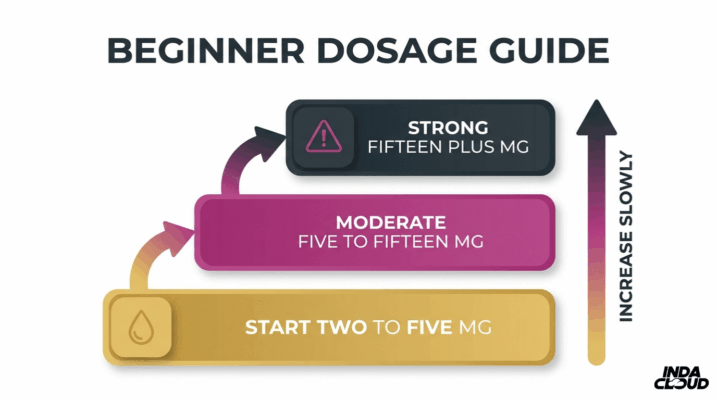
Dosage affects the Delta-9 THC experience by directly scaling the intensity of both physical and psychological effects. A low dose of 2.5 mg to 5 mg of oral THC is recommended for beginners to evaluate individual reactions and avoid potential adverse effects, according to a dosage guide published by Crescent Canna.
Moderate doses between 5 mg and 15 mg typically produce stronger euphoria, deeper relaxation, and more noticeable sensory changes. Doses above 15 mg can intensify effects to the point of discomfort for inexperienced users, potentially causing anxiety or paranoia. Starting low and increasing gradually remains the most reliable approach to finding a comfortable range.
How Does Your Tolerance Level Change the High?
Your tolerance level changes the high by determining how strongly your endocannabinoid system responds to Delta-9 THC. Regular consumers need higher doses to achieve the same effects that a smaller amount produces in occasional users. A study published by the National Institutes of Health found that repeated administration of Delta-9 THC leads to cannabinoid tolerance through regional brain downregulation of CB1 receptors, a mechanism confirmed in chronic cannabis smokers via PET imaging.
This receptor adaptation means frequent users experience diminished euphoria, reduced sensory enhancement, and shorter perceived duration. Taking periodic breaks, often called tolerance breaks, allows CB1 receptors to reset and restores sensitivity to lower doses.
How Does the Consumption Method Alter the Effects?
The consumption method alters the effects by changing how quickly Delta-9 THC enters the bloodstream and how long it remains active. According to a study published by the National Institutes of Health, inhaled THC bioavailability averages 30% with peak plasma levels occurring approximately 10 minutes after smoking, whereas oral THC bioavailability is significantly lower at only 6 to 10% due to extensive first-pass metabolism.
Key differences by method include:
- Smoking and vaping deliver rapid onset within minutes, with effects typically lasting one to three hours.
- Edibles take 30 to 90 minutes to kick in but produce a more intense, longer-lasting high because the liver converts THC into 11-hydroxy-THC.
- Sublingual tinctures offer a middle ground, with onset typically between 15 to 60 minutes and a shorter duration than edibles.
How Do Body Weight and Metabolism Play a Role?
Body weight and metabolism play a role by affecting how Delta-9 THC is distributed, processed, and eliminated in the body. THC is lipophilic, meaning it binds to fat tissue. Individuals with higher body fat percentages may store THC longer, which can extend the duration of effects and influence how quickly subsequent doses are felt.
Metabolism is equally significant. According to a study published in Frontiers in Pharmacology, Delta-9 THC is primarily metabolized in the liver by phase I hepatic cytochrome P450 enzymes, and naturally occurring variations in these enzymes can significantly impact individual metabolism. Someone with a faster metabolic rate may process THC more quickly, experiencing a shorter but potentially sharper high.
How Does the Strain or Terpene Profile Shape the High?
The strain or terpene profile shapes the high by influencing the specific character of effects beyond what THC alone produces. Different cannabis strains contain unique ratios of terpenes that interact with cannabinoids in what researchers call the entourage effect.
According to a 2024 study published in MDPI Pharmaceuticals, specific cannabis terpenes such as myrcene, limonene, pinene, and caryophyllene may modulate THC effects, with myrcene associated with relaxation and limonene showing potential as an analgesic. Choosing strains rich in specific terpenes allows users to tailor experiences toward calming, energizing, or pain-relieving outcomes. Understanding product composition is the foundation for selecting the right Delta-9 THC product.
What Are the Benefits of a Delta-9 THC High?
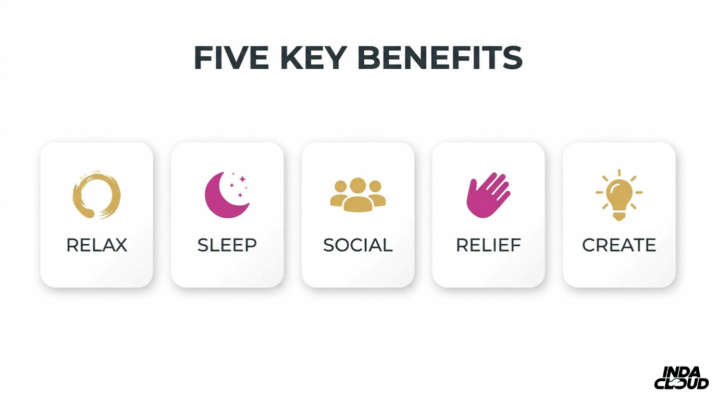
The benefits of a Delta-9 THC high span relaxation, sleep support, social enhancement, discomfort relief, and creative stimulation. Each benefit depends on dosage, terpene profile, and individual response.
How Can Delta-9 THC Help With Relaxation and Stress?
Delta-9 THC helps with relaxation and stress by activating cannabinoid receptors that influence mood regulation and physical tension. The calming effect is often amplified by specific terpene profiles present in the product. According to a 2024 study published in MDPI Pharmaceuticals, cannabis terpenes such as myrcene, limonene, pinene, and caryophyllene may modulate THC effects, with myrcene specifically associated with relaxation. Choosing products with myrcene-rich profiles can deepen the calming experience. Low-to-moderate doses tend to produce the most consistent stress relief, while higher doses may tip toward sedation or anxiety in some users.
Can Delta-9 THC Support Better Sleep?
Yes, Delta-9 THC can support better sleep by promoting drowsiness and reducing the time it takes to fall asleep. Many users report fewer nighttime awakenings and a deeper sense of rest after consuming THC in the evening. Indica-leaning strains and edible formats are commonly preferred for sleep, since edibles produce a longer-lasting effect that can sustain through the night. Starting with a low dose is important, as too much THC may cause restlessness or vivid dreams that disrupt sleep quality. Consistent timing and moderate dosing tend to yield the most reliable results for sleep support.
How Does Delta-9 THC Enhance Social Experiences?
Delta-9 THC enhances social experiences by lowering inhibitions, elevating mood, and increasing feelings of connection with others. Conversations may feel more engaging, humor becomes more accessible, and shared activities often take on a heightened sense of enjoyment. Sativa-dominant products are frequently chosen for social settings because they tend to promote energy and talkativeness rather than sedation. Dosage matters considerably here; a moderate amount can ease social anxiety, while overconsumption may lead to withdrawal or self-consciousness. For many, the social benefit is one of the most immediately noticeable aspects of a Delta-9 high.
Can Delta-9 THC Help With Discomfort and Soreness?
Yes, Delta-9 THC can help with discomfort and soreness by interacting with CB1 receptors in the central nervous system, which play a role in pain signal modulation. Many users turn to THC after physical activity or for ongoing tension that affects daily comfort. The analgesic properties may be further enhanced when terpenes like limonene are present in the product profile. Topical and edible formats are popular choices for targeted or sustained relief. While THC is not a replacement for medical treatment, it offers a complementary option that many find effective for managing everyday physical discomfort.
How Does Delta-9 THC Boost Creativity and Focus?
Delta-9 THC boosts creativity and focus by altering thought patterns, encouraging divergent thinking, and reducing the self-editing that can stifle new ideas. Many artists, musicians, and writers report that low doses help them enter a flow state where creative connections come more naturally. Sativa-dominant strains are typically preferred for this purpose, as they tend to stimulate mental activity rather than induce relaxation. Higher doses, however, can have the opposite effect, scattering attention and making sustained focus difficult. For creative pursuits, microdosing or consuming small amounts offers the best balance between mental stimulation and cognitive control.
With these potential benefits in mind, understanding the risks ensures a safer, more informed experience.
What Are the Potential Risks and Side Effects of Delta-9 THC?
The potential risks and side effects of Delta-9 THC range from mild short-term discomfort to more serious concerns with overconsumption or use by vulnerable populations. The following subsections cover common side effects, overconsumption symptoms, and who should avoid Delta-9 THC.
What Are the Common Short-Term Side Effects?
The common short-term side effects of Delta-9 THC include dry mouth, red eyes, increased heart rate, short-term memory impairment, anxiety, and impaired coordination. According to a study published by the National Institutes of Health, acute cannabis use interferes with multiple cognitive domains, specifically attention, executive function, learning, memory, motor coordination, and social cognition, with the degree of impairment depending on amount consumed, frequency, and age of onset.
These effects typically resolve as THC is metabolized, though they can feel uncomfortable for inexperienced users. Starting with a low dose remains the most reliable way to minimize unwanted reactions.
What Happens if You Take Too Much Delta-9 THC?
Taking too much Delta-9 THC can cause intense anxiety, paranoia, nausea, dizziness, and temporary disorientation. According to a report from the National Institutes of Health, acute ingestion of Delta-9 THC can lead to central nervous system depression, tachycardia observed in 23% of reported exposure cases, and agitation.
Symptoms of overconsumption are not life-threatening but can be deeply unpleasant. Finding a calm environment, staying hydrated, and waiting for effects to subside are the most effective responses. For most people, starting at 2.5 to 5 mg and increasing gradually prevents these episodes entirely.
Who Should Avoid Using Delta-9 THC?
Individuals who should avoid using Delta-9 THC include pregnant or breastfeeding women, adolescents, people with a history of psychotic disorders, and those taking medications metabolized by liver CYP enzymes. A study published in the International Journal of Drug Policy found that cannabis use during pregnancy is associated with adverse pre- and post-natal health outcomes, and cannabinoids can be passed through breast milk, potentially affecting brain development.
Anyone with cardiovascular conditions or a personal history of substance dependence should also consult a healthcare provider before use. Responsible consumption starts with honest self-assessment, which is why lab-tested, clearly dosed products matter for informed decision-making.
How Is Hemp-Derived Delta-9 THC Different From Marijuana?
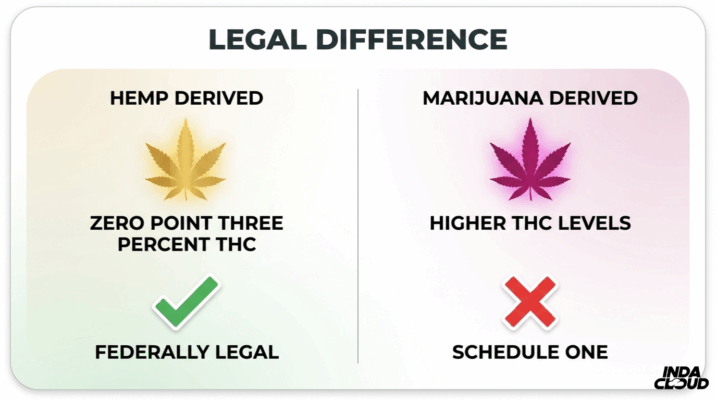
Hemp-derived Delta-9 THC is different from marijuana primarily in legal classification, THC concentration limits, and federal regulatory status. The distinction centers on the 2018 Farm Bill’s definitions.
The molecule itself is chemically identical in both sources. What separates the two is how much Delta-9 THC the plant contains by dry weight, which determines whether a product falls under hemp or marijuana regulations. This single threshold creates dramatically different legal consequences for consumers and businesses.
According to the U.S. Food and Drug Administration, the 2018 Farm Bill legalized hemp-derived products containing a maximum of 0.3 percent Delta-9 THC on a dry weight basis, effectively descheduling them from the Controlled Substances Act. Marijuana, by contrast, remains a Schedule I substance under federal law. Hemp-derived Delta-9 products can be sold legally across most of the country when they stay within this concentration limit, while marijuana-derived products require state-specific licensing and dispensary infrastructure.
The regulatory landscape remains uneven at the state level. As of 2022, 18 U.S. states and the District of Columbia had enacted measures removing all state-imposed penalties for specified recreational marijuana activities, according to the Congressional Research Service. Federal and state regulatory gaps persist for hemp-derived THC products, however, meaning legality can shift depending on where you live.
For consumers, the practical difference is significant. Hemp-derived Delta-9 THC products, like those available from Inda Cloud, can be shipped directly to your door in most states without requiring a dispensary visit. The effects at equivalent doses are comparable because the active compound is the same; only the source plant’s THC concentration and the resulting legal framework differ.
Understanding this distinction helps consumers make informed purchasing decisions, especially when choosing between dispensary products and federally compliant hemp-derived options.
What Is the Difference Between a Delta-9 and Delta-8 High?
The difference between a Delta-9 and Delta-8 high centers on intensity, chemical structure, and how each cannabinoid interacts with the body. Delta-9 THC produces a stronger, more pronounced psychoactive experience, while Delta-8 THC delivers milder effects often described as a “lighter” version of the same high.
According to a 2022 study published in the National Institutes of Health, Delta-8-THC is a naturally occurring cannabinoid found at substantially lower concentrations than Delta-9-THC, but it is nearly identical in chemical structure; the main difference is the location of a specific double bond on the carbon chain. This subtle structural variation is what accounts for the reduced potency. Where Delta-9 binds strongly to CB1 receptors in the brain, producing intense euphoria and potent psychoactive effects, Delta-8 binds with lower affinity to those same receptors. The result is a calmer, less overwhelming experience that many users prefer when they want relaxation without heavy cognitive impairment.
One important consideration often overlooked: standard urine drug screens detect the metabolite THC-COOH but cannot reliably distinguish between Delta-8 and Delta-9 intoxication. Anyone subject to drug testing should treat both cannabinoids with equal caution, regardless of the milder effects associated with Delta-8.
For those exploring both options, the choice often comes down to personal preference and tolerance. Delta-9 suits users seeking a full-spectrum, potent high, while Delta-8 appeals to those who want gentle mood elevation with clearer headedness. Understanding how dosage and consumption method shape each experience helps ensure the right fit.
How Do You Choose the Right Delta-9 THC Dosage as a Beginner?
You choose the right Delta-9 THC dosage as a beginner by starting low, observing your body’s response, and increasing gradually. The ideal amount depends on your consumption method, as edibles and vapes deliver THC differently.
What Is a Good Starting Dose for Delta-9 Edibles?
A good starting dose for Delta-9 edibles is 2.5 mg to 5 mg of THC. This low range allows beginners to evaluate individual reactions before increasing. According to a dosage guide published by Crescent Canna, a low starting dose of 2.5 mg to 5 mg of oral THC is recommended to avoid potential adverse effects.
Edibles pass through the digestive system and liver before reaching the bloodstream, which delays onset to 30 minutes or longer. Because the effects build slowly and last several hours, patience is essential. Many newcomers make the mistake of taking a second dose too soon, which can lead to an uncomfortably intense experience. Wait at least two hours before considering any additional amount.
What Is a Good Starting Dose for Delta-9 Vapes?
A good starting dose for Delta-9 vapes is one to two small inhalations, often called “puffs.” Vaping delivers THC through the lungs, where it enters the bloodstream almost immediately. Effects typically peak within minutes, making it easier to gauge your tolerance in real time.
This rapid feedback loop is why vaping can feel more forgiving for dose control than edibles. If a single puff feels sufficient, there is no need to take another. Beginners should wait five to ten minutes between inhalations to assess how each one feels before adding more. Starting with a low-potency cartridge or disposable pen further reduces the risk of overconsumption.
For beginners exploring either method, Inda Cloud offers a range of clearly labeled Delta-9 edibles and vapes designed to simplify dosing decisions.
Is Delta-9 THC Legal in the United States?
Delta-9 THC is legal in the United States at the federal level when derived from hemp and containing no more than 0.3 percent THC on a dry weight basis. However, state laws vary significantly, creating a patchwork of regulations across the country.
According to the U.S. Food and Drug Administration, the 2018 Farm Bill legalized hemp-derived products containing a maximum of 0.3 percent Delta-9 THC on a dry weight basis, effectively descheduling them from the Controlled Substances Act. Marijuana, with higher THC concentrations, remains a Schedule I substance under federal law. This distinction means the source of Delta-9 THC determines its federal legal status, not the cannabinoid itself.
State-level regulations add complexity. As of 2022, 18 U.S. states and the District of Columbia had enacted measures removing all state-imposed penalties for specified recreational marijuana activities, according to the Congressional Research Service. Yet federal and state regulatory gaps persist for hemp-derived THC products, meaning some states restrict or ban even compliant hemp-derived Delta-9 items. Consumers should always verify their state’s current cannabis laws before purchasing.
For those in states where hemp-derived Delta-9 THC products are permitted, choosing lab-tested options from transparent brands ensures both compliance and quality.
How Can You Experience Delta-9 THC With Lab-Tested Hemp Products?
You can experience delta-9 THC with lab-tested hemp products by choosing federally legal, third-party verified options from trusted brands. The following sections cover product availability for all experience levels and key takeaways from this guide.
Does IndaCloud Offer Delta-9 THC Products for Every Experience Level?
Yes, IndaCloud offers delta-9 THC products for every experience level. The product lineup includes gummies, vapes, flower, and pre-rolls organized by potency, from functional microdoses to higher-strength options. Beginners can start with low-dose edibles, while experienced users can explore the “Beast Mode” series for greater intensity.
Every IndaCloud product undergoes comprehensive third-party lab testing to verify potency and purity, with detailed reports available to consumers. All items contain less than 0.3% delta-9 THC on a dry weight basis, keeping them 100% federally legal under the 2018 Farm Bill. Inda Cloud ships directly to customers across the continental United States, with free shipping on orders over $89.
For anyone exploring delta-9 THC for the first time, starting with a lab-tested, clearly dosed product removes much of the guesswork and builds confidence in the experience.
What Are the Key Takeaways About the Delta-9 THC High?
The key takeaways about the delta-9 THC high are that effects vary by dosage, consumption method, individual biology, and product quality. Here are the essential points from this guide:
- Delta-9 THC produces euphoria, physical relaxation, altered sensory perception, and cognitive changes such as shifted time awareness.
- Effects from edibles last longer but onset slowly, while inhaled methods deliver faster but shorter experiences.
- Dosage is the single most controllable factor; beginners should start at 2.5 to 5 mg of oral THC.
- Tolerance, body weight, metabolism, and terpene profiles all shape how the high feels.
- Potential risks include anxiety, elevated heart rate, and impaired coordination, especially at higher doses.
- Hemp-derived delta-9 THC is federally legal at or below 0.3% on a dry weight basis, distinct from marijuana under the 2018 Farm Bill.
Choosing lab-tested products from a transparent brand like IndaCloud ensures consistent potency and a safer starting point for any experience level.