



Blogs

Are THC Gummies Legal? A 2026 State-by-State Guide
Yes, THC gummies are legal to buy in most of the United States right…
Learn more
You must be 21+ to enter this site
 FREE SHIPPING $89+
 FREE GIFT ON $120+
 100% FEDERALLY LEGAL
 LAB TESTED FOR PURITY
FREE SHIPPING $89+
FREE GIFT ON $120+
100% FEDERALLY LEGAL
LAB TESTED FOR PURITY
FREE SHIPPING $89+
FREE GIFT ON $120+
100% FEDERALLY LEGAL
LAB TESTED FOR PURITY
FREE SHIPPING $89+
FREE GIFT ON $120+
100% FEDERALLY LEGAL
LAB TESTED FOR PURITY
FREE SHIPPING $89+
FREE GIFT ON $120+
100% FEDERALLY LEGAL
LAB TESTED FOR PURITY
FREE SHIPPING $89+
FREE GIFT ON $120+
100% FEDERALLY LEGAL
LAB TESTED FOR PURITY
FREE SHIPPING $89+
FREE GIFT ON $120+
100% FEDERALLY LEGAL
LAB TESTED FOR PURITY
FREE SHIPPING $89+
FREE GIFT ON $120+
100% FEDERALLY LEGAL
LAB TESTED FOR PURITY
LAB TESTED FOR PURITY
FREE SHIPPING $89+
FREE GIFT ON $120+
100% FEDERALLY LEGAL
LAB TESTED FOR PURITY
FREE SHIPPING $89+
FREE GIFT ON $120+
100% FEDERALLY LEGAL
LAB TESTED FOR PURITY
FREE SHIPPING $89+
FREE GIFT ON $120+
100% FEDERALLY LEGAL
LAB TESTED FOR PURITY
FREE SHIPPING $89+
FREE GIFT ON $120+
100% FEDERALLY LEGAL
LAB TESTED FOR PURITY
FREE SHIPPING $89+
FREE GIFT ON $120+
100% FEDERALLY LEGAL
LAB TESTED FOR PURITY
FREE SHIPPING $89+
FREE GIFT ON $120+
100% FEDERALLY LEGAL
LAB TESTED FOR PURITY
FREE SHIPPING $89+
FREE GIFT ON $120+
100% FEDERALLY LEGAL
LAB TESTED FOR PURITY

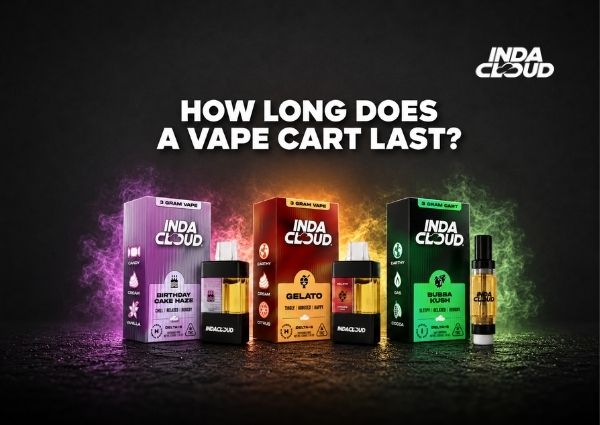
A 1g vape cart lasts most people one to three weeks. A 0.5g cart lasts roughly half that. Those are honest averages, and your own number depends on three things: how much oil the cart holds, how much each puff burns, and how often you hit it.
Labels and spec sheets love fixed puff counts. Real life doesn’t work that way, which is why this guide converts oil volume into puffs and puffs into days, so you can estimate your own 510-thread vape carts instead of trusting a number printed under lab conditions.
Quick reference before the math: a light user can stretch a 1g cart past three weeks. An average user gets about two. A heavy user can empty one in under seven days.
Three variables drive everything: cart size (total oil volume), oil consumed per puff, and puff frequency. Every duration estimate in this article is some combination of those three numbers.
Carts come in three common sizes: 0.5g (500mg of oil), 1g (1000mg), and 2g (2000mg). The gram figure measures total oil, so a “500mg vs 1000mg” comparison is really a half-gram versus full-gram comparison.
Total oil and active cannabinoid content are different numbers. A 1g THCA cart typically holds around 900mg of actual distillate, with botanical terpenes making up the remainder. The mg on the label is oil volume; the cannabinoid concentration determines potency, which we’ll come back to.
Colorado dispensary Silver Stem’s cart FAQ puts an average drag at 3 to 5mg of oil. At that rate, a typical 2 to 3 second puff works out to roughly 1 to 2mg per second of inhale.
That’s a range, and it stays a range. Draw length and device power both move the number. A long 5-second pull can burn double what a controlled 2-second puff does.
Puff length and puff frequency are separate variables, and they compound. Someone taking twenty short hits a day can outlast someone taking eight long ones.
Chain vaping, meaning back-to-back hits with no pause, drains a cart faster than any other habit. The coil stays hot, oil keeps vaporizing, and the puff count climbs before the effects have even settled in.
Here’s the whole calculation in one line: total milligrams divided by milligrams per puff gives you puffs, and puffs divided by your daily hits gives you days. Everything below is that formula with real numbers plugged in.
Start with a 1g cart: 1000mg of oil divided by roughly 3mg per puff gives you somewhere between 200 and 330 puffs. A 0.5g cart runs 100 to 160. These assume short, controlled 2 to 3 second draws. Longer pulls shrink the count fast.
| Cart size | Total oil | Estimated puffs |
| 0.5g | 500mg | 100 to 160 |
| 1g | 1000mg | 200 to 330 |
| 2g | 2000mg | 400 to 660 |
Potency changes the effective math. Stronger oil means fewer puffs per session to reach the same place, which stretches the same puff count across more days.
Now divide by daily usage. Three profiles cover most people: light (about 10 puffs a day), average (about 25), and heavy (50 or more).
| Cart size | Light (~10/day) | Average (~25/day) | Heavy (50+/day) |
| 0.5g | 10 to 16 days | 4 to 6 days | 2 to 3 days |
| 1g | 3 to 4+ weeks | 8 to 13 days | Under a week |
| 2g | 6 to 9 weeks | 2.5 to 3.5 weeks | 8 to 13 days |
Worked example: an average user on a 1g cart taking about 20 puffs a day gets roughly 265 puffs divided by 20, which is about two weeks. The same cart under heavy use, 50-plus puffs a day, is gone in five or six days.
Manufacturer puff counts come from machine testing: identical short draws at fixed temperature, every time. Nobody vapes like a machine. Longer pulls, higher heat settings, and session habits all push real-world numbers below the printed spec.
If your cart empties faster than the box suggested, the usual explanation is heavier use than the test conditions assumed. The cart itself is rarely the problem. Track your own habits for a few days and the math above will predict your number better than any label.
Two carts with identical oil volume can last very different lengths of time. Hardware, oil type, and heat settings decide who wins.
The heating element matters more than most people realize. A ceramic coil heats oil evenly across its surface, vaporizing more of what you paid for. A cotton wick heats less evenly, and inefficient hardware burns oil without turning all of it into usable vapor.
Ceramic coils on a standard 510-thread connection are the reference point for efficient hardware: even vaporization, smooth draws, and minimal wasted oil.
Thicker concentrates like live resin and rosin need more heat to vaporize, and more heat burns oil faster. Distillate-style oils, including the THCA carts in our lineup, vaporize more evenly at lower temperatures. The full comparison lives in our live resin vs distillate cart breakdown.
Tie that back to the per-puff math: denser vapor delivers more oil per hit. More oil per hit means fewer total puffs from the same cart.
Voltage is the throttle. Higher voltage runs the coil hotter, depletes oil faster, and raises the risk of burnt-off cannabinoids and terpenes. Running hot cuts total puff count substantially compared to low settings; more heat per second simply vaporizes more oil per second.
Most 510 batteries have a sweet spot around 2.5V to 3.6V. Staying low stretches the cart and preserves flavor. Push past 3.8V and you’re trading lifespan for bigger clouds.
For total oil delivered, a refillable-battery setup usually wins. A 510 cart pairs with a rechargeable battery you already own, so the oil is the only thing that runs out. When the cart empties, you swap it and keep the battery.
A disposable vape builds the battery in. If that battery dies before the oil is gone, the remaining oil is stranded, though rechargeable disposables have largely closed that gap. As a mechanical fact, a reusable 510 cart generally delivers more of the oil you paid for than a non-rechargeable disposable.
The usual suspects, in order of how often they’re the cause:
There’s also a difference between a cart that’s nearly empty and one that’s underperforming. Weak vapor, faint flavor, and visible low oil mean it’s finishing. A harsh, burnt taste with oil still visible usually means a clog or overheating, covered in our guide on how to hit a cart properly.
Every tip below follows directly from the math, and none of it involves modifying hardware.
Take shorter, controlled puffs. A 2 to 3 second draw is the efficiency sweet spot; every second beyond that burns oil you won’t fully use. Pause between hits so the coil cools and you can gauge effects before reaching for more.
Vape at lower voltage. The bottom of your battery’s range delivers the same oil over more puffs with better flavor.
Store the cart upright in a cool, dark place, ideally in its original packaging. Heat thins the oil and invites leaking; light and air degrade cannabinoids over time.
Match cart size to your actual usage. If you’re burning through 1g carts every week, 2 gram carts cut your replacement cycle in half and usually cost less per milligram. Frequent users who want to sample formats before committing can work through a one-of-each vape bundle, which also shows what the far end of the size spectrum looks like at 6 grams per device. Price factors into that decision too, and our guide on how much a cart costs covers the per-milligram math.
Yes, eventually. Shelf life and usage life are different clocks. Usage life is the puffs-and-days math above; shelf life is how long the oil stays good sitting in a drawer, typically one to two years with proper storage.
Cannabinoids and terpenes degrade with time, heat, light, and oxygen. Degraded oil turns from golden or amber toward dark brown, tastes muted or harsh, and hits weaker. An old cart is more of a quality problem than a safety one, but oil that’s gone cloudy or shows particulate is a toss-it sign.
If you vape occasionally, this is the argument for buying smaller, fresher batches instead of stockpiling. A 2g cart saves money only if you’ll finish it while the oil is still in its prime.
Run your own numbers: your cart’s milligrams divided by about 3mg per puff, then divided by your daily hits. Light users should buy small and fresh. Daily users come out ahead on 1g and 2g formats with a low-voltage battery and short draws.
Our THCA carts run ceramic coils on standard 510 threading and hold roughly 920mg of distillate per gram, so the puff math above maps directly onto them. Browse our vape carts collection to match a size to your math.
Every cart we ship is hemp-derived and 2018 Farm Bill compliant, containing less than 0.3% delta-9 THC by dry weight, with third-party lab testing and published COAs behind each batch (state laws vary, so check yours). Orders over $89 ship free. Whatever your usage tier, the math is the same: controlled puffs, low heat, cool storage, and a size that fits how you vape.
Yes, THC gummies are legal to buy in most of the United States right…
Learn more

Raw, unheated THCA clears your system in roughly 24 to 48 hours. Once you…
Learn more

Yes, edibles show up on drug tests. Standard panels detect THC edibles exactly the…
Learn more
Green Wednesday is the Wednesday before Thanksgiving, the cannabis industry’s second-biggest shopping day of…
Learn more
