FREE SHIPPING $89+
 FREE GIFTS ALL ORDERS $120+
 100% FEDERALLY LEGAL
  LAB TESTED FOR PURITY


Indica, sativa, and hybrid are the three primary cannabis classifications used to categorize strains by plant structure, effects, and intended use. While modern genetics reveal that these labels lack strict scientific boundaries, they remain the most practical framework for selecting products aligned with specific goals.
This guide covers botanical origins and plant morphology, the distinct effects each type produces, targeted use cases for sleep and energy and pain management, the role of cannabinoids and terpenes in shaping experiences, and how to choose the right strain for your needs.
Indica plants grow short and bushy with dense branching, originating from harsh Central Asian climates that favored compact structures and faster flowering cycles. Sativa plants stretch tall and slender with narrow leaves, shaped by equatorial regions where longer growing seasons allowed extended maturation periods of 12 to 16 weeks.
Each classification carries a distinct effect reputation. Indica strains promote deep physical relaxation and sedation suited to evening routines, while sativa strains deliver cerebral energy and alertness for daytime productivity. Hybrids blend both parent lineages across a spectrum from indica-dominant to balanced 50/50 to sativa-dominant, offering tailored combinations for nearly any situation.
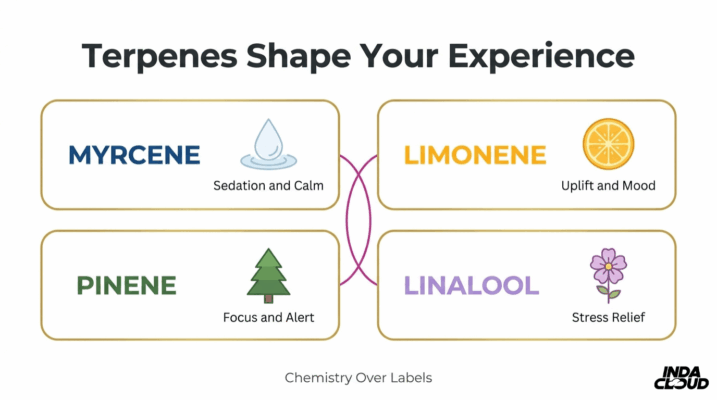
The chemical profile behind each strain tells a more accurate story than the label alone. Terpenes like myrcene drive the sedation commonly attributed to indica, while limonene and pinene fuel the uplift associated with sativa. Checking lab-tested cannabinoid and terpene data provides more reliable predictions than relying on classification names.
Choosing between these categories starts with identifying your desired effects, tolerance level, and time of day. We break down every factor in the sections that follow.
What Is Indica?
Indica is a cannabis classification traditionally associated with short, bushy plants that produce relaxing, body-centered effects. Originating from the mountainous regions of Central Asia, indica strains have become one of the most widely recognized categories in cannabis culture. While modern science increasingly questions the genetic basis of this classification, the indica label remains a practical shorthand for consumers seeking specific experiences. The term guides product selection across dispensaries, online retailers, and hemp-derived product lines, helping users identify strains suited to relaxation, sleep, and physical comfort.
According to Springer International Publishing, vernacular “Indica” refers to Afghani landraces (Cannabis indica subsp. afghanica) and their descendants in the northwest of Pakistan bordering Afghanistan. This geographic origin shaped the plant’s distinctive physical traits: compact structure, broad leaves, and dense bud formation adapted to harsh, high-altitude climates. These characteristics developed as natural adaptations to shorter growing seasons and cooler temperatures, producing plants that flower faster than their sativa counterparts.
Indica strains are prone to produce more side-branches and denser overall growth than sativa strains, resulting in a wider, bushier plant. This growth pattern makes indica cultivars particularly suitable for indoor growing environments where vertical space is limited. The dense flower clusters typical of indica plants also tend to carry higher concentrations of certain terpenes, particularly myrcene, which contributes to the sedative qualities many users associate with this strain type.
For consumers, the indica classification serves as a useful starting point when choosing products aligned with evening use, physical relaxation, or wind-down routines. Understanding what indica represents, both botanically and experientially, provides a foundation for comparing it against sativa and hybrid options in the sections that follow.
What Is Sativa?
Sativa is a cannabis classification traditionally associated with tall, narrow-leafed plants and uplifting, energizing effects. Below, this section covers sativa’s origins, physical traits, typical effects, and popular strains.
Sativa traces its heritage to equatorial regions where long growing seasons shaped its distinctive growth patterns. According to a University of Vermont publication, the “Sativa” vernacular type refers to plants of Indian heritage (Cannabis indica subsp. indica) that spread to equatorial regions like Southeast Asia, South and East Africa, and the Americas. These warm, humid climates encouraged vertical growth and extended flowering cycles. Cannabis sativa plants are characterized as typically tall and slender, often reaching heights well above their indica counterparts. The leaves feature long, thin fingers that maximize light absorption in tropical canopies.
Sativa plants have a much longer flowering time than indica, typically ranging from 12 to 16 weeks. This extended maturation period produces airy, elongated bud structures rather than the dense nuggets found on shorter varieties. For growers, the longer wait often yields generous harvests, though indoor cultivators need ample vertical space to accommodate sativa’s stretching habit.
Users commonly associate sativa strains with cerebral, stimulating effects. In a cross-sectional survey published through NCBI, participants were more likely to perceive feeling “alert,” “energized,” and “motivated” after using sativa. This reputation makes sativa varieties a popular choice for daytime activities, creative projects, and social gatherings where mental clarity is preferred over physical sedation. That said, individual responses vary significantly based on each product’s specific cannabinoid and terpene composition.
Popular sativa and sativa-leaning strains include:
- Sour Diesel, known for its sharp, fuel-like aroma and fast-acting cerebral buzz.
- Blue Dream, a widely available variety prized for balanced euphoria and gentle body relaxation.
- Green Crack, favored for its intensely focused, energetic experience.
For those exploring sativa’s uplifting qualities, understanding how these traits compare to indica and hybrid options helps narrow down the ideal match.
What Is a Hybrid Strain?
A hybrid strain is a cannabis variety created by crossbreeding indica and sativa parent plants to combine traits from both lineages. Hybrids can lean indica-dominant, sativa-dominant, or balanced (50/50), producing a wide spectrum of effects. Popular hybrid strains in 2025 include Runtz, Wedding Cake, Blue Dream, Gelato, and Gorilla Glue. Because breeders select parent plants for specific cannabinoid and terpene profiles, each hybrid offers a unique combination of relaxation and stimulation. Most cannabis available today is technically a hybrid, since decades of selective breeding have blended indica and sativa genetics extensively. The specific effects of any hybrid depend more on its chemical composition than its parent classification alone.
How Do Indica, Sativa, and Hybrid Differ in Plant Structure?
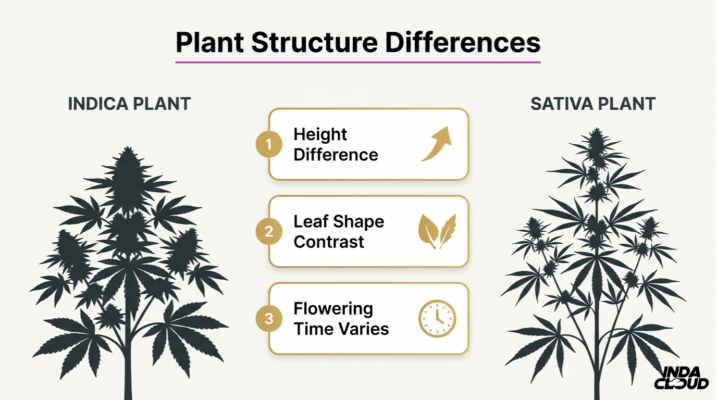
Indica, sativa, and hybrid differ in plant structure primarily through height, leaf shape, branching density, and flowering time. The following subsections break down how each type grows and why modern genetics complicate these visual categories.
How Does the Indica Plant Look and Grow?
The indica plant looks and grows as a short, wide bush with dense branching. Cannabis indica plants are described as shorter and bushier than their sativa counterparts, rarely exceeding three to four feet indoors. According to Utoya, indica strains produce more side-branches and denser overall growth than sativa strains, resulting in a wider, bushier plant. Broad, dark-green fan leaves with wide blades are another hallmark. This compact structure makes indica varieties well suited to indoor cultivation where vertical space is limited. Flowering periods tend to be shorter, often finishing in eight to ten weeks.
How Does the Sativa Plant Look and Grow?
The sativa plant looks and grows as a tall, slender structure with narrow fan leaves and long internodal spacing. Cannabis sativa plants are characterized as typically tall, sometimes stretching well beyond six feet when grown outdoors. Thin, light-green leaflets spread wide on each fan leaf, maximizing light absorption in equatorial climates where these varieties originated. Sativa flowering time is considerably longer than indica; plants typically require 12 to 16 weeks to mature. Because of this extended cycle, sativa cultivars demand more patience and vertical room. For growers prioritizing canopy management, training techniques like topping or low-stress training help control the vigorous upward stretch that defines sativa morphology.
How Do Hybrid Plants Vary in Growth Characteristics?
Hybrid plants vary in growth characteristics depending on their indica-to-sativa genetic ratio. An indica-dominant hybrid tends to stay shorter with denser foliage, while a sativa-dominant hybrid stretches taller with wider internodal gaps. Balanced 50/50 crosses often display intermediate traits: moderate height, medium leaf width, and flowering periods that fall between eight and fourteen weeks.
However, predicting structure from lineage alone is increasingly unreliable. Research from Bedrocan shows that genetically it is impossible to prove whether a cannabis plant is an indica or sativa, as no distinguishing difference exists in the genes. Chemotype, shaped by specific alleles like the BTBT combination linked to THC-A synthase, ultimately matters more than morphological labels when selecting products.
Understanding these structural differences provides useful context, yet the chemical profile is what truly shapes each strain’s effects.
What Are the Effects of Indica vs Sativa vs Hybrid?
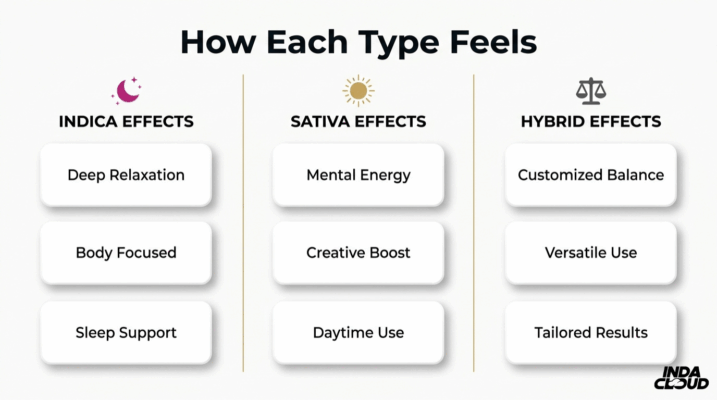
The effects of indica vs sativa vs hybrid differ primarily in how users perceive their physical and mental responses. Indica strains are associated with relaxation, sativa strains with energy, and hybrids with a blend of both.
What Effects Does Indica Typically Produce?
Indica typically produces deeply relaxing, body-focused effects. Users commonly report feelings of physical heaviness, muscle relaxation, and drowsiness. In a cross-sectional survey published by the National Center for Biotechnology Information, participants were more likely to perceive feeling “sleepy/tired” or “relaxed” after using indica compared to other strain types.
These sedating qualities make indica a popular evening choice. The calming body sensation, sometimes called “couch-lock,” can ease physical tension and quiet a restless mind. For those seeking wind-down effects after a long day, indica strains consistently deliver that heavy, settled feeling.
What Effects Does Sativa Typically Produce?
Sativa typically produces uplifting, cerebral effects that sharpen focus and boost energy. Users frequently describe feeling more alert, creative, and socially engaged after consuming sativa strains. Rather than weighing the body down, sativa tends to stimulate mental activity and elevate mood.
This energizing profile suits daytime use particularly well. Whether tackling a creative project or heading into a social gathering, sativa’s stimulating qualities can support productivity without the sedation associated with indica. For most consumers who want to stay active and clear-headed, sativa remains the go-to classification.
What Effects Do Hybrid Strains Typically Produce?
Hybrid strains typically produce a combination of indica and sativa effects, with the balance depending on the parent genetics. An indica-dominant hybrid leans toward relaxation with mild mental clarity, while a sativa-dominant hybrid emphasizes energy with subtle physical calm.
This versatility is what makes hybrids so widely popular. Balanced 50/50 hybrids offer an even split of body relaxation and cerebral stimulation, suiting users who want neither full sedation nor intense energy. Because each hybrid’s specific terpene and cannabinoid profile shapes its unique effect, checking lab results matters more than the label alone. Understanding these effect differences helps when selecting the right cannabinoid and terpene profile for your needs.
What Are the Best Uses for Indica Strains?
The best uses for indica strains center on sleep support, pain management, and anxiety relief. Each situation benefits from indica’s reputation for calming, body-focused effects.
When Should You Choose Indica for Sleep?
You should choose indica for sleep when you need help winding down at the end of the day. Indica strains promote deep physical relaxation, which can ease the transition into restful sleep. According to a cross-sectional survey published in the National Center for Biotechnology Information, participants were more likely to perceive feeling “sleepy/tired” or “relaxed” after using indica, while sativa users reported feeling “alert” and “energized.”
This sedating profile makes indica a natural fit for nighttime routines. Strains high in myrcene, a common terpene in many indica varieties, tend to amplify that drowsy, full-body calm. For anyone struggling with racing thoughts at bedtime, an indica-leaning product often delivers the stillness needed to fall asleep faster.
When Should You Choose Indica for Pain Relief?
You should choose indica for pain relief when physical discomfort, such as muscle tension, soreness, or chronic aches, interferes with daily comfort or rest. Indica strains deliver heavy body effects that many users describe as a wave of muscular relaxation, which can reduce the perception of pain.
The combination of higher myrcene content and full-spectrum cannabinoid profiles found in many indica varieties works synergistically to calm inflamed tissues and ease tightness. For persistent pain that disrupts sleep, indica serves double duty by addressing both discomfort and restlessness. Choosing a product with verified lab results ensures you get a consistent cannabinoid and terpene profile suited to relief.
When Should You Choose Indica for Anxiety?
You should choose indica for anxiety when stress feels overwhelming or physical tension accompanies anxious thoughts. Indica strains quiet mental restlessness through pronounced sedative and muscle-relaxing properties, creating a sense of grounded calm.
Because anxiety often manifests physically through tight shoulders, clenched jaws, or a racing heartbeat, indica’s body-heavy effects address both the mental and somatic sides of the experience. Starting with a low dose is essential, since overconsumption of any cannabis strain can sometimes heighten anxiety rather than reduce it. For consistent results, selecting lab-tested indica products with known terpene profiles helps you find a reliable routine for managing stress.
With indica’s calming strengths established, sativa strains offer a contrasting set of benefits worth exploring.
What Are the Best Uses for Sativa Strains?
The best uses for sativa strains include creative projects, daytime productivity, and social gatherings. Each scenario benefits from sativa’s uplifting, cerebral profile in distinct ways.
When Should You Choose Sativa for Creativity?
You should choose sativa for creativity when you need enhanced mental focus and imaginative thinking. Sativa strains stimulate cerebral activity, making them well suited for artistic work, brainstorming sessions, and problem-solving tasks. Terpenes like limonene and pinene, commonly found in sativa-leaning profiles, contribute to this alert, mentally stimulating experience. Many artists and musicians select sativa varieties specifically before writing, painting, or composing because the energizing headspace encourages free-flowing ideas without the heavy sedation associated with indica options.
When Should You Choose Sativa for Daytime Energy?
You should choose sativa for daytime energy when you want sustained alertness without drowsiness. According to a cross-sectional survey published via NCBI, participants were more likely to perceive feeling “alert,” “energized,” and “motivated” after using sativa. This makes sativa strains practical companions for morning routines, exercise, household tasks, and work that demands concentration. Because the effects tend to be uplifting rather than physically sedating, sativa allows most users to remain functional and engaged throughout the day.
When Should You Choose Sativa for Social Settings?
You should choose sativa for social settings when you want a conversational, euphoric mood. Sativa’s tendency to promote talkativeness and lighthearted energy makes it a popular choice for parties, group outings, and casual get-togethers. Rather than inducing the “couch-lock” relaxation many associate with indica, sativa keeps users present and interactive. For anyone who finds certain strains make them withdrawn or sleepy in group environments, a sativa-dominant option typically offers a more sociable experience.
With sativa’s strengths defined, hybrid strains offer a middle ground worth exploring next.
What Are the Best Uses for Hybrid Strains?
The best uses for hybrid strains depend on whether the hybrid leans indica-dominant, sativa-dominant, or sits at a balanced 50/50 ratio. Each type suits different situations, from targeted relaxation to versatile all-day use.
When Should You Choose an Indica-Dominant Hybrid?
You should choose an indica-dominant hybrid when you want pronounced relaxation without the full sedation of a pure indica. These hybrids pair calming body effects with enough mental clarity to remain functional during low-key evening activities, such as watching a movie, gentle stretching, or winding down after a long day.
Indica-dominant hybrids work well for users who find pure indicas too heavy. The sativa genetics blended in can soften the “couch-lock” sensation while still delivering stress and tension relief. Popular indica-dominant options like OG Kush and Wedding Cake illustrate this balance, offering deep relaxation with a mild cerebral lift. For anyone seeking evening comfort without immediately falling asleep, this category is a practical starting point.
When Should You Choose a Sativa-Dominant Hybrid?
You should choose a sativa-dominant hybrid when you need uplifting energy tempered by gentle physical ease. These strains emphasize the alert, motivated qualities associated with sativas while the indica influence smooths out overstimulation that some users experience with pure sativa varieties.
Sativa-dominant hybrids suit daytime productivity, creative projects, and social gatherings where focus and conversational energy matter. Strains like Blue Dream and Sour Diesel exemplify this profile, delivering cerebral stimulation alongside a subtle body calm. According to an NCBI cross-sectional survey, participants were more likely to perceive feeling “alert,” “energized,” and “motivated” after using sativa-leaning varieties. For users sensitive to anxiety from pure sativas, the indica component in these hybrids provides a stabilizing counterbalance.
When Should You Choose a Balanced 50/50 Hybrid?
You should choose a balanced 50/50 hybrid when you want equal parts mental stimulation and physical relaxation without either effect dominating. Balanced hybrids offer the most versatile experience, making them suitable across various times of day and activities.
This category appeals to users who have not yet identified a strong preference for indica or sativa effects. A 50/50 hybrid delivers a middle-ground experience useful for moderate socializing, light creative work, or simply unwinding without heavy sedation. Gelato is one well-known balanced hybrid that provides both euphoric uplift and soothing body comfort. For most newcomers exploring cannabis, balanced hybrids represent the safest starting point because the effects rarely skew too far in either direction.
Understanding which hybrid ratio matches your needs makes selecting the right cannabinoid and terpene profile much easier.
What Cannabinoids and Terpenes Shape Each Strain Type?
Cannabinoids and terpenes shape each strain type by creating distinct chemical profiles that drive the effects users experience. THC and CBD ratios vary between indica, sativa, and hybrid labels, while terpenes like myrcene and limonene further define each strain’s character.
How Do THC and CBD Levels Differ Across Strain Types?
THC and CBD levels differ across strain types less dramatically than most consumers assume. According to a 2024 analysis published in Frontiers in Public Health, average THC concentrations in seized herbal cannabis samples across U.S. regions fell within a narrow range of approximately 11–15% from 2013 to 2022.
This finding challenges the common belief that sativa strains are inherently higher in THC or that indica strains consistently contain more CBD. Modern breeding practices have pushed most commercial flower toward high-THC, low-CBD profiles regardless of strain label. What ultimately distinguishes one product from another is the specific cultivar’s genetics and growing conditions, not whether it carries an indica or sativa designation. Consumers benefit more from reading lab-tested cannabinoid percentages on product labels than relying on strain type alone.
How Do Terpenes Influence Indica, Sativa, and Hybrid Effects?
Terpenes influence indica, sativa, and hybrid effects by interacting with cannabinoids to modulate the overall experience, a mechanism often called the entourage effect. Myrcene, the most common cannabis terpene, produces sedative qualities frequently associated with indica strains. Limonene contributes uplifting, mood-enhancing effects typical of sativa varieties. Linalool promotes calm, while pinene supports alertness and focus.
According to an NCBI review, sedation in common cannabis strains is often attributable to myrcene content rather than CBD levels. Because terpene percentages in flower typically range from just 0.1% to 3%, even small shifts in a strain’s terpene ratio can noticeably alter its effects. This is precisely why two strains labeled “sativa” can feel completely different; their terpene fingerprints matter more than the category name.
With cannabinoid and terpene profiles clarified, the next step is evaluating whether traditional strain labels still hold value.
Does the Indica vs Sativa Classification Still Matter?
The indica vs sativa classification still matters as a practical shopping shorthand, but it lacks scientific validity as a predictor of effects. Modern research points to cannabinoid and terpene profiles as far more reliable indicators of what a strain will actually do.
The traditional labels persist because consumers find them useful for narrowing choices. According to a 2021 cross-sectional survey published through NCBI, participants were more likely to perceive feeling “sleepy/tired” or “relaxed” after using indica and “alert,” “energized,” and “motivated” after using sativa. These consistent user perceptions keep the classification commercially relevant, even as the science beneath it erodes.
Genetically, the distinction collapses. Research from Bedrocan has shown that it is impossible to prove whether a cannabis plant is an indica or sativa, as there is no difference in the genes. Dr. Ethan Russo, a prominent cannabinoid researcher, has called the sativa/indica distinction as commonly applied in the lay literature “total nonsense and an exercise in futility,” noting that biochemical content cannot be guessed from plant morphology alone.
What actually shapes a strain’s effects is its chemical composition. Sedation commonly attributed to indica strains is often driven by myrcene content, a monoterpene with a strongly sedative “couch-lock” effect, rather than by the indica classification itself. Similarly, energizing effects linked to sativa strains frequently correlate with terpenes like limonene and pinene rather than with any genetic sativa lineage.
For practical purposes, the classification works best as a starting point. Consumers who consistently respond well to products labeled “indica” are likely responding to a recurring terpene and cannabinoid pattern common among those products. The label itself is a convenient proxy, not a guarantee. Checking lab-tested terpene profiles and THC-to-CBD ratios offers a more reliable path to predicting your experience than relying on indica, sativa, or hybrid labels alone. Understanding the chemical profile behind the label is what ultimately helps you choose the right strain.
How Do You Choose the Right Strain Type for You?
You choose the right strain type by evaluating your experience level, desired effects, and the time of day you plan to consume. The following subsections break down each factor.
How Should Beginners Pick Between Indica, Sativa, and Hybrid?
Beginners should pick between indica, sativa, and hybrid by starting with the effects they want rather than relying solely on category labels. According to research published by Bedrocan, it is genetically impossible to prove whether a cannabis plant is an indica or sativa, as no difference exists in the genes. This means the label on a package tells only part of the story.
A more practical approach for new users includes:
- Starting with a low-THC hybrid to gauge personal tolerance before committing to a stronger indica or sativa.
- Reading the terpene and cannabinoid profile on the product label instead of choosing by name alone.
- Trying small quantities of each type to identify which effects feel most comfortable.
For most beginners, balanced hybrids offer the gentlest introduction because they blend characteristics from both parent types.
How Should You Choose a Strain Based on Desired Effects?
You should choose a strain based on desired effects by matching your goal to the cannabinoid and terpene profile of the product, not just the indica or sativa label. Each effect traces back to specific compounds:
- Relaxation and sleep: Strains high in myrcene and moderate-to-high THC tend to promote sedation.
- Energy and focus: Products with limonene or pinene and a moderate THC level often support alertness.
- Pain relief: Higher THC concentrations paired with calming terpenes like linalool may ease discomfort.
- Social uplift: Terpinolene-forward strains with balanced cannabinoid ratios frequently encourage sociability.
Prioritizing the chemical composition over the strain category leads to more predictable, satisfying results. When in doubt, check lab reports for terpene percentages alongside THC and CBD content.
How Should You Choose a Strain Based on Time of Day?
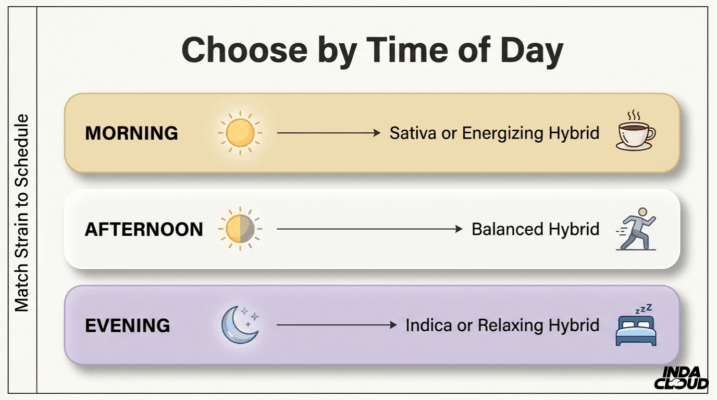
You should choose a strain based on time of day by aligning its typical effect profile with your schedule. A 2021 cross-sectional survey published by the National Center for Biotechnology Information found that 62% of participants prefer using indica at the end of the day, while 19% prefer using sativa in the morning.
A practical time-of-day framework includes:
- Morning or midday: Sativa-leaning strains or energizing hybrids that support productivity without heavy sedation.
- Afternoon: Balanced hybrids that offer mild relaxation without compromising alertness.
- Evening or nighttime: Indica-dominant options rich in myrcene for winding down and supporting restful sleep.
Matching strain type to your daily rhythm helps you get the most from each session. With these selection strategies in mind, exploring specific products makes the decision even easier.
How Can You Explore Indica, Sativa, and Hybrid Products?
You can explore indica, sativa, and hybrid products by choosing hemp-derived options that match your desired effects. The following sections cover how Inda Cloud helps you find your ideal strain type and the key takeaways from understanding these categories.
Can Hemp-Derived Products from Inda Cloud Help You Find Your Ideal Strain Type?
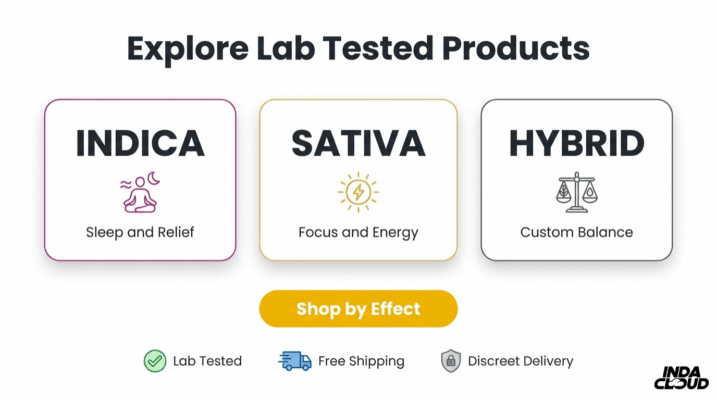
Yes, hemp-derived products from Inda Cloud can help you find your ideal strain type. Inda Cloud offers a curated selection of federally legal hemp-derived products, including THCa flower, pre-rolls, vapes, and edibles, organized by indica, sativa, and hybrid categories. Every product undergoes third-party lab testing for potency and purity, so you can trust what the label says about cannabinoid and terpene content.
Rather than guessing, you can shop by desired effect: relaxation, energy, focus, or social enhancement. With over 250,000 verified customers and a team of 35+ cannabis experts supporting product development, Inda Cloud simplifies the process of matching strain type to personal preference. Free shipping on qualifying orders and discreet delivery make exploring different options convenient across the continental United States.
What Are the Key Takeaways About Indica vs Sativa vs Hybrid?
The key takeaways about indica vs sativa vs hybrid center on how these categories guide product selection, even as science reveals a more nuanced picture. The most important points to remember include:
- Indica strains are traditionally associated with relaxation, sedation, and nighttime use.
- Sativa strains are linked to energy, alertness, and daytime productivity.
- Hybrid strains combine parent genetics to deliver balanced or customized effects.
- Terpene and cannabinoid profiles matter more than strain labels alone when predicting effects.
- Personal experimentation remains the most reliable way to identify what works for your body.
For most consumers, starting with a clearly labeled indica, sativa, or hybrid product provides a useful framework, while paying attention to lab-tested terpene data refines the experience over time. Inda Cloud makes this exploration straightforward with effect-based product organization and transparent lab results.