



Delta 8

Delta 8 vs Delta 9: Complete Comparison
Let’s dive into the worlds of delta 8 and delta 9 THC. Delta 9…
Learn more
You must be 21+ to enter this site
 FREE SHIPPING $89+
 FREE GIFT ON $120+
 100% FEDERALLY LEGAL
 LAB TESTED FOR PURITY
FREE SHIPPING $89+
FREE GIFT ON $120+
100% FEDERALLY LEGAL
LAB TESTED FOR PURITY
FREE SHIPPING $89+
FREE GIFT ON $120+
100% FEDERALLY LEGAL
LAB TESTED FOR PURITY
FREE SHIPPING $89+
FREE GIFT ON $120+
100% FEDERALLY LEGAL
LAB TESTED FOR PURITY
FREE SHIPPING $89+
FREE GIFT ON $120+
100% FEDERALLY LEGAL
LAB TESTED FOR PURITY
FREE SHIPPING $89+
FREE GIFT ON $120+
100% FEDERALLY LEGAL
LAB TESTED FOR PURITY
FREE SHIPPING $89+
FREE GIFT ON $120+
100% FEDERALLY LEGAL
LAB TESTED FOR PURITY
FREE SHIPPING $89+
FREE GIFT ON $120+
100% FEDERALLY LEGAL
LAB TESTED FOR PURITY
LAB TESTED FOR PURITY
FREE SHIPPING $89+
FREE GIFT ON $120+
100% FEDERALLY LEGAL
LAB TESTED FOR PURITY
FREE SHIPPING $89+
FREE GIFT ON $120+
100% FEDERALLY LEGAL
LAB TESTED FOR PURITY
FREE SHIPPING $89+
FREE GIFT ON $120+
100% FEDERALLY LEGAL
LAB TESTED FOR PURITY
FREE SHIPPING $89+
FREE GIFT ON $120+
100% FEDERALLY LEGAL
LAB TESTED FOR PURITY
FREE SHIPPING $89+
FREE GIFT ON $120+
100% FEDERALLY LEGAL
LAB TESTED FOR PURITY
FREE SHIPPING $89+
FREE GIFT ON $120+
100% FEDERALLY LEGAL
LAB TESTED FOR PURITY
FREE SHIPPING $89+
FREE GIFT ON $120+
100% FEDERALLY LEGAL
LAB TESTED FOR PURITY

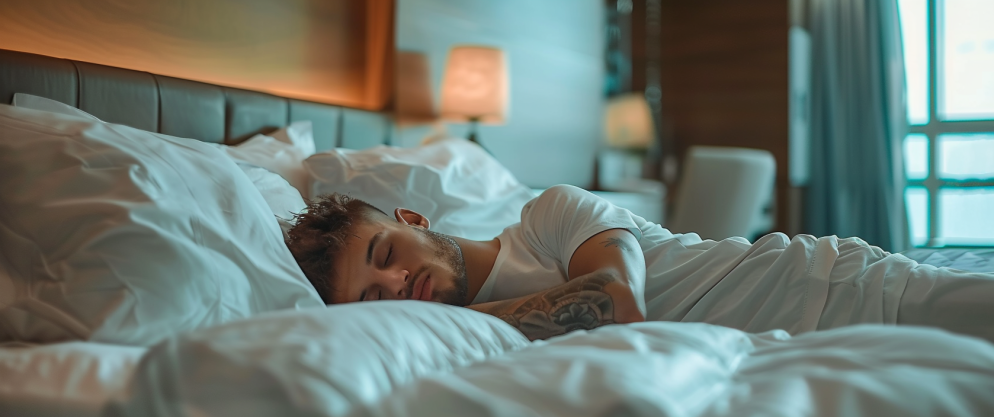
For most people, Delta 8 is the more reliably sedating of the two, because it is psychoactive and CBD is not. If you take CBD expecting to feel drowsy the way an antihistamine makes you drowsy, you will usually be disappointed.
That said, the question itself is too narrow. Neither cannabinoid is what most sleep products actually lean on, and the difference between a product that works at 11pm and one that leaves you foggy at 7am usually comes down to formulation rather than which THC isomer is printed on the bag.
Delta 8 is better if your problem is falling asleep and you want something you can feel working. CBD is better if you want to take the edge off without intoxication, and you are willing to accept a subtler, less predictable effect.
| CBD | Delta 8 THC | |
|---|---|---|
| Intoxicating | No | Yes, milder than Delta 9 |
| Typical sleep dose | Often 25mg and up, highly variable | Commonly 10 to 40mg |
| What it tends to do | Subtle calming, no clear sedation on its own | Noticeable relaxation and drowsiness |
| Next-day grogginess | Uncommon | Possible at higher doses |
| Tolerance with nightly use | Minimal reported | Builds, like any THC |
| Drug test risk | Low, higher with full-spectrum | Yes, it is THC |
The honest summary: Delta 8 will do more, and it asks more of you in return. CBD asks almost nothing and often delivers accordingly.
CBD, or cannabidiol, is the second most abundant cannabinoid in cannabis after THC, and it is not intoxicating. It does not bind directly to the CB1 and CB2 receptors the way THC does. It influences the endocannabinoid system indirectly, which is part of why its effects are harder to pin down.
For sleep specifically, the direct evidence is weaker than the marketing implies. Linares and colleagues found that a single 300mg oral dose of CBD produced no significant change to sleep architecture in healthy volunteers. That is a large dose producing no measurable structural effect.
This does not mean CBD does nothing. It means the plausible mechanism for sleep is indirect, through reduced physical tension or mental noise at bedtime rather than sedation. If racing thoughts are what keeps you up, that may be enough. If you want to feel yourself getting sleepy, it usually is not.
Delta 8 THC is an isomer of Delta 9, differing only in the position of one double bond, and it is psychoactive. Consumers consistently describe the high as milder, clearer, and less prone to producing anxiety than Delta 9 at comparable doses.
For sleep, that milder profile is the appeal. Delta 8 produces genuine physical relaxation and drowsiness without the intensity that can backfire at bedtime, which is why it became a popular evening option for people who found Delta 9 too much.
The catch is that Delta 8 is understudied. Almost all of the sleep research on THC used Delta 9, and findings are extrapolated to Delta 8 rather than measured in it. Treat confident claims about Delta 8 and sleep architecture with some skepticism, including the ones in this category’s marketing.
Hemp-derived Delta 8 is federally legal under the 2018 Farm Bill when the finished product contains no more than 0.3% Delta-9 THC by dry weight. That framework is what the hemp market operates under.
State law is where it varies. A number of states restrict or prohibit hemp-derived Delta 8 independently of federal law, and those rules change. We do not ship to states where Delta 8 is restricted, so check your current state law before ordering.
Less than either side of this debate suggests. Most cannabinoid sleep research is small, short, and focused on Delta 9, and the sleep-aid category routinely overstates what has been demonstrated.
What the better-designed work shows:
Read together, those point somewhere useful: the dose is what matters. Modest THC doses paired with supporting compounds look considerably gentler on sleep structure than the large doses that generated the older concerns.
CBN, or cannabinol, is the cannabinoid that most purpose-built sleep products actually rely on, and it is missing from almost every CBD-versus-Delta-8 comparison online. It forms as THC ages and oxidizes, and it is only mildly psychoactive on its own.
The evidence here deserves an honest framing rather than a sales pitch. A 2024 rat study using polysomnography found CBN increased total sleep time, with an effect on non-REM sleep comparable to zolpidem. That is a promising animal result, not a human one. Older human work found CBN alone did little for sleepiness, though participants reported feeling drowsier when CBN was taken together with THC.
That combination finding is the practical takeaway, and it is why serious sleep formulas pair a small amount of THC with a larger amount of CBN rather than betting everything on a single cannabinoid.
It can at higher doses. THC has a well-documented tendency to suppress REM sleep, the stage associated with memory consolidation and emotional processing, and that is the legitimate concern behind using any THC product as a nightly sleep aid.
The dose threshold matters more than most content on this topic admits. The 2025 review found significant REM reduction starting around 20mg of THC, with most findings at 30mg and above, and noted that the useful window for THC generally sits below 20mg. Products dosed in the single digits are operating well under where the effect reliably appears.
Two other things worth knowing:
Taking a few nights off each week is the more sustainable pattern, both because tolerance builds and because it keeps you honest about whether the product is still doing anything. Nightly use is not inherently harmful, but it is the fastest route to needing more for the same result.
If sleep problems persist for weeks, that is a conversation for a doctor rather than a dosing adjustment. Chronic insomnia has causes that no cannabinoid addresses, and nothing here is medical advice or a claim that any product treats a sleep disorder.
Start lower than you think and give each dose several nights before changing it. Sleep is noisy data, and judging a dose off one night will send you chasing an effect that a stressful Tuesday was responsible for.
There are no evidence-based CBD dosing guidelines, which is the honest answer. Commonly cited sleep ranges begin around 25mg and climb from there, and the research doses that showed no architectural effect were far higher, which tells you how wide the uncertainty is.
CBD is also fat-soluble, so taking it with a meal containing fat improves absorption. Check the label in milligrams per serving rather than total bottle content.
Commonly reported sleep doses run 10 to 40mg, with 10 to 20mg enough for most people who are not regular THC consumers. Higher doses are where next-day grogginess starts showing up, which defeats the purpose.
Timing matters as much as amount. Edibles take 30 minutes to two hours to arrive, so take one well before you want to be asleep rather than as you get into bed. The two-hour rule applies: do not redose because nothing has happened in 45 minutes. Our guide to THC edibles for sleep covers timing in more detail, and how long edibles last covers the full onset and comedown curve.
Both are generally well tolerated, and the side effect profiles differ in ways that matter at bedtime.
CBD: dry mouth, diarrhea, reduced appetite, drowsiness, and fatigue. More importantly, CBD can affect how the body metabolizes other medications, so if you take prescription drugs, that is a conversation to have with a doctor before starting.
Delta 8: dry mouth, red eyes, dizziness, elevated heart rate, and at higher doses the anxiety or paranoia that any THC can produce. Next-day grogginess is the most common complaint specific to sleep use, and it is almost always a dosing problem.
Our full breakdown of Delta-8 side effects covers the profile in depth.
Yes. Combining cannabinoids is standard rather than risky, and most full-spectrum hemp products contain several of them by default. There is no established reason to avoid taking CBD and Delta 8 in the same session.
CBD is often described as smoothing out the sharper edges of THC, which is why formulators pair them deliberately. Start at the low end of both when you first combine them, since you are changing two variables at once. Our breakdown of how much CBD is in Delta-8 covers how the two already appear together in hemp products.
If sleep is the goal, buy a product formulated for sleep rather than picking a cannabinoid and hoping. A single-cannabinoid product is asking one compound to do a job that purpose-built formulas split across several.
That is the thinking behind our Sleep Bliss gummies, which we have now sold over a million of. Each one contains 5mg THC, 10mg CBN, 3mg melatonin, 25mg GABA, and 100mg L-theanine, and they are sugar-free.
Note where that 5mg sits. It is well below the 20mg threshold where REM suppression starts appearing in the literature, with CBN and melatonin carrying the sedation instead of a large THC dose. That is the whole design logic: enough THC to help you let go, not enough to reorganize your night.
One to one and a half gummies is the usual starting point, with most people asleep inside about 40 minutes and effects running four to eight hours. Available as a 10-count if you want to try them first, or the 40-count jar for nightly use. If tolerance has caught up with you, the extra strength version steps it up.
Prefer Delta 8 specifically for the milder profile? Our Delta-8 sleep gummies cover that, and the full sleep gummy collection lays out every format side by side.
Whatever you buy, read the lab report. Every batch we sell is posted at our COA page with batch numbers that match the product in hand. All orders require 21+ age verification, and we ship across the continental US where regulations allow.
Edible Delta 8 runs four to eight hours, which covers most of a night, so it can help with both. Inhaled Delta 8 fades in one to three hours and is better suited to falling asleep than staying that way.
Edibles and gummies take 30 minutes to two hours. Sublingual tinctures land in 15 to 45 minutes. Inhaled products work within minutes. Take an edible well before bedtime rather than at lights out.
Yes. Standard tests screen for THC metabolites and do not distinguish Delta 8 from Delta 9. Full-spectrum CBD can also trigger a positive with regular use. If you are tested, neither is safe to assume otherwise about.
Both are generally well tolerated, but THC tolerance builds with nightly use and stopping abruptly can cause a few nights of disrupted sleep and vivid dreams. Building in a few nights off each week is the more sustainable approach. Talk to a doctor if sleep problems persist.
CBD, because it is not intoxicating. Next-day grogginess from Delta 8 is usually a sign the dose was too high or taken too late, and both are fixable before switching cannabinoids entirely.
The human evidence is too thin to say. CBN looks promising in animal research and older human work suggests it performs better alongside THC than alone, which is why most quality sleep formulas combine the two rather than choosing between them.
FDA Disclaimer: These statements have not been evaluated by the Food and Drug Administration. This product is not intended to diagnose, treat, cure, or prevent any disease. Must be 21 years or older to purchase. Not intended for children, or pregnant or lactating women. Consult a physician before use if you have a serious medical condition or take prescription medications.
Let’s dive into the worlds of delta 8 and delta 9 THC. Delta 9…
Learn more
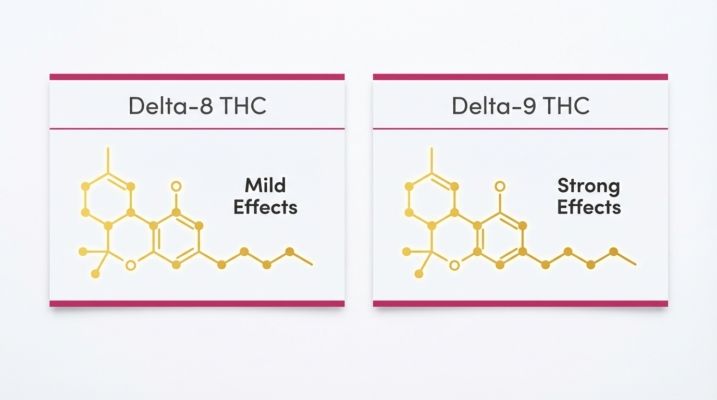
Delta-8 THC is a naturally occurring cannabinoid found in cannabis plants that produces milder…
Learn more
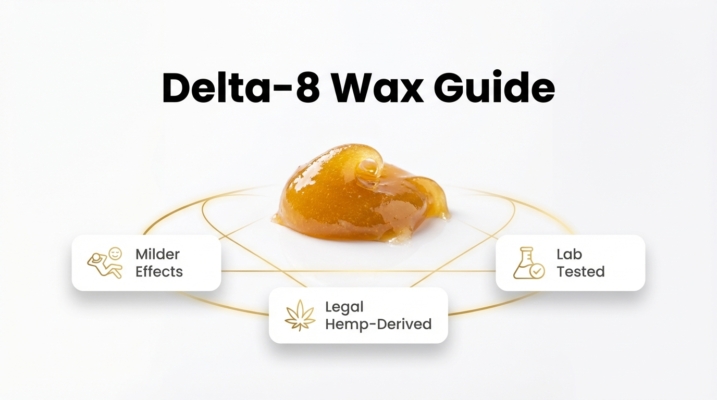
Delta-8 THC wax is a concentrated cannabis extract containing high levels of delta-8-tetrahydrocannabinol in…
Learn more
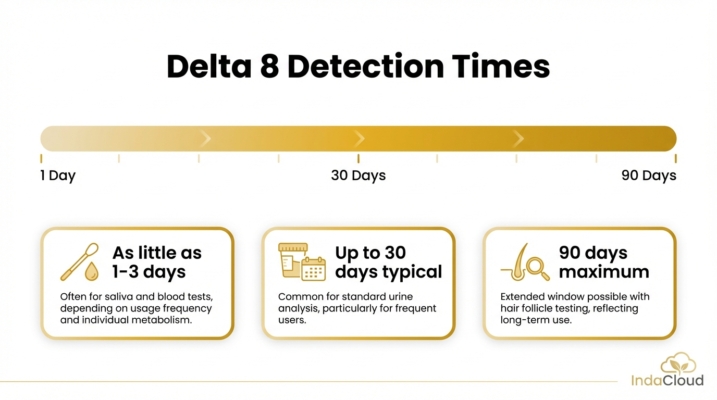
Delta-8 THC is a hemp-derived cannabinoid that stays in your system for as little…
Learn more
