



Blogs

Are THC Gummies Legal? A 2026 State-by-State Guide
Yes, THC gummies are legal to buy in most of the United States right…
Learn more
You must be 21+ to enter this site
 FREE SHIPPING $89+
 FREE GIFT ON $120+
 100% FEDERALLY LEGAL
 LAB TESTED FOR PURITY
FREE SHIPPING $89+
FREE GIFT ON $120+
100% FEDERALLY LEGAL
LAB TESTED FOR PURITY
FREE SHIPPING $89+
FREE GIFT ON $120+
100% FEDERALLY LEGAL
LAB TESTED FOR PURITY
FREE SHIPPING $89+
FREE GIFT ON $120+
100% FEDERALLY LEGAL
LAB TESTED FOR PURITY
FREE SHIPPING $89+
FREE GIFT ON $120+
100% FEDERALLY LEGAL
LAB TESTED FOR PURITY
FREE SHIPPING $89+
FREE GIFT ON $120+
100% FEDERALLY LEGAL
LAB TESTED FOR PURITY
FREE SHIPPING $89+
FREE GIFT ON $120+
100% FEDERALLY LEGAL
LAB TESTED FOR PURITY
FREE SHIPPING $89+
FREE GIFT ON $120+
100% FEDERALLY LEGAL
LAB TESTED FOR PURITY
LAB TESTED FOR PURITY
FREE SHIPPING $89+
FREE GIFT ON $120+
100% FEDERALLY LEGAL
LAB TESTED FOR PURITY
FREE SHIPPING $89+
FREE GIFT ON $120+
100% FEDERALLY LEGAL
LAB TESTED FOR PURITY
FREE SHIPPING $89+
FREE GIFT ON $120+
100% FEDERALLY LEGAL
LAB TESTED FOR PURITY
FREE SHIPPING $89+
FREE GIFT ON $120+
100% FEDERALLY LEGAL
LAB TESTED FOR PURITY
FREE SHIPPING $89+
FREE GIFT ON $120+
100% FEDERALLY LEGAL
LAB TESTED FOR PURITY
FREE SHIPPING $89+
FREE GIFT ON $120+
100% FEDERALLY LEGAL
LAB TESTED FOR PURITY
FREE SHIPPING $89+
FREE GIFT ON $120+
100% FEDERALLY LEGAL
LAB TESTED FOR PURITY

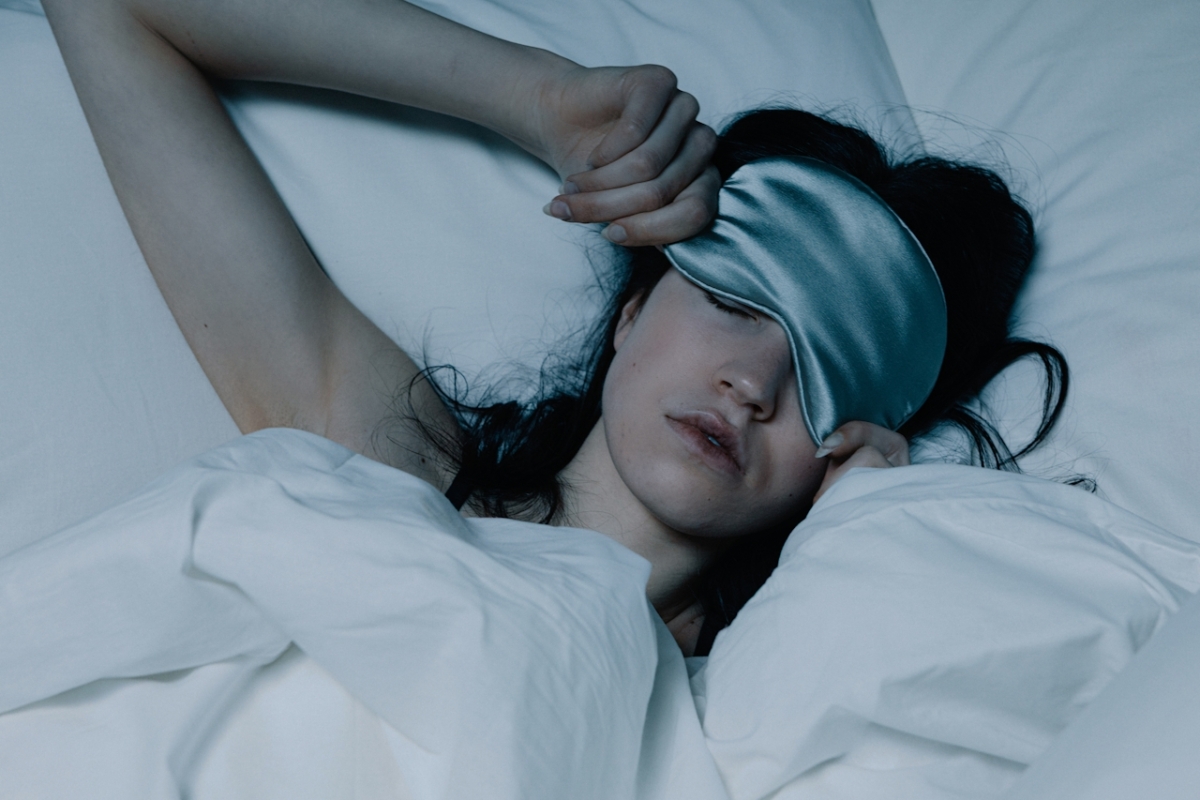
Plenty of people reach for a gummy at night without separating the three problems they’re actually trying to solve. Falling asleep, staying asleep, and waking up rested are different outcomes, and THC affects each one differently.
That distinction shapes everything that follows: how much to take, which cannabinoid blend to look for, and when to swallow it relative to bedtime. If you want to skip straight to dialed-in options, the sleep gummy collection is organized around exactly these outcomes.
THC edibles can speed up how fast you fall asleep, but they change the architecture of your sleep along the way. When you eat THC rather than inhale it, your liver converts it into 11-hydroxy-THC, a metabolite that crosses into the brain more readily and produces a stronger, longer-lasting effect than smoking.
That conversion is why an edible feels heavier and lasts longer than a puff. It’s also why the timing matters so much, which we’ll get to.
On sleep itself, the research points in one direction more clearly than others. THC tends to shorten the time it takes to fall asleep, and at higher doses it can suppress REM sleep, the stage tied to dreaming. Leafly and multiple peer-reviewed sleep reviews note this REM reduction, which is part of why some users report fewer dreams and why “sedated” is not the same as “rested.”
Here’s the practical frame for the rest of this guide. Falling asleep is where THC helps most reliably. Staying asleep is more variable. Sleep quality is the hardest claim to make, because suppressing REM is a trade-off, not a clean win. The evidence base is still emerging, so treat all of this as decision-useful context, not a medical promise.
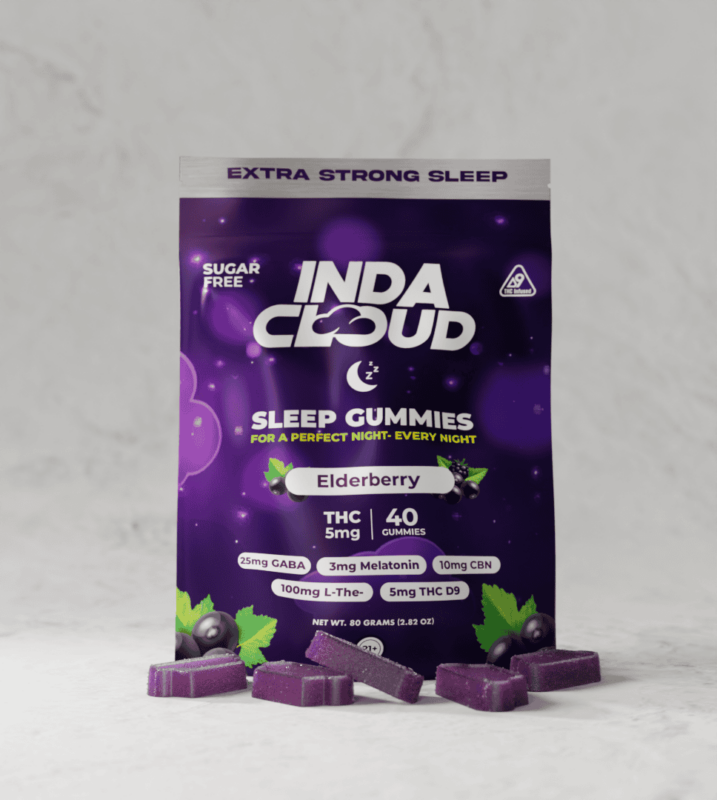
The best THC dose for sleep is usually lower than people expect, with most users landing between 2.5 mg and 10 mg. THC follows a dose-dependent, biphasic pattern: a low dose tends to relax and sedate, while a high dose can flip into anxiety, racing thoughts, and rebound wakefulness at 3 a.m.
Here’s a practical reference framework:
Start low and go slow, then wait the full window before taking more. The two-hour redose rule is non-negotiable with any edible: if the first dose feels weak, you wait at least two hours before adding more, because the peak hasn’t arrived yet. Most accidental over-consumption happens in that impatient gap.
Your right dose depends on body weight, metabolism, tolerance, and whether you’ve eaten. If edibles seem to do nothing for you, that’s usually an absorption or tolerance issue rather than a reason to double up. Our guide on why edibles don’t work for some people walks through the common causes before you escalate the dose.
This is also where dose accuracy stops being academic. A gummy labeled 5 mg only helps you titrate if it actually contains 5 mg, verified by testing rather than a label guess. Indacloud’s sugar-free sleep gummies in the 40-count jar carry per-serving labeling backed by public third-party COAs, which is what makes a nightly routine repeatable instead of a guessing game.
Keep any high-potency edibles in childproof storage, well away from anyone who might mistake them for candy.
THC, CBD, and CBN do different jobs for sleep, and the best sleep edibles often combine them rather than relying on one. Each cannabinoid contributes a distinct piece.
Be honest about CBN, because it’s a credibility test. CBN has been sold as a sedative for decades, but the human research supporting that claim is thin, and some of its reputation may come from the aged, high-THC cannabis it’s associated with rather than CBN itself. It may help as part of a blend. It is not a proven sleep drug.
That’s why blended ratios are popular. A THC and CBN pairing is the headline sleep combo on most product pages, sometimes stacked with melatonin for a tri-ingredient approach. A THC to CBD ratio aims to keep you relaxed without tipping into anxiety. The right blend depends on your tolerance and how sensitive you are to THC alone.
Both Delta-9 sleep gummies and the milder Delta-8 options for beginners come in these formats, so you can match the ratio to your experience level.
Indica strains have a reputation for sedation, but with edibles the dose and chemovar matter far more than the name on the label. The classic indica-versus-sativa split is a rough heuristic, not a guarantee, and a high enough dose of almost anything will make you drowsy.
What’s more useful is terpene content. Myrcene and linalool are the terpenes most associated with relaxation, and full-spectrum edibles that retain them differ from distillate products stripped down to isolated cannabinoids. This is part of the entourage effect, the idea that compounds work together rather than in isolation. Terpinolene, by contrast, leans more energizing, so it’s worth a second look at a sleep product.
Format also changes the experience more than most buyers realize:
If you want the indica-leaning profile in an edible, the indica gummies collection groups products selected for that relaxing, body-heavy character.
Take a THC edible 30 to 90 minutes before you want to be asleep, and as long as two hours if you’ve eaten a full meal. Edibles have to pass through digestion before that 11-hydroxy-THC conversion kicks in, which is why they’re slower than smoking and why timing is the most common mistake people make.
Food in your stomach slows onset further, so a gummy on an empty stomach hits faster than one after a heavy dinner. Plan around your own routine rather than a fixed number.
Duration is the other half of the timing equation. Edible effects typically last 4 to 8 hours, so the math matters: take a strong dose at 11 p.m. with a 6 a.m. alarm and you may still be metabolizing it when you wake. Lower doses and earlier timing are the two levers that prevent morning grogginess.
One scenario worth flagging. Edibles suit trouble falling asleep far better than they suit waking at 3 a.m. A slow-onset edible taken in the middle of the night won’t peak until you’re supposed to be up, so for middle-of-the-night waking, timing your original dose earlier usually beats a second one.
Next-day grogginess almost always traces back to too high a dose or too late a timing, and both are fixable. If you wake up foggy, the first adjustments are lowering the dose, moving it earlier in the evening, or switching to a format with a shorter duration.
Tolerance is the other predictable issue. Nightly use builds tolerance, which nudges people toward dosing creep, taking more to get the same effect. Cycling, taking occasional nights off, or holding a tolerance break keeps your effective dose lower over time.
Common side effects stay manageable with a few habits:
None of this is cause for alarm at sensible doses. It’s the difference between a tool you control and a habit that controls the dose.
Some people should be careful with THC edibles for sleep or skip them entirely. That list includes anyone with an anxiety disorder, people taking medications that interact with THC, those who are pregnant or breastfeeding, and anyone with a history of substance dependence.
THC edibles are federally legal when derived from hemp under the 2018 Farm Bill and contain no more than 0.3% delta-9 THC by dry weight, though state laws vary and shipping isn’t available everywhere. Our hemp-derived Delta-9 explainer covers the legal mechanics in full.
If you have an ongoing sleep problem, talk to a healthcare provider. These products are not designed to diagnose, treat, cure, or prevent any condition, and persistent insomnia deserves a real evaluation rather than a workaround.
Most people do best between 2.5 mg and 10 mg, starting at the low end. Higher doses raise the odds of grogginess and rebound wakefulness rather than better sleep.
Around 30 to 90 minutes, or up to two hours after a full meal, since food slows onset.
THC has the stronger sedative effect and the clearer evidence. CBN is widely marketed for sleep but rests on a thinner research base, and it tends to be used alongside THC rather than on its own.
Yes. Nightly use builds tolerance over time, so occasional breaks or cycling help keep your effective dose low.
THC edibles are most dependable for one job: helping you fall asleep faster. A low dose between 2.5 mg and 10 mg, taken 30 to 90 minutes before bed, gives most people the sedation they’re after without the morning fog that comes from overshooting.
The rest is matching the details to you. Choose a blend that fits your tolerance, lean on lab-tested products with accurate per-serving labeling so your routine stays consistent, and treat the start-low-go-slow rule as the whole game. When you’re ready to pick something, the sleep gummy collection is the place to start.
Yes, THC gummies are legal to buy in most of the United States right…
Learn more
Raw, unheated THCA clears your system in roughly 24 to 48 hours. Once you…
Learn more

Yes, edibles show up on drug tests. Standard panels detect THC edibles exactly the…
Learn more
Green Wednesday is the Wednesday before Thanksgiving, the cannabis industry’s second-biggest shopping day of…
Learn more
