



Blogs

Are THC Gummies Legal? A 2026 State-by-State Guide
Yes, THC gummies are legal to buy in most of the United States right…
Learn more
You must be 21+ to enter this site
 FREE SHIPPING $89+
 FREE GIFT ON $120+
 100% FEDERALLY LEGAL
 LAB TESTED FOR PURITY
FREE SHIPPING $89+
FREE GIFT ON $120+
100% FEDERALLY LEGAL
LAB TESTED FOR PURITY
FREE SHIPPING $89+
FREE GIFT ON $120+
100% FEDERALLY LEGAL
LAB TESTED FOR PURITY
FREE SHIPPING $89+
FREE GIFT ON $120+
100% FEDERALLY LEGAL
LAB TESTED FOR PURITY
FREE SHIPPING $89+
FREE GIFT ON $120+
100% FEDERALLY LEGAL
LAB TESTED FOR PURITY
FREE SHIPPING $89+
FREE GIFT ON $120+
100% FEDERALLY LEGAL
LAB TESTED FOR PURITY
FREE SHIPPING $89+
FREE GIFT ON $120+
100% FEDERALLY LEGAL
LAB TESTED FOR PURITY
FREE SHIPPING $89+
FREE GIFT ON $120+
100% FEDERALLY LEGAL
LAB TESTED FOR PURITY
LAB TESTED FOR PURITY
FREE SHIPPING $89+
FREE GIFT ON $120+
100% FEDERALLY LEGAL
LAB TESTED FOR PURITY
FREE SHIPPING $89+
FREE GIFT ON $120+
100% FEDERALLY LEGAL
LAB TESTED FOR PURITY
FREE SHIPPING $89+
FREE GIFT ON $120+
100% FEDERALLY LEGAL
LAB TESTED FOR PURITY
FREE SHIPPING $89+
FREE GIFT ON $120+
100% FEDERALLY LEGAL
LAB TESTED FOR PURITY
FREE SHIPPING $89+
FREE GIFT ON $120+
100% FEDERALLY LEGAL
LAB TESTED FOR PURITY
FREE SHIPPING $89+
FREE GIFT ON $120+
100% FEDERALLY LEGAL
LAB TESTED FOR PURITY
FREE SHIPPING $89+
FREE GIFT ON $120+
100% FEDERALLY LEGAL
LAB TESTED FOR PURITY

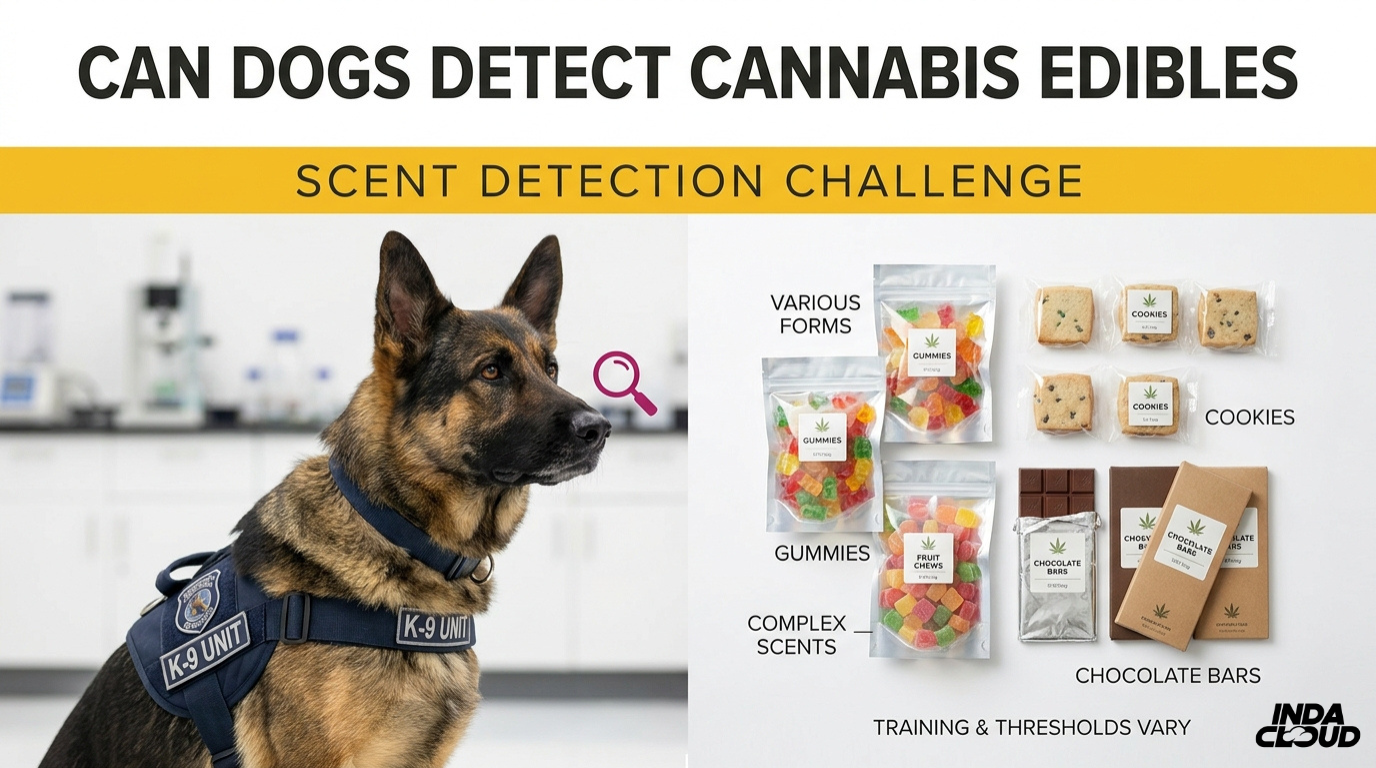
Cannabis edibles are food products infused with cannabinoids, and drug-detection dogs can smell them in most situations. Canines detect the volatile organic compounds and terpenes associated with cannabis rather than isolated THC molecules, which means edibles in baked goods, gummies, sealed packaging, and mixed food storage all remain within a trained dog’s detection range.
We cover canine olfactory biology, drug dog training and detection targets, real-world encounter settings, accuracy variables, and the legal landscape surrounding hemp versus marijuana edibles.
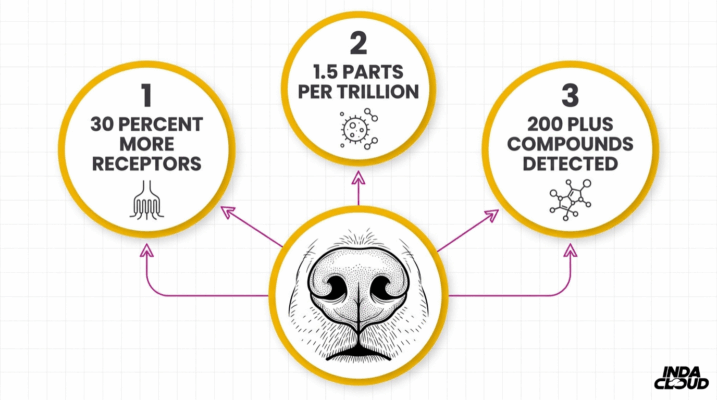
A dog’s nose contains roughly 30% more olfactory receptors than a human’s, with detection thresholds reaching as low as 1.5 parts per trillion. This biological architecture allows canines to decompose layered scents into individual chemical components, isolating cannabis signatures even within complex odor environments.
Drug-sniffing dogs are trained on whole-plant cannabis odor profiles, not specific cannabinoids. Certification programs require detection of cocaine plus at least one additional narcotic, and agencies like U.S. Customs and Border Protection include marijuana among their core target substances. Because hemp and marijuana share nearly identical terpene profiles, trained dogs alert to both without distinguishing legality.
Detection accuracy shifts based on THC concentration, packaging material, environmental conditions like temperature and humidity, and how recently the dog completed training. Vacuum-sealed plastic reduces odor leakage more effectively than standard bags, though no packaging eliminates scent permanently.
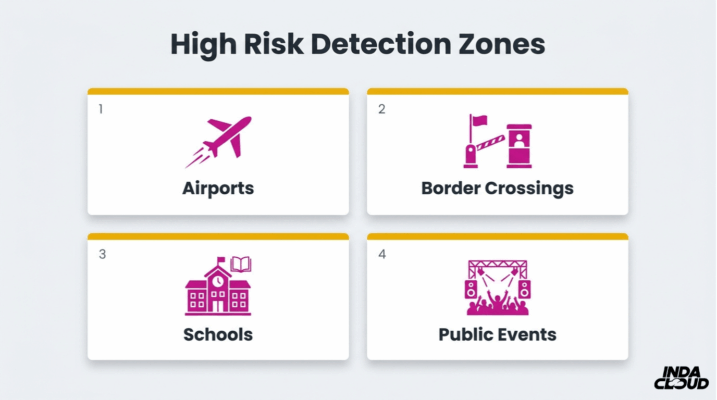
Drug dogs operate at airports, border crossings, schools, and public events, with enforcement varying by jurisdiction. Courts have upheld trained dog alerts as probable cause, yet legalization in 24 states plus the expanding federal hemp framework complicate how those alerts hold up legally. Choosing lab-tested, Farm Bill-compliant hemp edibles with verified THC levels below 0.3% remains one of the most reliable ways to reduce legal risk.
A dog’s sense of smell is extraordinarily powerful, far surpassing human olfactory capabilities in both sensitivity and precision. This biological advantage explains why canines serve as the foundation of scent-based detection programs worldwide.
The canine nose contains a significantly larger surface area of olfactory epithelium than the human nose, with approximately 30% more olfactory receptors. This anatomical difference allows dogs to process scent information at a level of detail that remains difficult to replicate with electronic instruments. According to a study published in Frontiers in Veterinary Science, the canine olfactory detection threshold for fluid mixtures ranges from 40 parts per billion to 1.5 parts per trillion. To put that in practical terms, dogs can isolate individual chemical signatures within complex mixtures at concentrations nearly invisible to laboratory equipment.
What makes this capability particularly relevant to drug detection is the way dogs process layered scents. Rather than perceiving a single blended aroma the way humans do, a trained dog can decompose an odor into its individual chemical components. Each nostril even operates semi-independently, helping the animal locate the directional source of a scent. This biological architecture is why institutions like Auburn University’s Canine Performance Sciences program and the Penn Vet Working Dog Center continue to invest in research exploring the frontiers of canine olfaction, behavior, and physical performance.
For anyone wondering whether a dog could detect something as subtle as a cannabis edible tucked inside a bag, the answer starts here: the nose itself is built for exactly that kind of challenge. Understanding what drug-sniffing dogs are specifically trained to find, however, requires looking beyond raw biological ability.
Drug-sniffing dogs are trained to detect specific controlled substances, including marijuana, cocaine, heroin, and methamphetamine. The subsections below cover whether these dogs can identify THC specifically, CBD products, and other cannabinoids.
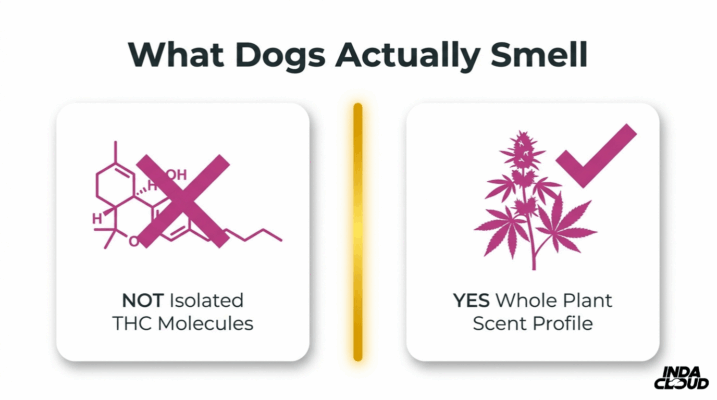
Drug dogs cannot detect THC specifically. These canines are primarily trained to detect the volatile organic compounds (VOCs) and terpenes found in raw cannabis rather than the isolated Delta-9 THC molecule. This means they respond to the overall scent profile of the plant, not a single chemical compound.
According to U.S. Customs and Border Protection, CBP canines are taught to detect concealed humans and controlled substances, specifically including marijuana, cocaine, heroin, and methamphetamine. The training targets whole-plant odor signatures, so a dog alerting to cannabis does not confirm THC presence or potency.
This distinction matters significantly for anyone carrying hemp-derived products. Because the scent compounds in legal hemp and illegal marijuana overlap almost entirely, a trained dog’s alert reflects odor recognition rather than a determination of THC content.
Drug dogs can potentially alert to CBD products. Since CBD is extracted from the same cannabis plant as THC, many CBD items retain shared terpenes and volatile compounds that overlap with marijuana’s scent profile. A dog trained on whole-plant cannabis odor may alert to CBD flower, full-spectrum tinctures, or broad-spectrum concentrates that carry residual plant aromatics.
Isolate-based CBD products, which undergo extensive processing to remove terpenes and other plant compounds, are less likely to trigger an alert. However, no guarantee exists because trace botanical compounds can persist even after extraction. The dog does not distinguish legality; it simply responds to familiar scent markers from its training. For anyone carrying CBD, understanding that detection depends on shared plant compounds rather than the CBD molecule itself is essential.
Drug dogs can detect other cannabinoids only when those products carry the same volatile plant compounds used in training. The dogs respond to odor profiles, not individual cannabinoid molecules like Delta-8, THCa, or HHC.
To certify with the National Narcotic Detector Dog Association (NNDDA), all K-9s must find cocaine and at least one other narcotic, which may include marijuana, heroin, methamphetamine, MDMA, fentanyl, or opium. Cannabinoids not on this list are not directly targeted during certification.
Still, any hemp-derived cannabinoid product retaining cannabis terpenes could trigger a false positive. The practical takeaway: detection hinges on shared scent chemistry, not the specific cannabinoid inside the product.
Understanding what triggers a drug dog’s alert becomes especially relevant when considering whether these canines can detect cannabis in edible form.
Yes, dogs can smell cannabis edibles in most situations. Their ability to detect volatile compounds associated with cannabis extends to baked goods, gummies, and packaged products. The following subsections cover detection through sealed packaging, baked goods, candy-form edibles, and items stored alongside other foods.
Yes, dogs can smell edibles in sealed packaging, though effectiveness depends on the packaging type. Standard containers like plastic bags and jars allow volatile organic compounds to permeate over time, giving trained dogs a detectable scent signature. Vacuum-sealed plastic, however, presents a greater challenge. A study reported by NORML found that subjects were unable to identify cannabis when it was packaged in vacuum-sealed plastic, whereas they could identify it when packaged in resealable sandwich bags. While vacuum sealing reduces odor leakage significantly, no packaging is permanently airtight. Micro-permeation through weak seals or thin film means trained detection dogs may still pick up trace scents given enough time and proximity.
Yes, dogs can smell edibles mixed into baked goods such as brownies, cookies, and infused butter recipes. Baking does not eliminate the terpenes and volatile organic compounds present in cannabis-infused ingredients. Although heat transforms some compounds during the cooking process, residual aromatic molecules remain embedded in the finished product. Sugar, flour, and chocolate may mask these scents to the human nose, but a trained drug detection dog isolates individual odor components rather than perceiving a blended aroma. This layered scent discrimination makes baked cannabis edibles detectable even when surrounded by strong competing food smells. For most practical purposes, mixing edibles into baked goods does not reliably prevent canine detection.
Yes, dogs can smell edibles in gummy or candy form. THC gummies and cannabis-infused candies contain terpenes, flavoring agents, and residual plant compounds that produce detectable volatile signatures. The gelatin or pectin base of a gummy does not fully encapsulate these molecules; trace amounts escape into the surrounding air over time. Candy coatings and artificial flavors may complicate detection slightly, yet drug dogs trained on cannabis-related scent profiles can distinguish target compounds from confectionery odors. Gummy edibles are among the most commonly encountered cannabis products, so many detection programs specifically account for this format during training exercises.
Yes, dogs can smell edibles stored with other foods. According to a 2018 study published in Frontiers in Veterinary Science, dogs have significantly larger surface area of olfactory epithelium than humans, with approximately 30% more olfactory receptors. This biological advantage enables dogs to parse individual scent layers within complex odor environments. Storing cannabis edibles alongside pungent items like coffee, spices, or citrus fruits does not create an effective scent barrier. A trained detection dog analyzes each component of a mixed odor separately rather than perceiving one unified smell. Surrounding edibles with strong-smelling foods is one of the least reliable concealment strategies against canine detection.
Understanding what dogs can detect in edibles raises the next question: how detection teams actually train dogs to find them.
Drug detection dogs are trained to find edibles through scent imprinting on the volatile organic compounds associated with cannabis, not the edible product itself. The process combines classical conditioning with systematic odor exposure.
Trainers begin by introducing a target scent, typically raw cannabis material, paired with a reward like a toy or treat. Through repetition, the dog learns to associate that specific chemical signature with a positive outcome. Once the foundation is established, handlers gradually introduce more complex detection scenarios.
What makes edible detection particularly nuanced is the scent profile involved. Drug dogs are primarily trained to detect the volatile organic compounds (VOCs) and terpenes found in raw cannabis rather than the isolated Delta-9 THC molecule, according to industry analysis from SeaBedee. This distinction matters because edibles undergo processing that alters or reduces many of these volatile compounds, potentially making them harder to identify than raw flower.
The terpene complexity of cannabis further illustrates why training requires extensive scent exposure. A study published by the National Institutes of Health characterized over 200 volatile compounds in cannabis resins, including 58 monoterpenes like β-myrcene and 38 sesquiterpenes like caryophyllene. Dogs must learn to recognize this broad chemical fingerprint across varying concentrations and product formats.
Training protocols typically progress through several stages:
For most agencies, the practical challenge is that edibles contain far fewer airborne VOCs than raw cannabis. Baking, cooking, and chemical extraction break down many terpenes that dogs rely on for identification. This is why a dog trained exclusively on raw flower may struggle with a low-dose gummy, while one exposed to diverse cannabis formats during training performs more reliably.
Training recency also plays a critical role. Dogs require consistent reinforcement sessions to maintain detection accuracy; without regular practice on varied cannabis products, their ability to identify edibles can degrade over time. Understanding these training methods helps clarify why detection outcomes vary so widely across encounters.
Drug-sniffing dogs operate in airports, border crossings, schools, and public events across the United States. The likelihood of encountering one depends on the setting, jurisdiction, and federal versus state enforcement priorities.
Airports use dogs that can smell edibles, though their primary mission varies by agency. TSA security officers do not search for marijuana or other illegal drugs; however, if an illegal substance is discovered during screening, TSA refers the matter to law enforcement. Most airport canine units focus on explosives detection rather than narcotics.
Policies also differ by location. According to the LAX official website, LAX Airport Police have no jurisdiction to arrest individuals possessing up to 28.5 grams of marijuana if they comply with California state law. Airports in prohibition states treat any cannabis detection far more seriously. Travelers carrying edibles face unpredictable enforcement depending on the terminal they pass through.
Border crossings use dogs that can smell edibles because federal law governs all ports of entry regardless of state cannabis policies. U.S. Customs and Border Protection canines are trained to detect concealed humans and controlled substances, specifically including marijuana, cocaine, heroin, and methamphetamine. Cannabis remains a Schedule I substance under federal law, so CBP treats any amount as contraband.
These dogs work at land borders, international mail facilities, and cargo inspection points. Even travelers coming from states or countries where cannabis is legal face federal enforcement the moment they cross an international boundary. The federal classification makes border crossings the highest-risk setting for anyone carrying cannabis edibles.
Schools and public events use drug-sniffing dogs, though the practice faces growing legal and public scrutiny. Some districts conduct locker or parking lot sweeps as a deterrence measure, while large venues may deploy canine teams at entry points for concerts, festivals, or sporting events.
Not all programs survive legal challenges. The Nine Mile Falls School District in Washington abandoned its policy of searching students with drug-sniffing dogs to avoid a lawsuit filed by the ACLU, highlighting Fourth Amendment concerns around suspicionless canine searches of minors. Public event deployments raise fewer constitutional issues since attendees typically consent to screening as a condition of entry. Understanding where these dogs operate helps consumers make informed decisions about carrying any cannabis product.
A drug dog’s accuracy with edibles depends on THC concentration, packaging material, environmental conditions, and training recency. Each variable can enhance or diminish a dog’s ability to detect cannabis-infused products.
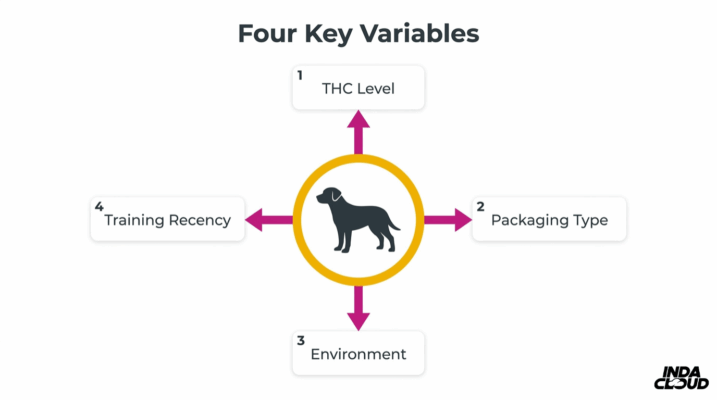
THC concentration affects detection because drug dogs rely on volatile organic compounds and terpenes that correlate with cannabinoid levels. Products with higher THC content typically retain more of these aromatic compounds from the original plant material, making them easier for a trained dog to identify. According to a study published in the National Institutes of Health (PMC), over 200 volatile compounds have been characterized in cannabis resins, including 58 monoterpenes like β-myrcene and 38 sesquiterpenes like caryophyllene. Low-concentration edibles, particularly those made with heavily processed distillate, emit fewer of these signature volatiles. This is why a full-spectrum gummy with rich terpene content presents a stronger scent profile than a pure isolate product.
Packaging material affects detection by controlling how much odor escapes from the product. Mylar bags provide protection against odor, humidity, oxygen, and light, though failures in odor proofing often result from weak seals or thin film, according to RinPac. Vacuum-sealed plastic offers even stronger containment. A NORML-cited study found that subjects were unable to identify cannabis when it was packaged in vacuum-sealed plastic, whereas they could identify it in resealable sandwich bags. Given that canine olfactory sensitivity far exceeds human capability, standard consumer packaging rarely provides a reliable barrier. For practical purposes, most off-the-shelf edible packaging slows detection rather than preventing it entirely.
Environmental conditions affect detection by altering how scent molecules travel and persist. Key factors include:
A canine’s detection threshold can reach as low as 1.5 parts per trillion, according to Frontiers in Veterinary Science, so even under difficult conditions, trained dogs maintain remarkable sensitivity.
The dog’s training recency affects detection because scent discrimination skills degrade without consistent reinforcement. Dogs that train regularly on target odors maintain sharper alerting behavior and lower false-positive rates. Certification standards reflect this principle; to certify with the National Narcotic Detector Dog Association (NNDDA), all K-9s must successfully find cocaine and at least one additional narcotic during testing. Handlers who skip refresher sessions risk diminished accuracy, especially with subtler targets like processed edibles. Ongoing training also helps dogs adapt to new product formulations and packaging types that may alter familiar scent signatures.
Understanding these accuracy factors clarifies why legal, lab-tested hemp edibles occupy a distinct category under federal law.
No, drug dogs cannot tell the difference between hemp and marijuana. Both plants share nearly identical chemical profiles, making scent-based distinction functionally impossible for canines.
The core issue is biological. Hemp and marijuana are the same species, Cannabis sativa, and they produce the same volatile organic compounds and terpenes that trigger a trained dog’s alert. The legal threshold separating them (0.3% Delta-9 THC on a dry weight basis, as defined by the 2018 Farm Bill) is a chemical concentration measurement, not a scent difference. No amount of training can teach a dog to quantify THC percentages through smell alone.
The North Carolina State Bureau of Investigation confirmed this limitation directly, stating in a memo that “Police narcotics K-9s cannot tell the difference between hemp and marijuana.” This acknowledgment from a state-level law enforcement agency underscores a fundamental challenge: a dog alerting on a cannabis product provides no indication of whether that product is federally legal hemp or illegal marijuana.
This inability creates real consequences for consumers carrying legal hemp-derived products, including edibles, flower, and concentrates. A positive alert from a drug dog may still be used to justify a search, even when the substance in question contains less than 0.3% THC. For anyone traveling with hemp products, understanding this limitation is essential to anticipating potential encounters with law enforcement.
The legal implications of a drug dog alert center on probable cause, search authority, and the growing conflict between state and federal marijuana laws. A positive alert can authorize vehicle searches, luggage inspections, and even detention, but recent court rulings and legalization trends have complicated how courts evaluate these alerts. Key legal dimensions include Supreme Court precedent, the hemp-marijuana distinction, and how legalization reshapes probable cause.
A drug dog alert historically establishes probable cause for a warrantless search. In Florida v. Harris (2013), the Supreme Court held that “evidence of a dog’s satisfactory performance in a certification or training program can itself provide sufficient reason to trust his alert.” This ruling gave law enforcement broad authority to act on a trained dog’s positive indication. However, the legal landscape has shifted considerably since then.
The Supreme Court also placed limits on how drug dogs can be deployed. In Rodriguez v. United States (2015), the Court ruled that extending a traffic stop to conduct a dog sniff, absent reasonable suspicion, violates the Fourth Amendment’s protection against unreasonable seizures. Officers cannot detain someone beyond the stop’s original purpose simply to wait for a K-9 unit.
State-level legalization creates additional legal tension. As of 2026, 24 states and the District of Columbia allow recreational marijuana use, according to the Congressional Research Service. In these jurisdictions, a drug dog alert on cannabis alone may no longer constitute probable cause, since the substance is legal under state law. Meanwhile, the 2018 Farm Bill defined hemp as cannabis containing less than 0.3% Delta-9 THC, making it federally legal. Because drug dogs cannot distinguish hemp from marijuana, an alert on either substance raises questions about whether the search is legally justified.
These overlapping frameworks mean the legal weight of a drug dog alert now depends heavily on jurisdiction, the substances involved, and the specific circumstances of the encounter. For consumers carrying federally compliant hemp products, understanding these distinctions is essential to knowing their rights.
Yes, drug dogs are trained differently by state or agency. No single national standard governs K-9 drug detection programs across the United States, so training protocols, target substances, and certification requirements vary significantly depending on the jurisdiction and the agency’s mission.
Several factors drive these differences:
This patchwork of standards means a drug dog in Colorado may be trained on an entirely different scent profile than one working in Texas or at a federal checkpoint. For consumers carrying federally legal hemp-derived edibles, these inconsistencies create real uncertainty about how a K-9 encounter might unfold.
Understanding these jurisdictional variations helps explain why drug dog reliability remains a debated topic in courtrooms and policy discussions alike.
Drug dog alerts as evidence are considered generally reliable by courts, but their accuracy is far from perfect and remains a subject of ongoing legal debate. Several factors influence how much weight an alert carries in legal proceedings.
The Supreme Court addressed this directly in Florida v. Harris (2013), holding that “evidence of a dog’s satisfactory performance in a certification or training program can itself provide sufficient reason to trust his alert.” This ruling established that a dog’s training record, rather than field accuracy statistics alone, can justify probable cause.
However, real-world reliability is complicated by several issues:
Courts increasingly scrutinize drug dog evidence rather than accepting it at face value. A certified dog’s alert may establish probable cause, yet defense attorneys regularly challenge alert reliability based on the dog’s individual track record, recency of training, and the handler’s potential bias. For consumers carrying federally legal hemp-derived edibles containing less than 0.3% Delta-9 THC, an alert alone does not confirm illegal activity. Understanding these limitations helps contextualize what a drug dog alert actually proves in a courtroom.
The difference between hemp-derived and marijuana edibles comes down to THC concentration and legal classification. Hemp edibles contain no more than 0.3% Delta-9 THC by dry weight, while marijuana edibles exceed that threshold. This single distinction determines federal legality, where you can buy them, and how drug dogs may complicate possession.
Hemp-derived edibles are federally legal under the 2018 Farm Bill, which defined hemp as cannabis containing no more than 0.3% THC on a dry weight basis. Marijuana edibles, by contrast, remain a Schedule I controlled substance at the federal level, regardless of state laws permitting recreational or medical use. According to the TSA, cannabis products containing no more than 0.3 percent THC on a dry weight basis are legal under federal law following the Agriculture Improvement Act of 2018.
Both product types originate from the same plant species, Cannabis sativa, and share overlapping terpene and cannabinoid profiles. From a drug dog’s perspective, this similarity matters significantly. The volatile organic compounds that trigger a canine alert are nearly identical in hemp and marijuana edibles, making scent-based distinction essentially impossible for detection dogs. For consumers, choosing compliant hemp-derived edibles with verified lab results reduces legal risk considerably, especially during travel or in jurisdictions where marijuana remains prohibited.
You should choose federally legal edibles by verifying Farm Bill compliance, third-party lab testing, and THC content below 0.3% on a dry weight basis. The following sections cover IndaCloud’s legal hemp edibles and the key takeaways from canine detection of edibles.
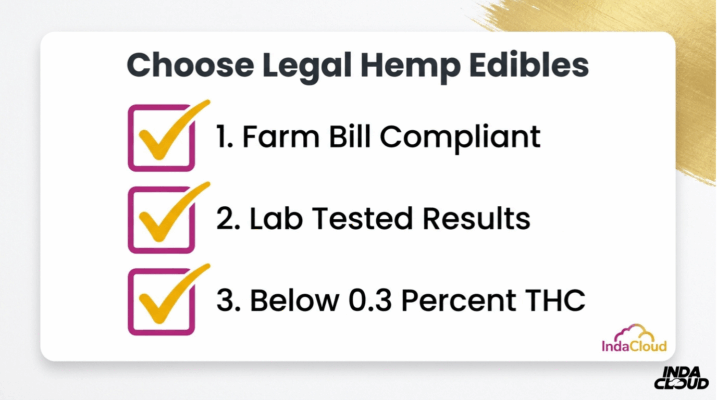
Yes, IndaCloud’s lab-tested hemp edibles can offer a legal alternative. The 2018 Farm Bill legally defined hemp as cannabis plants containing less than 0.3% Delta-9 THC on a dry weight basis, according to the National Institutes of Health. Plants exceeding this threshold are classified as marijuana under federal law.
IndaCloud products comply with this federal standard, and every batch undergoes comprehensive third-party testing to verify THC levels, purity, and potency. Because drug-detection canines cannot distinguish hemp from marijuana, as noted earlier, carrying products with verifiable lab reports provides an additional layer of legal protection. IndaCloud ships directly to consumers across the continental United States, offering a convenient way to access federally compliant edibles without visiting a dispensary.
The key takeaways about dogs smelling edibles center on three realities: canine capability, legal complexity, and consumer choice.
Choosing lab-tested, federally legal hemp edibles from a transparent source like IndaCloud remains one of the most practical steps toward peace of mind.
Yes, THC gummies are legal to buy in most of the United States right…
Learn more

Raw, unheated THCA clears your system in roughly 24 to 48 hours. Once you…
Learn more

Yes, edibles show up on drug tests. Standard panels detect THC edibles exactly the…
Learn more

Green Wednesday is the Wednesday before Thanksgiving, the cannabis industry’s second-biggest shopping day of…
Learn more
