FREE SHIPPING $89+
 FREE GIFTS ALL ORDERS $120+
 100% FEDERALLY LEGAL
  LAB TESTED FOR PURITY


Delta-8 THC is a naturally occurring cannabinoid found in trace amounts in the cannabis plant, distinguished from delta-9 THC by the placement of a single double bond in its molecular structure. This minor chemical difference produces a psychoactive experience roughly half to two-thirds the intensity of conventional THC.
This guide covers delta-8’s chemistry and how it compares to other cannabinoids, its common therapeutic and lifestyle uses, what its effects feel like and how long they last, available product formats and proper dosing, its legal status across the United States, and how to evaluate safety and product quality.
Delta-8 differs from delta-9 THC in the position of one double bond (between carbons 8 and 9 rather than 9 and 10), and it differs from CBD entirely in that it binds directly to CB1 receptors to produce a mild high. Most commercial delta-8 is converted from CBD isolate through acid-catalyzed isomerization rather than extracted directly from hemp.
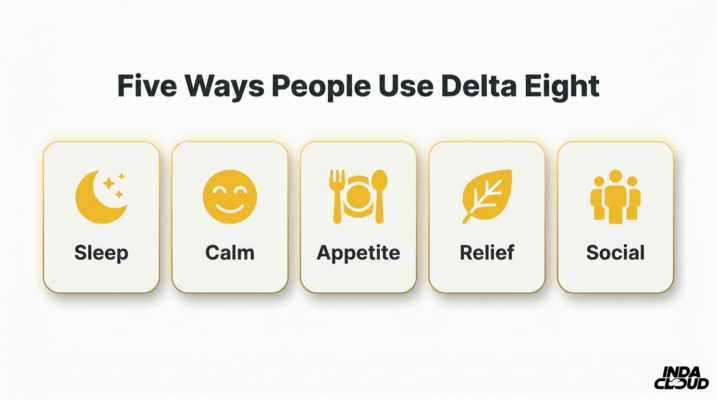
Users commonly turn to delta-8 for relaxation, stress relief, sleep support, appetite stimulation, and discomfort management. Its reduced psychoactive intensity makes it a functional option for social settings and daytime use where mental clarity matters.
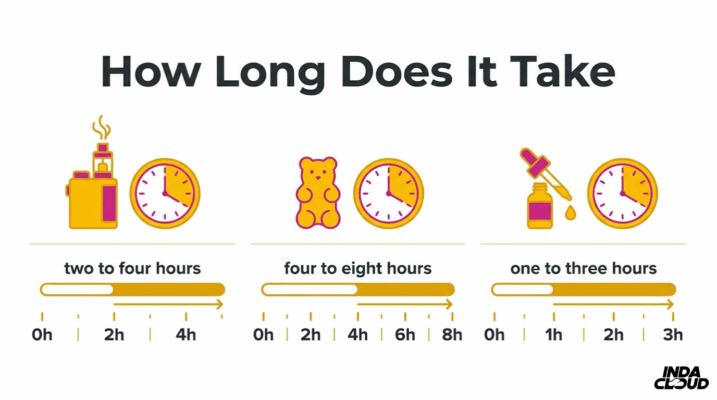
Effects from delta-8 vary by consumption method: inhaled formats produce results within minutes and last two to four hours, while edibles take 30 to 90 minutes to onset and can last up to eight hours. Common side effects include dry mouth, drowsiness, and increased heart rate, particularly with unregulated products.
Delta-8 derived from hemp is federally legal under the 2018 Farm Bill when it contains less than 0.3% delta-9 THC, but multiple states have enacted full bans or restrictions. Standard drug tests cannot distinguish delta-8 metabolites from delta-9, so anyone subject to screening should plan accordingly.
Product quality remains the most critical safety factor. Third-party lab testing that verifies potency, screens for contaminants, and publishes accessible certificates of analysis separates trustworthy brands from the largely unregulated options found in gas stations and convenience stores.
What Is Delta-8 THC Chemically?
Delta-8 THC is a naturally occurring cannabinoid with a tricyclic structure and the molecular formula C₂₁H₃₀O₂. Its chemical identity centers on one specific double bond position that distinguishes it from other THC isomers. The subsections below cover how delta-8 differs from delta-9 THC and CBD, plus how it is extracted from hemp.
How Is Delta-8 THC Different from Delta-9 THC?
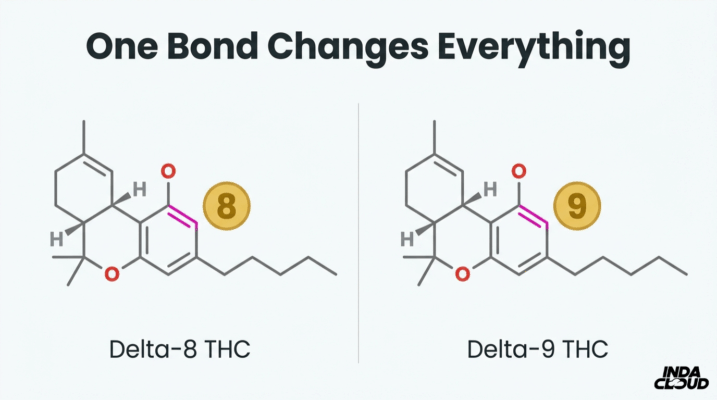
Delta-8 THC is different from delta-9 THC in the placement of a single double bond. Delta-8 has its double bond between carbon atoms 8 and 9, while delta-9 places the bond between carbons 9 and 10. This seemingly minor structural shift reduces psychoactive potency significantly; research from the Dilworth Center suggests delta-8’s psychoactive strength is roughly half to two-thirds that of delta-9 THC.
Because delta-8 exists only in trace amounts in cannabis, most commercial supply comes from nonenzymatic isomerization of delta-9 THC or cyclization of CBD. Despite their structural differences, both cannabinoids trigger identical responses on standard drug tests, with metabolites showing approximately 100% cross-reactivity on screening immunoassays. Both compounds can also induce cardiovascular effects such as tachycardia, so awareness of medication interactions remains important regardless of which isomer you use.
How Is Delta-8 THC Different from CBD?
Delta-8 THC is different from CBD in one fundamental way: delta-8 is psychoactive, while CBD is not. Delta-8 binds directly to CB1 receptors in the brain, producing a mild euphoric effect. CBD, by contrast, has minimal affinity for CB1 receptors and does not create a high.
Both compounds originate from the hemp plant, and both are legal under federal law when derived from hemp containing less than 0.3% delta-9 THC. However, their effects serve different purposes. CBD is typically chosen for everyday wellness support without intoxication, whereas delta-8 appeals to those seeking a gentle psychoactive experience. For anyone who finds delta-9 THC too intense, delta-8 occupies a practical middle ground between CBD’s non-intoxicating profile and delta-9’s full potency.
How Is Delta-8 THC Extracted from Hemp?
Delta-8 THC is extracted from hemp primarily through a chemical conversion process rather than direct plant extraction. Since the cannabis plant produces only trace amounts of delta-8 naturally, manufacturers convert CBD isolate derived from hemp into delta-8 THC using acid-catalyzed isomerization. This process rearranges CBD’s molecular structure, repositioning the double bond to create the delta-8 configuration.
The resulting extract then undergoes distillation and purification before being formulated into consumer products. According to Cannabis Business Times, the U.S. market for delta-8 THC and other hemp-derived cannabinoids increased 1,283% in just three years, growing from $200.5 million in 2020 to a multi-billion dollar industry. That explosive growth makes extraction quality and third-party testing essential for consumer safety.
Understanding delta-8’s chemical origins helps explain the effects and safety considerations covered next.
What Are the Common Uses of Delta-8 THC?
The common uses of delta-8 THC include relaxation, stress relief, sleep support, appetite stimulation, discomfort management, and social enhancement. The sections below explore each use in detail.
How Is Delta-8 THC Used for Relaxation and Stress?
Delta-8 THC is used for relaxation and stress by interacting with cannabinoid receptors that regulate mood and anxiety responses. Many consumers choose it specifically because its milder psychoactive profile produces calm without overwhelming intensity.
According to a study published in the Journal of Cannabis Research, about 51% of participants used delta-8 THC to treat medical conditions, with anxiety or panic attacks being the most common reason at 69%. This suggests that stress-related relief is a primary motivator for users seeking a gentler alternative to delta-9 THC. For anyone dealing with everyday tension, delta-8 offers a functional option worth exploring alongside other wellness practices.
How Is Delta-8 THC Used for Sleep Support?
Delta-8 THC is used for sleep support through its calming interaction with the endocannabinoid system, which helps regulate sleep-wake cycles. Its sedative qualities at moderate doses can ease the mental restlessness that often delays sleep onset.
Users commonly report that delta-8 edibles, taken 60 to 90 minutes before bed, promote deeper and more sustained rest. Because its psychoactive effects are milder than delta-9 THC, delta-8 is less likely to produce the racing thoughts or anxiety that sometimes disrupt sleep with stronger cannabinoids. For those who struggle with nighttime restlessness, low-dose delta-8 products represent a practical addition to an evening routine.
How Is Delta-8 THC Used for Appetite Stimulation?
Delta-8 THC is used for appetite stimulation by activating pathways that increase hunger signaling in the body. According to research published by the National Institutes of Health, delta-8 THC increases food consumption and alters neurotransmitter levels by requiring the ghrelin receptor to affect appetite.
This mechanism makes delta-8 particularly relevant for individuals experiencing reduced appetite due to stress, medication side effects, or other factors. Even at lower doses, the appetite-enhancing effect tends to be noticeable. Among all the cannabinoids commonly available, delta-8 stands out as one of the most reliable options for consistent appetite support without excessive psychoactive intensity.
How Is Delta-8 THC Used for Discomfort Management?
Delta-8 THC is used for discomfort management by binding to CB1 receptors in the nervous system, which modulate pain perception. Users frequently report that delta-8 provides meaningful relief from soreness, tension, and general physical discomfort.
Its analgesic properties work best for mild to moderate discomfort rather than acute or severe conditions. Because delta-8 produces less cognitive impairment than delta-9 THC, many users prefer it for daytime discomfort management when mental clarity matters. Topical and edible formats are especially popular for this purpose, as they deliver sustained effects over several hours. Combining delta-8 with other wellness strategies often yields the best results for ongoing physical discomfort.
How Is Delta-8 THC Used in Social Settings?
Delta-8 THC is used in social settings as a mild mood enhancer that promotes ease and sociability without heavy intoxication. Its lighter psychoactive profile allows users to remain conversational, engaged, and present during gatherings.
Low-dose edibles and vapes are the most common formats chosen for social occasions, since they offer controllable effects and discreet consumption. Unlike stronger cannabinoids that can cause withdrawal or anxiety in group environments, delta-8 tends to support a relaxed, open disposition. For individuals who find traditional THC products too intense for socializing, delta-8 fills a valuable middle ground between full sobriety and heavy psychoactive effects.
With these diverse applications in mind, understanding how delta-8 actually feels helps set realistic expectations.
What Are the Effects of Delta-8 THC?
The effects of delta-8 THC include a milder psychoactive high, relaxation, euphoria, and potential side effects like dry mouth and drowsiness. The sections below cover what the high feels like, onset timing, duration, and possible adverse reactions.
What Does a Delta-8 THC High Feel Like?
A delta-8 THC high feels like a gentler, clearer version of a traditional cannabis experience. Users commonly report relaxation, mild euphoria, and a calm mental state without the intense psychoactive intensity associated with delta-9 THC. According to a study published in the Journal of Cannabis Research, Dr. Jessica Kruger of the University at Buffalo noted that “delta-8-THC may provide much of the experiential and therapeutic benefits of delta-9-THC with lower risks and lesser adverse effects.” Many people describe the sensation as functional and manageable, allowing them to stay focused while still feeling uplifted. For those sensitive to stronger cannabinoids, this reduced intensity often makes delta-8 a more approachable starting point.
How Long Do Delta-8 THC Effects Take to Kick In?
Delta-8 THC effects take to kick in anywhere from a few minutes to over an hour, depending on the consumption method. Inhalation through vaping or smoking typically produces noticeable effects within 5 to 15 minutes, since cannabinoids enter the bloodstream rapidly through the lungs. Edibles and oral products take considerably longer, often 30 to 90 minutes, because delta-8 must pass through the digestive system before absorption. According to an FDA toxicology report, oral delta-8 THC exposure produced dose-dependent physiological changes in animal studies, confirming that the oral route involves slower but sustained absorption. Starting with a low dose and waiting before re-dosing is especially important with edibles, where delayed onset can lead to overconsumption.
How Long Do Delta-8 THC Effects Last?
Delta-8 THC effects last approximately 3 to 8 hours, with duration varying by product type, dosage, and individual metabolism. Inhaled delta-8 from vapes or flower generally produces effects lasting 2 to 4 hours. Edibles tend to produce longer-lasting effects, typically 4 to 8 hours, because the liver converts delta-8 into metabolites that sustain activity over a more extended period. Body composition, tolerance level, and how recently you have eaten can all influence duration. For most users, the peak experience occurs within the first 1 to 3 hours, followed by a gradual tapering. Keeping a consistent routine helps you predict how long each session will last.
What Are the Potential Side Effects of Delta-8 THC?
The potential side effects of delta-8 THC include dry mouth, red eyes, drowsiness, increased heart rate, and temporary cognitive impairment. Some users also report mild anxiety at higher doses. According to a study published in the Journal of Medical Toxicology, common medical outcomes reported to poison centers for delta-8 THC exposure include minor effects (38.6%), moderate effects (35.6%), and major effects (2.9%). These risks increase with unregulated products that may contain unknown contaminants. Potential side effects can be minimized by:
- Starting with a low dose and increasing gradually.
- Choosing lab-tested products with verified cannabinoid profiles.
- Avoiding delta-8 THC when operating vehicles or heavy machinery.
- Staying hydrated before, during, and after consumption.
Understanding these effects helps users make informed decisions about which delta-8 product types best suit their needs.
What Delta-8 THC Product Types Are Available?
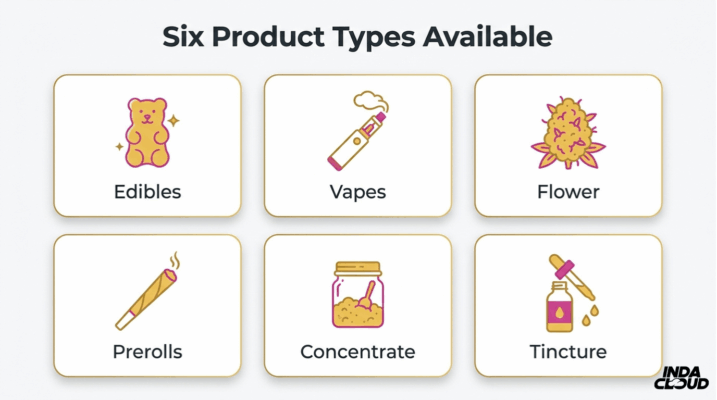
Delta-8 THC product types available include edibles, vapes, flower, pre-rolls, concentrates, and tinctures. Each format differs in onset time, duration, and intensity.
Delta-8 Edibles
Delta-8 edibles are food products infused with delta-8 THC, such as gummies, chocolates, and baked goods. They take 30 to 90 minutes to produce effects because the cannabinoid must pass through the digestive system before reaching the bloodstream. Once absorbed, the effects typically last longer than inhaled formats. Edibles offer precise dosing per piece, making them a practical choice for users who prefer consistent, measured intake without any inhalation.
Delta-8 Vapes
Delta-8 vapes are inhalation devices that heat delta-8 THC oil into vapor. Available as cartridges or disposable pens, vapes deliver effects within minutes because the cannabinoid enters the bloodstream through the lungs. This rapid onset makes vaping popular among users who want fast-acting results. Effects generally last one to three hours. Vapes also come in strain-specific options, allowing users to select indica, sativa, or hybrid profiles based on their desired experience.
Delta-8 Flower
Delta-8 flower is hemp flower that has been infused or coated with delta-8 THC distillate. Because hemp naturally contains only trace amounts of delta-8, the cannabinoid is applied to the flower after harvest. Smoking delta-8 flower produces effects within minutes, similar to vaping. The experience closely resembles traditional cannabis consumption, which appeals to users who prefer the full ritual of grinding, packing, and smoking. Available strains typically span indica, sativa, and hybrid varieties.
Delta-8 Pre-Rolls
Delta-8 pre-rolls are pre-made joints filled with delta-8 THC-infused hemp flower. They eliminate the need for grinding or rolling, offering a ready-to-use option. Onset and duration mirror those of delta-8 flower since the delivery method is identical. Pre-rolls are especially convenient for occasional users or social settings where portability matters. According to a 2023 study in the Journal of Analytical Toxicology, six commercially available urine cannabinoid immunoassay kits cross-reacted with delta-8 THC and its metabolite, so users should be aware that any delta-8 product format can trigger a positive drug test.
Delta-8 Concentrates
Delta-8 concentrates are highly potent extracts of delta-8 THC, available in forms such as wax, shatter, and distillate. They contain significantly higher cannabinoid concentrations than flower or edibles. Concentrates require specialized equipment like dab rigs or compatible vaporizers for consumption. Because of their potency, concentrates are best suited for experienced users with established tolerance levels. A small amount produces strong, fast-acting effects, so careful dosing is essential.
Delta-8 Tinctures
Delta-8 tinctures are liquid extracts designed for sublingual (under-the-tongue) administration. Placed beneath the tongue and held for 30 to 60 seconds, tinctures absorb through the mucous membranes, producing effects faster than edibles but slower than vaping. Most tinctures include a graduated dropper for precise dose control. This format suits users who want adjustable dosing without inhalation or the sugar content found in many edibles. With several product types now widely accessible, understanding proper dosing helps maximize benefits safely.
How Much Delta-8 THC Should You Take?
The amount of delta-8 THC you should take depends on your experience level and the product format you choose. The subsections below cover beginner dosing, experienced user ranges, and how dosing differs across edibles, vapes, and tinctures.
How Much Delta-8 THC Should a Beginner Take?
A beginner should take 5 to 10 mg of delta-8 THC as a starting dose. This low threshold allows new users to gauge individual sensitivity before increasing intake. For medical cannabis dosing, a Springer study published in the Journal of Medical Toxicology recommends starting with 2.5 mg every two to three days, increasing by 2.5 to 5 mg until reaching the desired outcome or a maximum of 40 mg per day. Body weight, metabolism, and tolerance all influence how delta-8 affects each person. Waiting at least two hours after an edible dose before consuming more helps prevent overconsumption. Starting low and adjusting gradually remains the safest approach for anyone new to delta-8 THC.
How Much Delta-8 THC Should an Experienced User Take?
An experienced user should take 25 to 50 mg of delta-8 THC per session, though some regular consumers use higher amounts depending on tolerance. According to a study published in the Journal of Cannabis Research, most delta-8 THC users reported significant relaxation (71%), euphoria (68%), and pain relief (55%), suggesting that moderate-to-high doses deliver consistent therapeutic effects. Because THC is highly lipid soluble, regular users accumulate it in fat tissue, extending the plasma half-life to 5 to 13 days compared with 1 to 3 days for occasional users. This accumulation means experienced consumers often need higher doses to achieve the same effects. Tracking your dose and adjusting incrementally prevents unnecessary overconsumption.
How Does Dosing Differ by Product Type?
Dosing differs by product type because each format has a unique onset time, bioavailability, and duration of effects:
- Edibles and gummies deliver 5 to 50 mg per piece, take 60 to 120 minutes to onset, and produce effects lasting 4 to 8 hours.
- Vapes provide near-instant effects within 1 to 5 minutes, making dose control easier through short, measured puffs.
- Tinctures absorb sublingually in 15 to 45 minutes, allowing precise milligram adjustments with a graduated dropper.
- Flower and pre-rolls deliver effects within minutes through inhalation, though exact milligram dosing is harder to measure.
Inhalation methods offer faster feedback, while edibles require more patience. For first-time users of any new product type, starting at the lowest available dose is the most reliable strategy for a comfortable experience.
Is Delta-8 THC Legal in the United States?
Delta-8 THC is legal at the federal level under certain conditions, but state laws vary significantly. The sections below cover federal law and state-level restrictions.
What Does Federal Law Say About Delta-8 THC?
Federal law permits Delta-8 THC derived from hemp containing less than 0.3% Delta-9 THC, based on the 2018 Farm Bill. However, this legality comes with important caveats. The Farm Bill preserved the FDA’s authority to regulate cannabis-derived compounds under the Federal Food, Drug, and Cosmetic Act, meaning products marketed with therapeutic claims remain subject to enforcement action. According to the FDA, the agency has not evaluated or approved Delta-8 THC products for safe use, and it has issued public warnings about the compound’s unregulated availability. Because federal policy leaves room for interpretation, consumers should verify both federal compliance and their own state’s position before purchasing.
Which States Have Restricted or Banned Delta-8 THC?
The states that have restricted or banned Delta-8 THC include a growing number of jurisdictions that have moved beyond federal baseline rules. As of 2025, Delta-8 THC is totally banned in:
- Alaska
- Colorado
- Delaware
- Idaho
- Iowa
- Montana
- New York
- North Dakota
- Rhode Island
- Vermont
Several additional states impose partial restrictions, such as age limits, retail licensing requirements, or potency caps. These regulations shift frequently as legislators respond to rising use; a 2023 Monitoring the Future survey found that 11.4% of U.S. 12th-grade students reported using Delta-8 THC in the past year. Checking current state laws before ordering is essential, especially when buying online. With legal status changing rapidly, understanding your state’s specific rules helps ensure compliant purchasing.
Is Delta-8 THC Safe to Use?
Delta-8 THC is generally considered safe when sourced from reputable brands that prioritize transparency and quality control. Safety depends on third-party lab testing, awareness of drug test implications, and individual health factors.
What Should You Look for in Third-Party Lab Testing?
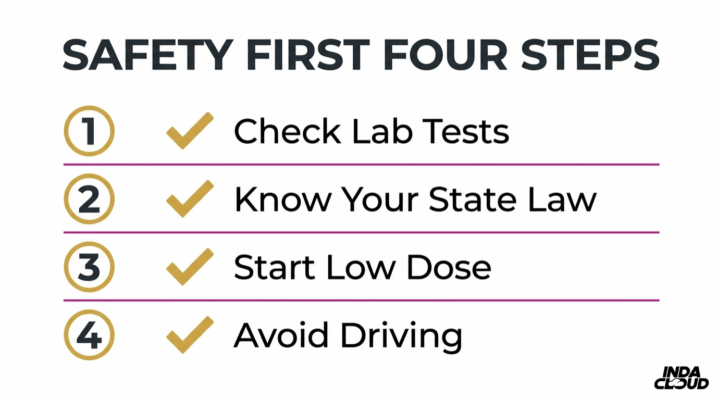
You should look for third-party lab testing that verifies cannabinoid potency, confirms the absence of contaminants, and validates accurate labeling. The US Pharmacopeia requires a resolution factor of 1.5 for accurate differentiation between delta-8 and delta-9 THC in testing, according to SC Labs. A credible certificate of analysis (COA) should confirm results for:
- Cannabinoid potency and profile
- Residual solvents from extraction
- Heavy metals such as lead, arsenic, and mercury
- Pesticide residues
- Microbial contaminants like mold and bacteria
Products sold without accessible COAs from accredited, independent laboratories should be avoided entirely. For anyone serious about safety, verifying lab results before purchasing is the single most effective step you can take.
Can Delta-8 THC Show Up on a Drug Test?
Yes, delta-8 THC can show up on a drug test. Standard urine screenings detect THC metabolites, and the body processes delta-8 in a way that produces metabolites nearly identical to those from delta-9 THC. A 2023 study published in the Journal of Analytical Toxicology found that six commercially available urine cannabinoid immunoassay screening kits cross-reacted with delta-8 THC and its metabolite 11-OH-delta-8-THC. Because most workplace and legal drug panels cannot distinguish between delta-8 and delta-9 metabolites, anyone subject to routine testing should exercise caution. Abstaining well in advance of a scheduled test is the only reliable approach, since THC compounds are lipid-soluble and may remain detectable for days or weeks depending on usage frequency.
Who Should Avoid Using Delta-8 THC?
Individuals who are pregnant, breastfeeding, or under 21 years of age should avoid using delta-8 THC. Several other groups face elevated risk:
- People taking prescription medications, particularly blood thinners or sedatives, since both delta-8 and delta-9 THC can induce cardiovascular effects such as tachycardia
- Individuals with a history of substance use disorder or mental health conditions
- Anyone operating heavy machinery or driving after consumption
- People in states where delta-8 THC is banned or restricted
Because delta-8 products remain largely unregulated at the federal level, consulting a healthcare provider before use is especially important for anyone with pre-existing conditions. With safety fundamentals covered, selecting a trustworthy source becomes the next priority.
How Should You Choose Delta-8 THC Products Online?
You should choose delta-8 THC products online by prioritizing third-party lab testing, transparent sourcing, and compliant shipping. The sections below cover how IndaCloud meets these standards and summarize the key takeaways about delta-8 THC.
Can IndaCloud’s Lab-Tested Delta-8 Products Deliver Safely to Your Door?
Yes, IndaCloud’s lab-tested delta-8 products can deliver safely to your door across the continental United States. IndaCloud subjects every batch to comprehensive third-party testing, verifying cannabinoid potency and screening for contaminants. This level of quality control matters in a market where many products lack oversight. According to the FDA, 104 reports of adverse events involving delta-8 THC products were filed between December 2020 and February 2022, underscoring the risks of untested options.
IndaCloud ships all orders in nondescript packaging within 48 hours, with free shipping on orders over $89. Every product contains less than 0.3% delta-9 THC, maintaining full federal compliance. For buyers navigating an unregulated landscape, choosing a brand that publishes lab reports and prioritizes transparency is one of the most effective ways to reduce risk.
What Are the Key Takeaways About Delta-8 THC Uses, Effects, and Safety?
The key takeaways about delta-8 THC uses, effects, and safety center on three areas: its therapeutic potential, its milder psychoactive profile compared to delta-9 THC, and the critical importance of product quality.
- Delta-8 THC produces relaxation, mild euphoria, and potential relief from discomfort and appetite loss at roughly half to two-thirds the intensity of delta-9 THC.
- Product safety depends entirely on sourcing; unregulated delta-8 items sold at gas stations and convenience stores carry higher contamination risks than lab-tested alternatives.
- Legal status varies by state, so buyers must verify local regulations before purchasing.
- Drug tests typically cannot distinguish between delta-8 and delta-9 metabolites, making this a consideration for anyone subject to screening.
As FDA Principal Deputy Commissioner Janet Woodcock, M.D., stated, “the FDA is very concerned about the proliferation of products claiming to contain delta-8 THC and marketed for therapeutic or medical uses that have not been approved by the agency.” This reinforces why consumers should rely on brands like IndaCloud that provide verifiable lab results rather than unsubstantiated therapeutic claims.